Afro-blues
When Ali Farka Touré, Malian guitarist, declared in 1989 that the blues is “not American music but African music imported directly from Africa,” he launched an ethnomusicological challenge that still resonates. Afro-blues is not a fixed genre: it is first and foremost an affirmation, a sonic bridge thrown between the banks of the Sahel and those of the Mississippi Delta, between Manding griots and Robert Johnson. How did this idea become a musical reality, and why does it matter more than ever today.
The term “afro-blues” (or “African blues”, “African blues”) covers at least two distinct realities. In ethnomusicology, it designates the hypothesis that the musical roots of American blues lie in West Africa, more precisely in the Sudanian-Sahelian zone. In Western record business, it designates a modern fusion current between American black blues and traditional African melodies, carried by Malian, Senegalese, and Gambian artists since the 1970s 1. Understanding this duality means grasping how a scientific idea turned into an artistic movement.
The debate on “roots”: when science explores the Delta
The African hypothesis for the origins of blues is not a simple speculation. It rests on decades of fieldwork. In 1969, Austrian ethnomusicologist Gerhard Kubik — today professor at the University of Vienna — found himself facing a Mozambican minor playing the cipendani, a musical bow with oral resonance. The same instrument existed in the hands of an Appalachian white musician, who considered it his heritage. This coincidence revealed to Kubik that the link between these two distant musicians was nothing other than American black music: blues 2.
Kubik devoted forty years to tracing the African cultural genealogy of blues through eighteen nations, focusing on the Sudanian-Sahelian zone — from Mali to Cameroon. His work Africa and the Blues (1999) constitutes the most dense scientific reference on the subject. For him, identifiable structural traits — “blue notes”, certain forms of heterophony (several voices playing the same melody with simultaneous variants), call-and-response structures — traverse this geographical area as a coherent musical substrate 3.
The profile Kubik draws is striking: American blues musicians share with West African griots an itinerant existence, a precarious social status, a predilection for string instruments, and a declamatory vocal style. Yet the debate is not closed. Researchers like David Evans, in African American Music: An Introduction, nuance: “it would be erroneous to see blues interpreters simply as biological or cultural descendants of griots,” reminding us that these traits are found in many African traditions, not only West African ones 4.
The linguistic dimension of the debate is equally complex. American blues, born in the Mississippi Delta around the turn of the 20th century, was built on a crucible of African work songs, Christian spirituals, and European influences. The first instruments — banjo (itself a direct descendant of the balafon and West African lutes), then guitar — evolved parallel to American culture, producing a unique hybrid. The banjo, whose first visual recording dates back to 1809 in the Caribbean colonies, played a foundational role: it structured the rhythms and harmonies on which blues was formed, before gradually being replaced by electric guitar 5.
Ali Farka Touré: the “king of desert blues” and his vision
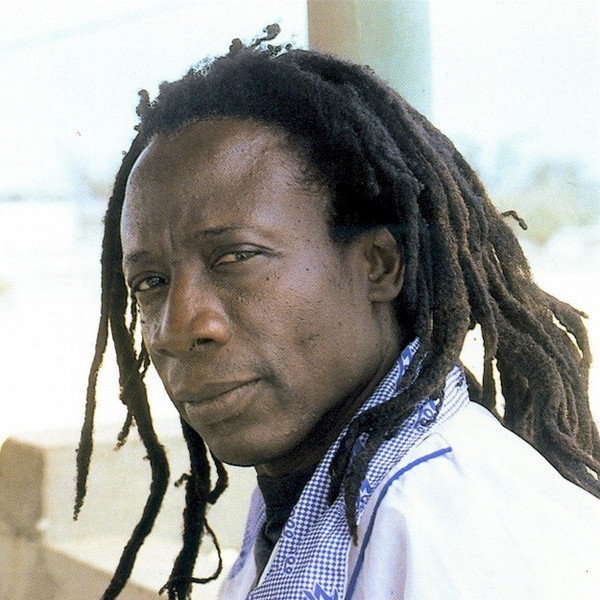
It is within this terrain of debate that Ali Farka Touré (1939–2006) is situated, the greatest Malian musician of the 20th century and a central figure in afro-blues. Born in Niafunké, a village nestled on the banks of the Niger River north of Mali, Touré was above all a rice farmer—a profession he practiced his entire life, alongside his musical career. This dual identity as peasant and musician shaped the radicality of his position: for him, blues was “not American music but African music imported directly from Africa” 6.
The story of his discovery of the guitar is itself revealing. As an adolescent, he learned to play the ngoni (a traditional Manding lute with gut strings) and the xalam (Senegalese lute, similar). In 1956, at seventeen years old, he saw an acoustic guitar for the first time during a performance by the Malian National Ballet. Fascinated, he began to learn it on his own, without a teacher—and transferred onto this Western instrument the plucking technique he had developed on the ngoni. The result: a unique sound, both organically African and immediately recognizable within the blues genealogy 7.
Touré’s international recognition came gradually. His first albums for the French label Esprit des Folklores date from 1978, but it was with Niafunké (1989), produced by American guitarist Ry Cooder, that his name became world-famous. This album—followed by The River (1990) and the historic duo with Toumani Diabaté, In the Heart of the Moon (2004)—showed the Western world that Mali possessed a powerful, primitive, and unclassifiable guitar. The Western press did not long before qualifying him as “king of desert blues,” a nickname that Touré himself contested: he saw his music as deeply Malian, not as a variant of American blues 8.
His last solo album, Savane (“savanna” in French), recorded at the bedside of death (he was suffering from bone cancer) and released posthumously in 2006, is his most assumed declaration. Subtitled “The King of the Desert Blues Singers” on its cover, he frontally accepts the link to blues—howling harmonica, raw guitar phrasing, mature and etched voice. For journalist Mark Guarino: “He does not sing blues; blues followed in his wake” 9. The paradox lies there: an African musician who refuses the term “blues” while being acclaimed as such by the West.
The next generation: Toumani Diabaté, Afel Bocoum and the return of the kora
If Ali Farka Touré imposed the guitar as a vector for afro-blues, another figure carried out the project through traditional instruments: Toumani Diabaté (1965–2025), master of the kora, the 21-string Manding harp-lute. Diabaté collaborated with as varied figures as Bill Frisell, Vincent Segal, or even the American blues guitarist Taj Mahal. Their joint album Kulanjan (1999) is a historic meeting: the bluesman from Arkansas and the kora-player from Mali there weave meditative improvisations that concretely show how two traditions separated by the Atlantic share the same emotional vocabulary 10.
After Ali Farka Touré, other Malian artists inherited this aesthetic: Afel Bocoum (born in 1967 in Ansongo, in northern Mali), Boubacar Traoré (born in 1965 in Bamako) and Vieux Farka Touré, the master’s son, all developed a style that mixes electric guitar with traditional Songhai and Tuareg melodies. Western compilations, such as Desert Blues from the Putumayo label (2005), popularized this designation under the marketing term “desert blues”—a commercial label that, despite its limitations, opened concrete doors for these artists 11.
In West Africa, Senegal and Gambia nourish a similar tradition. Artists like Mansour Seck (kora-guitarist from Casamance), Diabel Cissokho (brother of the Sossou dynasty) and Cheick Tidiane Seck have integrated blues vocabulary into their Manding music. Afrisson, the database dedicated to African musics, defines afro-blues as “a musical style born from the fusion of American black blues and African melodies and rhythms” 12.
Today: the legacy of a musical bridge
Twenty years after Ali Farka Touré’s death, afro-blues is not a past that has passed but a living category. The arrival of Tinariwen (the Tuareg group from northern Mali) on international stages, the planetary success of Amadou et Mariam or the constant reissue of Sahel records (via World Circuit / Nonesuch) keep this transatlantic conversation alive. The constant collaboration between African and American artists—whether in Bamako studios, Los Angeles or London—has made this musical border more porous than ever.
Afro-blues, beyond the genre, is a tool of dialogue between two worlds separated by centuries of history. As Kai Mora showed in Transition Magazine (Harvard University magazine), Touré used the metaphor of a tree: “The roots and trunk are here, in Africa. The branches and leaves are in the Western world” 13. This hierarchical statement fueled passionate debates—who is the “root,” the African or the American?—but it remains a starting point to understand how music can both connect and divide.
The scientific debate is not closed, as afro-blues does not reduce to a simple quest for roots. The musician and ethnomusicologist Althea SullyCole, in her study on the reception of the kora in New York, shows that African and Afro-American musicians operate simultaneously within the same soundscape without merging into one another. The dialogue remains tense, fertile and unfinished—exactly like blues itself 14.
Sources
-
Afrisson, « Afro-blues — African blues — Blues africain », article de Nago Seck, mis à jour le 7 novembre 2020. https://www.afrisson.com/afro-blues-african-blues-blues-9437 ↩︎
-
Banning Eyre, « Africa and The Blues: An Interview with Gerhard Kubik », Afropop Worldwide. https://www.afropop.org/articles/africa-and-the-blues-an-interview-with-gerhard-kubik ↩︎
-
Gerhard Kubik, Africa and the Blues, University Press of Mississippi, 1999. Résumé détaillé : Yale University Press — Cultural Exchanges and Trans-Atlantic Bonds. https://yalebooks.yale.edu/2020/10/21/cultural-exchanges-and-trans-atlantic-bonds-african-music-and-the-evolution-of-blues-and-jazz/ ↩︎
-
Kai Mora, « Talking Blues: Notes and Dialogue between Africa and its Atlantic Diaspora », Transition Magazine (Université Harvard). https://transitionmagazine.fas.harvard.edu/talking-blues-notes-and-dialogue-between-africa-and-its-atlantic-diaspora/ ↩︎
-
Gerhard Kubik, Africa and the Blues, University Press of Mississippi, 1999. Cité dans : Harvard Transition Magazine. https://transitionmagazine.fas.harvard.edu/talking-blues-notes-and-dialogue-between-africa-and-its-atlantic-diaspora/ ↩︎
-
Francis Davis, The History of the Blues, Hyperion, 1995. Cité dans : Kai Mora, Transition Magazine. https://transitionmagazine.fas.harvard.edu/talking-blues-notes-and-dialogue-between-africa-and-its-atlantic-diaspora/ ↩︎
-
Mark Guarino, « Desert blues: Afro-pop star makes his final statement with Savane », PopMatters. https://popmatters.com/ali-farka-tour-savane-2495688384.html ↩︎
-
Mark Guarino, « Desert blues: Afro-pop star makes his final statement with Savane », PopMatters. https://mark-guarino.com/desert-blues-afro-pop-star-makes-his-final-statement-with-savane ↩︎
-
BBC, « Awards for World Music 2007 — Ali Farka Touré », fRoots Magazine. https://bbc.co.uk/radio3/worldmusic/a4wm2007/2007_alifarkatoure_album.shtml ↩︎
-
All About Jazz, « Kulanjan — Taj Mahal and Toumani Diabaté », critique de Ronan AB. https://www.allaboutjazz.com/kulanjan-taj-mahal-hannibal-records-review-by-ronan-abayawickrema ↩︎
-
Louder Than War, « Ali Farka Touré: Savane rereleased — album review ». https://louderthanwar.com/ali-farka-toure-savane-rereleased-album-review ↩︎
-
Nago Seck, « Afro-blues », Afrisson. https://www.afrisson.com/afro-blues-african-blues-blues-9437 ↩︎
-
Kai Mora, « Talking Blues: Notes and Dialogue between Africa and its Atlantic Diaspora », Transition Magazine (Université Harvard). https://transitionmagazine.fas.harvard.edu/talking-blues-notes-and-dialogue-between-africa-and-its-atlantic-diaspora/ ↩︎
-
Althea SullyCole, « Listening to Kora in New York City: Constructing Africa and Blackness in the United States ». Cité dans : Kai Mora, Transition Magazine. https://transitionmagazine.fas.harvard.edu/talking-blues-notes-and-dialogue-between-africa-and-its-atlantic-diaspora/ ↩︎