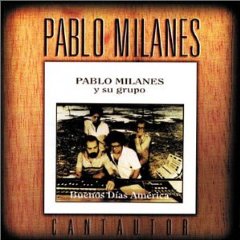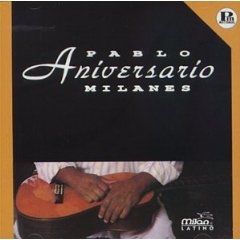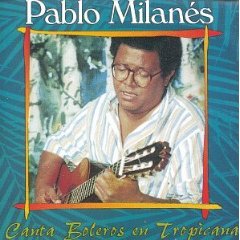
Biography
Pablo Milanés: the guitar of the new Cuban trova
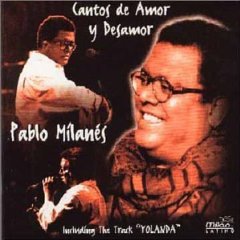
In 1970, in a small hotel room in Havana, Pablo Milanés wrote the first measures of “Yolanda”, a ballad dedicated to his partner Yolanda Benet and their newborn daughter. The title became a love anthem throughout the entire Spanish-speaking world, more popular than the artist himself. Milanés would later say that “Yolanda” dominated his career more than his own ambitions. This song sums it all up: a man who constantly blends the intimate with the political, the heart with rebellion.
In brief
| Full name | Pablo Paulo Milanés Arias |
| Birth | 24 February 1943, Bayamo (Granma province), Cuba |
| Death | 22 November 2022, Madrid, Spain |
| Field | Nueva trova, filin, son cubano, Latin American protest music |
| Iconic works | “Yolanda” (1970), Versos sencillos de José Martí, Como un campo de maíz |
| Awards | Two Latin Grammys (2006), Grammy Latino d’honneur (2015), Cuban National Music Prize (2005) |
Key dates
| Year | Event |
|---|---|
| 1943 | Born in Bayamo, son of a cobbler and a seamstress; eldest of five children |
| 1950 | Family moves to Havana; studies at Conservatorio Municipal de La Habana |
| 1956 | First public performance, aged thirteen |
| 1963-65 | First compositions including “Tu Mi Desengano” and “Mis 22 Años”, precursor of the nueva trova |
| 1965-67 | Sent to the UMAP forced labor camp in Camagüey; escapes and denounces injustices; imprisoned |
| 1968 | Founding nueva trova concert at the National Library with Silvio Rodríguez and Noel Nicola (18 February) |
| 1970 | Wrote “Yolanda”, Latin American love anthem |
| 1973 | Release of Versos sencillos de José Martí, music for the poems of the Cuban independence hero |
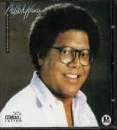
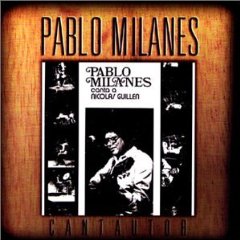
| 1976 | First solo album Pablo Milanés with original compositions |
| 1982 | Release of “Yo Me Quedo” and “Amo Esta Isla”, two of the most famous titles |
| 2006 | Two Latin Grammys: best album by a singer-songwriter and best traditional tropical album |
| 2015 | Grammy Latino d’honneur, music excellence award for his entire career |
| 2022 | Death in Madrid from blood cancer; last emotional concert in Havana in June |
Origins and revelation
Pablo Milanés was born in eastern Cuba, in the city of Bayamo — birthplace of the Haitian Revolution and land of musicians. His father Angel Milanés was a cobbler, his mother Conchita Arias a seamstress. The family moved to Havana in 1950, where young Pablo entered the Conservatorio Municipal. But it was on the streets and in the cafés of his neighborhood that he discovered inspiration: bohemian musicians who taught him filin, this romantic Cuban style influenced by American jazz and French chanson. Filin transformed the guitar into a megaphone for sentiment — a blend of tenderness and rebellion that would define his entire career.
In the 1960s, Pablo joined Cuarteto Los Bucaneros and began writing. In 1963, he composed “Tu Mi Desengano”, a love song that marked his debut. But it was “Mis 22 Años” (1965) that laid the foundations for what would become the nueva trova: a new way of combining engaged poetry and Cuban musical heritage.
From personal rebellion to collective song
The UMAP experience broke and forged Pablo Milanés. Sent to this forced labor camp in Camagüey for his appearance and musical tastes being too foreign, he escaped, denounced these camps in Havana, and was imprisoned. In 2015, he said he was still waiting for the Cuban government to ask for forgiveness and would qualify the UMAP as Stalinist concentration camps.
This trauma did not destroy his faith in the Revolution; it sharpened it. After his release, Pablo joined the Grupo de Experimentación Sonora and founded the nueva trova with Silvio Rodríguez and Noel Nicola. The nueva trova transformed traditional Cuban trova — the music of 19th-century troubadours — into a modern, poetic, and socially engaged art. “With Silvio and Pablo, there was always rum,” Milanés said in 2003 (translated from Spanish). “We were three, not two.”
Faithful to Castro’s motto in the Revolution, everything; outside the Revolution, nothing, Pablo assumed his paradoxical position: “I am just a worker who works with songs, doing in my own way what I know best, just like any other Cuban worker. I am faithful to my reality, to my Revolution, and to my education,” he said (translated from Spanish). This ambiguous loyalty allowed Milanés to criticize without deserting — supporting a hunger striker in 2010, signing the Cuban Civil Society Manifesto in 2021.
Major works
| Work | Year | Why it is essential |
|---|---|---|
| Versos sencillos de José Martí | 1973 | The poems of the Cuban independence hero transformed into popular songs — meeting between Martí and the nueva trova |
| Pablo Milanés (album) | 1976 | First record of original compositions; establishes the unique style between filin and trovadorismo |
| “Yo Me Quedo” | 1982 | Anthem of personal commitment: remaining faithful to one’s land and ideals despite trials |
| “Amo Esta Isla” | 1982 | Declaration of love for Cuba — the Caribbean island as inalienable identity |
| Como un campo de maíz | 2006 | Latin Grammy-winning album; poetic and musical maturity of an artist at the peak |
Heritage and influence
With more than fifty albums produced over five decades, Pablo Milanés became a national poet throughout the entire Spanish-speaking world. His gentle voice and guitar playing inspired generations of Latin American cantautores, from Silvio Rodríguez to Andrés Suárez, passing through Mariza Ross. The nueva trova he founded remains the musical voice of committed Latin America — from Violeta Parra’s Chile to the singer of Mexico.
Cuban authorities celebrated Milanés during his lifetime, but also controversially — the exiles despised his loyalty to Castro while some close associates criticized his musical deviations toward orchestrated jazz. This very tension is his legacy: an artist who managed to remain faithful without ever submitting, and who made the guitar a tool for gentle resistance.
Sources and references
- “Pablo Milanés Biography” by Steve Huey, AllMusic, https://www.allmusic.com/artist/pablo-milanés-mn0000006855, accessed November 8, 2026.
- “Pablo Milanés, Cuban singer-songwriter, dies at 79”, PBS News / Associated Press, November 22, 2022, https://www.pbs.org/newshour/arts/pablo-milanes-cuban-singer-songwriter-dies-at-79, accessed November 8, 2026.
- “Pablo Milanés obituary”, The Guardian, December 7, 2022, https://www.theguardian.com/music/2022/dec/07/pablo-milanes-obituary, accessed November 8, 2026.
- “Cuban musician Pablo Milanés dies aged 79”, BBC News, November 22, 2022, https://www.bbc.com/news/articles/cn0497v1jdno, accessed November 8, 2026.
- Pablo Milanés, Wikipedia (English version), https://en.wikipedia.org/wiki/Pablo_Milanés, accessed November 8, 2026.
- Pablo Milanés, Wikipedia (Spanish version), https://es.wikipedia.org/wiki/Pablo_Milanés, accessed November 8, 2026.