Cuba, when an island shaped the rhythm of the world
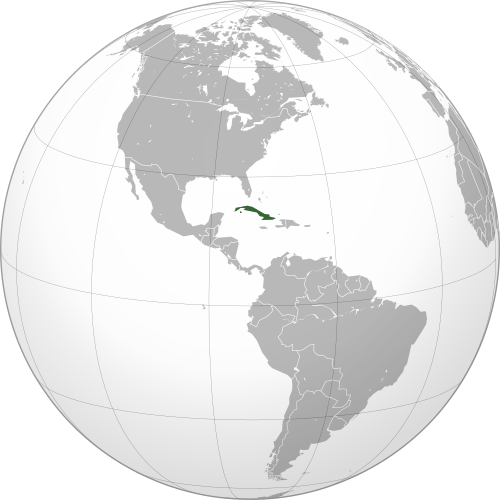
Sound, mambo, rumba, bolero: rhythms born in the barrios of Santiago de Cuba and Havana that conquered the dancefloors of Paris, New York, and Johannesburg. A small island of 110,000 square kilometers that gave the world more influential musical styles than any other Caribbean country. How did this sharp crucible of history—a mix of slavery, Spanish colonization, and African religions—become the matrix for Afro-Caribbean music and a large part of world popular music?
From African survivals to the first creole sounds
After the near-total extermination of the Taíno indigenous populations in the 16th century, Spanish colonists imported tens of thousands of African slaves to the island’s sugar plantations, mainly from Nigeria, Cameroon, Congo, and the Dahomey region1. This massive settlement explains why Cuba possesses the richest syncretic repertoire of the Antillean arc. It is here that the term transculturation—imagined by anthropologist Fernando Ortiz—finds its most advanced form: Cuban music is not a collage, but a recreation2.
Two major veins interwove. The first, Hispanic, brought the guitar, the tres (double-stringed three-string guitar), verses and décimas of Andalusian poetry, French contradanza, and the habanera—that ternary rhythm that would become the pulse of Cuban music3. The second, African, injected polyrhythm, call-and-response, variable-tone percussion—conga, bongó—and the ritual structures of Yoruba and Congo cults4.
The result: el son, born in the province of Oriente at the end of the 19th century. Originally peasant music, played on guitar and maracas, it gradually became Cuba’s reference genre5. In 1920, Sexteto Habanero added the trumpet and recorded the first el son discs, launching a phenomenon that would conquer the whole world.
Did you know? Cuban el son is not just a musical genre: it is the foundation of salsa, mambo, pachanga, and many Latin American styles. Without el son, there would be no salsa or timba.
The golden age: from conjunto to mambo (1930-1959)
If el son is the root, it was Arsenio Rodríguez (1911-1970) who invented its modern version. Blind, a genius guitarist, he expanded the sextet into a conjunto—piano, double bass, tres, congas, bongó, several trumpets, and choir6. He added pre-composed brass sections, the moñas, and popularized the verso-corro-montuno structure that would become the model for all urban Cuban music. His formula traveled to New York and served as a foundation for salsa7.
At the same time, the danzón—elegant salon music born in the 1870s, structured around violin, flute, and trombones8—evolved into danzón-mambo. Dámaso Pérez Prado, nicknamed the “King of Mambo”9, transformed the danzón into a dancing, orchestral, and frenetic style. Mambo exploded in the United States at the end of the 1940s, in New York ballrooms, and spread across Europe, Africa, and Asia.
It was also this period that made Celia Cruz (1925-2003) the iconic voice of guaracha and el son. Joined by Sonora Matancera in 1950, she sang “La vida es un carnaval” with such energy that her nickname Reina de la Salsa would never leave her10. Unlike many colleagues, she chose exile after 1959 and established her career in the United States.
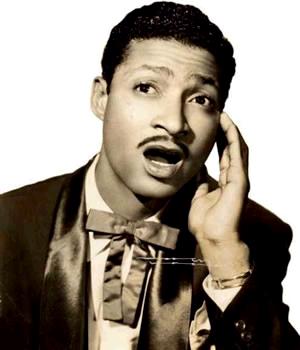
Benny Moré (1919-1963)—nicknamed “el Bárbaro del Ritmo”11—dominated the scene while alive. Absolute master of el son, bolero, and dance, he directed his own Banda Gigante where saxophones, trumpets, and trombones played Cuban music with big band jazz sophistication. His legacy remains today the absolute reference for Cuban salsa12.
Timba: revolution and reinvention (1980-2000)
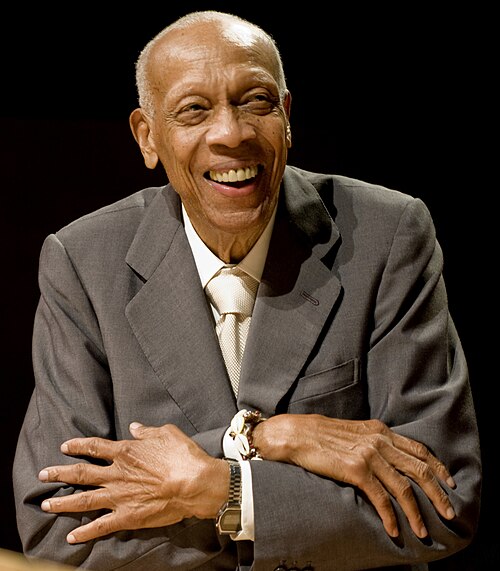
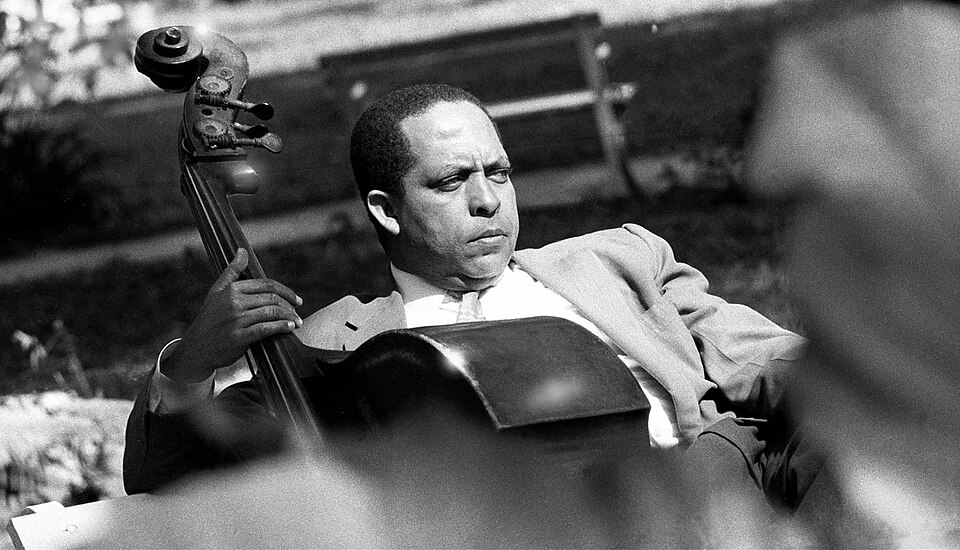
After the 1959 revolution, Cuban music became state-owned property under EGREM’s tutelage. The most ambitious artists emigrated—Celia Cruz, Cachao, Omara Portuondo13—while the system trained generations of extremely technical musicians in public schools. But it was precisely this high-level training that nourished a radical mutation.
In the 1980s, José Luis « El Tosco » Cortés founded NG La Banda by exploding classical formats. He mixed el son, rumba, salsa, funk, jazz, and rock, and invented a term: timba14. Timba is faster, more syncopated, and more violent than New York salsa. Its texts, often explicit and rooted in popular neighborhoods, made it a music of the street as much as of the stage15.
Two formations dominated this era. Los Van Van, led by bassist Juan Formell (1942-2014), preceded NG La Banda by twenty years, introducing funk and soul elements. Formell, nicknamed “el padre de la timba,” is without doubt the most important figure in the history of Cuban popular music16. Albums like La Bossa Nueva se pone Pa’ lante (1982) and Nengón (1983) anticipated timba by several years. NG La Banda, from 1988 onward, pushed the concept to its paroxysm with ultra-compressed rhythms, shouted choirs, and dense brass arrangements17.
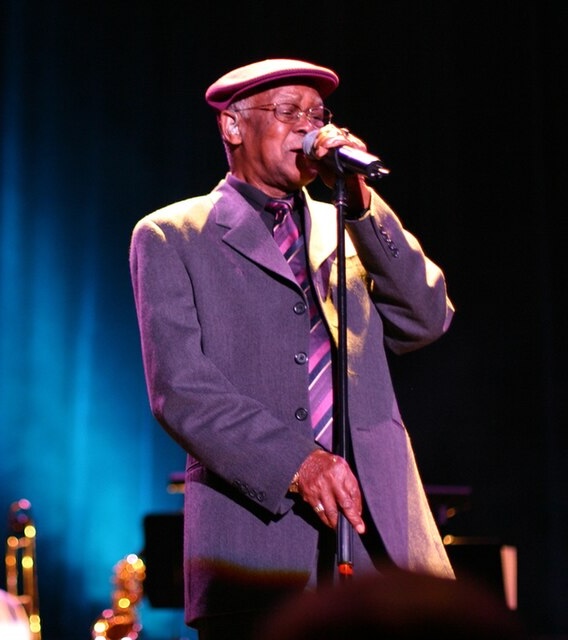
It was also in the 1990s that the Buena Vista Social Club movement rediscovers traditional Cuban music for a global public. Having recorded centenarian and forgotten musicians from the Guanabacoa neighborhood in Havana, their 1997 album sold over 8 million copies and inspired a film by Wim Wenders18. Ironically, this commercial success restored the global value of Cuban heritage—but without the musicians themselves benefiting widely from the money19.
New generation and reparto: the sound of crisis and renewal
The turn of the 2010s marks a turning point. After the death of Juan Formell (2014), many prominent artists left Cuba — Cimafunk, Adalberto Álvarez, Yotuel (Extodô) — leaving a void that the young fill through sheer ingenuity20. The arrival of the internet on the island in 2018 changes the game21: without a formal recording industry, new talents make their mark through Instagram, YouTube, and clips shot on smartphones.
Two phenomena coexist. First, a very high-level jazz and fusion scene: Cimafunk (Héctor Julio Pérez) fuses funk, timba and salsa with boldness that earns him international tours; brothers Diego and Fabio Abreu, 19 and 17 years old, triumph at Fábrica de Arte Cubano with traditional Haitian jazz inspired by Irakere and Eliades Ochoa22. Their group, Tributos, won the 2025 Cubadisco Opera Prima award23.
Next comes reparto, an urban subgenre born in the barrios of Havana. A fusion of reggaeton (the Puerto Rican dembow), Cuban clave and texts explicitly rooted in the street, reparto is nicknamed “the poor man’s reggaeton”24. Artists like El Taiger, Bebeshito, Wampi (Dasiel Mustelier) or Chocolate MC (pioneer with “Parapapampan” in 2010) have exported this sound to Miami, Madrid and Lima, where it has achieved considerable success25. In June 2025, Gente de Zona filled the Kaseya Center in Miami before more than 14,000 spectators, proving that the Cuban urban scene now has a major international foothold26.
The paradox is glaring: Cuba produces the most syncretic music on the continent — a mix of rumba, timba, jazz, funk, hip hop, reggaeton and folk — while suffering from structural isolation. The US embargo blocks digital payments (Spotify, which accounts for 80% of Cuban music listening, is not accessible on the island)27. Musicians must rely on intermediaries in third countries for distribution, and visas for the United States remain almost impossible28. In face of all this, Cuban creativity continues: as the singer Manolín Simonet sings in El puente, the bridge between Cubans on the island and those in exile, music remains the indestructible link.
An inheritance that does not stop
Cuban music is not museum folklore: it is today’s creative industry, fragile but alive. From the son montuno played by a tres from Guantánamo to reparto produced in a makeshift studio at La Víbora, it continues to write pages that the whole world listens to. The island has given the world rhythms that still dance in clubs in Tokyo, Buenos Aires and Berlin — not as a curiosity, but as the living foundation of global popular music.
Founding and contemporary figures
| Name | Period | Main Genre | Contribution |
|---|---|---|---|
| Arsenio Rodríguez | 1911-1970 | Son / Conjunto | Invention of the conjunto format, foundation of salsa |
| Celia Cruz | 1925-2003 | Guaracha / Salsa | Most iconic voice of Cuban music, exile in New York |
| Benny Moré | 1919-1963 | Son / Bolero / Mambo | “Barbaro del Ritmo”, master of all Cuban genres |
| Juan Formell | 1942-2014 | Timba | Founder of Los Van Van, father of timba |
| José Luis Cortés | born 1954 | Timba | Founder of NG La Banda, inventor of the term |
| Ibrahim Ferrer | 1927-2005 | Son / Buena Vista | Voice of the world rediscovery in 1996 |
| Compay Segundo | 1907-2003 | Son / Trova | Icon of the Buena Vista Social Club generation |
| Cimafunk | born 1983 | Timba / Funk / Jazz | New generation, international tours |
| Los Van Van | 1969-present | Timba | Most popular orchestra in Cuba, still active |
| Gente de Zona | 2002-present | Cubatón / Urbano | First Cuban duo to fill a venue in Miami |
Sources and references
-
Sáenz Coobat, C. & Vinueza, M. E., Oral Traditions of Cuba, Islands of History, accessed October 25, 2025. https://islandsofhistory.org/volume-2/oral-traditions-of-cuba/ ↩︎
-
Ortiz, Fernando, Counterpoint, Tobacco and Sugar, 1940; accessed via Duke University Press, Cuban Music from A to Z, 2021. https://www.dukeupress.edu/cuban-music-from-a-to-z ↩︎
-
Manuel, Peter & Largey, Michael, Caribbean Currents, 3rd edition, Temple University Press, 2016, chapter 2. ↩︎
-
Bensignor, François, Les Musiques du monde, Larousse, 2002, chapter 7 (Caribbean). ↩︎
-
Sáenz Coobat & Vinueza, 2012, op. cit. ↩︎
-
DAHR — Discography of American Historical Recordings, notice Arsenio Rodríguez. https://adp.library.ucsb.edu/index.php/mastertalent/detail/105970/Rodriguez_Arsenio ↩︎
-
Manuel & Largey, 2016, op. cit., p. 52-58; Herencia Latina, Arsenio Rodríguez. http://www.herencialatina.com/Arsenio_Padre/Arsenio_Rodriguez.htm ↩︎
-
Manuel & Largey, 2016, op. cit., p. 45-50. ↩︎
-
Manuel & Largey, 2016, op. cit., p. 58-62. ↩︎
-
Herencia Latina, Celia Cruz; Wikipedia, Celia Cruz, accessed October 25, 2025. https://en.wikipedia.org/wiki/Celia_Cruz ↩︎
-
CubaNet, Benny Moré : el Bárbaro del Ritmo a más de un siglo de su nacimiento, August 24, 2022. https://s3.eu-central-1.amazonaws.com/qurium/cubanet.org/cultura-benny-more-el-barbaro-del-ritmo-a-mas-de-un-siglo-de-su-nacimiento.html; Diario de Cuba, Benny Moré : genio y figura. https://diariodecuba.com/cultura/1361660053_282.html ↩︎
-
Wikipedia ES, Benny Moré, accessed October 25, 2025. https://es.wikipedia.org/wiki/Benny_Mor%C3%A9 ↩︎
-
Music of Cuba, Wikipedia, accessed October 25, 2025. https://en.wikipedia.org/wiki/Music_of_Cuba ↩︎
-
Timba.com, NG La Banda. https://www.timba.com/artists/ng-la-banda?lang=en-US; Redalyc, Somos Cubanos! Timba cubana and the construction of national identity, accessed October 25, 2025. https://www.redalyc.org/pdf/822/82200903.pdf ↩︎
-
Redalyc, op. cit.; Manuel & Largey, 2016, op. cit., p. 70-78. ↩︎
-
Timba.com, Los Van Van. https://www.timba.com/artists/losvanvan?lang=en-US; Manuel & Largey, 2016, op. cit., p. 62-68. ↩︎
-
Timba.com, NG La Banda. https://www.timba.com/artists/ng-la-banda?lang=en-US ↩︎
-
Wikipedia, Music of Cuba, op. cit.; FROM SON TO SALSA, Cambridge Core. https://www.cambridge.org/core/services/aop-cambridge-core/content/view/13D08F56E2BCFACD2948AB02876EBC4F/S002387910002015Xa.pdf ↩︎
-
Music of Cuba, Wikipedia, op. cit. ↩︎
-
AP News, A new generation of musicians is revitalizing the music scene in Cuba, 2025. https://www.ap.org/news-highlights/spotlights/2025/a-new-generation-of-musicians-is-revitalizing-the-music-scene-in-cuba/ ↩︎
-
AP News, op. cit.; NYT, Cellphones and Internet Come to Cuba, December 5, 2018. https://www.nytimes.com/2018/12/05/world/americas/cuba-cellphones-internet.html ↩︎
-
AP News, 2025, op. cit.; Facebook, Abreu Brothers: Cuba’s Young Jazz Stars. https://www.facebook.com/bellyofthebeastcuba/videos/abreu-brothers-cubas-young-jazz-stars/915292164155665/ ↩︎
-
Facebook, op. cit. ↩︎
-
Billboard, Reparto Music Is Cuba’s New Urban Movement, accessed October 25, 2025. https://www.billboard.com/lists/reparto-music-artists-to-know-cuban-urban-movement/ ↩︎
-
Billboard, op. cit.; Cuba On Record, Timba: The Global Music Phenomenon. https://cubaonrecord.substack.com/p/timba-the-global-music-phenomenon ↩︎
-
Billboard, op. cit. ↩︎
-
Cuba 50, Damage to the culture sector by the US blockade against Cuba amounts to 195 million dollars in 2024, September 18, 2025. https://cuba50.org/2025/09/18/damage-to-the-culture-sector-by-the-us-blockade-against-cuba-amounts-to-195-million-dollars-in-2024/ ↩︎
-
Cuba 50, op. cit.; Cubadebate, Cubadebate, October 31, 2024. http://www.cubadebate.cu/especiales/2024/10/31/musica-cubana-transformacion-necesaria-y-cambio-de-mentalidad/ ↩︎