Biography
Ibrahim Ferrer
Ry Cooder spots an old man polishing shoes on a bench in Havana, wearing a Kangol hat. The American guitarist needs a bolero singer. Ibrahim Ferrer is seventy years old.1 He sings a phrase, and Nick Gold, head of the label World Circuit, whispers: “I’ve heard the best; Ibrahim is among them.” On this evening in 1996, an forgotten man enters a studio. The whole world will discover him twenty years too late.
In brief
| Full name | Ibrahim Ferrer |
| Birth | February 20, 1927, San Luis (Santiago de Cuba), Cuba |
| Death | August 6, 2005 (78 years), Havana, Cuba |
| Field | Sound, bolero, guaracha |
| Iconic works | Dos Gardenias, Silencio, Buenos Hermanos |
| Awards | Latin Grammy for Best New Artist (2000), Grammy for Best Traditional Tropical Album (2003) |
Key dates
| Year | Event |
|---|---|
| 1927 | Birth in San Luis, near Santiago de Cuba, during a club social party |
| 1939 | Orphan at twelve years old, sells newspapers, forms his first group Los Jóvenes del Son |
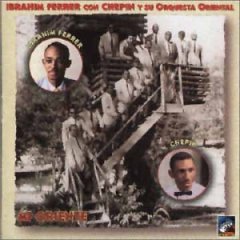
| 1955 | Local hit “El platanal de Bartolo” with Chepín y su Orquesta Oriental |
| 1959 | Follows Pacho Alonso to Havana; the group becomes Los Bocucos |
| 1991 | Retires, lives on his pension and shoe shining |
| 1996 | Ry Cooder recruits him for the Buena Vista Social Club sessions |
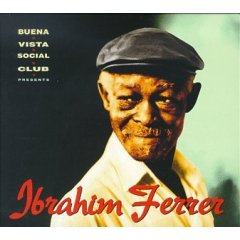
| 1999 | First solo album: Buena Vista Social Club Presents Ibrahim Ferrer |
| 2000 | Latin Grammy for Best New Artist (at 72 years old) |
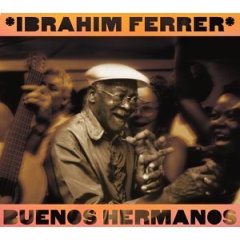
| 2003 | Buenos Hermanos — Grammy; visa refusal for the ceremony |
| 2005 | Dies after a European tour, at 78 years old |
A child of sound, an interrupted bolero
Ibrahim Ferrer is born on February 20, 1927, in the middle of a celebration, and his mother names him with an Arabic first name out of fascination for the Arab world.2 His heritage is a Cuban crucible: African, French, Spanish, and Chinese. He leaves school and sells newspapers on the streets of Santiago. A year later, his cousin proposes forming a duo for New Year’s Eve. “We won fifty pesos, we got drunk, we thought we had won the world,” he would remember.
He progresses through Santiago orchestras, notably Chepín y su Orquesta Oriental, where he records the hit “El platanal de Bartolo” in 1955. But he is not credited on the record, an injustice that haunts him. In 1957, he joins Havana and Pacho Alonso’s group, renamed Los Bocucos. He will spend thirty years there. The problem: this group plays guaracha and son, driving rhythms. Ferrer is a bolero in his soul — that slow, intimate Cuban romance genre, demanding silence and space between phrases. His boss repeats to him: “Your voice is only suitable for dance songs.”3 He will keep this refusal forever.
Retired in 1991, Ferrer lives in Cayo Hueso and subsists on his pension and shoe shining. His apartment houses an altar dedicated to Saint Lazarus, or Babalú-Ayé, the saint of Santería. His own are around him every day, but his name is forgotten.
The resurrection
In 1996, Juan de Marcos González, a passionate traditional son enthusiast, organizes cover sessions with Ry Cooder.4 They need an old-school bolero singer. They find him on his bench in Cayo Hueso. He refuses at first: “I was not interested, I suffered a lot through music.” But de Marcos returns, insists. Ferrer accepts. Barely in the studio, he sings Dos Gardenias, a bolero by Isolina Carrillo. Nick Gold, head of the label, is moved: “We immediately knew we had one of the strongest songs on the album.”
Buena Vista Social Club sells more than six million copies. Wim Wenders’ documentary makes Ibrahim Ferrer the iconic face of the renewal of Cuban music. His first solo album reaches second place on the Billboard. In 2000, at 72 years old, he wins the Latin Grammy for Best New Artist. In 2003, Buenos Hermanos offers him a second Grammy, but post-9/11 restrictive laws deny him a visa: he cannot attend the ceremony.
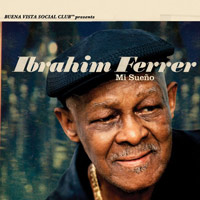
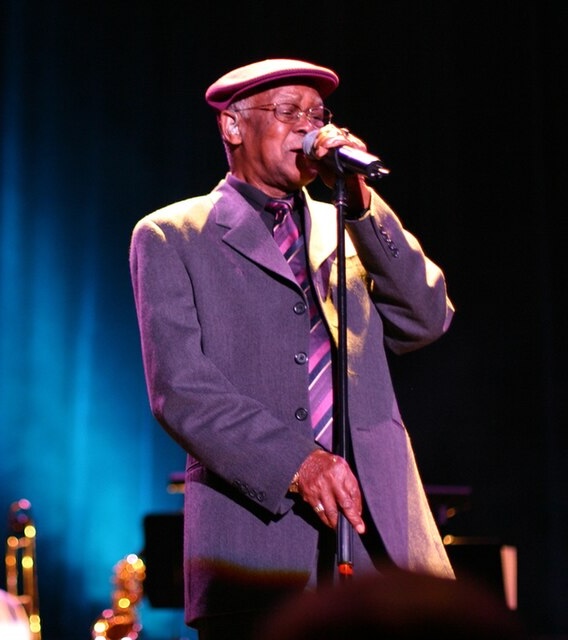
Until his death, Ferrer travels European roads with his orchestra. Mi sueño, dedicated to boleros, is released posthumously in 2007 — the dream of a whole life, finally accomplished. “I waited for my moment,” he said in 2003. “And now, my luck has arrived.”2
Legacy
Ibrahim Ferrer dies on August 6, 2005, from multi-organ failure at the CIMEQ hospital in Havana, after a European tour. Ry Cooder summarizes: “Ibrahim sings with all his inside. You hear who he is on every note. His species is rare today.”3
His soft, settled voice, mastering silence like an instrument, remains one of the most beautiful incarnations of Cuban bolero. His journey — from the shoe bench in Cayo Hueso to concert halls around the world — remains one of the most extraordinary resurrections in popular music history.
Major works
| Work | Year | Why it is essential |
|---|---|---|
| Buena Vista Social Club | 1997 | Collective album that propels Ferrer globally, produced by Ry Cooder |
| Dos Gardenias | 1997 | Bolero by Isolina Carrillo, Ferrer’s vocal masterpiece |
| Buena Vista Social Club Presents Ibrahim Ferrer | 1999 | First solo album, the rediscovery in album form |
| Buenos Hermanos | 2003 | Second collaborative album, Grammy |
| Mi sueño | 2007 | Posthumous album dedicated to the bolero, the dream of a whole life |
Sources and references
-
World Circuit, BVSC presents Ibrahim Ferrer, official site, https://worldmusiccentral.org/artist-profiles-ibrahim-ferrer ↩︎
-
NPR, The Tavis Smiley Show, interview with Ibrahim Ferrer, 2003, https://www.kosu.org/arts-culture/2005-08-07/fame-came-late-for-buena-vistas-ferrer ↩︎ ↩︎
-
Buena Vista Social Club, Ibrahim Ferrer, official site, https://www.buenavistasocialclub.com/musicians/ibrahim-ferrer/ ↩︎ ↩︎
-
Ben Ratliff, Ibrahim Ferrer, 78, Cuban Singer in Buena Vista Social Club, Dies, The New York Times, August 8, 2005 ↩︎