Biography
Pierrette Adams
In 1994, on a television studio in Côte d’Ivoire, a flight attendant watches a report about a little boy scalded by his stepmother. The images haunt her — she grew up in a blended family, those memories never fade. That same evening, she writes the first lines of a song that will propel Pierrette Adams to the forefront of the African stage.
In brief
| Full name | Alméida Duarte Pierrette Roland |
| Birth | May 5, 1962, Pointe-Noire, Republic of the Congo |
| Aliases | Mère Z, Mama Z’allumettes |
| Nationalities | Congolese, Ivorian |
| Field | Singer, musician (soukous, zouk, ndombolo) |
| Signature works | “Journal intime”, “Anesthésie”, “Coma profond” |
| Distinctions | UNICEF Côte d’Ivoire Ambassador (2001), Djembé d’Or 5 (2004) |
Key dates
| Year | Event |
|---|---|
| 1962 | Birth in Pointe-Noire, Republic of the Congo |
| 1984-90 | Flight attendant career with Air Afrique, travels across Africa and the Americas |
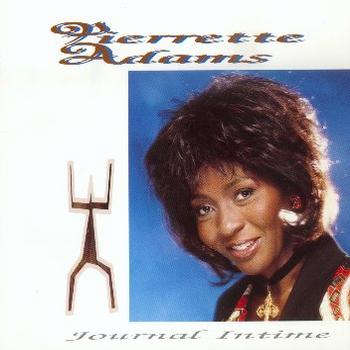
| 1994 | Release of Journal intime, first album, inspired by a case of child abuse |
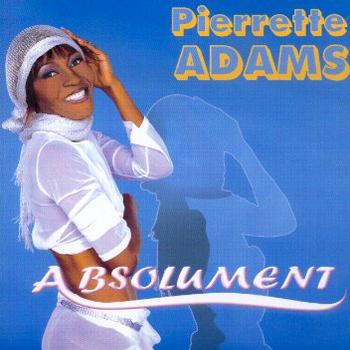
| 1996-2003 | Success in West Africa: Mal de mère, Je vous salue maris, Absolument |
| 2001 | Appointed UNICEF Ambassador in Côte d’Ivoire for the fight against poverty |
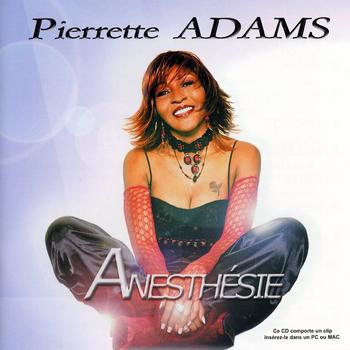
| 2003 | Move to Dakar; Anesthésie, nominated for Kora All Africa Music Awards |
| 2014 | Children of Africa Grand Prize; peace concert with Alpha Blondy in Abidjan |
From the B747 cockpit to Abidjan studios
Pierrette Adams was born on May 5, 1962, in Pointe-Noire, the industrial port of the Republic of the Congo. Her hometown pulsed then to the rhythm of Congolese rumbas and the first soukous chords that shaped the local scene. The little girl did not grow up in a family of musicians — nor at church, in the choirs. Her only access to sound came from the radio and records she listened to secretly. A teenager in Brazzaville, she crossed paths with Abeti Masikini, the great Congolese star, and already admired Mpongo Love. These encounters set the scene: music is not a choice, it is a silent certainty.
Paris exiled her for a few years of university studies. A college friend proposed an internal competition: Air Afrique, the still-active pan-African airline. Pierrette accepted. On board a B747 connecting Lagos, Paris, New York and Dakar, she discovered the world — cultures, languages, inequalities. And on board too, she met her future husband. They had two sons. For years, the flight attendant flew without ever thinking about performing under spotlights. She discovered, listened, absorbed — but the stage remained a world that did not concern her.
The spark happens in Côte d’Ivoire, where the family had settled for her husband’s work. Pierrette Adams watches on television a shocking report about a little boy nicknamed Mohamed, scalded and disfigured by his stepmother. The emotion overwhelms her — her childhood in a blended family resurfaces abruptly, according to the official website. Revolted, she takes action and writes a song. She contacts Boncana Maïga, arranger of the Africando project, who becomes her regular collaborator. Maïga suggests she compose five other tracks to form a mini-album. The result, Journal intime, is released on February 19, 1994, by Sonodisc. The song “Mohamed” achieves considerable success, followed by the “Caterpillars”. The first attempt becomes a masterpiece.
Her entourage does not let go, insists that she really launch herself. Pierrette takes singing lessons to refine her technique. The style of the Congolese native, now an Ivorian by adoption, absorbs the rhythms she has traversed: Congolese zouk, Ivorian ndombolo, rumba. The singer tackles without hesitation the themes that burn her: abuse, male infidelity, justice for women. Between 1996 and 2003, she releases Mal de mère, Je vous salue maris and Absolument, which crystallize her popularity in West Africa. On stage, she invents the déchirage — wearing ripped jeans so young fans would not be ashamed to approach her. Her orchestra, Les Caterpillars led by Kanda Vualu on guitar, accompanies her on intensive tours.
Anesthésie and beyond: a citizen of the continent
In September 2002, her husband is transferred to Dakar. Pierrette Adams transfers her base to Senegal and continues touring. Anesthésie (2003), with Atoll Music, marked a turning point: the album addresses domestic violence with rare frankness in African pop. It receives a warm welcome and earns the artist a nomination for Kora All Africa Music Awards. The record wins the Djembé d’Or 5 in 2004, awarded “for its quality contribution to the promotion of culture”. Her social commitment is not a backdrop: UNICEF Ambassador in Côte d’Ivoire since 2001, she campaigns against poverty and for peace. Activities in favor of homeless children in Abidjan are interrupted by political unrest — but the commitment remains. Coma profond (2007) and 7e Jour (2012), featuring the duo “Children of Paradise” with Alpha Blondy, confirm that an artist who began with a rant has not finished writing. In 2014, she receives the Children of Africa Foundation Grand Prize and shares the stage for a peace concert. The single “Sauté sauté” featuring Nigerian Flavour confirms that she is truly there.
Major Works
| Work | Year | Why It’s Essential |
|---|---|---|
| Journal intime | 1994 | First album inspired by a real case of child abuse; establishes Pierrette Adams on the African stage |
| Je vous salue maris | 1999 | Acidic satire of marital relationships; becomes a Pan-African standard |
| Anesthésie | 2003 | Major artistic turning point; addresses domestic violence with frankness; Djembé d’Or 5 |
| Coma profond | 2007 | Double album with the duo “Children of Paradise” by Alpha Blondy; exploration of world music |
Legacy and Influence
Beyond music, her humanitarian commitment — as an ambassador for the Pnud, Grand Prix Children of Africa — shows that an artist can combine art and action. Music in Africa describes her as an « eternal traveler ». Generations of Congolese and Ivorian musicians claim her legacy: the one who dared to sing the secrets of a burned child has never stopped doing so since.
Sources and References
- « Pierrette Adams — Biographie », Wikipédia en français, https://fr.wikipedia.org/wiki/Pierrette_Adams, accessed November 19, 2026.
- « Pierrette Adams », Wikipedia (EN), https://en.wikipedia.org/wiki/Pierrette_Adams, accessed November 19, 2026.
- « Pierrette Adams », Musiques d’Afrique (Frank Bessem), https://musiques-afrique.net/congo/art_adams.html, accessed November 19, 2026.
- « Pierrette Adams », Music in Africa, https://musicinafrica.net/node/8389, accessed November 19, 2026.
- « Biographie », Official Website of Pierrette Adams, https://www.pierrette-adams.com/biographie-_r_23.html, accessed November 19, 2026.
- « Pierrette Adams », Qobuz, https://qobuz.com/us-en/interpreter/pierrette-adams/24108, accessed November 19, 2026.