Biography
Reddy Amisi
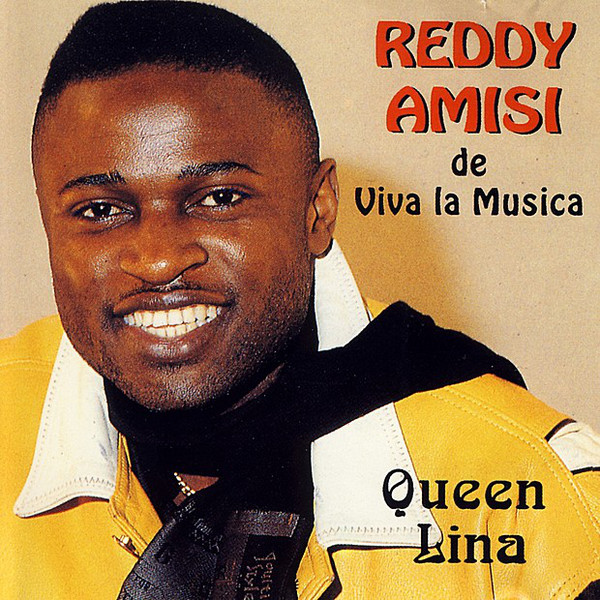
In 1982, when Kester Emeneya and a dozen musicians left Viva La Musica at the same time, Papa Wemba found himself in a precarious position. It was then that the young Reddy Amisi, 22 years old with a deep voice and already shaped by the singing churches of Kinshasa, took the leap. Twenty years later, while most of his colleagues had jumped into competing orchestras, Amisi remained faithful. His journey — from church choir member to lead singer of the legendary orchestra — is that of a musician who chose constancy over adventure.
In brief
| Full name | Rémy Jules Namwisi Ngoy |
| Birth | May 5, 1960, Kinshasa (Democratic Republic of the Congo) |
| Nickname | Baïlo Canto (given by Papa Wemba) |
| Genre | Congolese rumba and soukous — dance music originating from the Congo, blending son cubano and African rhythms |
| Notable works | “Bomengo Ata Kala”, “Zakina”, “Orphelin” |
| Awards | 40 years of career (celebrated in 2023); commitment to the rights of Congolese artists |
Key dates
| Year | Event |
|---|---|
| 1960 | Born in Kinshasa, son of Benjamin Luyangusu and Albertine Nkesa; family of eight children |
| 1975 | Began singing in the small choir group Chem Chem Yetu |
| 1976–1980 | Successive stints in the groups Sambole Master Ngombe, Juvenil, Likamuisi and No Lingwala |
| 1982 | Joined Viva La Musica on October 4 as a singer and songwriter |
| 1985–1990 | World tour with Viva La Musica (Japan, United States, Australia); meeting the great artists of the time |
| 1992–1994 | Remained loyal to Papa Wemba when several members created the Nouvelle Génération de la RDC |
| 2001–2002 | Left Viva La Musica; created the group Casa do Canto |
| 2018 | Spoke before the President of the National Assembly to demand a royalty system for artists |
| 2022 | Release of the tenth solo album, Bailo Canto, in homage to his mentor |
Origins and training: from church to grand orchestra
Born in Kinshasa in 1960 into a family of eight children, Reddy Amisi — his real name is Rémy Jules Namwisi Ngoy — grew up in the Zairian capital listening to Bob Marley and Jimmy Cliff. From his adolescence, he joined the Christian small choir group Chem Chem Yetu, where he learned the basics of harmonic singing. His talent was quickly spotted: a year later, he joined Sambole Master Ngombe as a small choir member, then moved on to youth music formations — Juvenil (1977), Likamuisi (1978) and finally Touche Pas de Lingwala in 1980. It was in this last group that he met Koffi Olomide, who would become his musical godfather and introduce him to Papa Wemba.
As early as 1977, the 17-year-old had already impressed Papa Wemba with the quality of his voice. The latter invited him to join his orchestra, but Amisi, judging that he was still too young and wishing to continue his schooling, declined the offer. Providence caught up with the young man five years later.
Revelation and consecration: twenty years of loyalty to Viva La Musica
On October 4, 1982, following the spectacular departure of Kester Emeneya and a dozen musicians, Reddy Amisi finally joined Viva La Musica. He entered as a performing singer and songwriter, and the Congolese public did not take long to adopt him. His first song in the group, “Kotida”, quickly earned him the nickname of favorite among Congolese pop music fans. Papa Wemba then nicknamed him Baïlo Canto during a concert in 1984, on the occasion of the performance of “Petite Gina”.
For two decades, Amisi traveled the world with Viva La Musica: Europe, Japan (1986), United States, Australia. He rubbed shoulders with Salif Keita, Youssou N’Dour, Peter Gabriel and Paul Simon. It was a formative world tour for the young musician from a modest background. Meanwhile, Papa Wemba settled him with him in France in 1987 and Amisi moved through the various Parisian formations — Viva La Musica International, Viva la Musica Cour des Grands, Molokaï Stars. He became the confidant and one of his mentor’s most faithful musicians.
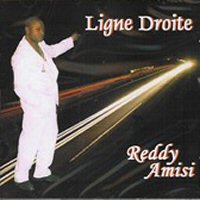
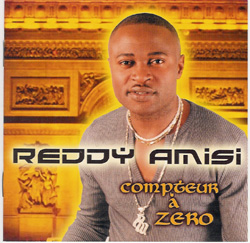
While remaining a member of Viva La Musica, he embarked on a solo career that truly took off with the album Zakina in 1987. The 1990s saw a meteoric success: “Bomengo Ata Kala”, “Orphelin” and “Prudence” became classics of the Congolese repertoire. Amisi also composed for the grand orchestra, with titles such as “Maria Valencia”, “Madilamba” or “Mère supérieure”. He is credited with approximately one hundred and fifty compositions in total.
Evolutions and final period: the mass educator
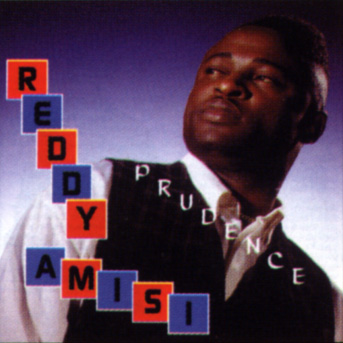
In 2001, Amisi left Viva La Musica to launch his own group, Casa do Canto. His departure coincided with a difficult period for Papa Wemba’s orchestra, but Amisi affirmed he never broke with his mentor. In 1994, he had attempted a similar experience by creating his own formation and recording the album Prudence; Papa Wemba, displeased with this initiative, had taken over the formation and renamed it Nouvelle Ecriture. Lesson learned.
With Casa do Canto, Amisi recorded several albums and continued to advocate for music with a message. He defined himself without ambiguity: “I am proud to claim my music, the music from home.” In his concerts in Canada in 2008, his music was described as oscillating between rumba and soukous, addressing social themes — poverty, injustice, education. Some fans have qualified him as a mass educator.
Major Works
| Work | Year | Why It’s Essential |
|---|---|---|
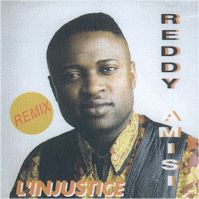
| “Bomengo Ata Kala” | 1993 (album Injustice) | hymn to perseverance, still performed live forty years after its initial composition |
| “Zakina” | 1987 | fundamental hit, composed at age 17; title that launched his solo career |
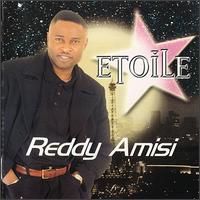
| “Orphelin” | 1998 (album Étoile) | message-driven song on vulnerability and social responsibility, a recurring theme in his repertoire |
| Bailo Canto | 2022 | return of an artist after twelve years away, posthumous tribute to Papa Wemba, featuring Sam Mangwana |
Legacy and Influence
Reddy Amisi embodies a certain idea of loyalty in an industry where orchestra rotations are commonplace. His twenty consecutive years with Viva La Musica remain a rare example of artistic commitment. Beyond his musical career, he played a pioneering role in defending the copyright rights of Congolese artists, advocating since 2018 for a legal framework protecting creators against piracy. His music, blending traditional rumba and modern soukous, continues to be played throughout the Zaire-Congolese space and its diaspora. Young Congolese artists who claim the school of Papa Wemba — Koffi Olomide, Werrason, Ferre Gola — indirectly carry Amisi’s influence, who composed “Miss Okito” at sixteen and “Zakina” at seventeen, titles that the Congolese public still listens to today.
Sources and References
- « Reddy Amisi », Wikipédia, https://fr.wikipedia.org/wiki/Reddy_Amisi, accessed 18 November 2026.
- « Interview. Reddy Amisi : « Brazzaville la ville magnifique, j’arrive » », Adiac Congo, https://www.adiac-congo.com/content/interview-reddy-amisi-brazzaville-la-ville-magnifique-jarrive-141873, accessed 18 November 2026.
- « Reddy Amisi », Discogs, https://discogs.com/artist/1135801-Reddy-Amisi, accessed 18 November 2026.
- « Reddy Amisi (Congo-Kinshasa) », Musiques d’Afrique (Frank Bessem), https://www.musiques-afrique.net/rdc/art-amisi.html, accessed 18 November 2026.
- « Amisi Reddy », Africultures, https://www.africultures.com/personnes?no=32744, accessed 18 November 2026.
- « Reddy Amisi, légende de la Rumba congolaise, célèbre ses 40 ans de carrière », Africa Radio, https://www.africaradio.com, accessed 18 November 2026.
- « Reddy Amisi, 40 ans de carrière et pas une ride », Media Congo, https://www.mediacongo.net/article-actualite-119863_reddy_amisi_40_ans_de_carriere_et_pas_une_ride.html, accessed 18 November 2026.