Biography
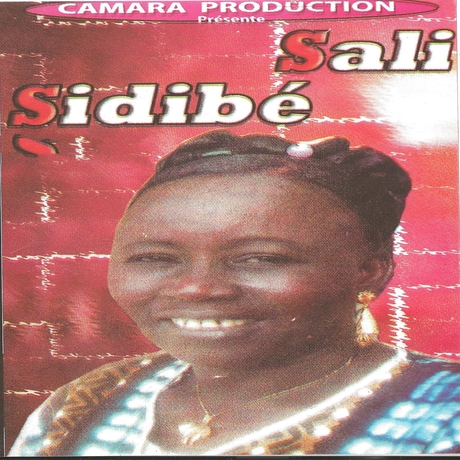
Sali Sidibé
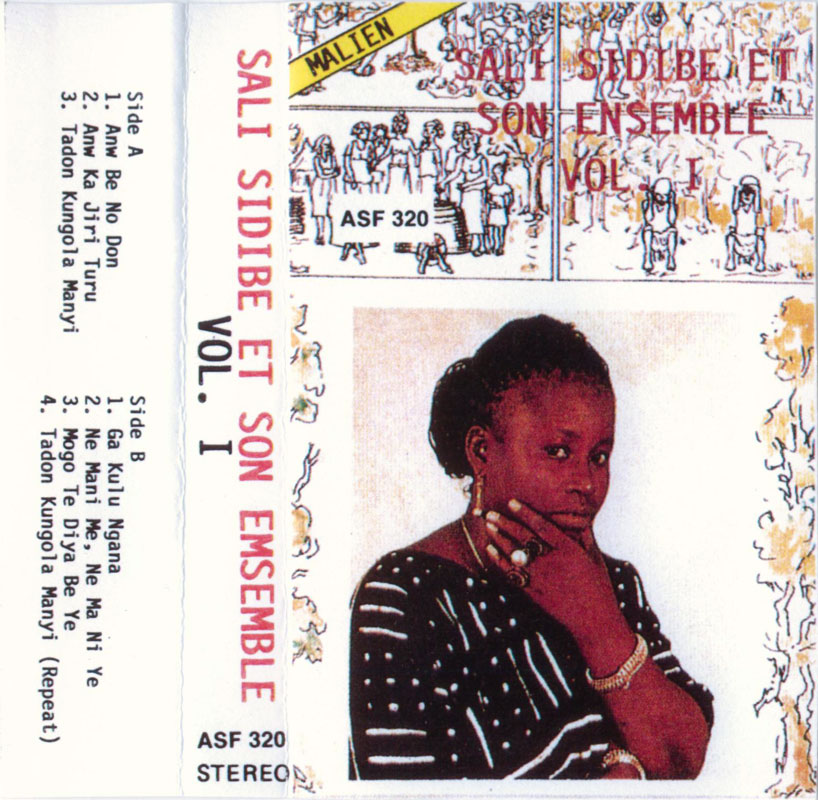
In 1987, her cassette Tounkan Magni made a sensation in Bamako even before Oumou Sangaré emerged. This powerful-voiced singer, from southern Mali, tackles social issues with a frankness that stands out. She is soon nicknamed “the black pearl of Wassoulou.”
In brief
| Full name | Salimata Sidibé, known as Sali Sidibé |
| Birth | March 10, 1960, village near Bamako (Mali) |
| Death | February 8, 2019, Bamako (Mali) |
| Field | Wassoulou singer — this bluesy style originating from southwestern Mali, carried by women and animated by the kamelengoni (young man’s harp) |
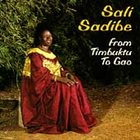
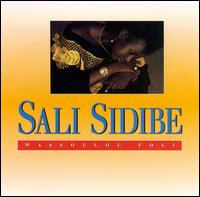
| Iconic works | Wassoulou Foli, From Timbuktu to Gao |
| Honors | Guardian figure of Malian music, beloved by the public and critics |
Key dates
| Year | Event |
|---|---|
| 1960 | Birth of Salimata Sidibé in Yanfolila, in southern Mali |
| 1970–1972 | Joins the National Instrumental Ensemble of Mali, pioneering Wassoulou artist in the group |
| 1980 | First album, L’enfant chéri du Wassolon (Disco Club de la Bagoué) |
| 1987 | Cassette Tounkan Magni, huge local success before Oumou Sangaré |
| 1993–1994 | Contributions to compilations The Wassoulou Sound: Women of Mali (Stern’s); first international album Wassoulou Foli |
| 1990s | Tours in Europe; her group remains blocked for months in Congo-Brazzaville |
| 2003–2019 | Alliance with President ATT, then isolation following his overthrow in 2012 |
From a rejected vocation to a contested glory
Salimata Sidibé grew up in an environment where music was not destined for a noble girl. Her father, a conservative diviner, forbade her from singing. “If we are noble, we do not sing,” she recalls in an interview with Banning Eyre. “But it is God who gave me this gift,” she insists, and the villagers plead with her to sing. She eventually lives with a commander who encourages her talent — a foundational episode for her rebellious personality. In the 1970s, she joins the National Instrumental Ensemble of Mali, among the first Wassoulou singers in the group, alongside Coumba Sidibé. The kamelengoni — a six-string harp from the hunting tradition — is still a young instrument, at the heart of an expanding style.
In 1987, Sali forms her own ensemble and records Tounkan Magni, a resounding success in Mali. By the end of the 1990s, compilations like The Wassoulou Sound: Women of Mali (Stern’s Music) reveal her voice to a global audience: tracks such as “Wale Gnouma Don,” “Djen Magni,” and “Ntanan” make her an international artist. Wassoulou Foli (Stern’s) and From Timbuktu to Gao (Shanachie) follow immediately. But her European tours are abruptly interrupted when she and her group remain blocked for months in Congo-Brazzaville during a civil unrest episode. “They made war against me,” she will recount. “Just as they did to Amadou Touré. It was quite pathetic.”
In the 2000s, she rebuilds her ensemble with the kamelengoni Harouna Samaké, whom she had trained as a youth. She performs at Bamako weddings and on major stages, her stage charisma dominating every audience. A political enthusiast, she becomes one of President Amadou Toumani Touré’s (ATT) favorite singers in the early 2000s. When ATT is overthrown by a coup in 2012, Sali pays a heavy price: “They made war against me.” In 2016, at her last meeting with Banning Eyre, already ill but “full of energy,” she claims to have written enough songs for five albums — titles that remain unknown today.
Major works
| Work | Year | Why it is essential |
|---|---|---|
| Wassoulou Foli (Stern’s Africa) | 1993 | First international album; a raw portrait of female Wassoulou |
| The Wassoulou Sound: Women of Mali (compilation, Stern’s) | 1993–1994 | The compilations that revealed Sali to the world, a foundational moment for Wassoulou |
| From Timbuktu to Gao (Shanachie) | 1993–1994 | Expanded international distribution, reissue of her album N’Daya International |
| Tounkan Magni (Syllart cassette) | 1987 | First major local success, avant-garde for its time |
Legacy and influence
Sali Sidibé belongs to the first generation of Wassoulou singers who paved the way for the style. Her refusal of systematic praise from griots and her political frankness make her a counter-model, distinguished from Oumou Sangaré as well as Nahawa Doumbia. Her collaboration with Harouna Samaké perpetuates a form of musical transmission based on fidelity rather than market conventions. Afropop Worldwide paid tribute to her in February 2019, and researchers continue to identify her missing tracks in Malian archives.
Sources and references
- “Sali Sidibé (1960–2019) — Mali”, Musiques d’Afrique (Frank Bessem), https://www.musiques-afrique.net/mali/art-sidibe-sali.html, accessed November 6, 2025.
- “Ayub Ogada and Sali Sidibe: RIP”, Afropop Worldwide, Banning Eyre, https://www.afropop.org/articles/ayub-ogada-and-sali-sidibe-rip, accessed November 6, 2025.
- “Malian singer Sali Sidibé dies at 59”, World Music Central, https://worldmusiccentral.org/malian-singer-sali-sidibe-dies-at-59/, accessed November 6, 2025.
- “Sali Sidibe — Biography, Discography”, AllMusic, https://www.allmusic.com/artist/sali-sidibe-mn0000292617, accessed November 6, 2025.
- “Sali Sidibé discography”, Rate Your Music, https://rateyourmusic.com/artist/sali-sidibe, accessed November 6, 2025.
- “Sali Sidibe discography”, Discogs, https://www.discogs.com/artist/395994-Sali-Sidibe, accessed November 6, 2025.