Biography
Sam Fan Thomas
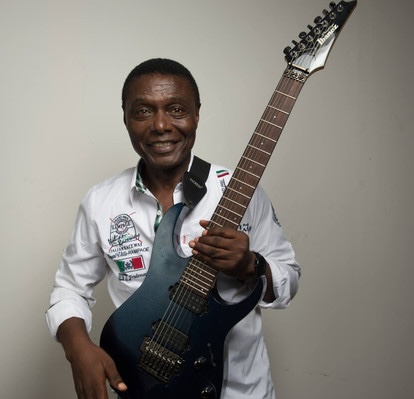
In 1984, in Lomé, a man arrived by bus after a three-week tour of West Africa. From the first chords of his guitar, thousands of dancers flocked to the square. No one mistook him for a Congolese: his raspy baritone voice, frenetic rhythm, and piercing brass bore a name — Makassi. That evening, Sam Fan Thomas made an entire generation vibrate, a style they would dance to for decades.
In brief
| Full name | Samuel Thomas Ndonfeng |
| Nickname | « the Black Tiger of New-Bell » |
| Birth | April 1952, Bafoussam, Cameroon |
| Field | Music: makossa, makassi, afro-pop |
| Signature works | “African Typic Collection”, Makassi, “Rikiatou” |
| Awards | Gold Record (1984); Canal 2’or |
Key dates
| Year | Event |
|---|---|
| 1968 | Joins Les Tigres Noirs d’André-Marie Tala in Bafoussam |
| 1976 | Leaves Les Tigres Noirs, launches solo career in Benin |
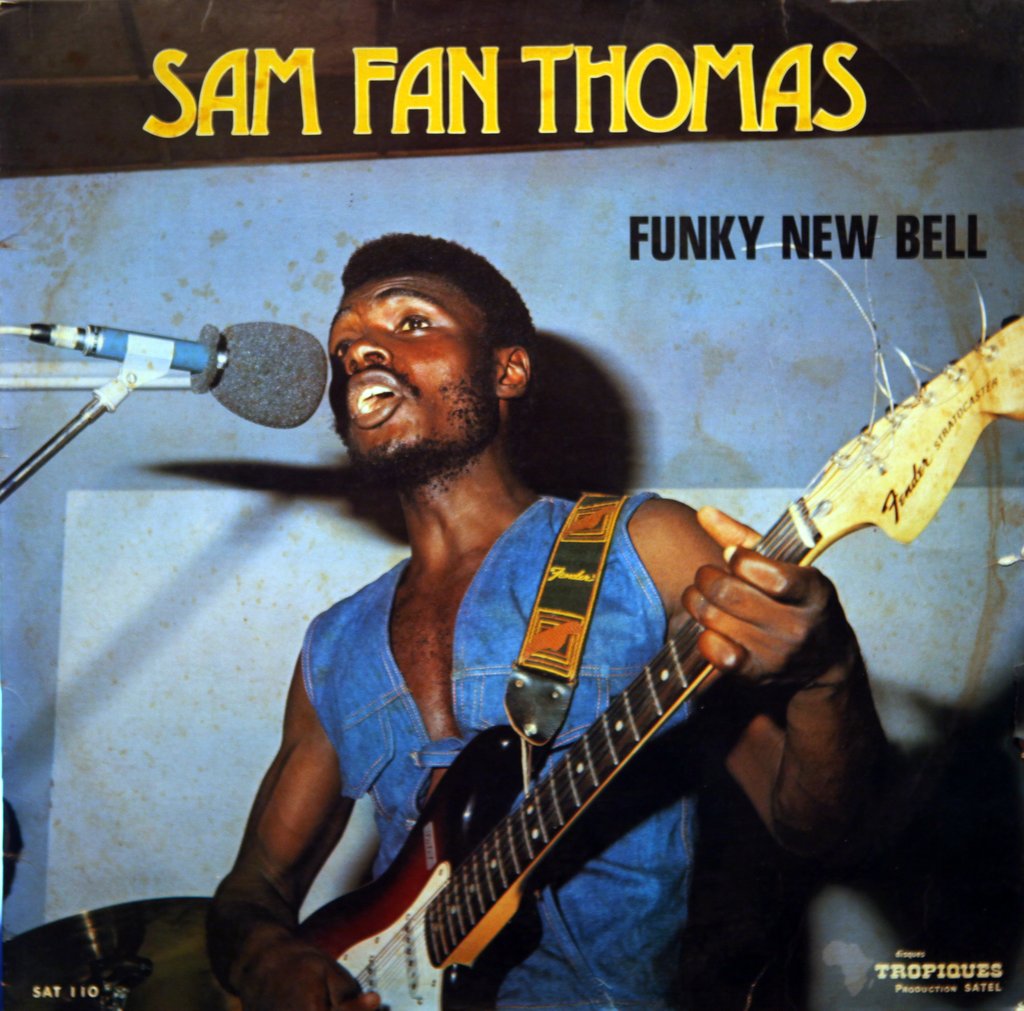
| 1978 | First album Funky New Bell on label Satel |
| 1982 | National hit “Rikiatou” in Cameroon |
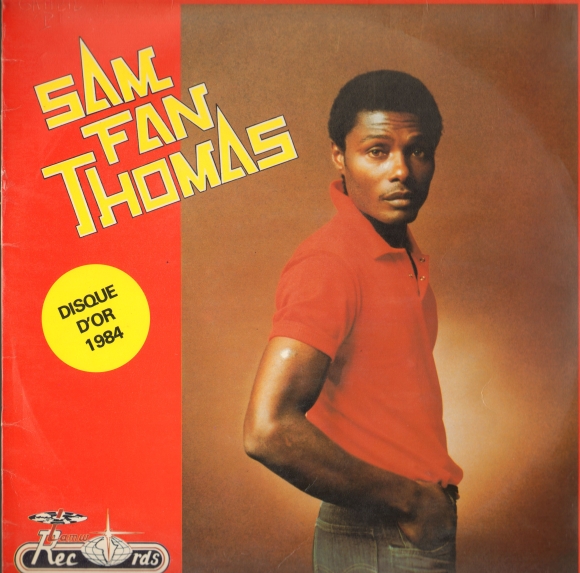
| 1984 | Album Makassi and “African Typic Collection”; gold record |
| 1986 | International tour with MBC (Makassi Band Corporation) |
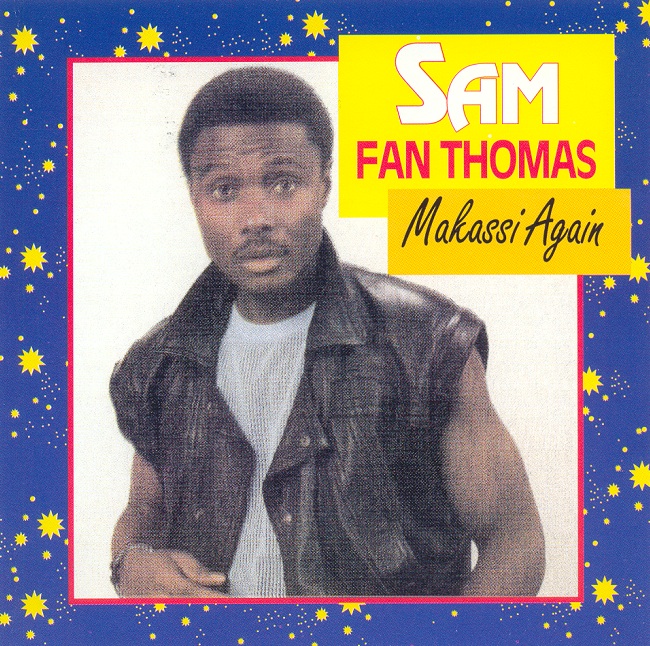
| 1988 | Makassi Again distributed by Celluloid Records |
| 2017 | Elected president of the Board of Directors of SONACAM |
From tailor to creator of makassi
Born in April 1952 in Bafoussam, Samuel Thomas Ndonfeng was spotted at a party by Kame Yougaing, bandleader of Les Tigres Noirs — the group of André-Marie Tala, a tutelary figure in Cameroonian music. The latter had developed the tchamassi, a modern rhythm based on Bamiléké folklore. Kame Yougaing immediately integrated Samuel as guitarist. To survive, he worked as a tailor in the popular neighborhoods of Douala. The nickname « Black Tiger of New-Bell » quickly designated him, borrowing from the group’s tiger and New Bell, the workers’ quarter of Douala. The group recorded in Paris and toured Senegal, allowing the young guitarist to refine his craft.
After eight years, he left the group in 1976 to attempt a solo career. His journey was arduous: he traversed West Africa, played with Nigerian Sonny Okosun, then moved to Cotonou where he joined the Black Santiagos. There he recorded his first album, Funky New Bell, published by the Beninese label Satel. Back in Cameroon in 1978, “Rikiatou” exploded across the country and confirmed his talent.
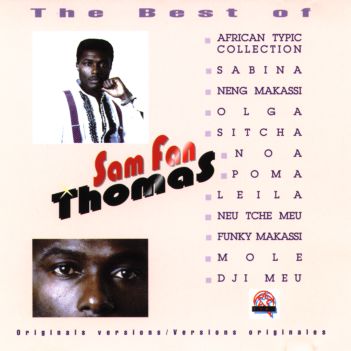
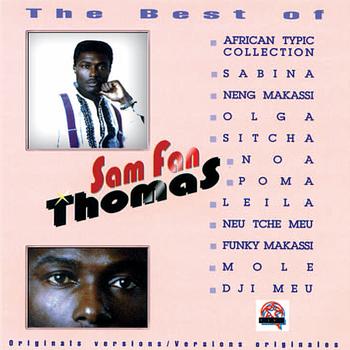
The year 1983 was a decisive turning point. Thomas settled in Paris to record Makassi under the label Tamwo Record, founded by Isidore Tamwo. The flagship track, “African Typic Collection”, is based on the melody of Franco Luambo’s classic “Boma l’heure” and is surrounded by a flamboyant arrangement — rolled guitar rhythms, sharp brass, keyboard and percussion that never stop restarting the dancer. The hit spread across Africa, France, and the Caribbean. The album received its gold record in 1984, and “African Typic Collection” surpassed one million copies sold — a record for a Cameroonian artist of the time. Sam Fan Thomas entered the extremely restricted circle of African artists who had crossed this threshold.
The makassi, named after his own style, is an uptempo makossa that fuses the Cameroonian groove with Congolese guitar, funk and soul. He stringed together hits — “Olga” (1985), “Si Tcha” (1986), “Zimo” (1988, tribute to Nelson Mandela) — and went on an international tour with his band MBC. « His baritone voice and raspy timbre made him one of the most popular artists in East Africa outside of lingala », wrote Kenyan press in the 2010s.
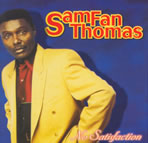
From the early 1990s, Thomas made a strategic turn: he moved from the stage to the shadow of the studio. He founded Studio Makassi Plus in Douala, where he gathered talented musicians — Kotto Bass, Ebelle Jeannot, Guy Bilong — and produced records for many young Cameroonian talents. His personal albums Emotion (1993) and No Satisfaction (1999), although published, never matched the success of the Makassi period.
Major works
| Work | Year | Why it is essential |
|---|---|---|
| “African Typic Collection” | 1984 | The pan-African hit that conquered the continent, the Caribbean and France in one season |
| Makassi | 1984 | The founding album that invented makassi — a style born from the Cameroonian groove, Congolese guitar and funk |
| “Rikiatou” | 1982 | The first national hit that propelled Sam Fan Thomas onto the Cameroonian stage |
| Makassi Again | 1988 | The tribute to Fela Kuti and Nelson Mandela, distributed internationally by Celluloid |
Legacy and influence
Sam Fan Thomas is not just a musician: he is the architect of a sound. The makassi — that rhythm which draws from André-Marie Tala’s Bamiléké folklore while borrowing Congolese guitar and American funk — exists because he forged it. Generations of Cameroonian musicians have sung, danced and recorded on this rhythm.
In East Africa, his popularity borders on the mythical. In Kenya and Tanzania, radios continue to play “African Typic Collection” as if the afternoon of forty years ago had never ceased. The young Kenyan generation still learns his lyrics by heart and would never have imagined that a Cameroonian could become their dancefloor star.
As president of SONACAM, his election in 2017 aimed to reform a copyright system he considered broken. The road was strewn with obstacles and public contestations were not lacking, such as in 2020 with accusations of too meager distribution. But his musical legacy remains intact: an artist who made Cameroon the music capital of an entire Africa, with a guitar, brass and a rhythm he created from scratch.
Sources and references
- « Sam Fan Thomas: the black tiger of New Bell », Cultural Agenda of Cameroon, https://www.agendaculturelducameroun.com/sam-fan-thomas-le-tigre-noir-de-new-bell/, accessed 15 November 2025.
- « Sam Fan Thomas makes comeback after 15 years », Daily Nation (Kenya), https://nation.africa/kenya/news/sam-fan-thomas-makes-comeback-after-15-years-543874, accessed 15 November 2025.
- Leon Jackson, « Sam Fan Thomas — Biography », AllMusic, https://www.allmusic.com/artist/sam-fan-thomas-mn0000831459, accessed 15 November 2025.
- « Sam Fan Thomas Biography », BigSong, https://www.bigsong.online/artist/sam-fan-thomas/, accessed 15 November 2025.
- « Sam Fan Thomas », Wikipedia (FR), https://fr.wikipedia.org/wiki/Sam_Fan_Thomas, accessed 15 November 2025.
- « Sam Fan Thomas », Wikipedia (EN), https://en.wikipedia.org/wiki/Sam_Fan_Thomas, accessed 15 November 2025.
- Nago Seck, « Sam Fan Thomas », Afrisson, https://www.afrisson.com/sam-fan-thomas-065/, 7 May 2007, accessed 15 November 2025.
- Armand Djaleu, « Copyright: artists demand the resignation of Sam Fan Thomas », Actu Cameroun, https://actucameroun.com/2020/01/15/droits-dauteurs-les-artistes-exigent-la-demission-de-sam-fan-thomas/, 15 January 2020, accessed 15 November 2025.