Biography
Samba Touré: the Sahel blues that never stops
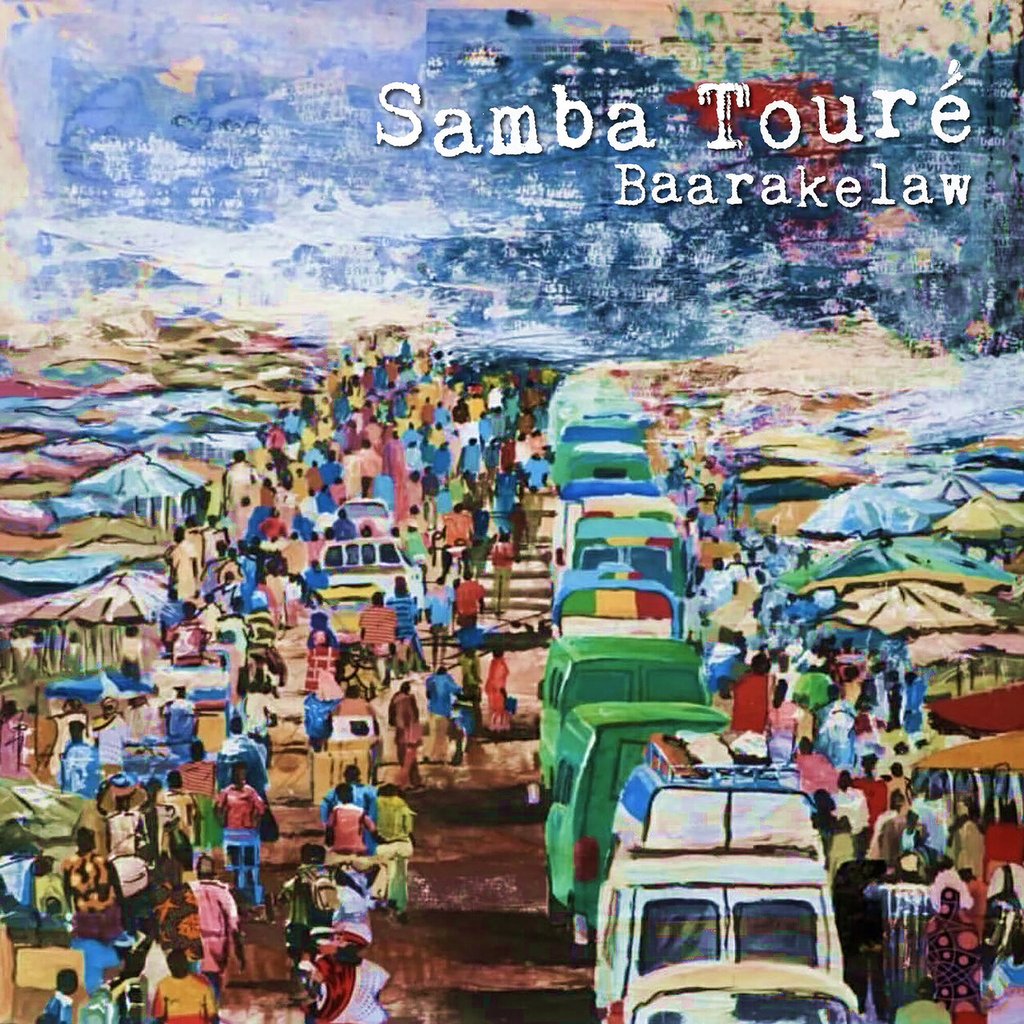
In Bamako, amidst the mists of the harmónica and the hum of the n’goni, Samba Touré sets down his guitar and sings of water hands, the backs of push-pullers, and the irons before dawn. On his latest album Baarakelaw (“The workers”), released in 2025, he pays tribute to those the world ignores — while making European halls dance. « I prefer to sing what I know well, what surrounds me every day » (translated from English), he tells Songlines, preferring to sing the daily reality of the most modest.
In brief
| Full name | Samba Ibrahima Touré |
| Birth | June 15, 1968, Dabi (Tombouctou region), Mali |
| Genre | African blues (desert blues / Saharan blues), Songhai music, world music |
| Instruments | Guitar (acoustic and electric), vocals |
| Notable works | Songhaï Blues, Crocodile Blues, Albala, Baarakelaw |
| Awards | Tamani d’Or 2011 (Mali), Songlines Best Artist Award 2022 |
Key dates
| Year | Event |
|---|---|
| 1968 | Born in Dabi, near Niafunké. His father died shortly before his birth; his mother raised him alone with his brother |
| 1976 | At eight years old, Samba sees Ali Farka Touré at a market in Niafunké; the experience deeply marks him |
| 1993 | Moves to Bamako, forms the multi-ethnic group Farafina Lolo (Étoile d’Afrique) as lead singer |
| 1997–1998 | Joins Ali Farka Touré’s group, goes on international tours Europe–United States as supporting guitarist and vocalist |
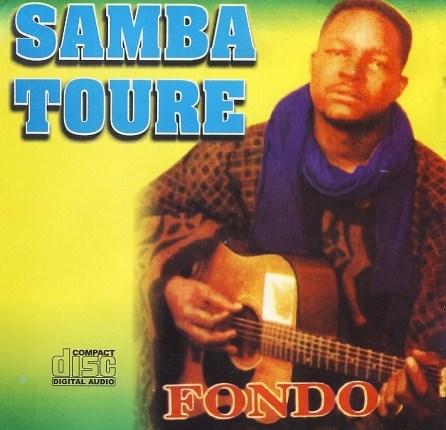
| 2003 | Release of his first solo album, Fondo, in Mali — popular success thanks to the track “Anbafo” |
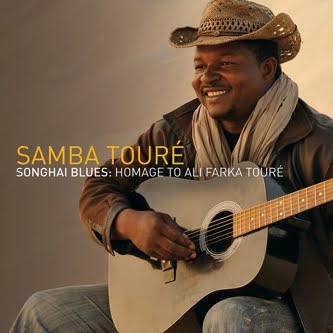
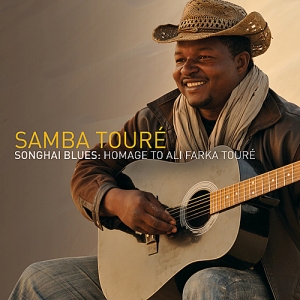
| 2009 | First international album Songhaï Blues: Homage to Ali Farka Touré on Riverboat Records (World Music Network) |
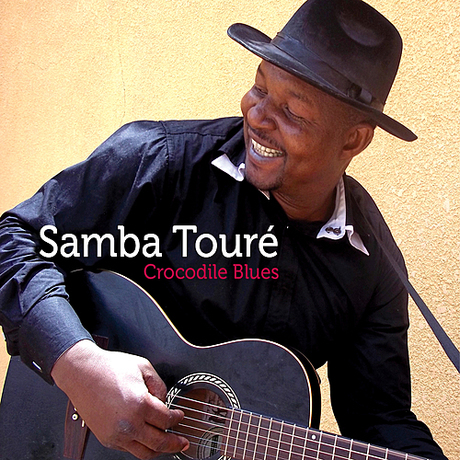
| 2011 | Crocodile Blues wins the Tamani d’Or for best international Malian album |
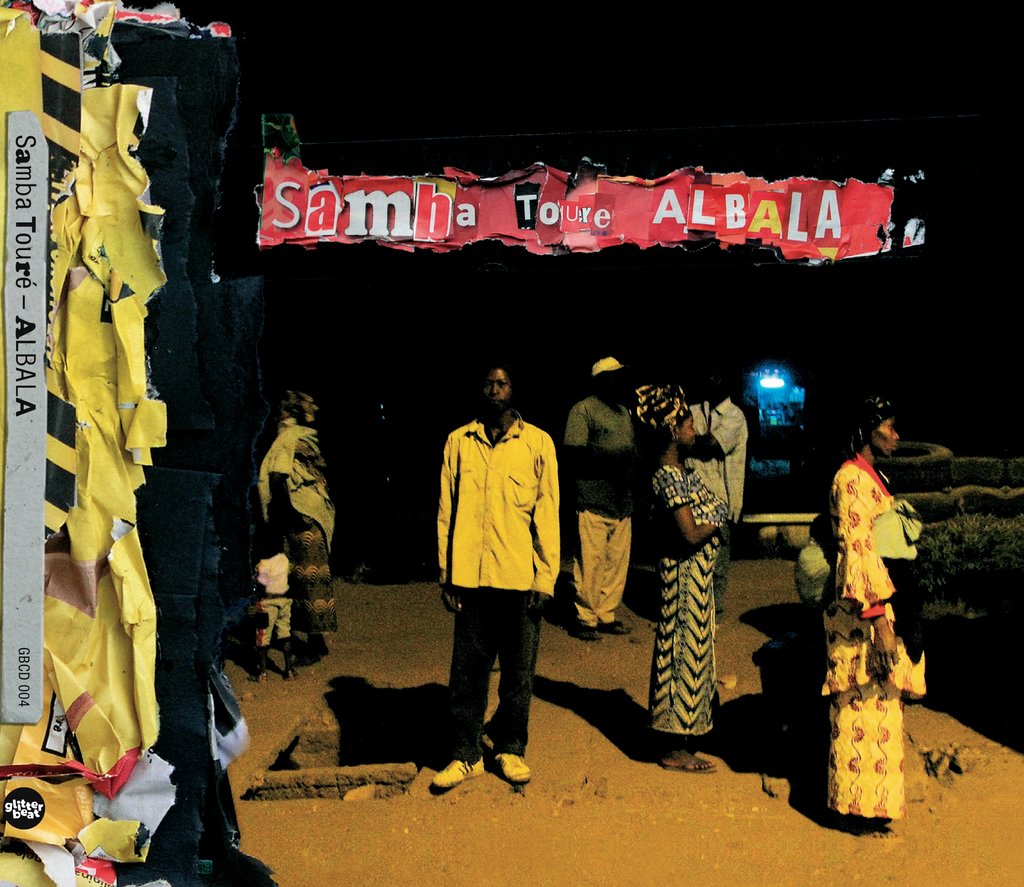
| 2013 | Albala on Glitterbeat Records: enthusiastic international critical reception, a darker and more engaged sound |
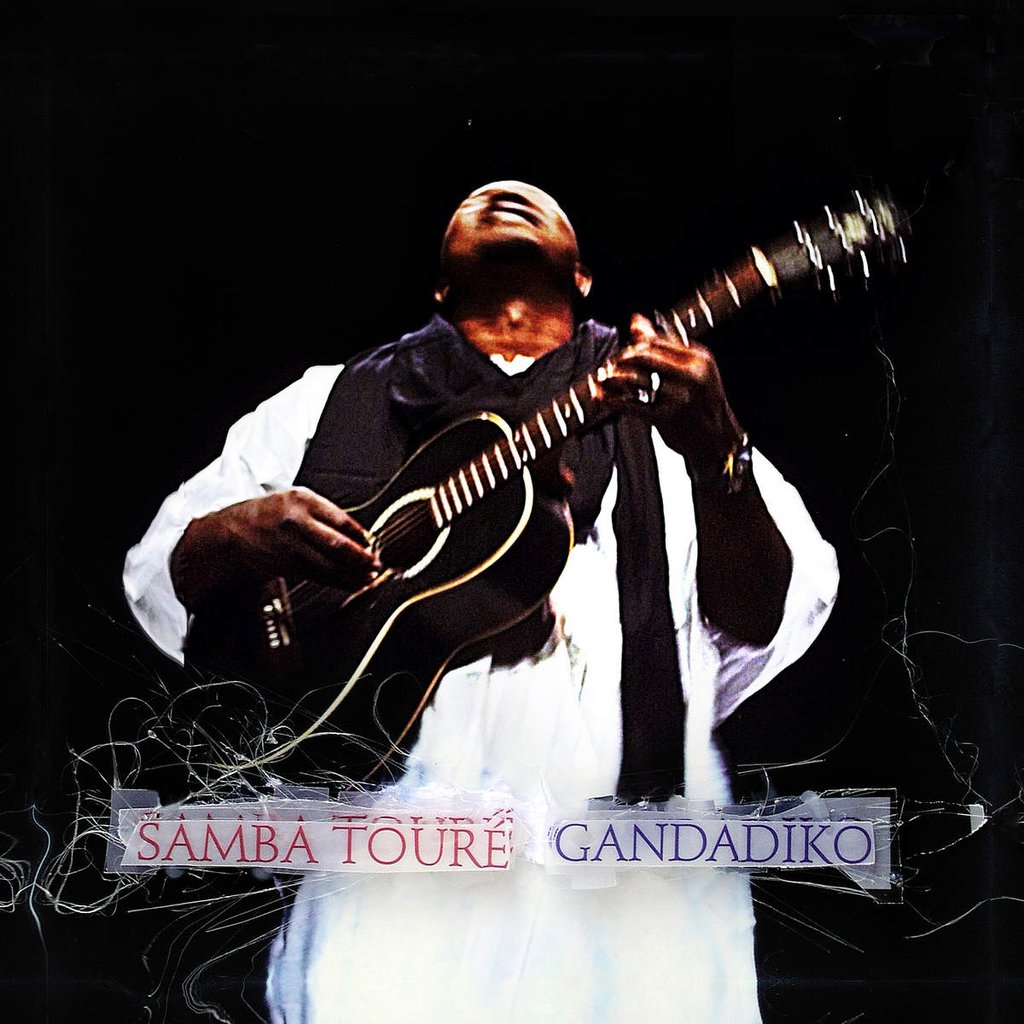
| 2015 | Gandadiko, #2 on World Music Charts Europe, world tours |
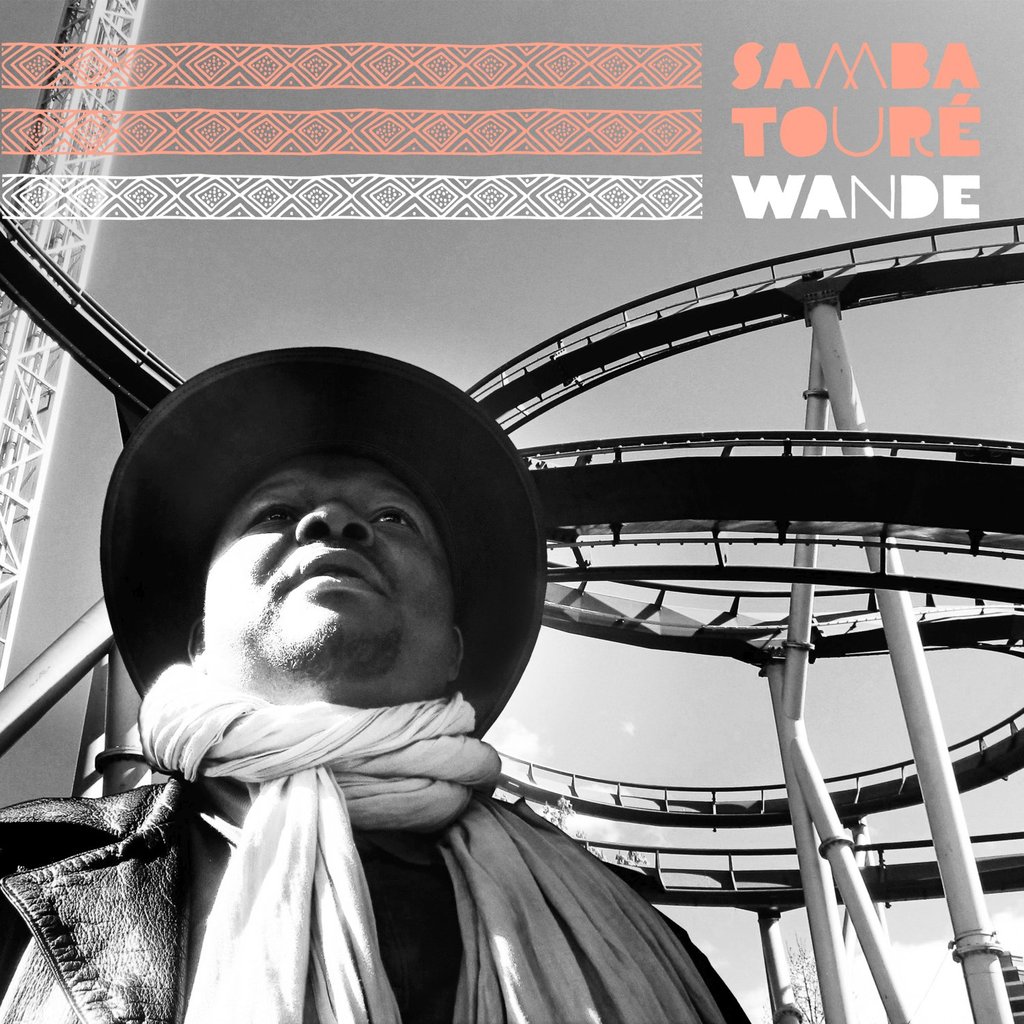
| 2018 | Wande, a warm and danceable album, European tours |
| 2021 | Binga: return to Songhai roots in trio, Best Artist Award at Songlines Music Awards |
| 2023–2025 | Recording of Baarakelaw despite power cuts in Bamako; release in January 2025; Europe–Canada tour |
From Farafina Lolo to Ali Farka Touré’s mentor
Samba Touré grew up in a Songhai village in northern Mali, raised by his talented mother — herself a singer who shared the stage with Ali Farka Touré. Cradled by traditional Songhai sounds, he learned to sing from childhood.
Samba left his region for Bamako at twenty-five, founded Farafina Lolo (Étoile d’Afrique) as lead singer. Fascinated by Ali Farka Touré’s blues, he sent him demos. Impressed, the mentor encouraged him to explore Saharan blues and develop his own style. In 1997, Ali Farka Touré recruited Samba for international tours in Europe and the United States. For two years, he traveled the world as supporting guitarist and vocalist.
Samba solo: from Songhai blues to social struggle
Back in Mali, Samba formed his group Fondo and began composing. His first solo album, Fondo (2003), was a success in Mali thanks to “Anbafo”. In 2008, World Music Network signed him and released in 2009 Songhaï Blues: Homage to Ali Farka Touré, marking his entry onto the world stage. In 2010, Toumani Diabaté called him for the great Ali Farka Touré Variations Tour. He also recorded Crocodile Blues (2011) with Oumou Sangaré on “Moussoya”, which won the Tamani d’Or.
In 2013, Albala (Glitterbeat Records) captured the anger of a Malian crisis. Hugo Race (ex-The Bad Seeds) participated on the album, and The Wire described Samba as « the most eminent heir of Ali Farka Touré » (translated from English). Gandadiko (2015) — country on fire, which means “burn the land” in Songhai — remains marked by the sufferings of the crisis, with a regained dance energy. Wande (2018) brings warmth and joy, with “Hawah” as a love piece. With Binga (2021), Samba returns to Songhai roots in a reduced formation — guitar, n’goni, calabash — with a raw and hypnotic sound. This record earns him the Songlines Best Artist Award 2022. Baarakelaw (January 2025), a concept album on the anonymous workers of Bamako, was recorded under power cuts. British producer Mark Mulholland added additional guitars, banjo, and harmonica — a record of rare density that confirms Samba as a major social voice.
Major works
| Work | Year | Why it’s essential |
|---|---|---|
| Songhaï Blues: Homage to Ali Farka Touré | 2009 | First international album, the birth act of his global career |
| Crocodile Blues | 2011 | Tamani d’Or, with Oumou Sangaré; his entry into European light |
| Albala | 2013 | The cry of anger of a crisis Malian — The Wire: “the most eminent heir of Ali Farka Touré” (translated from English) |
| Gandadiko | 2015 | #2 World Music Charts Europe; music as a social document of the Malian crisis |
| Binga | 2021 | Return to Songhai roots in trio; Songlines Best Artist 2022 award |
| Baarakelaw | 2025 | Concept album on Bamako workers; Europe and Canada tours |
Legacy and influence
Samba Touré counts more than two decades of a career in full expansion. He shares the world’s most prestigious stages — Roskilde, Viljandi Folk Festival, Banlieues Bleues — while remaining anchored in the reality of Bamako. His contemporary producers — Mark Mulholland, Chris Eckman — make him one of the most important authors of the new generation of African blues. His music continues to influence scenes ranging from Northern Europe to Canada, where he performed for the first time in 2025.
Sources and references
- « Samba Touré — Wikipédia », Wikipedia in French, https://fr.wikipedia.org/wiki/Samba_Tour%C3%A9, accessed 6 November 2025.
- « Samba Touré — Wikipedia », Wikipedia, https://en.wikipedia.org/wiki/Samba_Tour%C3%A9, accessed 6 November 2025.
- « Samba Touré (Mali) — Frank Bessem’s Musiques d’Afrique », Musiques-Afrique, https://www.musiques-afrique.net/mali/afr_toure_samba.html, accessed 6 November 2025.
- « Samba Touré — Releases », Glitterbeat Records, https://glitterbeat.com/artists/samba-toure/, accessed 6 November 2025.
- « Samba Touré | Bio », Aga Khan Museum, https://agakhanmuseum.org/bio/samba-toure/, accessed 6 November 2025.
- Robin Denselow, « Samba Touré: Gandadiko review – mature, confident desert blues », The Guardian, https://www.theguardian.com/music/2015/feb/12/samba-toure-gandadiko-review-mali-blues, accessed 6 November 2025.
- Daniel Brown, « Samba Touré interview: Malian artists love singing the praises of bosses », Songlines Magazine, https://www.songlines.co.uk/content/features/samba-toure-malian-artists-love-singing-the-praises-of-bosses-rich-people-and-the-powerful-that-has-never-been-my-thing, accessed 6 November 2025.
- Bertrand Lavaine, « With the album ‘Baarakelaw’, Malian Samba Touré takes to the streets », RFI Musique, https://www.rfi.fr/fr/musique/20250128-avec-l-album-baarakelaw-le-malien-samba-tour%C3%A9-descend-dans-la-rue, accessed 6 November 2025.