Biography
Sorry Bamba: Modernizing Dogon music without betraying its soul
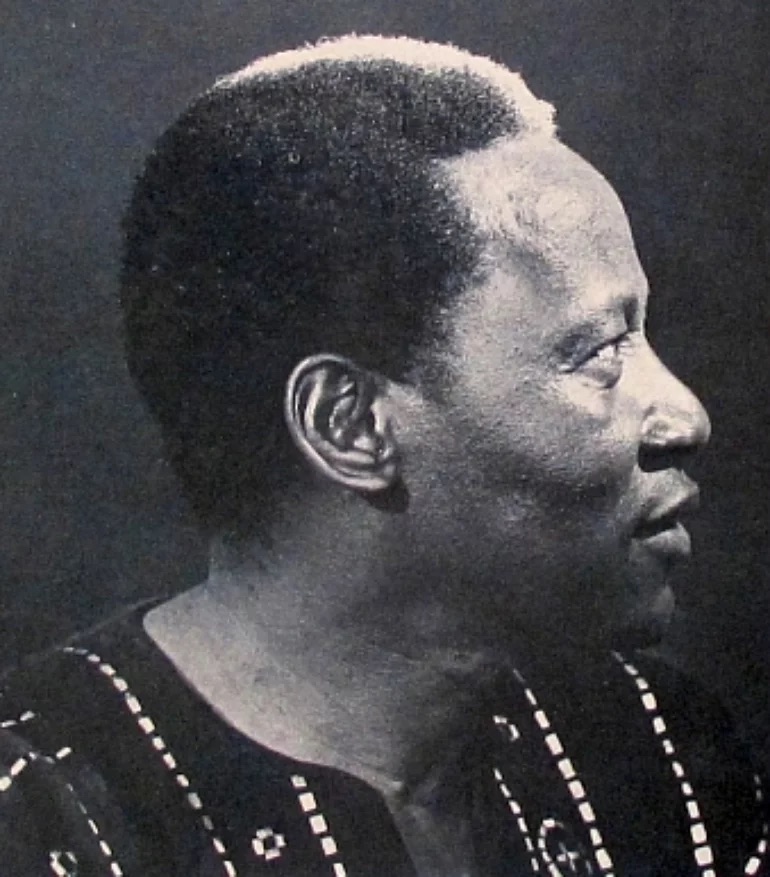
Mopti, “the Venice of Mali,” a crossroads between the Niger and the Dogon country. In 1938, Bourama Bamba was born there, a boy destined for music—and against conventions. From a noble family, he was not supposed to play: in Mali’s caste-based society, musical art belonged to the griots. An orphan at an early age, the young boy found a new family in a six-hole flute. Six decades later, this “Master” (as Malian musicians call him) remains one of the most visionary arrangers in West Africa.
In brief
| Full name | Bourama Bamba (also spelled Sory Bamba) |
| Birth | 1938, Mopti, French Sudan (now Mali) |
| Death | July 23, 2022, Mopti, Mali |
| Fields | Malian music, Manding, Peul, modern Dogon |
| Instruments | Six-hole flute, trumpet, vocals |
| Notable works | “Yayaroba”, Le Tonnerre Dogon, Dogon blues |
| Nickname | “The Pink Floyd of Mali” |
Key dates
| Year | Event |
|---|---|
| 1938 | Birth in Mopti, son of a noble veteran of Samori Touré’s army |
| c. 1948 | Orphaned, placed with a marabout at the Bandiagara cliffs |
| 1957 | Founded his first group, Association Jeunesse RDA (Group Goumbé) |
| 1965 | First 45 rpm record; first experience in Abidjan with Kanté Manfila |
| 1968–1981 | Director of the dance troupe and traditional ensemble of Mopti |
| 1976–1980 | Kanaga de Mopti wins the Cultural Biennale (1976, 1978, 1980) |
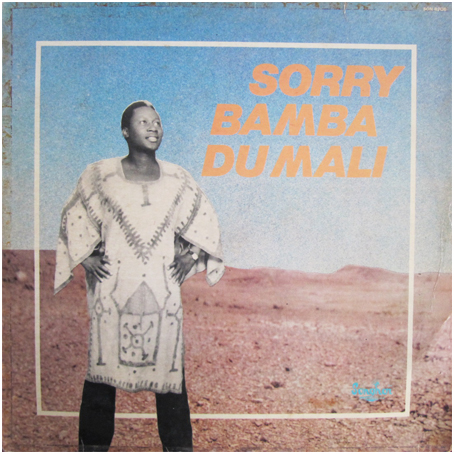
| 1987 | Release of Le Tonnerre Dogon, a landmark solo album |
| 1991 | Got the “Initiés” Dogons to dance at Nantes Castle (first departure from Mali) |
| 2010 | Release of Dogon blues, after 15 years of silence |
| July 23, 2022 | Death in Mopti; funeral on July 25 |
Career Path
Bourama Bamba grew up in Mopti, a port city at the crossroads of Peul, Bozo, Manding, and Dogon peoples. His father, a noble veteran of Samori Touré, forbade him to embrace music. Before he turned ten, his parents and his marabout disappeared. Another Koran student lent him a six-hole flute imported from France: “She never left me again. Music softened my orphan’s grief and became my family,” he once confessed.
The child followed his marabout to the Bandiagara cliffs, where he witnessed a Dogon mask dance ceremony. The drums, voices, and masks under the low roof of the toguna deeply marked his imagination. His passion for Dogon culture was sealed. As an adolescent, he immersed himself in disparate sound universes: Ghanaian highlife, Tino Rossi, Luis Mariano, Toumani Touré. In 1957, at age 19, he formed his first group, Association Jeunesse RDA, then Group Goumbé. On trumpet (which he taught himself), percussion, and vocals, the group conquered Mopti’s youth in a tiny truck.
Independence in 1960 sparked a cultural effervescence. President Modibo Keïta encouraged the modernization of traditions. Bani Jazz transformed into Kanaga de Mopti, named after a Dogon mask representing the god Amma. Between 1968 and 1981, Bamba directed several formations, multiplying innovations: unprecedented arrangement methods, introduction of the calabash-guitar (an overturned calabash used as a bass), and bringing a young truck driver violinist onto the stage—Ali Farka Touré, still a beginner. At national biennials, Kanaga won first prize three times. With each award, Bamba let his musicians carry the trophy cup themselves. “It is not good for a man to speak of himself,” says the Bambara proverb. His motto.
Lack of recognition pushed him to try his luck in Côte d’Ivoire, where he recorded with Kanté Manfila. Paris finally welcomed him in the 1980s: Nouveau Morning, collaboration with Jean-Michel Jarre (Revolutions), Le Tonnerre Dogon (1987). In 1991, he managed to have the “Initiés” Dogons dance at Nantes Castle—they had never left Mali before. But grants disappeared. Bamba continued writing (Hamdallaye, 1995) and then… a long silence. In 2010, Dogon blues served as a musical testament: perfectionist, he revisited his key tracks, adorned them with colorful brass instruments, and reinvented them.
Major Works
| Work | Year | Why it is essential |
|---|---|---|
| Le Tonnerre Dogon | 1987 | Solo album imposing Dogon music in a modern format |
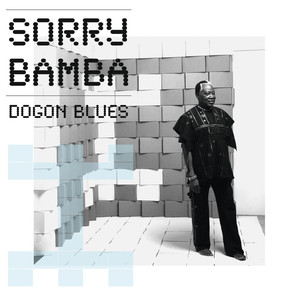
| Dogon blues | 2010 | Musical testament recorded in the Dogon country after 15 years of silence |
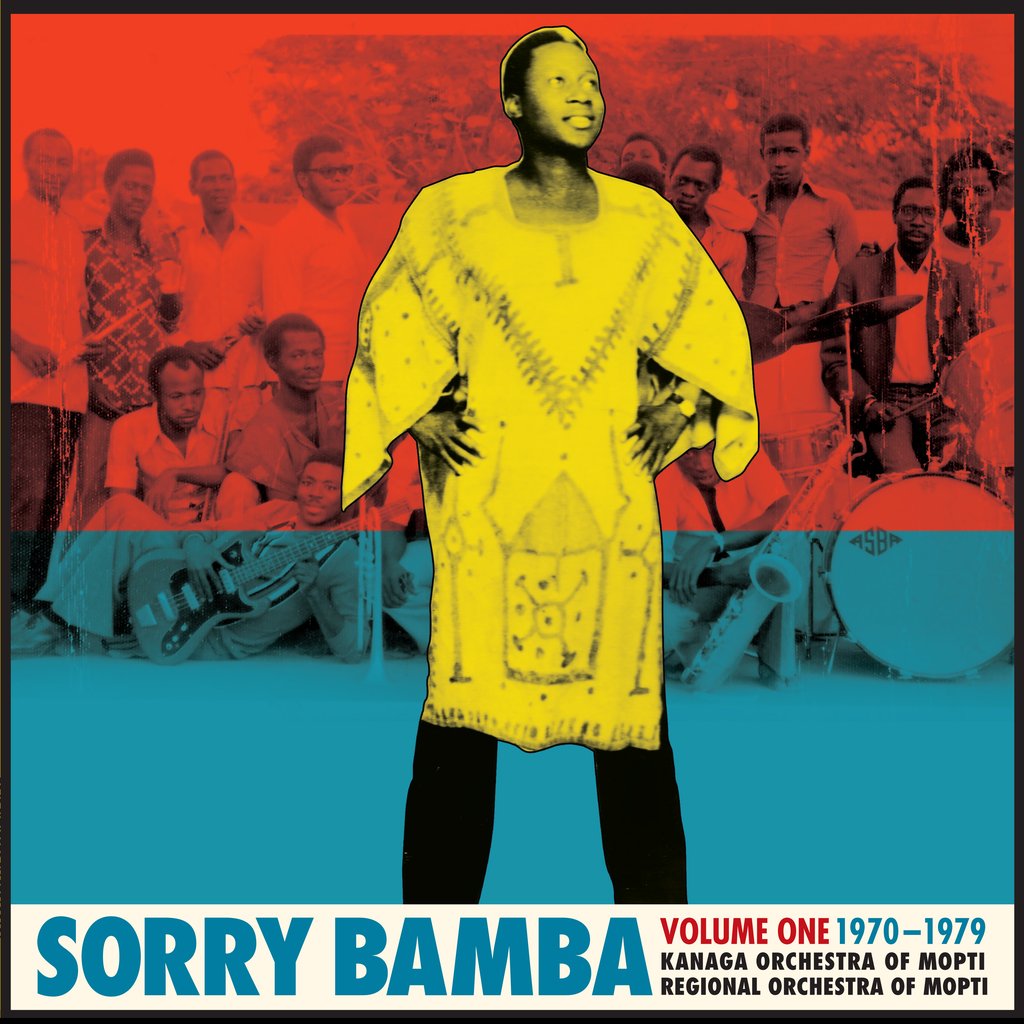
| Volume One 1970-1979 | 2011 | Compilation by Thrill Jockey compiled with the artist; international rediscovery |
Legacy
Sorry Bamba remains above all an arranger and a cultural mediator. His legacy is proving that modernization does not have to betray tradition: no kora, no balafon, no ngoni at Dogon ceremonies, but as much bass and keyboards as needed. Malian musicians call him “Master”; critics qualify him as a “little-known treasure of Malian music.” He died on July 23, 2022, leaving behind a rare but intact discography and this lesson: “The day you feel that you are the best, you will stop progressing. You must work, always.”
Sources and references
- “Death of Sorry Bamba, little-known treasure of Malian music”, RFI Musique, https://musique.rfi.fr/musique-africaine/20200727-mort-sorry-bamba-tresor-meconnu-musique-malienne.html, accessed October 23, 2026.
- “Sorry Bamba, messenger of Dogon music”, RFI Musique, https://musique.rfi.fr/musique-africaine/20101119-sorry-bamba-le-messager-musique-dogon.html, accessed October 23, 2026.
- Rob Fitzpatrick, “Sorry Bamba: A life in music in Mali”, The Guardian, https://www.theguardian.com/music/2011/apr/21/sorry-bamba-mali-pop, accessed October 23, 2026.
- Mark Deming, « Sorry Bamba — Biography », AllMusic, https://www.allmusic.com/artist/sorry-bamba-mn0000213685, accessed 23 October 2026.
- « Sorry Bamba », Thrill Jockey Records, https://www.thrilljockey.com/artists/sorry-bamba, accessed 23 October 2026.
- Banning Eyre, « Sorry Bamba: From Mali, With Love And Enchantment », NPR, https://www.npr.org/2011/07/21/138559665/sorry-bamba-from-mali-with-love-and-enchantment, accessed 23 October 2026.
- Frank Bessem, « Musiques d’Afrique / Mali : Sorry Bamba », Musiques d’Afrique, https://www.musiques-afrique.net/mali/art-bamba-sorry.html, accessed 23 October 2026.
- Nago Seck, « Sorry Bamba », Afrisson, https://www.afrisson.com/sorry-bamba-371, accessed 23 October 2026.