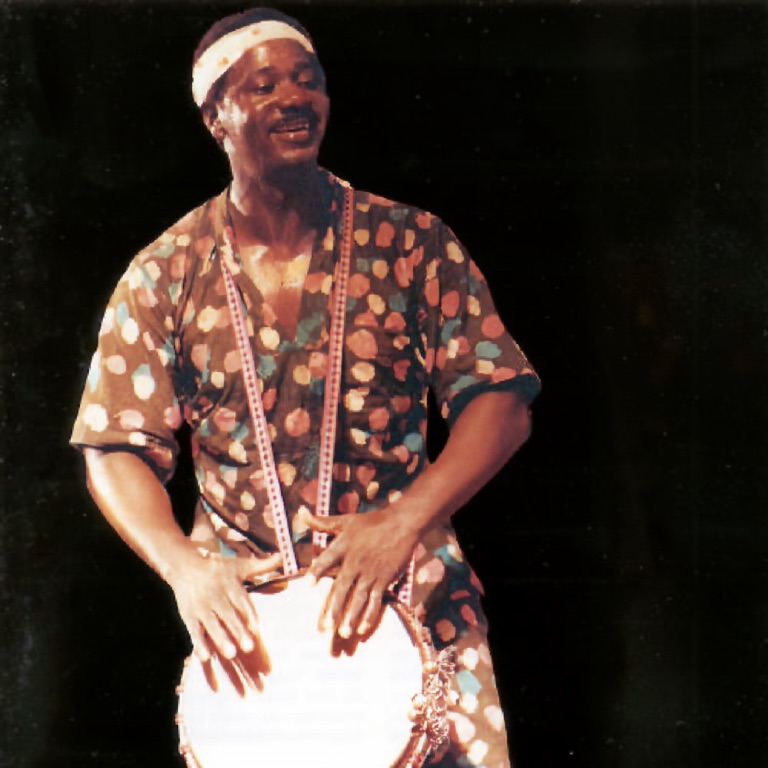
Biography
Soungalo Coulibaly
In 1983, while traveling in Europe with the Burkinabé group Farafina, Soungalo Coulibaly found himself on a recording stage with Jon Hassell. The French sound engineer watched him play the djembé for three hours, fascinated by the precision of his polyrhythms. This session where the Malian percussionist introduced Bambara rhythms to a European audience summarizes the trajectory of a musician who took the traditional drum of Mali onto international stages.
In brief
| Full name | Soungalo Coulibaly |
| Birth | 1955, Béléko, Baninko region (Mali) |
| Death | March 9, 2004, Bamako (Mali) |
| Field | Percussion, djembé, flute — Mandingue music and Bambara tradition |
| Notable works | Sankan Wulila, Dengo, L’art du djembé |
| Honors | Considered by his peers as one of the great masters of the djembé; collaborations with Jon Hassell, Farafina and Ryuichi Sakamoto |
Key dates
| Year | Event |
|---|---|
| 1955 | Birth in Béléko, a village in southern Mali; his father was the village chief |
| 1963 | Discovers drums at age eight, learns on his own against his father’s wishes |
| Around 1975 | Moves to Bouaké, Côte d’Ivoire; makes a name for himself as a djembéfola |
| Early 1980s | Joins Farafina, a group of Burkinabé percussionists; tours in Europe |
| 1983 | Records Flash of the Spirit with Jon Hassell; begins international collaborations |
| 1989 | Release of Naya!; joins the Swiss company Djinn Djow |
| 1993 | Records Faso Denou with Farafina; begins thirteen years of European tours |
| 1998 | Filmed in Mögöbalu, a documentary about masters of the African drum |
| 2004 | Death in Bamako; album Live released posthumously on Arion |
Bambara roots and self-taught training
Soungalo Coulibaly was born in 1955 in Béléko, a village in the Baninko region of southern Mali, about one hundred kilometers from Ségou. His father was the village chief — a position that placed his family at the heart of community affairs and exposed him, from early childhood, to the ceremonies that structure Bambara life. The Bambara are the dominant ethnic group in Mali, whose agricultural civilization and deep respect for ancestral lineages make music a collective pillar.
It was at the age of eight that Soungalo discovered drums. Against his father’s wishes, he learned on his own: every day, he observed local musicians and reproduced the rhythms of ceremonies. He encountered the djembé, the flute, the tama (talking drum) and the balafon — instruments that accompany village life. He played the bara and sabani during fieldwork and festivals, forging an innate sense of tempo and ensemble interplay. As a teenager, he left Béléko for Fana where he accompanied the older djembefolas during ceremonies and agricultural rituals.
In the mid-1970s, he moved to Bouaké, Côte d’Ivoire’s second city. There, he embarked on a professional career and quickly gained recognition for his exceptional musicality, the complexity of his playing, the power of his strikes and his ability to adapt to all styles.
Going international: Farafina, Jon Hassell and Europe
In the early 1980s, Soungalo opened doors to the international scene by joining Farafina, a Burkinabé formation known worldwide. With them, he toured Europe and contributed to unexpected collaborations: Flash of the Spirit (1983) by American composer Jon Hassell, the contribution to the Rolling Stones album Steel Wheels (1989), and Ryuichi Sakamoto’s album Beauty (1989). He appeared on Farafina’s Faso Denou (1993) and performed at the WOMAD festival in Morecambe, England (1992).
Returning to Europe in the 1980s, Soungalo joined the company Djinn Djow founded in 1989 by Swiss musician Vincent Zanetti and dancer Anne-France Brunet. From 1989 until his death, he worked for more than a decade with this cross-border group, playing the djembé and flute on tours across Europe. Zanetti served as his arranger and artistic director until 2004.
Discography, films and legacy
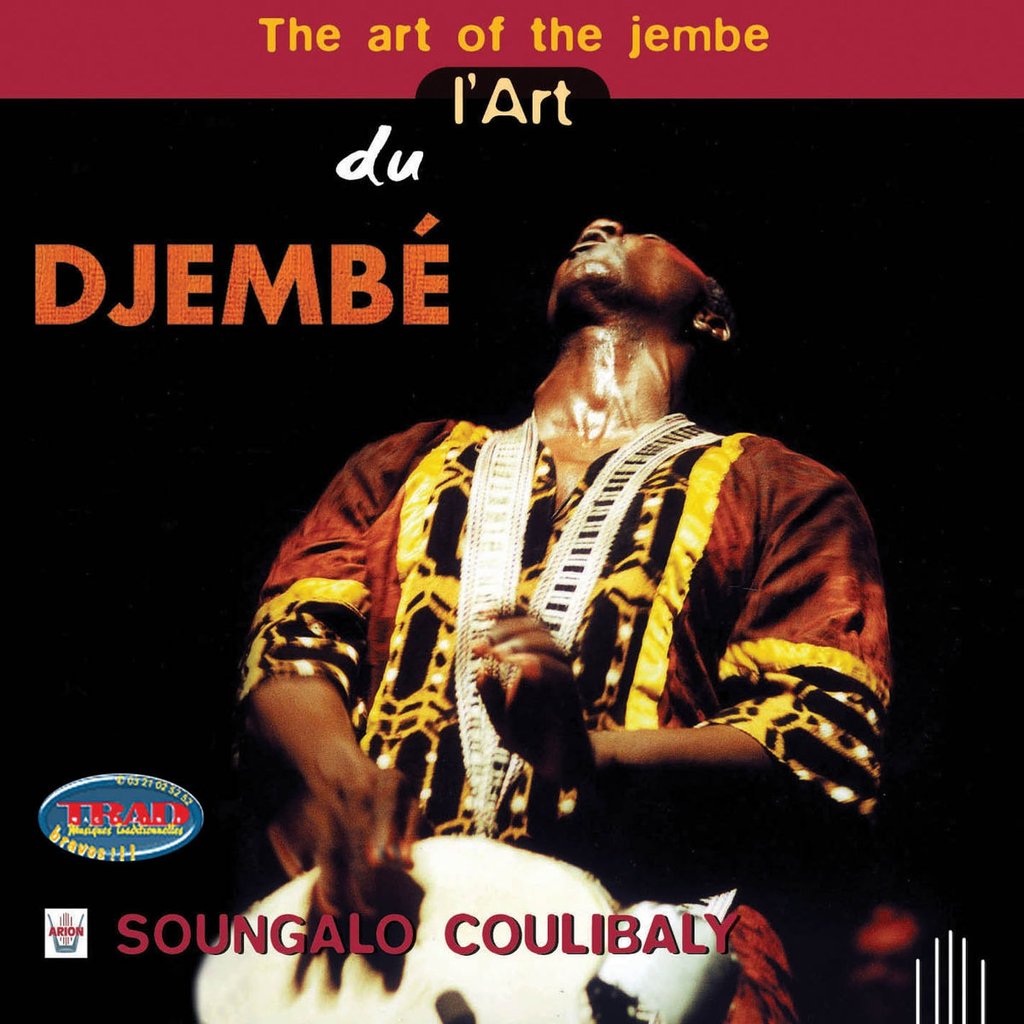
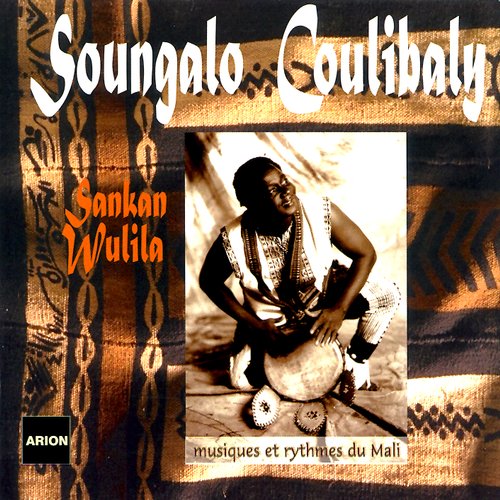
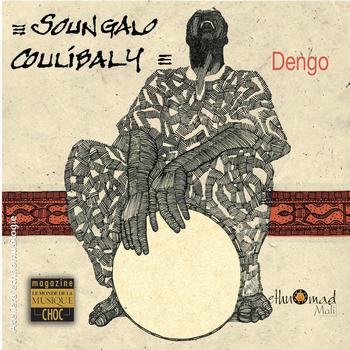
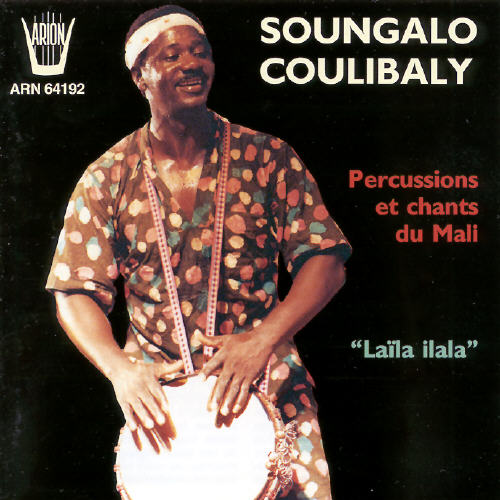
Soungalo Coulibaly recorded a rich discography: Naya! (1989) marked his debut on cassette. Followed by Laïla Ilala (1992, Arion), Sankan Wulila — Musiques et rythmes du Mali (1999/2000), praised for its fidelity to traditional Malian rhythms, Dengo (2001), the first volume of a series with Ethnomad/Arion, and L’art du djembé (2002). His image extended beyond music: in 1998, he was filmed in Mögöbalu, a documentary by French director Laurent Chevallier tracing the journey of great masters of West African drumming.
On March 9, 2004, Soungalo Coulibaly died in Bamako from cancer at the age of 49. The group he had formed continued to exist after his passing, and an album Live was released posthumously on Arion in 2004, followed by a DVD edition in 2005.
Today, Soungalo Coulibaly is recognized as one of the most important djembefolas of the 20th century. His playing, rooted in Bambara tradition but open to cross-border collaborations, contributed to popularizing the djembé on the world stage.
Major works
| Work | Year | Why it’s essential |
|---|---|---|
| Sankan Wulila: Musiques et rythmes du Mali | 1999/2000 | Reference for Bambara rhythms, Arion label |
| Dengo (Mali Vol. 1) | 2001 | Collaborative series with Ethnomad/Arion, bridging tradition and modernity |
| L’art du djembé | 2002 | Synthesis of instrumental technique, pedagogical and artistic work |
| Live (posthumous album) | 2004 | European concerts, final testimony of a live djembé |
Heritage and influence
Soungalo Coulibaly’s career illustrates a major phenomenon of 20th-century African music: the exportation of tradition without betraying its source. By joining Farafina and collaborating with Jon Hassell, Ryuichi Sakamoto, and Vincent Zanetti, he did not westernize the djembé — he showed that Bambara polyrhythmic complexity possessed a universality recognized in the most demanding circles. The documentary Mögöbalu (1998) places him alongside the greatest West African masters, which in itself is testimony to his status. Today, the djembé heard on world stages bears the trace of hands like his — hands that traveled an instrument from village to make it a cornerstone of world music.
Sources and references
- « Soungalo Coulibaly », Wikipédia en français, https://fr.wikipedia.org/wiki/Soungalo_Coulibaly, accessed 19 November 2026.
- « Soungalo Coulibaly », Wikipedia in English, https://en.wikipedia.org/wiki/Soungalo_Coulibaly, accessed 19 November 2026.
- « COULIBALY, SOUNGALO », Encyclopaedia Africana, https://encyclopaediaafricana.com/coulibaly-soungalo/, accessed 19 November 2026.
- Nago Seck, « Soungalo Coulibaly », Afrisson, 17/03/2008 (updated 24/05/2020), https://www.afrisson.com/soungalo-coulibaly-19573/, accessed 19 November 2026.
- « Soungalo Coulibaly », AllMusic, https://www.allmusic.com/artist/soungalo-coulibaly-mn0000742826, accessed 19 November 2026.
- « Soungalo Coulibaly », Real World Records (Farafina discography), https://realworldrecords.com/releases/faso-denou/, accessed 19 November 2026.