Biography
Tarika: the voice of Madagascar on world stages
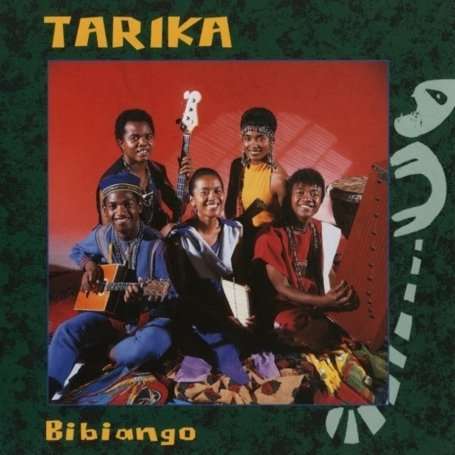
In London, in 1990, Hanitra and her sister Noro sing on a street of the British capital. Six months later, the group releases Bibiango, the first album that will propel them as Madagascar’s greatest musical export1.
In brief
| Group name | Tarika (means “group” in Malagasy) |
| Origin | Madagascar |
| Genres | World music, Malagasy roots music |
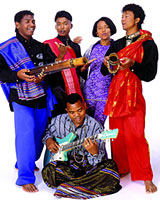
| Key members | Hanitra Rasoanaivo (vocals, percussion), Noro Raharimalala (vocals), Donné Randriamanantena (marovany, valiha), Ny Ony Rasolomahatratra (guitar, kabosy), Solo Randrianasolomalala (bass, kabosy) |
| Labels | Green Linnet, Xenophile, Triloka, Compass |
| Distinctions | TIME “10 best bands on planet Earth” (2001) |
Key dates
| Year | Event |
|---|---|
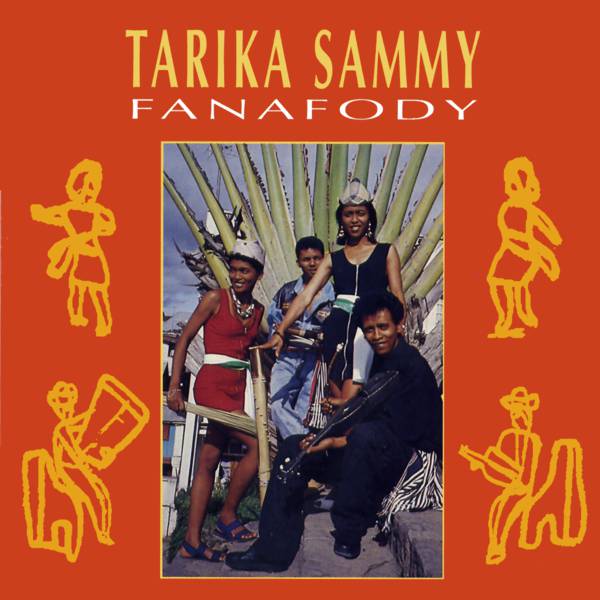
| 1983 | Birth of Tarika Sammy, the first modern group of traditional Malagasy music, led by Hanitra |
| 1989 | Hanitra moves to London to work at the Madagascar embassy |
| 1990 | Discovered by a BBC producer while singing on the street |
| 1993 | Split of Tarika Sammy; formation of Tarika with a new lineup |
| 1994 | Release of Bibiango, first album under the name Tarika |
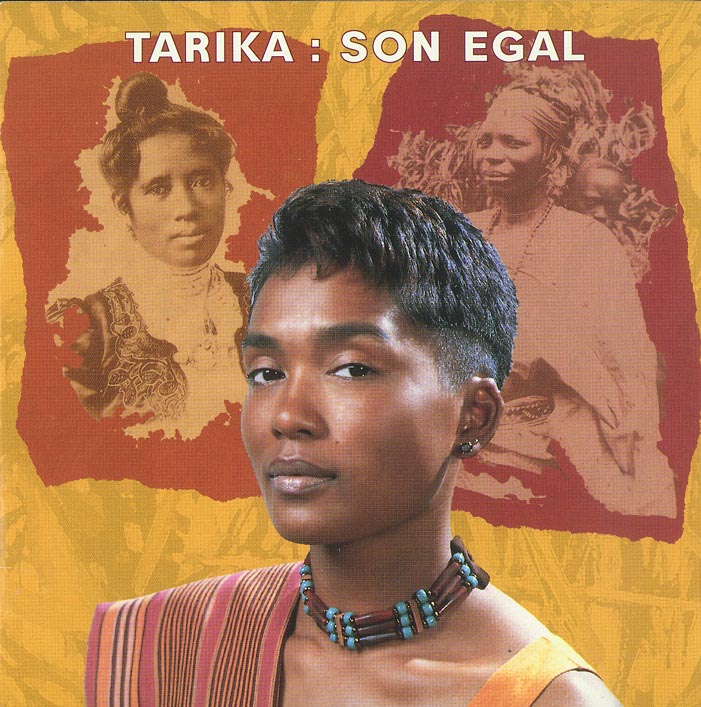
| 1997 | Release of Son Egal, conceptual album on the 1947 insurrection |
| 1998 | Women of Africa Tour with Oumou Sangaré and Sibonghile Khumalo |
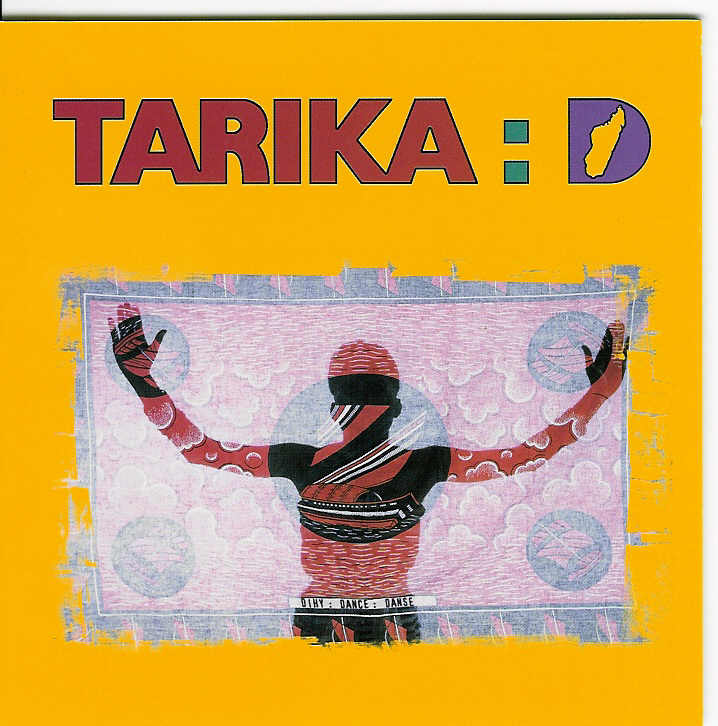
| 1999 | Release of D Sakay, album centered on Malagasy dances |
| 2001 | TIME ranking; release of Soul Makassar |
| 2002 | Opening of Antshow, cultural center in Antananarivo |
| 2004 | Compilation Tarika 10 for the tenth anniversary |
Origins, revelation, and unique sound
Hanitra Rasoanaivo, nicknamed “Anch”, grew up in Antananarivo in a family where music is part of daily life. Her father and mother sang together, and family harmonies paced the ceremonies. Originally destined to become an English interpreter, she lives in London at the end of the 1980s. One evening, she and her sister Noro improvise traditional songs on the street. The BBC producer approaches, curious. The recording leads to a first album, followed by the creation of Tarika Sammy in 1983 with musician Sammy Andraimanahirana2.
The split of Tarika Sammy in 1993 marks the beginning of Tarika proper3. Hanitra and Noro become the live heart of the new group, joined by three multi-instrumentalists: Donné on marovany and valiha, Ny Ony on guitar and kabosy, and Solo on bass. The marovany is a wooden zither, the valiha a bamboo harp, and the kabosy a seven-stringed small guitar: these reinvented traditional Malagasy instruments form the group’s sonic base.
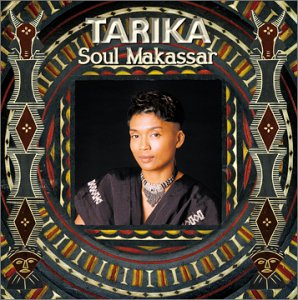
Tarika’s texts tackle taboo subjects in Malagasy society head-on — women’s status, corruption, colonial exploitation. Bibiango (1994) creates a stir in Madagascar. Son Egal (1997), produced by Simon Emmerson (Afro Celt Sound System), explores the Malagasy insurrection of 1947 and attempts to reconcile Malagasys and Senegalese, two peoples marked by colonial repression. The album receives an enthusiastic welcome in Europe and the United States, tops world music charts for eight weeks, and wins the AFIM Indie Award. D Sakay (1999) offers a dancing counterpoint, with covers of Malagasy hits from the 1960s and 1970s. Soul Makassar (2001) constitutes the most ambitious project: Hanitra travels to Sulawesi in 1999 and there discovers the Indonesian roots of Madagascar, this archipelago populated 1,500 years ago by Malay sailors. TIME ranks Tarika among the ten best bands on the planet in 20014.
A legacy that transcends music
After the September 11 attacks, Tarika withdraws from the intensive tour. Hanitra decides to settle permanently in Madagascar and founds there in 2002 Antshow Madagascar, a cultural center in Antananarivo5. The complex brings together a performance hall, a recording studio, guest rooms, a restaurant, and free valiha lessons dispensed by the Valiha High Association, created by Hanitra in 1997 to train disadvantaged children. Tarika 10, released in 2004, celebrates the group’s tenth anniversary.
Hanitra continues to sing under the name Tarika Bé. Her message, between social commitment and fidelity to roots, paved the way for an entire generation of Malagasy artists. “Music is sacred to me,” declares Hanitra, who chose to return to Madagascar rather than pursue a lucrative career abroad4.
Major works
| Work | Year | Why it’s essential |
|---|---|---|
| Bibiango | 1994 | First album, provoking debates on women’s status in Madagascar |
| Son Egal | 1997 | Conceptual album on the 1947 insurrection, AFIM Indie Award, number 1 in world music charts |
| D Sakay | 1999 | Dancing homage to Malagasy hits from the 1960s-1970s |
| Soul Makassar | 2001 | Exploring ancestral links between Madagascar and Indonesia |
Sources and references
-
World Music Central, Artist Profiles: Tarika, by Angel Romero, accessed October 31, 2026 ↩︎
-
AllMusic, Tarika — Biography, by Chris Nickson, accessed October 31, 2026 ↩︎
-
Wikipedia, Tarika (musical group), accessed October 31, 2026 ↩︎
-
Joanna Złotkowska, Go With the Flow. Madagascar Artists Facing the Challenges of the Modern Times, International Symposium of Musicology, 2024, accessed October 31, 2026 ↩︎ ↩︎
-
WOMEX, ANTSHOW: cultural arts centre in Madagascar, accessed October 31, 2026 ↩︎