
Biography
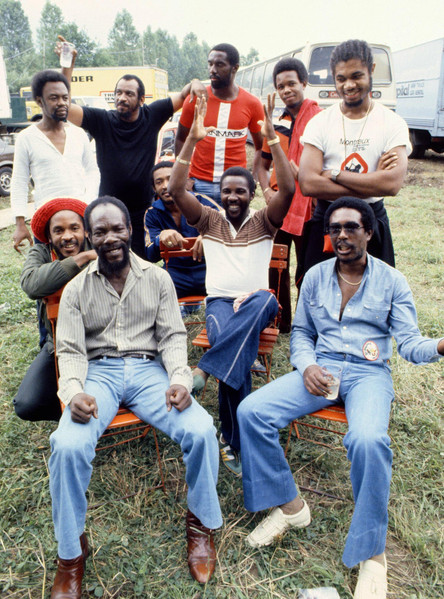
Toots and the Maytals
In 1968, in a Kingston studio, Frederick Hibbert recorded “Do the Reggay” — a dance track that would give its name to an entire musical genre. Before this title, Jamaican music was called blue-beat or boogie-beat. The Maytals were going to turn a slang word into a global name.
In Brief
| Full Name | Frederick Nathaniel Hibbert, known as “Toots” Hibbert (OJ) |
| Birth | December 8, 1942, May Pen, Jamaica |
| Death | September 11, 2020, Kingston, Jamaica |
| Group | Toots and the Maytals (1962-1980, reformed from 1990) |
| Genre | Ska · rocksteady · reggae (three consecutive phases of Jamaican music) |
| Notable Works | “Pressure Drop”, “Monkey Man”, “Bam Bam” |
| Awards | 2 Grammy Awards Best Reggae Album (2005, 2021), Order of Jamaica (2012) |
Key Dates
| Year | Event |
|---|---|
| 1942 | Born in May Pen, youngest of seven children; mother was a midwife |
| 1962 | Formation of the Maytals with Raleigh Gordon and Jerry Matthias; signed to Coxsone Dodd’s Studio One |
| 1966 | First winner of the Jamaica Independence Festival with “Bam Bam”; incarcerated for 18 months for marijuana possession |
| 1968 | “Do the Reggay”, first song to use the term reggae; recording of 54-46 made upon release from prison |
| 1970 | “Monkey Man”, first international hit (No. 47 in the UK); signed to Chris Blackwell’s Island Records |
| 1972 | Appearance in The Harder They Come (Jimmy Cliff film); two tracks on the soundtrack |
| 1973 | Release of Funky Kingston, founding album for Island Records / Mango |
| 1980 | Guinness Record: concert at London’s Hammersmith Palais pressed and distributed in 24 hours |
| 2004 | True Love, duet album with Eric Clapton, Keith Richards and Bonnie Raitt |
| 2005 | Grammy Award Best Reggae Album for True Love (48th ceremony) |
| 2012 | Order of Jamaica (OJ), 5th highest honor in the country |
| 2020 | Final album Got to Be Tough; death on September 11 in Kingston |
From Church Choir to Grammy: The Life of Toots Hibbert and the Maytals
Toots Hibbert grew up in southern Jamaica, Clarendon parish. His father died when he was eleven; his mother, a midwife, left him two years later. He sang in the church choir — it was there that his remarkable voice was discovered. At thirteen, he moved to Kingston and worked as a barber’s assistant, where he befriended Raleigh Gordon and Jerry Matthias. The trio formed in 1962, the same year Jamaica gained independence. Coxsone Dodd, the legendary producer of Studio One, spotted them and signed the group. Between 1962 and 1965, they recorded a series of singles that made them one of the most popular vocal groups in the country, in the dominant styles of ska and rocksteady — a danceable blue-beat where counterpoint guitar accents emphasized the off-beats. Their close harmonies, influenced by gospel and American R&B, immediately distinguished the Maytals.
In 1966, the trio won the first edition of the Jamaica Independence Festival with “Bam Bam”. The following year, Hibbert was arrested for marijuana possession and incarcerated for eighteen months. This experience nourished one of his greatest hits, recorded in 1968 for producer Leslie Kong. It was also upon his release from prison that the Maytals recorded “Do the Reggay”, a track whose name comes from a Jamaican slang word, streggae (meaning neglected, shabby). This slang term became the global name for the genre.
Chris Blackwell, founder of Island Records, noticed the Maytals and signed the group in 1970. Gordon and Matthias left, and Hibbert became the frontman of an instrumental collective — Jackie Jackson, Paul Douglas, Radcliffe Bryan — forming the Maytals Band. The first single, “Monkey Man”, reached No. 47 in Great Britain. The group obtained a role in The Harder They Come (1972), the cult film by Jimmy Cliff: they are seen recording. Funky Kingston, released in 1973 on Mango (a subsidiary of Island), was hailed as a masterpiece by Lester Bangs. They toured as the opening act for The Who (1975-76), sharing the bill with Santana in San Francisco. They won the Jamaica Independence Festival three times and accumulated 31 number-one singles on the Jamaican charts. During the ska and British punk rock revolution of the late 1970s, their tracks were covered by The Specials and The Clash.
After the departure of founding members in 1980, Hibbert continued as a solo artist. He reformed the Maytals in the early 1990s. The decisive turning point came in 2004 with True Love, a duet album reinterpreting his greatest hits in collaboration with Eric Clapton, Keith Richards and Bonnie Raitt. The album won a Grammy Award in 2005. In 2013, during a university concert in the United States, a nineteen-year-old fan threw a bottle on stage. Hibbert was hit in the head and suffered a traumatic brain injury that kept him off stage for three years. He himself asked for lenient sentencing for the teenager before the judge. Zak Starkey, co-producer of Got to Be Tough (2020), described him as a musician who crossed all generations of reggae. Got to Be Tough became his final studio album. Toots Hibbert died on September 11 in Kingston, surrounded by his family. The group continued: Got to Be Tough received the Grammy Best Reggae Album in March 2021, a posthumous victory.
Major Works
| Work | Year | Why It’s Essential |
|---|---|---|
| « Bam Bam » | 1966 | First champion title at the Jamaica Festival, the anthem that brought Maytals into history |
| « Pressure Drop » | 1972 | Portrait of daily life in Trenchtown; covered by the Clash, a classic of British punk |
| Funky Kingston | 1973 | The founding album of Island Records, acclaimed by critics as a reggae masterpiece |
| « Monkey Man » | 1970 | First international hit in the United Kingdom, covered by The Specials and Amy Winehouse |
Legacy and Influence
The Maytals brought reggae to stages around the world long before Bob Marley became the genre’s universal figure. Chris Blackwell, founder of Island Records, described the group as « sensational, raw and dynamic ». Their position at the crossroads of American soul and Jamaican music influenced generations of artists. Rolling Stone ranks them among its « 100 Greatest Singers », and the Oxford Dictionary cites their « Do the Reggay » as the etymological origin of the word reggae. Jackie Jackson and Marie « Twiggi » Gitten, historical members, continue the group’s sound on tour. Toots Hibbert’s legacy is simple: a man from a parish church in May Pen named, with one word, a genre that would become one of the most spoken musical expressions on the planet.
Sources and References
- « Toots and the Maytals », Wikipedia, https://en.wikipedia.org/wiki/Toots_and_the_Maytals, accessed November 22, 2026.
- « Toots Hibbert », Wikipedia, https://en.wikipedia.org/wiki/Toots_Hibbert, accessed November 22, 2026.
- « Toots and the Maytals », Encyclopædia Britannica, https://www.britannica.com/topic/Toots-and-the-Maytals, accessed November 22, 2026.
- Mark Deming, « Toots & the Maytals — Biography », AllMusic, https://www.allmusic.com/artist/toots-the-maytals-mn0000790988/biography, accessed November 22, 2026.
- Mark Savage, « Obituary: Toots Hibbert — the man who coined the word reggae », BBC News, September 12, 2020, https://www.bbc.com/news/entertainment-arts-54129368, accessed November 22, 2026.
- Peter Mason, « Toots Hibbert obituary », The Guardian, September 12, 2020, https://www.theguardian.com/music/2020/sep/12/toots-hibbert-obituary-maytals, accessed November 22, 2026.
- « Toots and the Maytals: Reggae Got Soul », BBC Four, https://www.bbc.co.uk/programmes/b00ymljb, accessed November 22, 2026.
- « Grammy.com — Toots And The Maytals », https://grammy.com/artists/toots-and-maytals/13134, accessed November 22, 2026.


