Biography
Yé Lassina Coulibaly
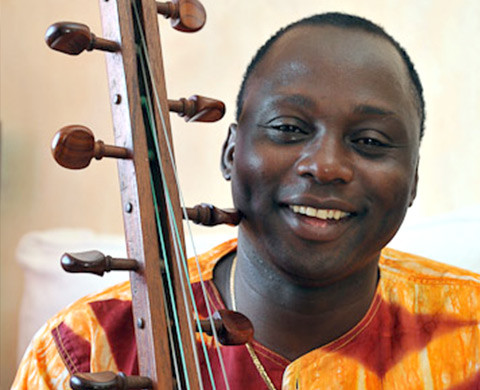
On November 7, 2015, in the hall of the Maison des Cultures du Monde in Paris, Yé Lassina Coulibaly strikes a balafon whose full sound resonates like a prayer. Behind him, Yan Kadi Faso pulses — djembé, bell, Peul flute. Six meters below, the George Sand hospital in Bourges, where he works as a music therapist, awaits: in the evening, he moves from the Mandingue ritual to the care room, music remaining that bridge between worlds he has never ceased to cross.
In brief
| Full name | Yé Lassina Coulibaly |
| Birth | 1966, Bobo-Dioulasso (Burkina Faso) |
| Field | West African traditional music, afro jazz — balafon, djembé, singing |
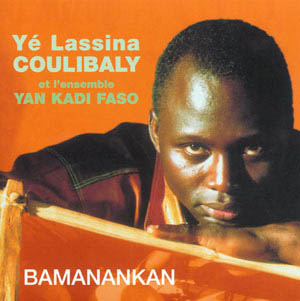
| Emblematic works | Bamanankan (2004), Yan Kadi Faso, Djembé |
| Distinctions | Participation in the Festival de l’Imaginaire (Paris, Maison des Cultures du Monde) |
Key dates
| Year | Event |
|---|---|
| 1966 | Birth in Bobo-Dioulasso, in a Bamanan family of Malian and Ivorian origin |
| 1970s-80s | Training in traditional West African music and initiation into the Korèduga (Mandingue initiatory society) |
| 1980s-1990s | Settlement in France; beginnings of collaborations with Michel Portal, Manu Dibango, and Salif Keita |
| 1980s | Founding of the ensemble Yan Kadi Faso and the Afro-jazz Europe-Africa orchestra |
| 2001 | Release of Djembé and the album Burkina Faso - Mali : Musiques Actuelles with Yan Kadi Faso |
| 2004 | Publication of Bamanankan with the Buda Musique label |
| 2012 | Appointment as music therapist at the George Sand hospital in Bourges |
| 2015 | Concert at the 19th Festival de l’Imaginaire, Maison des Cultures du Monde (Paris) |
| 2018 | Release of the album Duo Frissonore with André Serre-Milan, label Cinq Planètes |
| 2023 | Publication of L’Art des sons, l’art du soin, regard d’un musicothérapeute, Yé Lassina Coulibaly’s first book |
An initiated learning, a carried language
Yé Lassina Coulibaly grows up in contact with traditional music that crosses Bamanan generations. Far from a simple heritage, this music is a living learning: he integrates ritual practices of societies like the Korèduga — the Mandingue male initiation that teaches the relationship to nature and human destiny. “Tradition is created at every instant,” says the proverb he often quotes: a motto that makes transmission not a copy, but a dialogue.
Child and adolescent in Bobo-Dioulasso, his ear catches the polyphonies of balafons (large African xylophones), the rumble of djembé (wooden goblet drums), and the breaths of Peul flutes. These instruments will become his vocabulary.
From the 1980s, he leaves Burkina Faso for France. There, he does not limit himself to reproducing a fixed repertoire: he founds Yan Kadi Faso, an ensemble that gathers balafons, djembé, bell, and flute, as well as the Afro-jazz Europe-Africa orchestra. This musical current — a fusion of Western jazz and traditional African rhythms, popularized by figures like the Tou Tou or the Ambassadeurs — allows him to create a bridge between two sound continents.
He will collaborate with international figures — Michel Portal, French jazz clarinetist, Manu Dibango, pioneer of soul african, and Salif Keita, the “black gold” of Africa — as well as with the Percussions de Nantes, and perform at festivals like Africa Fête (Paris) or Europa Jazz.
From stage to hospital: music therapy as destiny
While Yan Kadi Faso carries the sound of Burkina Faso, Yé Lassina Coulibaly breathes into it texts that speak of today: deforestation, scarcity of water, youth unemployment, forced marriage, freedom of expression. His music does not slam the door of the past; it returns to it to extract what can serve the present.
It is this conviction that leads him, at the turn of the 2010s, to explore another face of music: that of care. In September 2012, he joins the George Sand hospital in Bourges as a music therapist. Music therapy — the therapeutic use of music to soothe pain, relieve anxiety, or accompany the work of mourning — is not for him a career change: it is the logical continuation of an art he conceives as a remedy. He is professionally trained in it and has been practicing since that date, alternating between stages and care rooms.
In 2023, he publishes his first book: L’Art des sons, l’art du soin, regard d’un musicothérapeute. A work that builds a bridge between the tradition of the balafon and the contemporary realities of a care often unknown in the West.
Major works
| Work | Year | Why it is essential |
|---|---|---|
| Bamanankan | 2004 | First major solo album, published by the Buda Musique label (specialist of African music); carries the voice of the Mandingue balafon into the world |
| Yan Kadi Faso (ensemble) | From 1980s | Founding collective mixing balafons, djembé, bell, and Peul flute; lives the proverb “tradition is created at every instant” |
| Burkina Faso - Mali : Musiques Actuelles (with Yan Kadi Faso) | 2001 | Compilation that presents to the Western public the current sounds of Burkina Faso and Mali |
| Djembé (Bourges) | 2001 | Solo instrumental album that displays the virtuosity of his drumming |
Heritage and influence
Yé Lassina Coulibaly embodies a rare path: that of a musician who has never betrayed his traditional matrix while exploring the world, and who succeeded in making music an instrument of care. The following generations of West African artists — those who navigate between balafon and electronics, between stage and care room — owe him an example: one can be first a balafon player, and remain whole.
Sources and references
- “Yé Lassina Coulibaly”, Wikipedia, https://fr.wikipedia.org/wiki/Y%C3%A9_Lassina_Coulibaly, accessed November 6, 2025.
- « Yé Lassina Coulibaly et l’ensemble Yan Kadi Faso », Maison des Cultures du Monde, https://www.maisondesculturesdumonde.org/actualite/ye-lassina-coulibaly-et-yan-kadi-faso, accessed 6 November 2025.
- « Ye Lassina Coulibaly », Music In Africa, https://musicinafrica.net/fr/directory/ye-lassina-coulibaly/, accessed 6 November 2025.
- « Yé Lassina Coulibaly », Rate Your Music, https://rateyourmusic.com/artist/ye_lassina_coulibaly, accessed 6 November 2025.
- « Musicothérapie : La grande passion retrouvée pour Yé Lassina Coulibaly », Africultures (Le Faso), https://africultures.com/murmures?no=11770, accessed 6 November 2025.
- « Le Berruyer Yé Lassina Coulibaly sort un livre sur la musicothérapie », Le Berry Républicain, https://www.leberry.fr/bourges-18000/loisirs/le-berruyer-ye-lassina-coulibaly-sort-un-livre-sur-la-musicotherapie_14243092/, accessed 6 November 2025.
- « Yé Lassina Coulibaly Discography », Qobuz/Buda Musique, https://www.qobuz.com/fi-en/interpreter/ye-lassina-coulibaly/40893, accessed 6 November 2025.