Botswana, the Musical Crossroads of Southern Africa
Did you know? The landlocked country of 2.3 million people, Botswana, hosted the first International School of Music for Southern Africa in Gaborone. Founded by Hugh Masekela in 1985, it was established while the musician was living in exile in the capital.
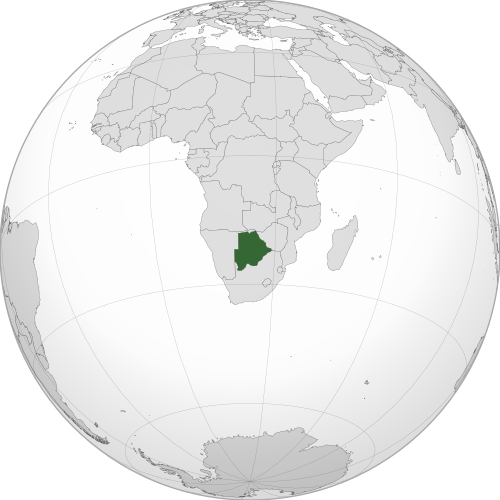
Botswana is a small country with great influences. Landlocked between South Africa, Namibia, Zimbabwe and Zambia, this nation of 2.3 million people — an area equivalent to that of France with one-twelfth the population — boasts one of the richest musical scenes in Southern Africa. Far from clichés about a “mysterious Africa,” Botswana music is urban, connected and hybrid: it draws from the millennia-old instruments of the Tswana people and the San, absorbs South African jazz, American hip-hop, Johannesburg kwaito and Pretoria amapiano, never giving up its identity.
The uniqueness of Botswana lies in this dual dynamic: a living community tradition embodied by the dikhwaere choirs coexists with a vibrant urban scene where hip-hop, amapiano and Afropop intersect. Far from being merely a receptacle for regional influences, Botswana produces unique genres and attracts exiled artists.
From Ancient Instruments to Ethnic Diversity
Traditional Botswana music is first and foremost vocal, structured around call-and-response patterns where a lead singer is relayed by a choir. The melodies rely on a pentatonic scale — five notes — and generally span less than an octave. Since Setswana is a tonal language, pitch variations conveyed by voice or flutes carry meaning.
The country’s emblematic instrument is the segankuru (or segaba), a one-stringed musical bow played with a bull-hair bow and a metal can as resonator. San musicians play the quashi, a four- or seven-stringed lute-bow, and the dzoma, an instrument whose resonator faces the ground. The San used music to imitate bird cries or hoofbeats, a tradition confirmed by archaeology: a dated seburuburu (bone rattle) was discovered at the Matlapaneng site, and a 900-year-old bone flute at Bosutswe.
Dance is inseparable from traditional music. The matlhowa, coconut rattles fixed to the ankles, accompany intense bodily movements, while hand-clapping — historically assigned to women — structures the rhythms. The practice of dikhwaere, choral and danced music, remains the cornerstone of community musical life, particularly in the Kgatleng region. Choirs compete with choreographies during seasonal celebrations and a national competition that has become an institution.
Colonisation, Independence and the Radio Era
British missionaries of the 19th century disrupted the Botswana musical landscape by opposing the link between traditional music and indigenous spiritual practice. Church choirs replaced community practices, and traditional music was only partially documented — a silence that ethnomusicologists still regret.
Independence in 1966 sparked a resurgence of traditional music as an element of identity building. The national radio played a central role: early stations broadcast choirs and folk songs on air. Ratsie Setlhako, singer and segaba player, became the defining figure of this period and performed at most national events between 1966 and his death in 1976.
The first group to record in Botswana was the Brown Kalanga Wizards, formed in the 1950s and released two albums. The dikopelo of the Bakgatla ba Kgafela community — a cappella chants blending community history with messages about AIDS, poverty and corruption — was inscribed in 2013 on the UNESCO Intangible Cultural Heritage list of endangered heritage1.
The Post-Apartheid Turn: Kwaito, Hip-Hop and Motswako
The opening of the South African border in 1994, after the end of apartheid, was a decisive turning point. Kwaito — this genre born in Johannesburg townships that fuses marabi, kwela and house music — flooded Botswana. But it was hip-hop that transformed the local scene most profoundly.
Arriving in the 1980s with young people from affluent families exposed to American culture via television and imported records, hip-hop initially suffered from its “elite” status in a country then experiencing rapid economic growth (1977–1999), fueled by diamond revenues. Labels and clubs preferred kwaito, perceived as more popular. A critical turning point came via radio: DJ Sid (Ndala Baitsile) hosted Rap Blast on Radio Botswana 2 in the early 1990s, followed by Draztik with Strictly Hip Hop on RB2 and Yarona FM’s Sprite Rap Activity, while also being a member of the Cashless Society group. Radio democratised the genre.
Around 2000, hip-hop exploded. Artists like Tha Orakle, Apollo D (ex-Apollo Diablo), Zeus and Scar built national audiences. Mista Doe won the 2006 Channel O Award for Best Southern African Artist for Hot to Death, the first continental recognition for a Botswana rapper2. Motswako was born in this dynamic: a unique subgenre of Botswana where rap is delivered in Setswana. Tebogo Mapine (Nomadic) popularised it from the 1990s as a member of P-Side Crew. Zeus (Game Bantsi, born in 1986 in Serowe) became its iconic figure post-2010:
“Motswako is a genre because we are Tswana. We are young boys promoting Tswana culture. I believe in Africanism; my sound is tied to authenticity. I want young Africans to embrace who they are through my music.”3
Kwaito-kwasa — a fusion of kwaito and kwasa kwasa, a genre of Congolese origin based on body movement — has become specifically Botswana, driven by Franco Lesokwane and Chris Manto 7.
Pioneers and contemporary scene: from exile to international ambition
Hugh Masekela (1939-2018) is the most famous figure linked to Botswana. This South African trumpeter fled apartheid and settled in Gaborone in 1981. He founded the Botswana International School of Music (BISM) there in 1985, serving as its first director. The album Techno-Bush (1984), recorded in exile, blends Wimoweh, Smokian and Grazing in the Grass into modern arrangements — a manifesto refusing that apartheid dictate his career4.
Vee Mampeezy (Odirile Sento, born 1983 in Hukuntsi) popularized kwaito-kwasa as early as 2002 with Lamalanga, earning him international recognition. He founded Black Money Makers in 2006 and now collaborates with DJ Maphorisa and Mellow & Sleazy5. Dr Vom (Kangangwani Mogocha, born 1977) is the major contemporary figure of dikhwaere. His song Tsaya Thobane (2007), recorded with the Rangers Marena Choir, became a sort of unofficial national anthem: during the 50th independence anniversary in 2016, it was spontaneously played on stage and the audience sang along during a five-kilometer parade in Gaborone6.
Mpho Sebina (born 1989 in Mochudi), a singer at the crossroads of soul, R&B and Tswana folk, became in 2024 the first Botswana musician to join the Grammy Awards Academy7. Dato Seiko saw his single The Vow (2023) generate over 44 million TikTok views. The duo Khoisan (Thabang Rasefako and Oratile Kofa) won a publishing deal with the South African label Muthaland and represented Botswana at the FNB Africa Day concert8.
Amapiano — a fusion of deep house, jazz, kwaito and lounge characterized by its piano melodies and log drum basses — quickly conquered the country. Way Kay (Mbaki Mohako, from Francistown) is the most striking case: his EP Woza Way Kay (October 2026) invites three central names of South African amapiano and marks a turning point in the genre’s power dynamics9. Tefo Bright (born 1998 in Maun) and HarryCane BW illustrate the phenomenon’s scale, with tracks nominated for YAMAs, Botswana’s music Oscars.
The Botswana music industry boasts solid infrastructure: Yarona FM and Gabz FM train generations of listeners, BTV broadcasts Mokaragana and Flava Dome as far as Namibia, Zambia and Zimbabwe, while the Botswana National Arts Council, established in 2020, distributes significant public funds10. But the scene faces challenges. Rapid urbanization has wiped out most traditional instruments11, and younger generations migrate to Gaborone or abroad. Vee Mampeezy’s commitment to protecting Botswana identity on the international stage12 illustrates the stakes: how to export music without diluting it?
Botswana is a fascinating observatory of contemporary African music. Neither an enclave nor merely a receptacle, it is a hub where segaba dialogues with amapiano, where hip-hop speaks in Setswana, and where exiled Masekela crosses paths with producer Way Kay. While market size constitutes an economic obstacle, it is also a cultural asset: every Botswana artist develops a unique signature, identifiable and capable of crossing borders without getting lost.
Sources
-
UNESCO, Dikopelo Folk Music of Bakgatla ba Kgafela (2013), intangible heritage inscriptions. ↩︎
-
Music In Africa, “Hip hop in Botswana” (musicinafrica.net, full article on the genre’s evolution). ↩︎
-
Zeus, interview in Sunday World, 2013, cited in Hip hop in Botswana, Music In Africa, musicinafrica.net. ↩︎
-
NPR, “Where Did the Unique Style of Botswana’s Guitarists Come From?”, April 2018 (npr.org). ↩︎
-
Botswana Gazette, “Vee Mampeezy is Unstoppable”, 2024-2025. ↩︎
-
Mmegi Online and Botswana media, reviews of the 50th independence anniversary celebrations (2016). ↩︎
-
Grammy.com, announcement of Mpho Sebina’s admission to the Grammy Academy (2024). ↩︎
-
The Voice BW, “Celeb Edition with Noello” (thevoicebw.com). ↩︎
-
Way Kay, Woza Way Kay EP (2026), mentioned in Time to House (timetohouse.com, October 2026). ↩︎
-
Your Botswana, “The History of Botswana’s Hip Hop Music” (yourbotswana.com). ↩︎
-
Music In Africa, 2018, on the disappearance of traditional instruments. ↩︎
-
Vee Mampeezy, panel on music production at Creators Assembly (Maitisong), cited in Botswana Youth Magazine. ↩︎