The Malawi, a musical history in three acts
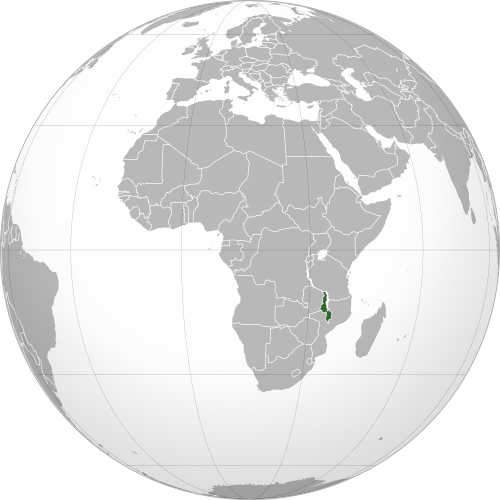
Malawi, nicknamed the warm breast of Africa by explorer David Livingstone in the 19th century, is also a full-fledged musical crossroads. This landlocked country of southern Africa, with its elongated contours bordered by the great eponymous lake, has built a discreet but fertile musical scene where Chichewa polyphonies meet reggae rhythms from Jamaica, banda brass instruments, and today, urban productions connected to London1. From the court music of the Nyungwe kingdoms to the digital studios of Lilongwe, passing through the prisons of Zomba and the beaches of Nkhata Bay, Malawian music tells a story of mixing and resilience2.
From forest origins to guitar pioneers
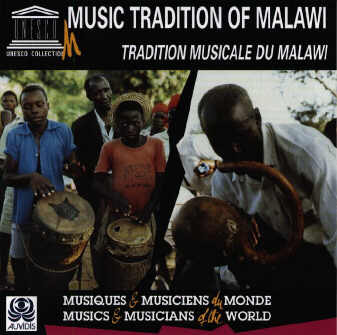
Before British colonization (protectorate of 1891), musical life was already a tightly woven fabric of community practices. The Chewa — the country’s largest ethnic group, representing nearly 60% of the population — maintained a musical tradition rooted in rites: the initiation ceremonies Gule Wamkulu, inscribed on UNESCO’s intangible heritage list in 2008, mobilize masked dances and songs that structure all social life3. The northern Lomwe practiced vocal polyphony and nthondwe drums, while the southern Yao, influenced by Swahili culture and Islam, integrated Arab and Indian melodies4.
Colonization introduced Christian singing and European hymns, quickly adapted into local languages, creating a syncretic repertoire still alive today5. The Indian community brought as contract workers enriched the scene with string instruments that left lasting traces in Malawian guitar playing6.
Post-independence (1964) saw the emergence of a first generation of professional artists. Guitarist Dr Daniel Kachamba (c. 1931-1985) is universally recognized as the father of modern music in the country. Trained in church singing, he developed a solo guitar style simultaneously imitating bass and backing vocals, thus creating his own orchestra7. His compositions, blending local rhythms with Western harmonic progressions, paved the way for a full professionalization of the scene.
Lucius Banda, known as “Soldier” (1956-2016), extended this heritage. A virtuoso guitarist born in the Mangochi region by the lake, Soldier first played in Congolese rumba groups before developing his own repertoire mixing pop, soul, and Chewa rhythms8. With his brother Paul, he formed the Orchestra Machengedwa. His brutal death in 2016, following a car accident, plunged the country into mourning and led to a national memorial9.
In the south of the country, the village of Chileka, near Blantyre, became a quarter for musicians. The Fumulani family, with guitarist Robert Fumulani and his sons Musamude, Anjiru, and Chizondi, first played in the group Likhubula before switching to reggae10. It was on this soil that a young man would become the most influential figure in Malawian reggae.
Evison Matafale and the international scene
Evison Matafale (1969-2001) was born in the village of Singano, in Chileka. Starting composition at nine years old, he climbed the rungs of the local scene before founding the Black Missionaries in the late 1990s11. His first album, Kuimba 1, released in 1999, made a sensation with the hit “Watsetsereka”12. Matafale, converted to Rastafarianism, adapted classic Jamaican reggae themes — resistance to oppression, social justice, the dignity of the poor — to Malawian realities, denouncing corruption and inequalities13.
The Black Missionaries, whose original members included Peter Amidu on bass and the Fumulani brothers, became the country’s most popular reggae ensemble14. On November 24, 2001, Matafale was arrested by Malawian police and died three days later at the Lilongwe hospital15. His death in custody sparked student protests and remains a controversial chapter16. After his disappearance, the Black Missionaries continued under the direction of the surviving Fumulani brothers, publishing the Kuimba series (which means to sing in Swahili), and in 2025 they continue to tour17.
Although Malawi remains a small country, its music has found remarkable export routes. The most visible exit door is the Lake of Stars festival, founded in 2004 by Briton Will Jameson18. The festival has become one of the largest cultural events in southern Africa, attracting more than 6,000 visitors from 30 countries19.
It was on this scene that Esau Mwamwaya found his chance. In 2007, while running a second-hand shop in London, he met Etienne Tron of the duo Radioclit. Together, they recorded a mixtape in 2008 that went viral on the internet: over 300,000 downloads, praised by Pitchfork20. The album Warm Heart of Africa (2009), recorded in part in Lilongwe, saw Mwamwaya sing in Chichewa and English over European beats, alongside M.I.A. and Ezra Koenig (Vampire Weekend)21. The flagship track won the World Beat Song award at the Independent Music Awards, and the group shared the stage with Florence + the Machine and The XX22. Mwamwaya went from furniture seller to headliner of Lake of Stars23.
Current Stars and the Future
The contemporary Malawian scene is impressively diverse. Tay Grin, a biline rapper (born in Malawi and raised in Norway), made his name on the European stage24. Tsar Leo, a singer and multi-instrumentalist, blends reggae, soul, and acoustic folk25.
Among the new female voices, Lily Banda (born in 1990, known as Lily B) has established herself as a complete artist — singer, songwriter, dancer, and poet. Her debut album Black Kiss (2014) and her fourth release, Original Thought (2018), place personal expression and female emancipation at the center26. In 2020, she was named among the 35 influential African personalities under 3527. Soul singer Lilia, signed to the label Serato Media, releases singles that air on Malawian and South African radio stations28.
Producer Blasto popularized dancehall reggae tracks with a young audience, while Young Kay, born in Mangochi, modernizes hip-hop in Chichewa by addressing urban life and youth aspirations29.
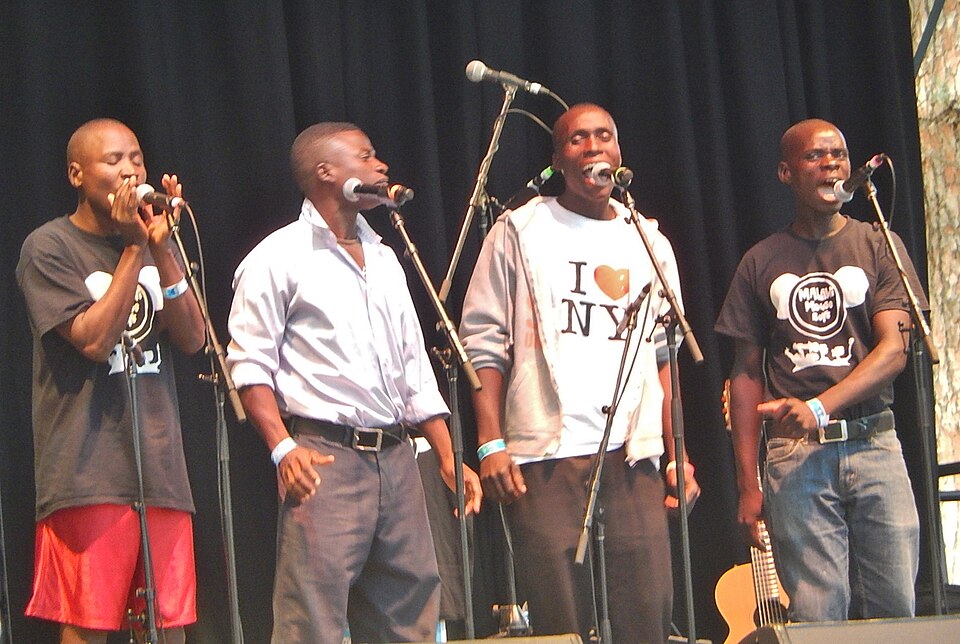
In 2015, the unexpected spotlight on the Zomba Prison Project went global30. Grammy-winning producer Ian Brennan discovered in Zomba prison a choir formed of inmates incarcerated for everything from witchcraft to murder. The album I Have No Everything Here (2015) was nominated for a Grammy Award — the first Grammy nomination ever granted to a Malawian artist31. The track “I Have No Everything in Here” became an anthem of resilience32.
Malawian music is propelled by a growing ecosystem. The Musicians Union of Malawi (MUSOMA) works to improve artists’ rights33. The Lake of Stars festival celebrated its twentieth anniversary in 2024, coinciding with the 60th anniversary of independence34. The festival’s return is scheduled for 202635.
From the church hymns of early missionaries to a viral London mixtape, from Dr Kachamba’s guitar solo to the Zomba Prison choir, Malawian music is a story of voices that refuse to be silenced. The country, often cited as one of the poorest in the world, paradoxically exports a vibrant culture36.
Sources and references
-
Afropop Worldwide, Preserving the Sounds of Malawi, https://www.afropop.org/articles/preserving-the-sounds-of-malawi. ↩︎
-
Songlines, Music in Malawi, https://www.songlines.co.uk/content/features/music-in-malawi. ↩︎
-
UNESCO, Gule Wamkulu of the Chewa people, https://ich.unesco.org. ↩︎
-
Wikipedia, Music of Malawi, https://en.wikipedia.org/wiki/Music_of_Malawi. ↩︎
-
Stern’s Guide to African Music, Malawi, references skill sterns-guide-african-music. ↩︎
-
Stern’s Guide to African Music, same source. ↩︎
-
MWNation, Digging Authentic Sounds of Malawi, https://mwnation.com/digging-authentic-sounds-of-malawi/. ↩︎
-
Natari, Malawi Music Archive, http://www.natari.com/malawi.htm. ↩︎
-
Same as [8]. ↩︎
-
Grokipedia, Black Missionaries, https://grokipedia.com/page/black_missionaries. ↩︎
-
Grokipedia, Evison Matafale, https://grokipedia.com/page/evison_matafale. ↩︎
-
Same as [11]. ↩︎
-
Same as [11] and [15]. ↩︎
-
Last.fm, Black Missionaries biography, https://last.fm/music/Black+Missionaries/+wiki. ↩︎
-
Wikipedia, Black Missionaries, https://en.wikipedia.org/wiki/Black_Missionaries. ↩︎
-
Same as [11] and [15]. ↩︎
-
Grokipedia, Black Missionaries, 2025 album Kuimba 13. ↩︎
-
Lake of Stars official, Our Story, https://lakeofstars.org/about/. ↩︎
-
University of Glasgow, Partying with a Purpose at Lake of Stars, 2023, https://doi.org/10.33823/jfs.2023.5.1.156. ↩︎
-
Pitchfork, Warm Heart of Africa Album Review, 2009, https://pitchfork.com/reviews/albums/13518-warm-heart-of-africa/. ↩︎
-
The Very Best Bandcamp, https://theverybestmusic.bandcamp.com/album/warm-heart-of-africa. ↩︎
-
Malawi-Music.com, The Very Best, https://www.malawi-music.com/T/28-the-very-best. ↩︎
-
BBC, A fairytale born in Malawi, http://news.bbc.co.uk/2/hi/africa/8310951.stm. ↩︎
-
Sweet Mother African Music, Music of Liberation, references on southern hip-hop. ↩︎
-
World Music Guide, ch06-south-africa, references southern diaspora. ↩︎
-
Grokipedia, Lily Banda, https://grokipedia.com/page/Lily_Banda. ↩︎
-
Africa 35:35 Awards, 2020, same source. ↩︎
-
Nyasa Times, Malawi soulful singer Lilia signed, https://nyasatimes.com/malawi-soulful-singer-lilia-signed-by-south-africa-based-company. ↩︎
-
Malawi-Music.com, Lilia, https://malawi-music.com/L/187-lilia. ↩︎
-
Al Jazeera, Maximum-security prisoners receive Grammy nomination, 2015, https://www.aljazeera.com/news/2015/12/9/maximum-security-prisoners-receive-grammy-nomination. ↩︎
-
KSL, Prisoners score Malawi’s first Grammy nomination, AP, 2015, https://www.ksl.com/article/news/entertainment/entertainment-news/prisoners-score-malawis-first-grammy-nomination/38056422. ↩︎
-
NPR, The Zomba Prison Musicians Have A Follow-Up, 2016, https://www.npr.org/sections/goatsandsoda/2016/11/05/500387463/prisoners-and-guards-sing-in-sequel-to-grammy-nommed-album. ↩︎
-
Times360 Malawi, Musicians Union of Malawi, https://www.facebook.com/Times360Malawi. ↩︎
-
Malawi Tourism, Lake of Stars 20 year anniversary, 2024, https://www.malawitourism.com/news-blogs/lake-of-stars-to-make-triumphant-return-for-20-year-anniversary/. ↩︎
-
Malawi Tourism, Lake of Stars Festival, https://www.malawitourism.com/experiences/events/lake-of-stars-festival/. ↩︎
-
Afropop Worldwide, Ian Brennan on the Zomba Prison Project, https://www.afropop.org/articles/ian-brennan-on-the-zomba-prison-project. ↩︎