Musical History of Sierra Leone
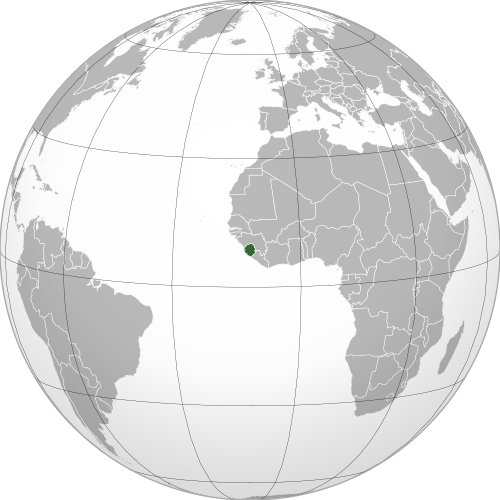
Between Freetown and the eastern townships, Sierra Leonese music has ceaselessly reinvented itself. From the finger-picked guitar of S.E. Rogie to the amapiano rhythms of Drizilik, passing through the resilience of Refugee All Stars born in camps, this small West African country has produced a scene where each generation forges its own language — and where local traditions continue to nourish global sounds.
Roots: Brass Bands, Maroons, and Maringa
Sierra Leone is nestled at the extreme corner of Africa, on a coast where African, British, Caribbean, and Creole influences have crossed1. Ethnic groups — Mende and Temne at the forefront, but also Mandingo, Fula, Susu, Limba, and Yalunka — each possess ancient musical traditions transmitted by griots and community ceremonies2. But the modern musical history of the country begins elsewhere: in Freetown.
Founded in 1787 by English philanthropists to house freed slaves, Freetown became a crucible. The Creoles — descendants of Liberated Africans from different regions of Africa — forged an autonomous culture there, with the Krio language, a creole with English vocabulary and African grammar3. It is in this milieu that modern Sierra Leonese music was born.
In the 19th century, Kru (Liberian sailors) and Creole sailors introduced the acoustic guitar to the coast4. They played it in palm-wine taverns, these port bars where palm wine is consumed — hence the name given to this style: palm-wine music. In Sierra Leone, this genre became the maringa, a light, dancing finger-picked guitar rhythm5. It gained popularity as early as the 1920s and durably structured local urban music6.
The path to modern music also passes through the military school. The Royal West African Frontier Force (RWAFF) maintains an active brass band that durably influenced the Freetown scene7. Thanksgiving ceremonies — school anniversaries — gather brass bands, students in uniform, and former pupils in straw hats in parades reminiscent of the New Orleans style8.
The Golden Age: 1950s–1970s
World War II triggered an explosion of nightlife in Freetown. Groups like the Mayfair Jazz Band, the Blue Rhythm Band, Ralph Wright’s Melody Swingers, and the Njala Symphonic Orchestra animated the halls9. Amplification and electric instruments arrived, and modern Sierra Leonese music entered a new era.
At the height of this effervescence stands the name Ebenezer Calendar (1912–1985). A professional joiner — he also made coffins — Calendar transformed into a musical chronicler10. His songs tell everyday life: he immortalized the first double-decaquage race in January 1951 by naming the director, the driver, everyone11. Under the pseudonym Ebenezer Calender, he recorded 78s for Decca and HMV playing the maringa, his characteristic style featuring the gombe (ceremonial bass drum) and guitar12. He later worked at the Sierra Leone Broadcasting Service as director of traditional music from 1960 to 198413.
The 1960s scene broadened. Ghanaian highlife arrived in Freetown, rumba and cha-cha styles spread, and Geraldo Pino (alias Gerald Pine) formed the Heartbeats in 196114. Pino brought the soul style from Liberia, integrating it into his repertoire and introducing it to Ghana and Nigeria — a young Fela Kuti left influenced15. Independence in 1961 fueled this cultural effervescence16.
The name rising then was that of S.E. Rogie (1926–1994). A complete autodidact from Fonikoh in the Pujehun district, Rogie ran his own tailor shop by day and performed at night17. His style blended palm-wine, highlife, and American country — he admired Jimmie Rodgers, imitating his yodel18. He sang in four languages (English, Krio, Mende, Temne), formed The Morningstars in 1965, and recorded “My Lovely Elizabeth”, a title that became cult19. In 1961, he performed for Queen Elizabeth II during the independence celebrations20. In 1973, he settled in the United States, in San Francisco, and used Rogie as a surname considered more African21. He became a cultural ambassador in Californian schools and received distinctions from the U.S. Congress and Senate22. His guitar was later sampled by Vampire Weekend and Adrian Sherwood23. In December 2004, the BBC ranked “My Lovely Elizabeth” among the ten best songs ever produced by an African musician24.
At the same time, groups like the Afro National Band — led by Sule and singer Patricia Koroma — recorded in the United States and the United Kingdom25. Bunny Mack (Cecil MacCormack) went to England, then partnered with producer Aki Dean; his album Let Me Love You (1981) achieved international success, reaching number one in Nairobi26.
War, exile and renaissance
The decline begins with the collapse of the local record industry. By the 1980s, pirate cassettes dominate the market and record production crumbles27. Musicians emigrate — to London, the United States, Spain. S.E. Rogie founds his own label, Rogiephone, and maintains an international career28.
Then comes the civil war (1991-2002). Music is devastated. Some artists flee to Conakry, Guinea; others stay, traumatized. It is in this context that the Refugee All Stars emerge. Reuben Koroma, his wife Grace, and Franco (Francis Langba), musicians from Freetown, find themselves in the Kalia refugee camp29. A Canadian organization provides them with two old electric guitars and a microphone30. In Sembakounya, they join Mohammed Bangura and Arahim, both amputated by rebels, and Black Nature, an orphaned teenage rapper31. In 2002, American documentarians follow them for three years32. Their first album Living Like a Refugee, released in 2006 on the Anti label, blends palm-wine, gumbe, reggae roots and highlife33. The group tours international stages, appears on the Oprah Winfrey Show, and their story is told in a documentary film34.
The new school: Krio Fusion and the contemporary scene
After the war, the scene rebuilds. The Freetown Music Festival, created in 2016, aims to transform an industry where playback (simulated performance) was the norm35. The new school — Yung Sal, Drizilik, Kracktwist, Samza, Empress Pee — grew up with real bands on stage36.
At the forefront, Drizilik (Benjamin Menelik George, born in Waterloo) embodies this renaissance. He named his style Krio Fusion — a blend of traditional bubu and goombay, afrobeats, hip-hop and R&B, sung in Krio37. His album Shukubly wins Album of the Year and he becomes the most streamed musician on Sierra Leonean platforms, with over 12 million streams38. In 2025, his EP Wait and See accumulates 4 million streams on Audiomack39. He obtains an O-1B American visa, signs with UBA and Orange, and sells out the FBC Amphitheater in Freetown40.
- Hip-hop, introduced in the early 2000s, finds its major figures with Kao Denero (Amara Dennis Turay), from
- Lungi41. His album King of Africa (2005) earns him his nickname. He champions urban music in Krio and pidgin, and remains
- active into the 2020s42. Star Zee, for her part, establishes the female rapper by drawing inspiration from the legacy of Afro National
- her track Doli (2025) echoes Patricia Koroma’s Satta, reinterpreting it in Mende43.
Did you know? AFRICA NO. 1, the national radio station founded in 1992 by the SLPP government, is one of the main broadcasters of Sierra Leonean music. It opposes Africa FM from the APC, created in 1999 — radios have become political battlegrounds beyond music44.
The diaspora will play a decisive role in the renewal. Artists like Samza (based in Perth) become the “kingmakers” of the scene, discovering and championing young talents45. Studios in Kenema, the country’s second city, now also produce — Team Kenema Kenema publishes Kema Ena in 202546. Collectives like Telem Uncommon Sounds, supported by MIT Sloan, attempt to build a creative infrastructure in Freetown47.
Heritage and looking toward the future
Sierra Leone is not Nigeria or Ghana, but it forges a sound that is its own48. Bubu, goombay, maringa — genres born in port bars and community ceremonies — continue to fuel the most contemporary productions49. Only two music schools (Ballanta in Freetown, Kakua in Bo) train young instrumentalists50. Live payment remains a struggle, piracy persists51. But every new track in Krio, every concert performance, every international stream gives a voice back to a country whose music has never stopped answering adversity.
As S.E. Rogie’s song says: cheerfully, with style, and the certainty that music does not wait for perfect opportunities to exist52.
Sources and references
-
Graham, Ronnie (1988). Stern’s Guide to Contemporary African Music, chap. 3 Sierra Leone. Zwan Publications. URL: /opt/data/skills_local/sterns-guide-african-music/references/sierra-leone.md ↩︎
-
World Music Guide (François Bensignor, Larousse, 2002). « West Africa », Les Musiques du monde, chap. 3. Cited via skill_view. ↩︎
-
Bender, Wolfgang (1991). Sweet Mother: Modern African Music, chap. 3 West African Highlife. University of Chicago Press. URL: /opt/data/skills_local/sweet-mother-african-music/references/ch3-west-african-highlife.md ↩︎
-
Melodigging, « Palm-Wine », melodicdigging.com — description of palm-wine as a West African coastal style. ↩︎
-
Wikipedia, « Maringa (music) » — maringa as a Sierra Leonean variant of palm-wine. ↩︎
-
Pan African Music, « The dizzying destiny of palm wine music », pan-african-music.com — history of palm-wine and maringa in Freetown. ↩︎
-
Graham (1988), op. cit. — the RWAFF Band dominates the pre-1940 period. ↩︎
-
Bender (1991), op. cit. — Thanksgiving and brass bands of Freetown. ↩︎
-
Graham (1988), op. cit. — Mayfair Jazz Band, Blue Rhythm Band, Njala Symphonic Orchestra. ↩︎
-
Bender (1991), op. cit., p. 134 — Calendar, a joignier and musical historian. ↩︎
-
Bender (1991), op. cit., p. 134-135 — the song of the January 1951 double-décaquage. ↩︎
-
Graham (1988), op. cit. — Calendar recorded for Decca and HMV. ↩︎
-
Graham (1988), op. cit. — Calendar at the SLBS from 1960 to 1984. ↩︎
-
Graham (1988), op. cit. — Geraldo Pino and the Heartbeats in 1961. ↩︎
-
Graham (1988), op. cit. — Pino influences Fela. ↩︎
-
Graham (1988), op. cit. — independence in 1961 and cultural effervescence. ↩︎
-
Wikipedia, « S.E. Rogie » — biography, autodidact, tailor. ↩︎
-
Wikipedia, op. cit. — influences of Jimmie Rodgers. ↩︎
-
Wikipedia, op. cit. — four languages, Morningstars, « My Lovely Elizabeth ». ↩︎
-
Rogie (serogie.com) — performance for Queen Elizabeth II in 1961. ↩︎
-
Wikipedia, op. cit. — migration to San Francisco in 1973. ↩︎
-
Rogie (serogie.com) — distinctions from the Congress and Senate. ↩︎
-
Wikipedia, op. cit. — sample by Vampire Weekend and Adrian Sherwood. ↩︎
-
Rogie (serogie.com) — BBC poll 2004: « My Lovely Elizabeth » among the top 10. ↩︎
-
Graham (1988), op. cit. — Afro National Band, Patricia Koroma. ↩︎
-
Graham (1988), op. cit. — Bunny Mack, Let Me Love You, hit in Nairobi. ↩︎
-
Graham (1988), op. cit. — pirate cassettes, collapse. ↩︎
-
Wikipedia, op. cit. — Rogiephone, international career. ↩︎
-
Wikipedia, « Sierra Leone’s Refugee All Stars » — Kalia camp, Guinea. ↩︎
-
L.A. Phil « Music Database » — two guitars and one microphone. ↩︎
-
L.A. Phil op. cit. — Bangura and Arahim amputees, Black Nature. ↩︎
-
L.A. Phil op. cit. — documentarians Banker White and Zach Niles. ↩︎
-
Wikipedia, op. cit. — Living Like a Refugee (2006), Anti. ↩︎
-
Wikipedia, op. cit. — Oprah Winfrey Show, 2005 documentary. ↩︎
-
People’s Stories Project, « Sound Checked: Live and Uncut in Freetown » (psp-culture.com) — Freetown Music Festival 2016. ↩︎
-
Music in Africa, « Live music in Sierra Leone » (musicinafrica.net) — new school and live groups. ↩︎
-
Okay Africa, « The Rising African Music Genres of 2026 » — definition of Krio Fusion. ↩︎
-
Drizilik (drizilik.com/bio) — 12M streams, Shukubly, King of the new school. ↩︎
-
Sierra Loaded (sierraloaded.sl) — Wait and See, 4M streams on Audiomack in 2025. ↩︎
-
Sierra Loaded op. cit. — O-1B visa, UBA, Orange, FBC Amphitheater. ↩︎
-
Music in Africa, « Kao Denero » — Lungi, Black Leo 4 Life. ↩︎
-
Sierra Loaded (sierraloaded.sl) — Kao Denero 2025, All Game Final, Living Legends. ↩︎
-
Blue Tree Audio (bluetreeaudio.com) — Star Zee, Doli 2025. ↩︎
-
Driscoll, Paul (2006). Sierra Leone: The Politics and Economy of Inclusive Growth. Palgrave Macmillan — discussion on Africa No. 1 and Africa FM as political instruments. ↩︎
-
Sierra Loaded op. cit. — Samza in Perth, AfroRudnez, A Perfect Time. ↩︎
-
Blue Tree Audio op. cit. — Team Kenema Kenema, Kema Ena 2025. ↩︎
-
MIT Sloan, « Music with a Mission » (mitsloan.mit.edu) — Telem Uncommon Sounds, Freetown. ↩︎
-
People’s Stories Project op. cit. — « Freetown is not Lagos or Accra ». ↩︎
-
Pan African Music op. cit. — bubu, goombay, maringa as contemporary roots. ↩︎
-
Music in Africa op. cit. — Ballanta Academy of Music, Kakua Music Academy. ↩︎
-
People’s Stories Project op. cit. — live payment and piracy. ↩︎
-
Rogie (serogie.com) — « Go Easy With Me », contextual citation from his repertoire. ↩︎