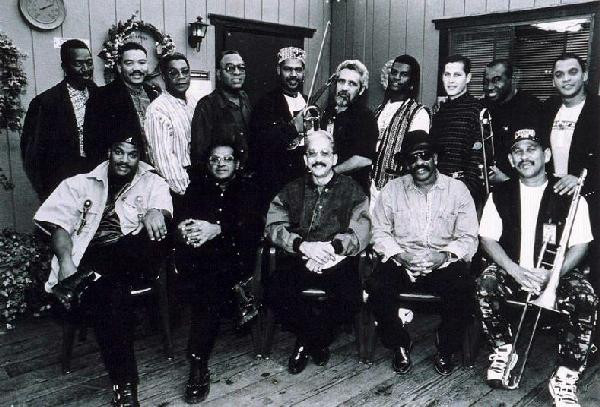
Songo, the Cuban rhythmic revolution born in Havana clubs
The montuno sound reigned supreme over Cuban popular music since the 1940s. In Havana dance halls, the structure of son and that of mambo set generations of dancers to rhythm. Then, around 1970, a group changed the game: Los Van Van, an ensemble founded by bassist Juan Formell, invented a new rhythm called songo (in Spanish “chant” or “melody”). This rhythm, born from the fusion between Afro-Cuban traditions and North American funk, became the DNA of contemporary Cuban music 1.
Songo is not merely a drum pattern. It is a rhythmic approach that transformed the way Cubans play and dance their own music. It paved the way for an even more violent genre, timba, which has dominated Cuban clubs since the 1980s. To understand songo, one must go back to the roots of son and explore how four percussionists disrupted decades of tradition.
From montuno son to songo: how a rhythm changed everything else
Cuban son was born at the end of the 19th century in the east of the island, in Santiago de Cuba. It fuses Spanish guitar (the tres) with African percussion, creating a style that became the dominant popular genre of Cuba for decades 2. In the 1940s and 50s, montuno son — the catchy variant of son, structured in verses and choruses 1 — evolved into mambo thanks to great orchestras. Arsenio Rodríguez, blind leader and genius of the tres, expanded this format by integrating brass instruments and congas. The result dominated Cuban dance until the Castroist revolution of 1959 3.
But starting in the 1960s, young Cubans listened to James Brown and the Rolling Stones just as much as Havana boleros. Elio Revé, a charismatic figure of a charanga orchestra (the classic format with flute, violins and rhythm section), decided to experiment with a fusion between changüí — a proto-son folk music from eastern Cuba 1 — and montuno son. The result was called Changui'68.
In 1969, Juan Formell, bassist of this ensemble, founded Los Van Van — “they will go” in Spanish, a promise of constant movement. On December 4, 1969, the group entered the studio for the first time with a line-up that would change the history of Cuban music: Formell on electric bass, Pupy Pedroso on piano, Blas Egües on North American drums and Raúl “El Yulo” Cárdenas on congas. The sound was fresh, modern, and deeply Cuban 4.
Songo emerged from this crucible between 1968 and 1970, developed collectively by Formell and his musicians. Blas Egües laid the rhythmic foundations with a drum kit without cymbals; Changuito, who arrived in 1970, enriched it decisively 5. Formell himself described songo as “the synthesis of a personality, a way of living and feeling music, a sum of cultures 4”. It is not a fixed rhythm but a state of mind.
Changuito: the genius behind the skins and sticks
José Luis “Changuito” Quintana (1948-2025) is undoubtedly the greatest Cuban percussionist of his time. Born on January 18, 1948 in Casablanca, a small village facing Havana, he grew up in a musical environment — his father Pedro Luis Quintana was the conguero of the Habana Jazz orchestra, which performed at the Tropicana. At five years old, he was already hitting his father’s bongó; at eight, he worked as a replacement at the Tropicana. He essentially trained himself, listening to jazz and funk records, absorbing the traditional rhythms of his black neighborhood 6.
When he joined Los Van Van in 1970, Changuito brought a radical innovation: he integrated North American drum rudiments into traditional Cuban techniques. He added the snare drum and cymbals to the kit, mixed timbales with drums, and created a hybrid that does not exist anywhere else. “Songo is a creation of master Formell,” he said. “I am the creator of songo as far as drums are concerned 5.”
His contribution to congas was equally revolutionary. He developed the “mano secreta” (secret hand) — a conga technique inspired by quinto patterns (the rumba conductor) to create constantly changing variations while respecting the counter-clave 6. This approach, taught in instructional videos published in collaboration with DCI/Warner Bros., influenced a whole generation of Latin percussionists around the world 1.
Changuito taught and played with the greatest — Irakere, Roy Hargrove, Jane Bunnett. He won a Grammy nomination in 1996 for “Ritmo y Candela,” an album paying tribute to great Cuban figures of percussion. Cuba awarded him the Alejo Carpentier medal. He died on June 6, 2025, at the age of 77 5. His legend is also reported by Francophone music press 7
The mechanics of the songo: when rumba meets funk
The characteristic sound of the songo relies on several technical innovations. The first is the expansion of rhythmic instrumentation: to traditional Cuban timbales are added a snare drum, charleston (hi-hat), and sometimes electronic drums. The result is a timbales/drums hybrid of North American origin 8.
The bell pattern (cencerro or campana) of the songo is an embellishment of the cáscara pattern from Matanzas used in guaguancó (one of the three forms of Cuban rumba) 1. The right hand plays the four strong beats — on a closed charleston, woodblock, or bell — while the left hand improvises off-beat patterns on the snare drum, cowbells, or toms. This arrangement recalls James Brown’s funk and the groove of American rock groups 4.
The congas (tumbadoras) play the traditional tumbao on the large drum while the small drum reproduces the phrases of the rumba quinto. These quinto-like phrases can change continuously, but they always follow a precise counterclave pattern 6. It is this complex polyrhythm, where each percussionist carries an independent but complementary line, that gives the songo its “funk” character while remaining deeply Cuban 8.
The piano and bass also play their role. Pupy Pedroso, the founding pianist, invents guajeos — the characteristic melodic ostinatos of Cuban sound 4 — in a rock style, with progressions im – bVII – bVI borrowed from Anglo-Saxon music 1. Formell, for his part, respects the codes of traditional Cuban bass while introducing syncopated metrics and more adventurous melodic lines. The result is a groove that has been making people dance from Havana to Tokyo 9.
From songo to timba: the legacy of a rhythmic revolution
The songo is not an end in itself but a bridge. From 1980, Los Van Van continued to innovate by adding trombones — a first for a charanga group 1. In 1985, the group introduced synthesizers. The sound became heavier and more complex, giving birth to timba: a musical form that absorbs funk, hip-hop, disco, and folkloric rhythms in an explosive mix 9.
Other groups followed the same path: NG La Banda, founded in 1985 by a former member of Los Van Van, José Luis “El Tosco” Cortés, pushed timba in even more extreme directions. La Charanga Habanera, Paulito FG and Manolín y su Trabuco perpetuate this tradition in the clubs of Havana 3.
The influence of the songo goes far beyond Cuban borders. In Latin America, Puerto Rican groups like Batacumbele and Zaperoko qualify their style as “songo” 1. In the United States, percussionists like Karl Perazzo (Santana) and Giovanni Hidalgo were directly trained by Changuito 1. In Japan, the genre is taught in conservatories. The songo has become the rhythmic grammar of contemporary Latin music 5.
Juan Formell died on May 1st, 2014, at the age of 71 10. His son Samuel succeeded him at the helm of Los Van Van, which continues to tour worldwide under the name “El Tren de la Música Cubana” — the train of Cuban music. The group, nicknamed the “Rolling Stones of salsa” internationally 9, remains the absolute reference. In 2014, a nomination for Grammy Awards for “Llegó Van Van” confirmed that the songo is not a memory: it is living music, which continues to shake dancefloors 4.
Did you know?
Los Van Van was named by Juan Formell to mean “they are going” — a prophecy of movement and innovation. The group has never stopped transforming since 1969, moving from sound to timba by crossing jazz, funk and hip-hop 4. It is also one of the few Cuban orchestras to have integrated trombones into a charanga format, traditionally limited to flute and strings 1.
Sources
-
Wikipédia (en), « Songo music », 2025. https://en.wikipedia.org/wiki/Songo_music ↩︎ ↩︎ ↩︎ ↩︎ ↩︎ ↩︎ ↩︎ ↩︎ ↩︎ ↩︎
-
Wikipédia (fr), « Songo (musique) », https://fr.wikipedia.org/wiki/Songo_(musique) ↩︎
-
EcuRed Cuba, « Songo (género musical) », https://ecured.cu/Songo_(género_musical) ↩︎ ↩︎
-
« Cuba’s Los Van Van », OnCubaNews, November 3, 2014. https://oncubanews.com/en/culture/music-culture/cubas-los-van-van ↩︎ ↩︎ ↩︎ ↩︎ ↩︎ ↩︎
-
Paulo Stagnaro, « Percussion Profiles: Changuito », Conga Chops, November 4, 2026. https://www.congachops.com/blog-articles/percussion-profiles-changuito ↩︎ ↩︎ ↩︎ ↩︎
-
« José Luis “Changuito” Quintana Fuerte », Drummers Zone, https://drummerszone.com/artists/jos-luis-changuito-quintana-fuerte/570/profile ↩︎ ↩︎ ↩︎
-
« Changuito », Montuno Cubano — Tumbao, https://www.montunocubano.com/Tumbao/biographies/changuito.htm ↩︎
-
Smithsonian American History Museum, « Latin Jazz Glossary — Songo », https://americanhistory.si.edu/explore/projects/smithsonian-jazz/collections-and-archives/latin-jazz/glossary ↩︎ ↩︎
-
Kinga Zaczkowska, « Juan Formell (1942-2014) », LatinOLife, https://www.latinolife.co.uk/articles/juan-formell-1942-2014 ↩︎ ↩︎ ↩︎
-
Afropop Worldwide, « RIP Juan Formell, Founder of Cuba’s Los Van Van », https://www.afropop.org/articles/rip-juan-formell ↩︎