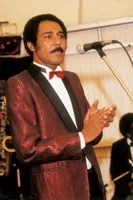
Biography
Abdel Aziz el Mubarak: the golden voice of Sudan
In the 1970s, the streets of Khartoum resonated with a new sound: the soft tenor of Abdel Aziz el Mubarak rose above orchestras featuring violins, accordions and saxophones. A true nickname for the Sudanese scene — “butterfly” — he spent his entire life weaving bridges between local traditions and Western sounds.
In brief
| Full name | Abdel Aziz el Mubarak |
| Birth | 1951, Wad Madani, Sudan |
| Death | February 9, 2020 (69 years), Cairo, Egypt |
| Field | Sudanese music, Arab pop |
| Instrument(s) | Oud, vocals |
| Notable works | “Laih Ya Galbi Laih”, Straight From The Heart, Songs From The City |
| Distinctions | First Sudanese artist at WOMAD (1988) |
Key dates
| Year | Event |
|---|---|
| 1951 | Birth in Wad Madani into a family of musicians |
| Early 1970s | Training at the Institute of Music and Drama in Khartoum |
| 1975 | First major success: “Laih Ya Galbi Laih” |
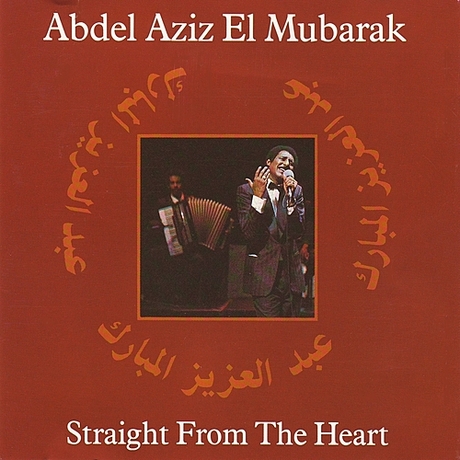
| 1985 | Release of Straight From The Heart (World Circuit) |
| 1987 | First album on Globe Style, recorded in London |
| 1988 | First Sudanese artist at WOMAD Glastonbury |
| 1990 | Participation in the album Sounds of Sudan (World Circuit) |
| 2020 | Death in Cairo |
From Sudanese origins to international recognition
Abdel Aziz el Mubarak was born in 1951 in Wad Madani, Sudan, into a musical family. His childhood unfolded surrounded by traditional Sudanese and Arab rhythms, with early exposure to Nubian sounds. He began singing as a student and joined the Institute of Music and Drama at Khartoum University in the early 1970s. Simultaneously, he worked at the Ministry of Culture in Wad Madani.
His consecration arrived in 1975 with “Laih Ya Galbi Laih” (why, my heart, why?), which played on Sudanese radio and television. This romantic title opened the doors to weddings and galas in Khartoum. Between 1976 and 1980, he settled in Jeddah where he recorded numerous tracks, refining his style under the influence of reggae and American rhythm and blues.
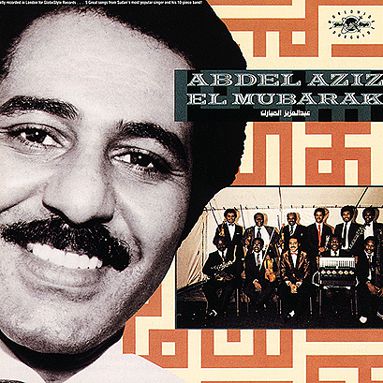
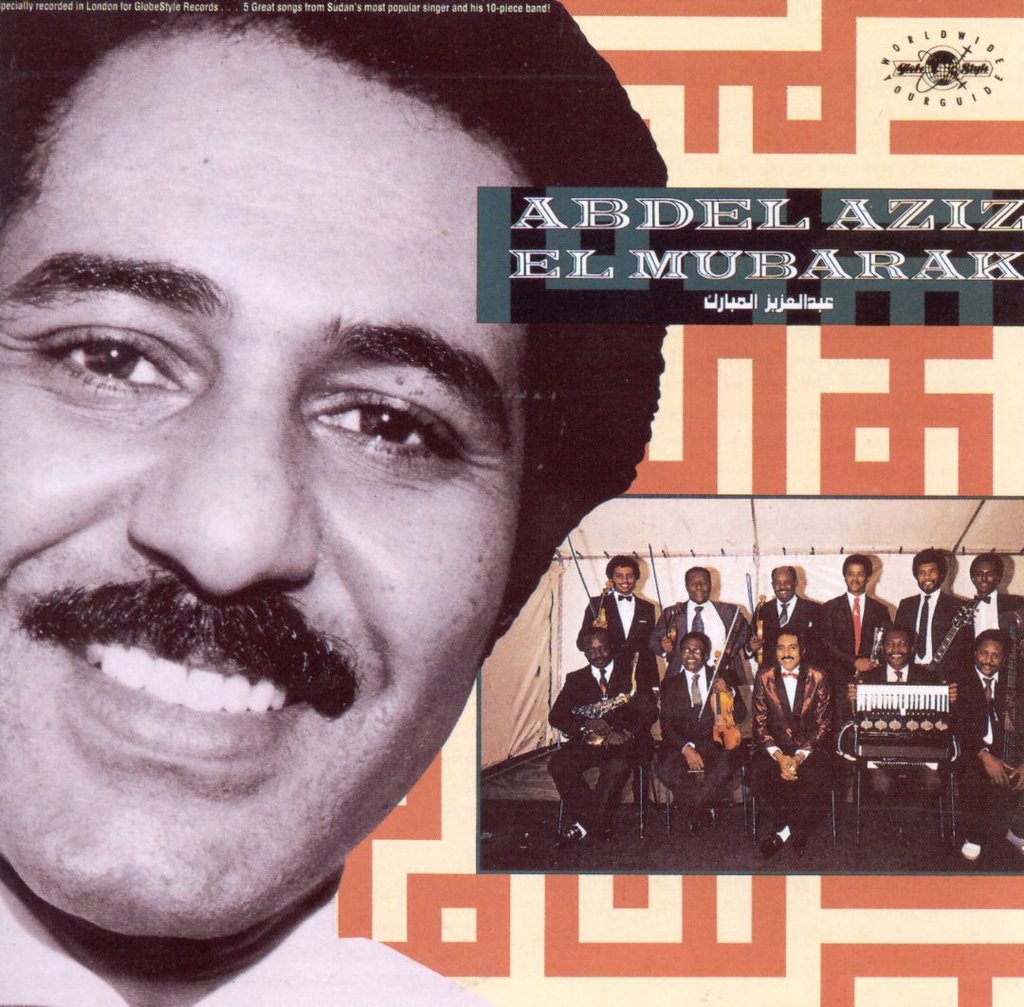
The international turning point occurred in 1987–1988: his album Abdel Aziz el Mubarak was released on Globe Style, produced by Adam Skeaping, featuring an orchestra of ten musicians. In 1988, he entered history as the first Sudanese artist at WOMAD Glastonbury, accompanied by a dozen musicians in white jellabiyas. This was followed by tours across the United Kingdom, Italy, France, Germany and the Netherlands. The press compared him to Bryan Ferry of Sudanese music, with a better voice. A shrewd entrepreneur, he knew how to manage his recordings and seize international market opportunities. After the 1989 coup d’état, he settled in Cairo, a refuge city for exiled artists, where he continued his work discreetly.
Major works
| Work | Year | Why it is essential |
|---|---|---|
| “Laih Ya Galbi Laih” | 1975 | First major Sudanese success that launched his career |
| Straight From The Heart | 1985 | First love songs brought to Europe by World Circuit |
| Abdel Aziz el Mubarak | 1987 | First London album, featuring a ten-musician orchestra |
| Sounds of Sudan | 1990 | Landmark compilation by World Circuit, first international Sudanese album |
Legacy
Abdel Aziz el Mubarak paved the way for international recognition of Sudanese music. His style — a blend of local traditions, Arab influences, reggae and rhythm and blues — remains a reference for artists who, after him, sought to make Sudan heard beyond its borders. His love songs, recorded during the Golden Age of popular Sudanese music, continue to be rediscovered by new generations.
Sources and references
- « Abdel Aziz el Mubarak », Sudan Update, http://www.sudanupdate.org/REPORTS/MUSIC/musicians/MUBA.HTM, accessed October 22, 2025.
- Leon Jackson, « Abdel Aziz el Mubarak — Biography », AllMusic, https://allmusic.com/artist/el-mubarak-mn0000488698, accessed October 22, 2025.
- « ‘There was music on every corner of every street in Khartoum’ », Al Jazeera, https://www.aljazeera.com/features/2018/9/23/there-was-music-on-every-corner-of-every-street-in-khartoum, accessed October 22, 2025.
- « Abdel Aziz El Mubarak », Wikipedia, https://en.wikipedia.org/wiki/Abdel_Aziz_El_Mubarak, accessed October 22, 2025.