Biography
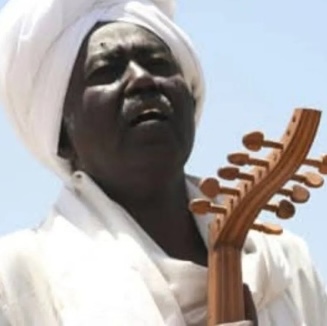
Abdel Gadir Salim
In 1971, in the heart of Khartoum which was expanding and whose first truck arrived in remote villages, Abdel Gadir Salim launched “Umri Ma Bansa”, translated as “I Will Never Forget You”. The song, blending the Nuba Mountains dialect with urban instruments, crossed Sudan and remains today one of the most emblematic titles in Sudanese music. Over fifty years of career, international tours, an unexpected collaboration with a rapper who was once a child soldier, and forty years of teaching in N’Djaména… Salim would be the living bridge between the desert rhythms of Kordofan and the world stage.
In Brief
| Full Name | Abdel Gadir Salim (عبد القادر سالم) |
| Birth | 1946, Dilling, South Kordofan, Sudan |
| Death | December 16, 2025, Khartoum, Sudan |
| Field | Sudanese music, merdoum, oud |
| Emblematic Works | “Umri Ma Bansa”, The Merdoum Kings Play Songs of Love |
| Distinctions | President of the Sudanese Union of Musical and Artistic Professions |
Key Dates
| Year | Event |
|---|---|
| 1946 | Birth in Dilling, in the Nuba Mountains (South Kordofan) |
| 1963 | Teacher’s diploma, Pedagogical Training Institute of Dilling |
| 1970 | Move to Khartoum; creation of the All-Stars group |
| 1971 | First major success, “Umri Ma Bansa” (“I Will Never Forget You”) |
| 1971 | Shift from urban music to the folk repertoires of Kordofan and Darfur |
| 1986 | First international tour in Europe, with Abdel Aziz El Mubarak and Mohamed Gubara |
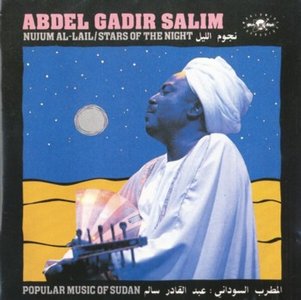
| 1989 | First international album, Nujum al-Lail (Stars of the Night), Globe Style |
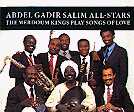
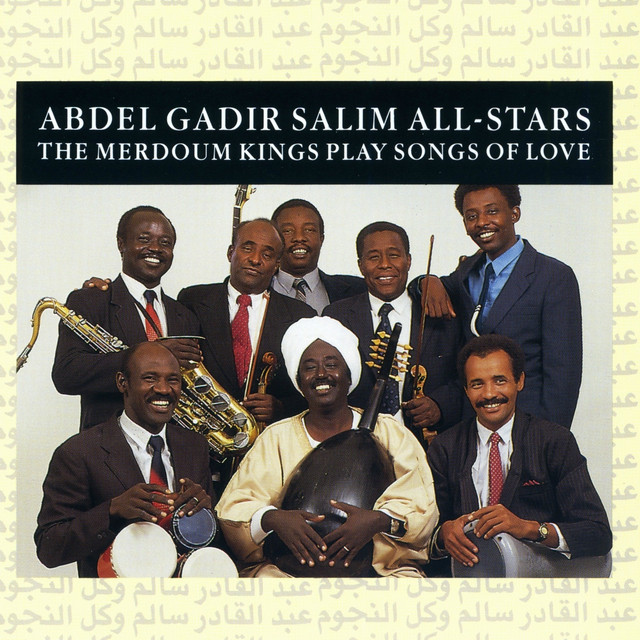
| 1991 | Release of The Merdoum Kings Play Songs of Love, via World Circuit |
| 1994 | Knife attack in Omdurman; singer Khogali Osman loses his life |
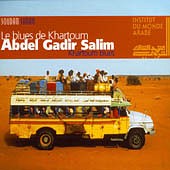
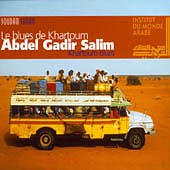
| 1999 | Le Blues de Khartoum (Harmonia Mundi) |
| 2005 | Album Ceasefire with Emmanuel Jal, former Sudanese child soldier |
| 2006 | Appointed associate professor at the Faculty of Education, University of Khartoum |
| 2012 | Represents Sudan at the qualification round for the first ABU Radio Song Festival |
Origins and Revelation
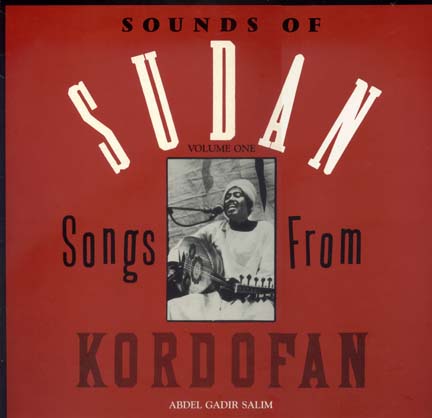
Abdel Gadir Salim was born in 1946 in the village of Dilling, in South Kordofan, at the foot of the Nuba Mountains. His childhood was rocked by a mosaic of tribal chants — Nuba, Abbala, Baggara — where the rhythms of the merdoum, an imitation of the camel’s step, shaped his ear. In 1963, he obtained his teacher’s diploma. In 1970, he settled in Khartoum and immediately founded his group, the All-Stars, where saxophonist Hamid Osman Abdalla — also originally from Dilling — held the first instrumental role.
Initially singing the urban style of Khartoum song, Salim made a decisive turn in 1971: he plunged into the traditional repertoire of Kordofan and Darfur, rounding out rural melodies with Western instruments — saxophone, electric guitar, accordion — which became the signature of his orchestra. That same year, radio and television broadcast “Umri Ma Bansa”, a hymn to nostalgia that remains inseparable from Sudanese musical memory.
The violence of the Islamic regime in power since the 1989 coup put the music scene in difficulty. In 1994, Salim was a victim of a knife attack in Omdurman during which singer Khogali Osman lost his life. Salim, always above politics, qualified the act as that of a madman and continued his work. His carefully non-political repertoire allowed him to survive and export himself.
Major Works
| Work | Year | Why It Is Essential |
|---|---|---|
| The Merdoum Kings Play Songs of Love | 1991 | Global compass for Kordofan merdoum; legendary production via World Circuit |
| Le Blues de Khartoum | 1999 | Perfect fusion of solo oud and orchestra, via Harmonia Mundi |
| Ceasefire | 2005 | Duets with Emmanuel Jal: musical reconciliation in a war-torn Sudan |
| Nujum al-Lail | 1989 | First international album, recordings in the United Kingdom |
Legacy and Influence
Abdel Gadir Salim was much more than an artist: unknowingly, he became an ethnomusicologist, collecting in the fields of Kordofan Abbala shepherd and Baggara herder chants to transform them into reference points for his own music. For years, he directed the Sudanese Union of Musical and Artistic Professions, published articles to defend musicians’ rights, and taught at the University of Khartoum. His voice and his oud continue to inspire generations rediscovering Sudan beyond borders. He passed away on December 16, 2025 in Khartoum at the age of 79.
Sources and References
-
« Abdel Gadir Salim », Wikipedia, https://en.wikipedia.org/wiki/Abdel_Gadir_Salim, accessed October 22, 2026.
-
« Abdel Gadir Salim », Wikipedia FR, https://fr.wikipedia.org/wiki/Abdel_Gadir_Salim, accessed October 22, 2026.
-
« Artist Profiles: Abdel Gadir Salim », World Music Central, Angel Romero, https://worldmusiccentral.org/2016/04/17/artist-profiles-abdel-gadir-salim/, accessed October 22, 2026.
-
« In Memoriam 2025-2026 », Grammy.com, https://www.grammy.com/press-room/in-memoriam, accessed October 22, 2026.
-
« Abdel Gadir Salim », Sudanow Magazine, https://sudanow-magazine.net/page.php?Id=828&mainId=15&subId=22, accessed October 22, 2026.
-
« Abdel Gadir Salim », Music in Africa, https://musicinafrica.net/node/10229, accessed October 22, 2026.
-
« Abdel Gadir Salim », Discogs, https://www.discogs.com/artist/4740339, accessed October 22, 2026.
-
« Khartoum Blues », Arabosounds, https://arabosounds.com/en/khartoum-blues, accessed October 22, 2026.
-
« Salim, Abdel Gadir (1946-2025) », BnF Catalogue, https://catalogue.bnf.fr/ark:/12148/cb140145039, accessed October 22, 2026.
-
« Salim, Gadir, Abdel Biography », Gateway of Africa, https://www.gatewayofafrica.com/artists/biography/214.html, accessed 22 October 2026.