Biography
Baco: the Mayotte rasta who made the Indian Ocean vibrate
In 1977, in Mayotte, a ten-year-old boy stopped in front of a Bob Marley poster1. Thirty years later, Baco Mourchid is one of the most unique faces in francophone reggae, singing in four languages and blending gabousy guitar with Jamaican chords. From Moroni to Paris, from the subway to recording studios, this artist is a cultural nomad who has reconnected the threads between the Indian Ocean and the world.
In brief
| Full name | Baco Mourchid, known as “Baco” |
| Birth | January 1st, 1966, Bandrélé, Mayotte2 |
| Origins | Mahoran father who sold strings, Malagasy mother3 |
| Genre | Reggae, ska, blues, mgodro4 |
| Instruments | Guitar, gabusi (Comorian variant of qanbüs), vocals |
| Signature works | Martyr’s Blues, Kinky Station, Rocking My Roots |
| Honors | Ambassador of Comorian music in France |
Key dates
| Year | Event |
|---|---|
| 1966 | Birth in Bandrélé, Mayotte |
| 1977 | Discovery of Bob Marley at age ten |
| 1979 | Departure for Ngazidja (Grande Comore) after his father’s death |
| 1985 | Arrives in France, sings on the Parisian subway |
| 1990 | Settles in Paris, meets Manjul |
| 1998 | Release of Karakalala, first solo album |
| 2003 | Martyr’s Blues with Manjul, affirmation of Indian Ocean reggae |
| 2006 | Hadisi, seventh album dedicated to Indian Ocean identity |
| 2010 | Kinky Station, album by Baco Hiriz Band inspired by the subway |
| 2020 | Rocking My Roots, rock-reggae-rap fusion trilogy |
From Mayotte to Paris: the roots of a rebel
Baco Mourchid was born on January 1st, 1966 in Bandrélé, on the island of Mayotte. His Mahoran father sold strings and his Malagasy mother transmitted Bantu culture to him. He grew up cradled by Swahili, Arab, and Malagasy influences that shaped Comorian identity. At ten years old, he discovered Bob Marley on a poster5. Reggae entered the repertoire of local dance halls, and Baco grabbed a guitar whenever he could.
In 1979, at thirteen years old, he left Mayotte for Ngazidja (Grande Comore) after his father’s death. His life in Moroni was hard: he dropped out of school and sold water to the bourgeois6. At the Moroni Rotary Club, he played Marley with the tax director’s band, frequented by Kenyan and Tanzanian cooperants. This place also opened up English and a new musical universe to him. After one year in Réunion, he arrived in France in 1985 and sang on the Parisian subway. In 1990, he settled there definitively and met Manjul, a child of Barbès who became his musical accomplice.
Building his musical empire
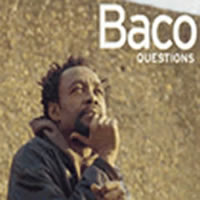
Baco released Karakalala in 1998, followed by Questions in 2000. These afro-blues albums revealed an artist inspired by the Comoros forests and the city of Paris, but reggae remained discreet—four songs against the grain by the Cobalt record label. In 2003, Baco and Manjul released their secret garden with Martyr’s Blues, an album with deep roots sound7.
But Baco didn’t just sing. He trained as a sound engineer at the Paris Opera, learned computer-assisted production. In 2004, he founded his label Hiriz Records8. He signed several artists and produced recordings that resonated throughout the Indian Ocean.
The seventh album, Hadisi (2006), was entirely devoted to Indian Ocean currents9. The title refers to the palabre, to dialogue between the islands of the archipelago. He played the gabousy (small Afro-Arab guitar), the marovany (Malagasy cithara) and the ngoma (drum), while inviting artists like Keziah Jones, Yungchen Lhamo and Wally Badarou.
In 2010, the Baco Hiriz Band released Kinky Station, recorded over two years10. Fourteen tracks, one for each line of the Parisian subway. Reggae met the cosmopolitan influences of the capital, hailed as authentic “Parisian reggae.”
His most ambitious project, Rocking My Roots (2020), is a seven-year reflection trilogy11. He fuses rock, reggae and rap with the African drum, in a quest for roots that “brings Chuck Berry home” and “brings Afrika Bambaataa back to Africa.”
Major works
| Work | Year | Why it’s essential |
|---|---|---|
| Karakalala | 1998 | First solo album, afro-blues rooted in Comorian traditions |
| Questions | 2000 | Public revelation, blends island culture and protest song |
| Martyr’s Blues | 2003 | Collaboration with Manjul, affirmation of Indian Ocean reggae |
| Hadisi | 2006 | Album entirely dedicated to Indian Ocean identity |
| Kinky Station | 2010 | Album by Baco Hiriz Band, Parisian reggae and subway as metaphor |
| Rocking My Roots | 2020 | Monumental trilogy, rock-reggae-rap fusion and African drum |
Legacy
Baco has become a reference name for Comorian music in France12. His commitment to training young artists and founding his own label makes him a model for an entire generation. The “hoarse voice” that resonated in the corridors of the Parisian subway now inhabits albums acclaimed from Paris to Mayotte.
His multilingual repertoire continues to celebrate the mixing that is the strength of the islands of the Indian Ocean. The artist, “child of pirates” as he likes to define himself, has never stopped crossing musical seas.
Sources and references
-
Baco Mourchid, Wikidata Q2878445, accessed 28 October 2026 ↩︎
-
Baco (singer), French Wikipedia, accessed 28 October 2026 ↩︎
-
RateYourMusic, Baco — Comorian Music / Reggae, accessed 28 October 2026 ↩︎
-
Discogs, Mourchid Baco profile, accessed 28 October 2026 ↩︎
-
RFI Musique, Baco, from Mayotte to reggae, by Bertrand Lavaine, 12 January 2004 ↩︎
-
Music In Africa, Baco and Urban Plant to release triple album, accessed 28 October 2026 ↩︎
-
RFI Musique, Baco, the rasta of Mayotte, by Daniel Lieuze, 13 December 2006 ↩︎
-
RFI Musique, Baco organizes musical repatriation, 24 August 2020 ↩︎
-
France Inter, Mayotte: meeting with Baco, L’Heure Ultramarine, 22 July 2011 ↩︎
-
Hiriz Records, label founded by Baco in 2004, official website ↩︎
-
La 1ère France Info, Singer Baco in Mayotte presents Rocking my Roots, accessed 28 October 2026 ↩︎
-
France Inter, Mayotte: meeting with Baco, L’Heure Ultramarine, 22 July 2011 ↩︎