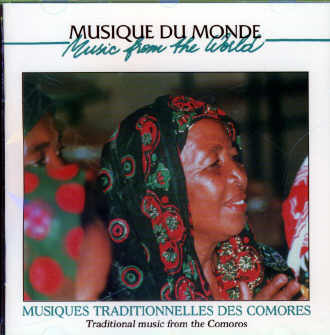
Musical History of the Comoros
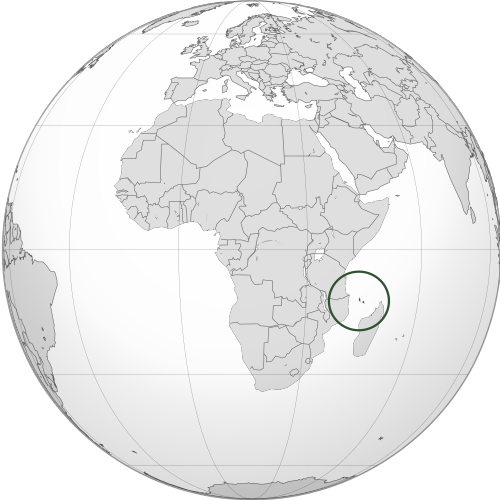
At the crossroads of Bantu Africa, the Arabo-Persian world, India and France, the Comoros archipelago — « Moon » in Arabic, Qamar — boasts one of the most cosmopolitan music scenes in the Indian Ocean. Each Comorian generation has drawn from outside influences without renouncing what composed them: the violin meets the local drum, poems in shingazidja echo the ghazals of Cairo, and the twarab — heir to Zanzibarite taarab — continues to rhythmically drive the great ceremonies of the grand mariage.
From ngoma to twarab, the Swahili imprint (16th–19th century)
The Comoros derive their musical roots from the waves of migration that populated them since the 6th century: Bantu peoples coming from East Africa, Arabs from Yemen, Persans transiting through Swahili trading posts. Each left its rhythms, instruments, and ways of singing. The « ngoma » — three-time collective dances still present in ceremonies — and the « sambe », a traditional dance with ternary rhythm, constitute the foundation of Comorian music 1.
The decisive turning point arrives in the 19th century with the Sultanate of Zanzibar, which extended its influence over the Indian Ocean. Around 1880, Sultan Barghash bin Said brought an Egyptian musical ensemble to enrich his court. The « taarab » — violins, oud, poems in Swahili — fused Egyptian, Indian and African influences. In Zanzibar, Comorian nationals founded the Nadi Shuub music club in 1908 2. Two or three years later, violinist Abdallah Cheikh Mohamed returned to Moroni with the first taarab group, baptized « fidrilia » in shingazidja — from the Swahili word fidla, which means « violin » 3. The Comorians adopted the style, transposed it into their language and renamed it « twarab ».
In less than twenty years, music clubs (kilabu) opened in all major cities of Grande Comore 4. Twarab is played in wedding salons, gathers about thirty people, and is accompanied by violins, oud, local drums (the msondo, the duf), and later accordions and cello. In 1937, a French observer reported that « guests all sang at once, swaying their heads from left to right, in rhythm » 5. For historian Moussa Said, professor at the University of Comoros, the genre quickly took root in the island’s social practices 6.
Did you know? The first known recording of a Comorian artist dates back to 1930: a mysterious record published by Columbia Records and credited to a certain « Abubakar », whose Comorian or Zanzibari-speaking shingazidja origins remain unknown 7. No other recording of Comorian musicians followed until the 1960s.
Mohammed Hassan: from village to pantheon (1945–1975)
If twarab arrived as urban and elitist music, it was Mohammed Hassan who made it popular. Born in 1932 in the village of Ntsaoueni on the west coast of Grande Comore, in a pious family (his mother was recognized as the best Quran reciter in the neighborhood), Hassan had nothing of a prodigy 8. Music was then viewed with suspicion by conservative Muslim communities.
In 1945, around age 13, a group from the neighboring village came to perform — a violinist and a ngoma player. Hassan was shocked: « I tried the next day to build a similar instrument, with strings made from coconut fiber », he recalls 9. The following year, he launched his own group; in 1948, he gave his first public concert. He played Swahili and Arab pieces — Siti bint Saad, Bakar Abedi from Zanzibar, but also Umm Kulthum and Mohamed Abdel Wahab 10.
During the 1950s, all songs were in Swahili or Arabic. The decisive turning point came in 1962: Hassan sang for the first time in shingazidja, the local language of Grande Comore. « People came from all corners of the island to attest that I was really singing in Comorian », he confided in 1998 11. This was a cultural revolution in a context of struggle for autonomy. In parallel, Hassan wrote his lyrics by adapting the Swahili-Arabic script (« Ajami »), which he used to notate poems such as Mri Uwalao (The Flowering Tree) 12.
Simultaneously, the ASMUMO orchestra (Association Musicale de Moroni), founded by Maabad Mzee, became the musical pillar of the capital. Its members composed songs denouncing President Said Mohamed Cheikh, a proponent of internal autonomy, and campaigned for total independence 13. ASMUMO was affiliated with the Green Party, while its rival Aouladil Comores belonged to the White Party, and each used twarab to spread its ideas 14. The genre, imported as salon music, became a tool of political struggle.
In 1969 and 1972, Mohammed Hassan was invited to Majunga (Madagascar), where he recorded on the label Voix de Comores. Subsequently, Radio Comores regularly broadcast his tracks. But after independence (1975), the revolutionary regime of Ali Soilih (1975–1978) considered twarab a reactionary heritage and had almost all records removed from the Radio Comores library 15. Hassan retired to Ntsaoueni. He performed only occasionally, invited by the diaspora in Marseille or La Réunion in the 1990s. He received a presidential medal in 2004 and passed away in 2013 at the age of 81 16.
Mshago, diaspora and fusion: modernization (1975–2000)
The end of the 1960s marks a turning point: the introduction of a jazz or rock drum kit makes the twarab more energetic, more danceable. The new form, dubbed « mshago », migrates from cities to villages 17. The 1980s see two phenomena modify the scene: the birth of the first recording studio in the Comoros (Studio 1, 1988) and the massive emigration of musicians to France 18. Artists established in Paris and Marseille record in France but keep Comoros as a major source of inspiration.
Salim Ali Amir, born in 1962 in Moroni, nicknamed « SA2 », embodies this era of blending. Composer-lyricist, multi-instrumentalist and autodidact, he has recorded more than twelve albums since 1988 and each time composes bridges between twarab, Mauritian sega, Malagasy salègy, afro-zouk and Comorian rhythms 19. Named to the RFI Découvertes prize in 1987, he tours throughout the Indian Ocean, in France and in Côte d’Ivoire 20. In 2019, he publishes Tsiono Zindji, a collection of his 110 texts from 12 albums, to leave a written archive of his art 21.
The singer Maalesh (Othman Mohamed Elyas, born in 1961 in Moroni) follows an analogous itinerary. Of Comorian father and Ugandan mother, he stays in Kenya and Saudi Arabia before returning to the Comoros in 1989 22. His first album, Wassi Wassi (1992), blends Comorian rhythms, African percussion and Oriental melodies 23. RFI Découvertes Prize 1992 after his participation in the Château-Thierry festival, he performs in France, the Netherlands, Belgium and Canada 24.
Chamsia Sagaf, born in 1955 in Mitsamiouli, establishes herself as the first Comorian woman to record a studio album (Studio 1, 1989) and conquer the international stage 25. Pioneer in twarab–zouk fusion, anticipating the « afro-zouk » trend, she receives the Best East-Africa Artist (women) prize at the KORA All Africa Music Awards in 2003 for Loléya 26.
The current generation: between heritage and innovation
Today, Comorian music renews itself constantly. Nawal (Nawal Mohamed, born in 1964), soprano and multi-instrumentalist often designated as the « Voice of Comoros », has built an international career with L’Île Rose (1997) and Sitti (2005) 27. In 2026, she launches the Afro Jazz Taarab Project on Bandcamp, extending this dialogue between Indian Ocean traditions and the world stage 28.
Chebli, born in the Comorian diaspora in Lyon, paints the anxieties of a sacrificed youth in Shababi 29. Shaadoow (Ali Chadhuli), who accompanied Maalesh between 2005 and 2008, develops a Comorian folk mixed with reggae and blues 30. The young Malha (born in 1993) improvises an « afro-toirabé » style, a fusion of afrobeat, afrohouse and twarab 31.
Digital platforms open new paths. TikTok is described as a « springboard » by young Comorian artists capable of reaching an international audience in a few seconds of video 32. Rapper Rayad, from Seine-Saint-Denis, started at six and surpasses two million views per clip 33. And Salim Ali Amir, at 62, is already preparing his thirteenth album, blending classical compositions and talents of the new generation 34.
Founding figures of Comorian music
| Name | Period | Role | Source |
|---|---|---|---|
| Abdallah Cheikh Mohamed | 1912 | First twarab group in Moroni (Marin Band) | 3 |
| Mbaruk Mwandjié Twabibu | 1940–1950 | Pioneer singer, brings hits from Zanzibar | 2 |
| Mohammed Hassan | 1932–2013 | Greatest composer-lyricist, first in shingazidja (1962) | 8 |
| Maabad Mzee | 1960 | Composer of ASMUMO, Moroni orchestra | 13 |
| Salim Ali Amir | 1962 | 12 albums, twarab–zouk–sega fusion, RFI prize 1987 | 19 |
| Maalesh | 1961 | Wassi Wassi, RFI Découvertes Prize 1992 | 22 |
| Chamsia Sagaf | 1955 | First woman with studio album (1989), KORA Award 2003 | 25 |
| Nawal | 1964 | Voice of Comoros, Afro Jazz Taarab Project 2026 | 27 |
A heritage in mutation
The music of the Comoros is not a museum — it is a moving construction site. The twarab, which traveled from Egypt’s Oum Kalthoum to the majilis of Grande Comore, continues to reinvent itself. Young artists mix sambe and afrobeat, twarab and zouk, Morné rhythms and Parisian rap. The challenges are immense: exile, piracy, economic crisis. But the archipelago, which has always fed on exchange, has never stopped singing. And the fidrilia violin has never fallen silent.
Sources and references
-
Grokipedia, “Music of the Comoros” https://grokipedia.com/page/music_of_the_comoros ↩︎
-
PHOI, “Comoros music”, Werner Graebner, July 5, 2023. https://phoi.io/index.php/Articles/Show/Details/id/544 ↩︎ ↩︎
-
Observatoire Pharos, “Chronique d’une histoire d’amour entre le twarab et les Comores”, Jeanic Lubanza, June 29, 2022. https://www.observatoirepharos.com/pays/comores/chronique-dune-histoire-damour-entre-le-twarab-et-les-comores/ ↩︎
-
Fontoynont and Raomandahy, “La Grande Comore”, Mémoires de l’Académie Malgache 23, Tananarive, 1937. Cited in PHOI, op. cit. ↩︎
-
Observatoire Pharos, op. cit. ↩︎
-
Excavated Shellac, “Abubakar – Shah Na Mbere”, March 24, 2019. https://excavatedshellac.com/2019/03/24/abubakar-shah-na-mbere-pts-1-2 ↩︎
-
#AuxSons / Music In Africa, “Le taarab aux Comores, un patrimoine oublié” https://www.auxsons.com/focus/le-taarab-aux-comores-un-patrimoine-oublie/ ↩︎
-
PHOI, op. cit.; Wikipedia, “Music of the Comoros” https://en.wikipedia.org/wiki/Music_of_the_Comoros ↩︎
-
PHOI, op. cit.; #AuxSons, op. cit. ↩︎
-
PHOI, op. cit. ↩︎
-
#AuxSons, op. cit. ↩︎
-
PHOI, op. cit.; Wikipedia, op. cit. ↩︎
-
Grokipedia, op. cit. ↩︎
-
PHOI, op. cit. ↩︎
-
#AuxSons, op. cit. ↩︎
-
Afrisson, “Salim Ali Amir” https://www.afrisson.com/salim-ali-amir-674/ ↩︎ ↩︎
-
Afrisson, op. cit. ↩︎
-
Africa-Press, “Autobiographie « Tsiono Zindji »” https://www.africa-press.net/comores/culture-et-art/autobiographie-tsiono-zindji-le-recueil-qui-retranscrit-les-chansons-de-salim-ali-amir ↩︎
-
Wikipedia, “Maalesh” https://fr.wikipedia.org/wiki/Maalesh ↩︎ ↩︎
-
200 World Albums, “Comoros: Wassi Wassi – Maalesh” https://www.200worldalbums.com/post/comoros-wassi-wassi-maalesh ↩︎
-
Partoch.com, “Maalesh” https://mail.partoch.com/artistes/maalesh ↩︎
-
Probsee, “Chamsia Sagaf” https://probsee.com/p/chamsia_sagaf ↩︎ ↩︎
-
Probsee, op. cit. ↩︎
-
Bandcamp, “Afro Jazz Taarab Project” — Nawal, April 10, 2026 https://nawal-voiceofcomoros.bandcamp.com/album/afro-jazz-taarab-project ↩︎
-
Africultures, “Chebli” http://africultures.com/chebli-2531/ ↩︎
-
Montreal Radio Cité, “Shaadoow” http://www.montrealradiocite.com/artists-links/comores/shaadoow.html ↩︎
-
IOMMa 2026, “Malha” https://www.iomma.net/artiste/malha ↩︎
-
Kiltir, “TikTok, nouvelle rampe de lancement pour les artistes comorien·nes” https://kiltir.org/actualites/tiktok-nouvelle-rampe-de-lancement-pour-les-artistes-comoriennes ↩︎
-
Wikipedia, “Rayad” https://fr.wikipedia.org/wiki/Rayad ↩︎
-
Habariza Comores, “Salim Ali Amir : l’infatigable en course pour son treizième album”, February 15, 2024 https://www.habarizacomores.com/2024/02/salim-ali-amir-linfatigable-en-course.html ↩︎