Biography
Abou Chihabi: the voice of the Indian Ocean
In 1976, at twenty-two years old, a young guitarist from Grande-Comore won a contest organized by President Ali Soilih and saw his composition chosen as the national anthem of Comoros. The following year, a coup d’état exiled him from the country. He fled to Kenya and then to France in 1980, where he built an international career with his group Folkomor Ocean, forging a unique style that he called “folkomore” — a blend of Comorian traditions, Jamaican afro-folk and reggae. Nicknamed “Dylan of Moroni” by Le Monde, he remained for half a century the sonic figure of Comoros.
In brief
| Full name | Abdérémane Chihabiddine, known as “Abou Chihabi” |
| Birth | 1954, Grande-Comore, Comoros |
| Genre | Folkomore, afro-folk, reggae, zouk, soukous |
| Instruments | Guitar, vocals, flute, harmonica, percussion |
| Group | Folkomor Ocean (founder) |
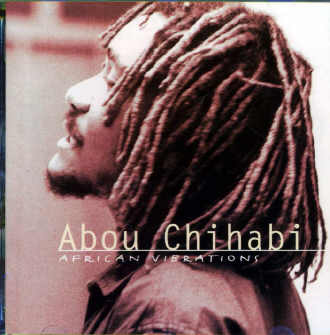
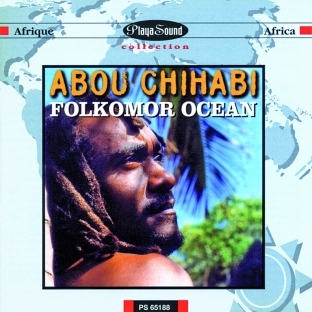
| Iconic works | “Ungwana”, Folkomor Ocean, African Vibrations |
| Awards | RFI Découvertes Listener Prize (1981), Jeune Chant Québec Prize (1982) |
Key dates
| Year | Event |
|---|---|
| 1954 | Birth in Grande-Comore into a modest family |
| 1968 | Debut with the group Les Dragons |
| 1969 | Tour in West Africa with the Association Musicale de Moroni |
| 1972 | Founding of Folkomor Ocean, blending Comorian, African and Jamaican sounds |
| 1976 | His composition “Ungwana” becomes the national anthem of Comoros under Ali Soilih’s regime |
| 1978 | Coup d’état; flees Comoros, settles in Kenya then France in 1980 |
| 1981 | RFI Découvertes Listener Prize, first prize for a Comorian singer |
| 1983 | Concert at the first Fête de la Musique in Paris |
| 1997 | Release of Folkomor Ocean (Playa Sound/Auvidis) |
| 1999 | Release of African Vibrations (Auvidis) |
From the song of Moroni to exile and beyond
Abdérémane Chihabiddine was born in 1954 on the island of Grande-Comore, at the heart of the Comoros archipelago, in the Mozambique Channel between the east African coast and Madagascar. From childhood, he was rocked by songs and dances that rhythm daily life: ceremonies, festivals, moments of gathering. Self-taught, he learned the guitar by listening to records and reproducing motifs by ear.
In 1968, at fourteen years old, he joined Les Dragons, one of the first modern groups in Moroni. The following year, he participated in a tour in West Africa with the Association Musicale de Moroni. The journey opened his horizons: he discovered continental African sounds, Jamaican afro-folk and became aware of the richness of his own culture. Back in Moroni, he founded Folkomor Ocean, an avant-garde formation. The name is programmatic: “Folkomor” combines “folk” and “Comoros”, “Ocean” recalls insularity. The group blends the mgodro (traditional Comorian dance) with reggae rhythms, Congolese soukous chords and engaged texts in francophone song. His songs in shingazidja, the language of Grande-Comore, denounce injustices with a wry smile, without violence.
In 1976, history turned. The young Comorian state, independent under President Ali Soilih, organized a contest for its national anthem. Abou Chihabi won the contest with his composition “Ungwana” (“Freedom” in Comorian), also titled “Comor Masiwa Mane” (“The four islands of Comoros”). At twenty-two, he was a star. But the brilliance did not last: in 1978, Ahmed Abdallah, supported by mercenary Bob Denard, overthrew the regime. Abou Chihabi, who had served the revolutionary power, had to flee abandoning his equipment. He took refuge in Kenya and then went to France in 1980 with his wife. Exile was hard, but the metropolis offered fertile ground. In 1981, he won the “Listener Prize” at the RFI Découvertes contest — first Comorian singer laureate. In 1982, he received the “Jeune Chant” prize in Quebec. With Folkomor Ocean, he led an international career: tours in francophone countries, festivals. In 1983, he was part of the celebrations for the first Fête de la Musique in Paris. His music feeds from both shores of the Indian Ocean, from Brazilian saudade transposed into the atmospheres of the archipelago.
Major works
| Work | Year | Why it is essential |
|---|---|---|
| “Ungwana” (national anthem) | 1976 | First national anthem of Comoros, hymn to the unity of the four islands |
| Folkomor Ocean | 1997 | Pivotal album that introduced “folkomore” to the international public |
| African Vibrations | 1999 | Confirms his place in francophone world music |
Legacy
Abou Chihabi is recognized as the founder of “folkomore”, a current that paved the way for an entire generation of modern Comorian musicians. Artists like Poundja Abdallah Boul (RFI Découvertes laureate 1983), Maalesh, Salim Ali Amir and Nawal owe in part to his example the fact that one can blend island traditions and contemporary sounds without renouncing their roots. Le Monde nicknames him “the Dylan of Moroni” for the accuracy of his guitar dexterity and engaged lyricism.
His music, built in exile but rooted in Comorian land, remains a testimony to the hope of 1970s Comoros. He is the “tree that hides the forest” of Comorian music: behind him, the twarab, mgodro, Comorian rap and still-hidden currents continue to develop in this soundscape that journalist Soeuf Elbadawi qualifies as “elastic, stretching, lingering, voluntarily mixing times”.
Sources and references
- “Music of the Comoros”, Wikipédia, https://en.wikipedia.org/wiki/Music_of_Comoros, accessed October 23, 2026.
- “Ungwana”, Wikipédia, https://en.wikipedia.org/wiki/Ungwana, accessed October 23, 2026.
- Craig Harris, “Abou Chihabi”, AllMusic, https://allmusic.com/artist/mn0000491321, accessed 23 October 2026.
- “Abou Chihabi”, Discogs, https://www.discogs.com/artist/abou-chihabi, accessed 23 October 2026.
- “Abou Chihabi et les guitares des Comores”, Le Monde, https://www.lemonde.fr/musiques/article/2010/03/05/abou-chihabi-et-les-guitares-des-comores_5978304_1654986.html, accessed 23 October 2026.
- “Comorian music: committed and hybrid”, AFSF Blog, https://www.afsf.com/news/blog/tblog/comorian-music-committed-and-hybrid, accessed 23 October 2026.
- “Prix Découvertes RFI”, Wikipedia, https://fr.wikipedia.org/wiki/Prix_découvertes_RFI, accessed 23 October 2026.
- Ahmed Daniel, “Ideology and revolutionary poetry in the Comoros”, Carnets de Recherches de l’Océan Indien, 2018, https://hal.univ-reunion.fr/hal-02474951v1/document, accessed 23 October 2026.
- “Abou Chihabi”, Afromix, https://www.afromix.org/html/musique/artistes/abou-chihabi/index.en.html, accessed 23 October 2026.