Biography
Nawal: the voice of Comoros, from forbidden guitar to Sufism
In 1985, at a wedding in Comoros, a woman grabbed a guitar on stage. An uncle pulled her by the arms, made her descend and beat her up1. Thirty years later, she performed at the Kennedy Center in Washington2. Her journey, from initial violence to conquered serenity, is a voyage that crosses the Indian Ocean.
In brief
| Stage name | Nawal |
| Birth | 1965, Moroni, Comoros |
| Profession | Singer, composer, multi-instrumentalist |
| Origin | Comoros (archipelago in the Indian Ocean) |
| Genre | Afro-Sufi, world music |
| Languages | Shikomori, Arabic, French, English |
| Instruments | Guitar, gambusi (Comorian lute), daf, mbira, flute |
| Distinctions | UN Goodwill Ambassador for Comoros (2014) |
Key dates
| Year | Event |
|---|---|
| 1965 | Birth in Moroni, in a family of musicians |
| ~1975 | Move to France with her family |
| 1985 | First attempt at a public concert in Comoros: exclusion and violence |
| 2001 | Release of Kweli, first studio album |
| 2004 | Participation in the compilation Women of Africa (Putumayo) |
| 2007 | Release of Aman; Sahel Opera in Paris |
| 2011 | Release of Caresse de l’âme (Embrace the Spirit) |
| 2014 | UN Goodwill Ambassador for Comoros |
| 2015 | Release of the documentary Nawal and the Women of the Moon |
From forbidden guitar to international stages
Nawal grew up in the Comoros archipelago, nicknamed the Cinq parfums (Five Perfumes) or the Îles de la Lune (Moon Islands), located east of Africa3. The dzikr (lit. “invocation”, a devotional Sufi chant) resonates in the mosques, and twarab (Comorian music inspired by Algerian raï) circulates4. Her family counts many musicians, and her grandmother passed on the heritage of her grandfather El-Maarouf (1852-1904), an eminent Sufi marabout who preached an Islam based on love, respect and peace5.
At ten years old, Nawal left Comoros for France, where she grew up in the south of the country6. The culture shock was harsh7. She learned guitar on a homemade instrument. “My voice is my first instrument, above all,” she says8.
In 1985, back in the archipelago, Nawal wanted to prove that a woman could occupy space reserved for men9. She went on stage at a wedding. “My uncle said: in our family, we cannot let the first woman play guitar like a man coming from our home,” he said10. They dragged her off the stage. “Today, my uncle is proud and comes to see me at concerts,” she says11.
She developed a sound that is a dialogue of cultures12. The gambusi — a four-stringed Comorian lute, cousin of the oud — dialogues with the guitar. The daf (Persian tambourine with jingles) interweaves the rhythms of the Indian Ocean. Her music rests on a Sufi spirituality she received through family heritage13.
Three albums, three stages of an inner quest
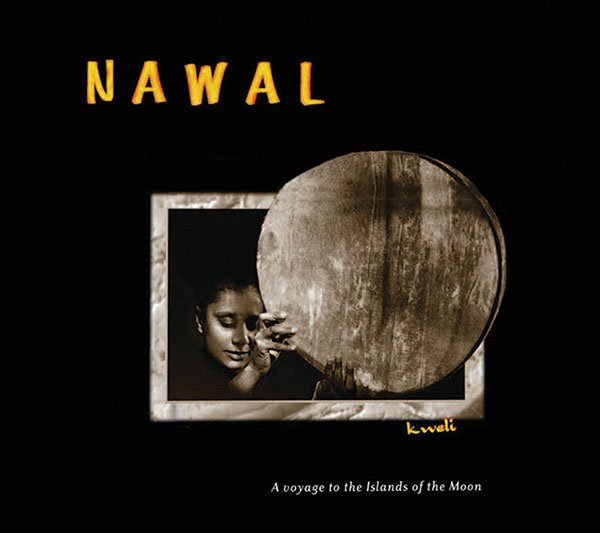
Kweli (2001, label Mélodie) is the confirmation album14. Kweli, which means “truth” in Shikomori, sounds like an affirmation. Her music weaves a bridge between Comorian tradition and the influences she absorbed in France15.
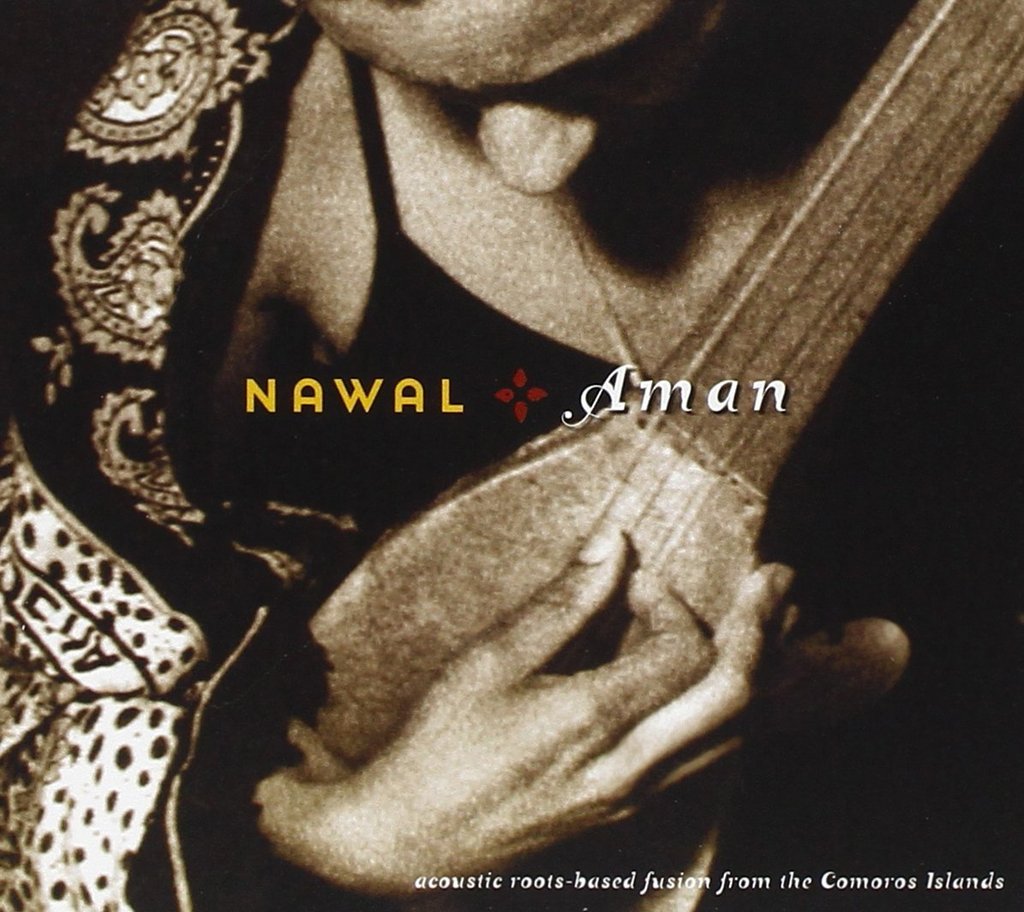
Aman (2007, Nawali Productions / DOM Distribution) marks a turning point16. Aman means “peace of the soul”. Jon Pareles from the New York Times ranks it among the most significant world music albums of the year17. On this record, Nawal reduces the sound, making room for silence between tracks. “If we really want peace in the world, we must find it within ourselves,” she affirms to RFI18.
In 2007, Nawal participated in the first African Opera, the Sahel Opera, at Théâtre du Châtelet in Paris19. Her song Hima appears on the Putumayo compilation Women of Africa (2004)20.
Caresse de l’âme (2011, Jade / Milan) — also titled Embrace the Spirit — is her third solo album21. SoundRoots ranks it among its Top 20 global albums of 2011. Ten titles that merge into a single hymn the peace and human dignity22. The Chicago Reader sees in it a “powerful meditation that salutes the recent revolutions in the Middle East and the human desire for freedom and peace”23. L’Express qualifies it as an “invitation to live the stage like a ritual”24.
Major works
| Work | Year | Why it is essential |
|---|---|---|
| Kweli (Truth) | 2001 | First album by a Comorian: an identity manifesto |
| Aman (Peace of the soul) | 2007 | International revelation, crowned by the New York Times; meditative album |
| Caresse de l’âme (Embrace the Spirit) | 2011 | Solo turning point with Jade/Milan; hymn to human peace |
Legacy
Nawal paved the way for a new chapter in Comorian music25. She is the first woman to perform publicly26. “Today, some young women in Comoros study guitar; they do not yet play on stage but they practice and want to become professionals. I have opened the path a bit,” she says27.
Beyond the stage, in 2014 she received the title of UN Goodwill Ambassador for her archipelago28. The documentary Nawal and the Women of the Moon (2015, 68 minutes, directed by Éric Münch and François Kotlarski) follows her journey through Comoros, Mayotte and Zanzibar to rediscover the ancient female Sufi traditions of the Indian Ocean29.
Her musical heritage is not compartmentalized30. Artists like Zap Mama31 serve as stylistic parallels, but she cultivates a sound that is her own32. Her musicality bridges the archipelago she defends and an international audience33.
Sources and references
-
Kennedy Center, Nawal, artist profile, accessed 29 October 2026 ↩︎
-
Kennedy Center, Nawal, artist profile, accessed 29 October 2026 ↩︎
-
World Music Central, Artist Profiles: Nawal Nawal, article by Angel Romero, 19 April 2018 ↩︎
-
AllMusic, Nawal - Biography, accessed 29 October 2026 ↩︎
-
World Music Central, Artist Profiles: Nawal Nawal, article by Angel Romero, 19 April 2018 ↩︎
-
RFI, Nawal’s Afro Sufi music makes space for silence, interviews, 24 November 2016 ↩︎
-
AllMusic, Nawal - Biography, accessed 29 October 2026 ↩︎
-
RFI, Nawal’s Afro Sufi music makes space for silence, interviews, 24 November 2016 ↩︎
-
World Music Central, Artist Profiles: Nawal Nawal, article by Angel Romero, 19 April 2018 ↩︎
-
RFI, Nawal’s Afro Sufi music makes space for silence, interviews, 24 November 2016 ↩︎
-
RFI, Nawal’s Afro Sufi music makes space for silence, interviews, 24 November 2016 ↩︎
-
AllMusic, Nawal - Biography, accessed 29 October 2026 ↩︎
-
World Music Central, Artist Profiles: Nawal Nawal, article by Angel Romero, 19 April 2018 ↩︎
-
PopMatters, review of Aman by Deanne Sole, 29 August 2007 ↩︎
-
AllMusic, Nawal - Biography, accessed 29 October 2026 ↩︎
-
PopMatters, review of Aman by Deanne Sole, 29 August 2007 ↩︎
-
New York Times, review of Aman by Jon Pareles, accessed 29 October 2026 ↩︎
-
RFI, Nawal’s Afro Sufi music makes space for silence, interviews, 24 November 2016 ↩︎
-
World Music Central, Artist Profiles: Nawal Nawal, article by Angel Romero, 19 April 2018 ↩︎
-
Kennedy Center, Nawal, artist profile, accessed 29 October 2026 ↩︎
-
PopMatters, review of Aman by Deanne Sole, 29 August 2007 ↩︎
-
PopMatters, review of Aman by Deanne Sole, 29 August 2007 ↩︎
-
Chicago Reader, review of Embrace the Spirit, 2011 ↩︎
-
RFI, Nawal’s Afro Sufi music makes space for silence, interviews, 24 November 2016 ↩︎
-
World Music Central, Artist Profiles: Nawal Nawal, article by Angel Romero, 19 April 2018 ↩︎
-
RFI, Nawal’s Afro Sufi music makes space for silence, interviews, 24 November 2016 ↩︎
-
RFI, Nawal’s Afro Sufi music makes space for silence, interviews, 24 November 2016 ↩︎
-
UN, appointment as Goodwill Ambassador for the Comoros, 2014 ↩︎
-
Africine, Nawal and the Women of the Moon, accessed 29 October 2026 ↩︎
-
AllMusic, Nawal - Biography, accessed 29 October 2026 ↩︎
-
AllMusic, Nawal - Biography, accessed 29 October 2026 ↩︎
-
AllMusic, Nawal - Biography, accessed 29 October 2026 ↩︎
-
World Music Central, Artist Profiles: Nawal Nawal, article by Angel Romero, 19 April 2018 ↩︎