Biography
Chamsia Sagaf: the Comorian voice that broke afro-zouk taboos
Mitsamiouli, late 1970s. In a society where the Comorian woman sang only in wedding or baptism circles, separated from men by an invisible wall of customs and religion, a girl from a wealthy family took a crazy gamble: to perform on stage before a mixed audience. Her name is Chamsia Sagaf. By reinterpreting traditional melodies in afro-zouk, she became the first Comorian woman to conquer international stages and bring women’s emancipation issues to the heart of Indian Ocean music1.
In brief
| Full name | Chamsia Sagaf |
| Birth | December 29, 1955, Mitsamiouli, Comoros |
| Nationality | Comorian |
| Singing language | Shingazidja (Comorian) |
| Genre | afro-zouk (mix of Antillean zouk and Comorian traditions) |
| Emblematic works | Loléya, Tsihoro, Ntroulize Roho |
| Distinction | Best Female Singer of East Africa Trophy (2003) |
Key dates
| Year | Event |
|---|---|
| 1955 | Birth in Mitsamiouli, Grande Comore, in a wealthy family |
| 1975 | Move to France |
| 1970s | Debut in women’s associations and student circles |
| 1976 | Recording of “Sarumaya mwigni hazi” with ASEC |
| 1979 | Recording of “Chamama” with ASEC |
| 1989 | First studio album recorded at Studio 1 |
| 1990 | Release of Ntroulize Roho, which sells more than 3,000 copies |
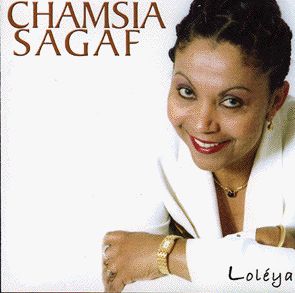
| 2002 | Release of the album Loléya, distributed by JPS |
| 2003 | Best Female Singer of East Africa Trophy |
| 2008 | Tour in the Antilles with Monique Séka |
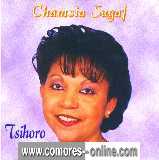
| 2018 | Release of the album Tsihoro |
Origins and break
Chamsia Sagaf was born on December 29, 1955, in Mitsamiouli, the capital of northern Grande Comore2. Coming from a wealthy family, she was not destined for an artistic career. In Comorian society of the time, women sang but only in private circles—weddings, baptisms—where they did not perform before a male audience. The country, a young Muslim nation, separated ceremonies by gender.
The turning point came from France, where she settled in 1975. From there, she discovered that women could sing before everyone1. She began singing in the 1970s within women’s associations, cultural circles, and student organizations.
In 1976 and 1979, she recorded two tracks with ASEC—Sarumaya mwigni hazi and Chamama—songs of emancipation and mental revolution that would be used as propaganda instruments by the organization3.
Consecration and themes
In 1989, Chamsia Sagaf became the first Comorian woman to record a studio album, at Studio 1. Inspired by Comorian traditions, she integrated Caribbean zouk inspirations—a genre born in Guadeloupe and Martinique at the end of the 1980s, a mix of synthesizers and creole rhythms—and created a style she named afro-zouk.
Her first commercial album, Ntroulize Roho, was released in 1990. It sold more than 3,000 copies, a considerable figure for the local market of the time. “What I was doing was different from what one could hear up to then in Comoros,” she explains. The music crossed borders: it was known throughout the Indian Ocean, in Madagascar, Mayotte, and Réunion.
Her lyrics carry strong messages. Women’s emancipation, children’s education, family dialogue, and hope for Comoros cross all her albums4. On Loléya (2002), distributed in France by JPS for the first time, she invites her daughter Naïma to sing in French on two tracks and collaborates with French rapper Rohff on “Nafassi,” a cover of the first album. Critics praise a musically accomplished album, where brass, percussion, creole bass, and Comorian harmonies articulate around a high-placed voice.
In 2003, she received the trophy for Best Female Singer of East Africa. She then shared the stage with Ivorian singer Monique Séka in Paris and embarked on tours in the Antilles in 20085.
Major works
| Work | Year | Why it’s essential |
|---|---|---|
| Ntroulize Roho | 1990 | First commercial album; 3,000 copies sold on the local market; foundations of Comorian afro-zouk |
| Loléya | 2002 | Most accomplished album; first distribution in France by JPS; collaboration with Rohff and Naïma |
| Tsihoro | 2018 | Last recorded album; hit tracks like “Tsi Swalitiha” and “Moina” |
| “Sarumaya mwigni hazi” | 1976 | First recording with ASEC; ode to women’s emancipation |
| “Chamama” | 1979 | Second committed track; hymn to the mental revolution |
Legacy
Chamsia Sagaf paved the way for a whole generation of Comorian female artists. After her, interpreters like Naila, Rouwaida, Samra, Zaza, Malha, Elykiah, and Imany launched themselves into zouk, modern twarab, or contemporary forms. Her path as a woman from a noble family who defied cultural prohibitions remains a symbol. She sings only in Comorian, but her music transcends the borders of the Indian Ocean, carried by universal themes: women’s rights, education, hope. “Far from conflicts and clichés about her country, she wishes to offer through her work a new image of Comoros”6.
Sources and references
-
Wikipedia (FR), Chamsia Sagaf, accessed 28 October 2026 ↩︎ ↩︎
-
Wikipedia (EN), Chamsia Sagaf, accessed 28 October 2026 ↩︎
-
Music In Africa, Women in the Comorian music industry, Walter Badibanga, accessed 28 October 2026 ↩︎
-
Kiff Africa — artist CHAMSIA SAGAF, accessed 28 October 2026 ↩︎
-
Discogs, Chamsia Sagaf – Loléya, CD (Album), 2002, accessed 28 October 2026 ↩︎
-
Continent Media (neeon), Chamsia Sagaf, Comorian singer, with afro-zouk breaks taboos, accessed 28 October 2026 ↩︎