Biography
Clément Masdongar: the man with a thousand faces from Chad to the international stage
In 1982, in the stone quarry near Avignon, a twenty-four-year-old Chadian embodied the Angel of Death in L’Os by Birago Diop, directed by Peter Brook. The following year, Brook called him for the Mahabharata, this monumental nine-hour work that would travel around the world. This young dancer, who traded his saroual for tights, was soon to become a singular figure on the Francophone stage — composer, pianist, balafon player, painter, actor — a man whose destiny seemed traced at the crossroads of Africa and Europe.
In brief
| Full name | Clément N’Gar Ygam Masdongar |
| Birth | 1955 or 1958, Fort-Lamy (now Ndjamena, Chad) |
| Field | Music (Chadian folk, world music, folk rock), dance, theater, painting |
| Instruments | Balafon, piano, drums |
| Notable works | Mariam (1988), Anastasia (1990), Let The Sunshine (2001) |
| Awards | RFI Découvertes Prize (1983, 1987), RFI Listener’s Prize, Maracas d’Or, Euro-Asia Prize (Kazakhstan) |
Key dates
| Year | Event |
|---|---|
| ~1967 | Hired as singer in the National Orchestra of Chad (under ten years old) |
| ~1970 | Joins the National Ballet; tours the entire country |
| 1977 | Maurice Béjart selects him for New York Blues |
| 1981 | Settles in France on a dance contract with Béjart |
| 1982 | Performs in L’Os by Birago Diop adapted by Peter Brook |
| 1985-1989 | Participates in Brook’s Mahabharata (play and film) |
| 1988 | Release of Mariam; RFI Listener’s Prize |
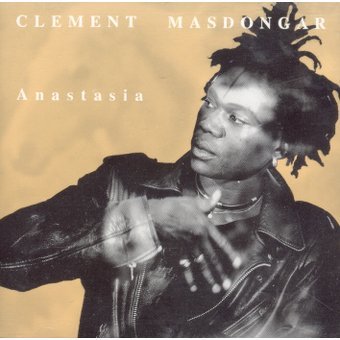
| 1990 | Anastasia, flagship album with Remy Walter |
| 1995 | Sept en attente |
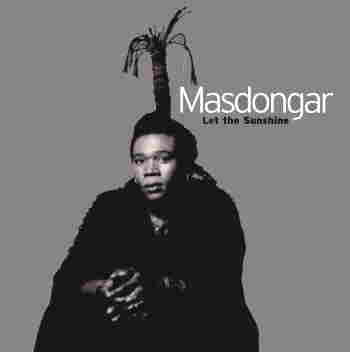
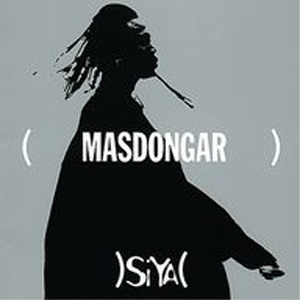
| 2001 | Let The Sunshine, remixed version of Siya |
| 2014 | Ouest Foire, last identified album |
Biography
Clément N’Gar Ygam Masdongar grew up in Fort-Lamy — the capital that would become Ndjamena. The 1960s and 1970s saw Chad plunge into conflicts that would tear the country apart. Sylvie Clerfeuille reports in Afrisson that he took refuge in the sewers when fighting erupted. But music prevailed: at under ten years old, he was integrated into the National Orchestra of Chad as a singer. He received drum lessons and composed “Adama chili saba” (“Adama take patience” in Arabic-Choa, a language of Chad).
At twelve, he joined the National Ballet and toured the country. In 1977, Maurice Béjart selected him for New York Blues, where he portrayed Cab Calloway. At the Mudra in Dakar — Béjart and Germaine Acogny’s school — he learned the piano. In 1981, he settled in France. Béjart, he said, “is a great master.”
His theatrical career took off in 1982 with L’Os by Birago Diop, adapted by Peter Brook. Three years later, Brook integrated him into the Mahabharata, the nine-hour fresco mounted near Avignon. “It was fascinating but exhausting,” he admits. “Peter Brook kept saying one had to invest in the play, not scatter oneself. Yet my temperament pushes me instead to lead several artistic activities simultaneously. That is why I left.” (RFI Musique, 2001)
While theater was his gateway to the international stage, it is music that made his name. Rabina, his first single (1983), was carried by piano and saxophone that foreshadowed his fusions. Mariam (1988) was recorded at Kilimanjaro International Records — Washington then Paris, a journey imposed on African artists of the time — and earned him the RFI Listener’s Prize, the Maracas d’Or, and the Euro-Asia Prize in Kazakhstan.
In 1990, Anastasia, produced by the label Wanted and co-written with Remy Walter of Guesh Patti, blended Chadian folk with rock arrangements. “Anastasia is also an evocation of many themes dear to the author, such as alcoholism, women, God, and the national reconciliation of the Chadian people,” he explains (RFI). This album, distributed in Europe, established Masdongar as one of the most authentic voices of Francophone world music.
The 1990s saw the release of Le cercle de minuit (1992) and Sept en attente (1995). No work reached the resonance of Anastasia. In 2000, the bankruptcy of his label Wanted plunged his career into silence. Siya (1995), disappointed, was reissued in 2001 under the title Let The Sunshine, remixed with two new tracks. “For me, these different disciplines are complementary,” he declares. “Music, dance, comedy, and painting are my favorite passions. I am a tree with several branches.” In 2014, Ouest Foire appeared — the last identified album. The career was never closed, but silence had returned.
Major works
| Work | Year | Why it is essential |
|---|---|---|
| Rabina (single) | 1983 | First recording; piano and saxophone foreshadow fusions |
| Mariam | 1988 | First album, RFI prize; recorded in Washington and Paris |
| Anastasia | 1990 | Flagship album; Chadian folk-rock fusion; international recognition |
| Sept en attente | 1995 | Last album before the label’s bankruptcy |
Legacy
Clément Masdongar remains a singular figure of the African diaspora. His journey — from the National Ballet of Chad to Peter Brook’s stage, from the balafon to the piano, from theater to song — illustrates an artistic freedom that few artists of his generation dared pursue with constancy. Anastasia remains a reference in the landscape of French world music. Even in the shadow of his silence, Masdongar continues to be cited in stories of Chadian music as one of the most charming faces of a country whose music, despite political turmoil, has remained a voice of peace.
Sources and references
- Sylvie Clerfeuille and Nago Seck Mis, “Clément Masdongar,” Afrisson, May 7, 2007, updated August 29, 2022, https://www.afrisson.com/clement-masdongar-148/, accessed October 24, 2026.
- Patrick Labesse, « Clément Masdongar », RFI Musique, 4 January 2001, https://musique.rfi.fr/musique/20010104-clement-masdongar.html, accessed 24 October 2026.
- « Clément Masdongar », RFI Musique, 12 November 2007, https://musique.rfi.fr/musique/20071112-clement-masdongar.html, accessed 24 October 2026.
- « Clément Masdongar », Wikipedia, https://fr.wikipedia.org/wiki/Cl%C3%A9ment_Masdongar, accessed 24 October 2026.
- « Music of Chad », Wikipedia (EN), https://en.wikipedia.org/wiki/Music_of_Chad, accessed 24 October 2026.
- « The Mahabharata (1989 film) », Wikipedia (EN), https://en.wikipedia.org/wiki/The_Mahabharata_(1989_film), accessed 24 October 2026.
- « The Mahabharata (play) », Wikipedia (EN), https://en.wikipedia.org/wiki/The_Mahabharata_(play), accessed 24 October 2026.
- « Recording industry in Chad », Music in Africa, https://musicinafrica.net/magazine/recording-industry-chad, accessed 24 October 2026.
- « Clément Masdongar », WorldCat / EMI, https://worldcat.org/identities/viaf-126847008, accessed 24 October 2026.