Biography
Eyuphuro
In 1989, a group from the island of Mozambique, in the north of the country, took the stage at WOMAD Harbourfront in Toronto1.
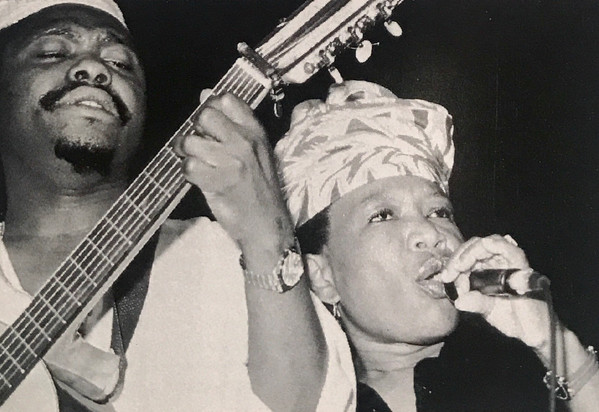
The voice of Zena Bacar, raspy and powerful, carried lyrics in makhuwa — a bantu language that thousands of spectators did not understand, but which moved them deeply. The guitar chords blended Portuguese influences and Arab rhythms, in a mix that had never been heard so accomplished. The group is called Eyuphuro, which means “whirlwind” in macua2. Forty years later, their legacy continues to resonate well beyond the borders of Mozambique.
In Brief
| Group Name | Eyuphuro |
| Origin | Island of Mozambique, Nampula, Mozambique |
| Genre | Marrabenta |
| Language | Makhuwa (bantu) |
| Founding Members | Zena Bacar (vocals), Omar Issa, Gimo Remane |
| Current Members | Issufo Manuel, Belarmino Rita Godeiros, Jorge Cossa, Mahamudo Selimane, Firmina Louis Hunguana |
| Emblematic Album | Mama Mosambiki (1990) |
| Label | Real World Records |
Key Dates
| Year | Event |
|---|---|
| 1981 | Group founded by Omar Issa, Gimo Remane, and Zena Bacar |
| 1989-1991 | Tours in Europe and the United States, discovery of WOMAD in Toronto |
| 1990 | Release of Mama Mosambiki on Real World Records label |
| 1990 | Group dissolution following the loss of Zena Bacar’s child |
| 1998 | Zena Bacar reforms Eyuphuro |
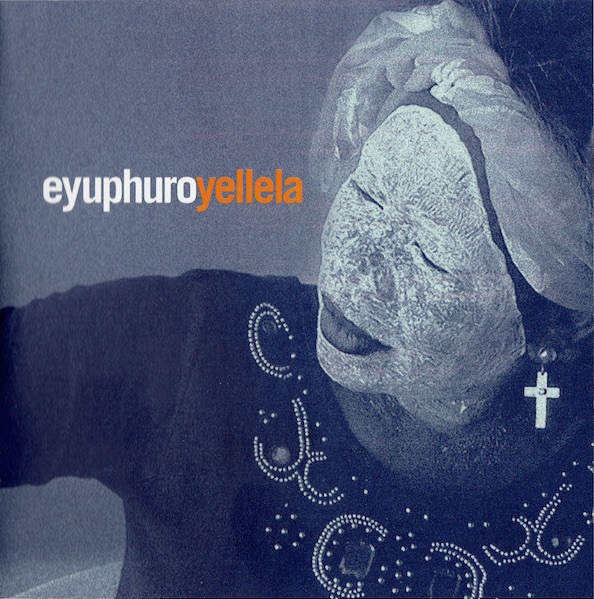
| 2001 | Release of Yellela on Riverboat Records / World Music Network |
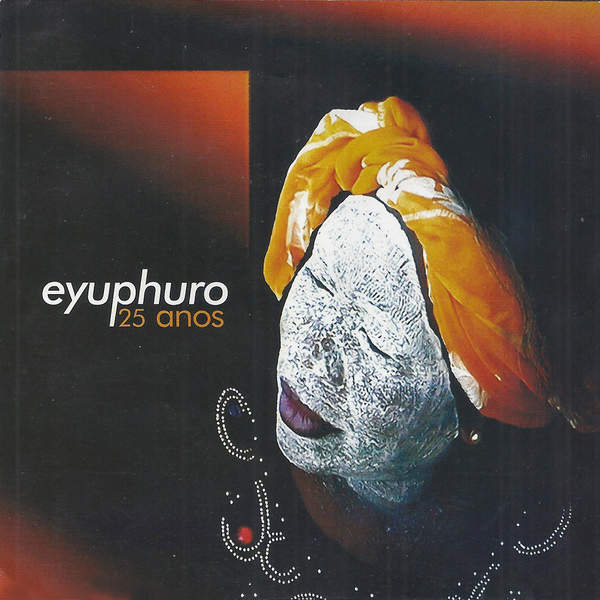
| 2006 | Release of 25 Anos; last international concert in Portugal |
| 2017 | Death of Zena Bacar in January; the group continues without her founding voice |
Origins: The Voice of a Millennial Island
The Island of Mozambique, connected to the continent by a 3.5-kilometer bridge, has been a crossroads of African, Arab, and Latin civilizations since the 8th century. This cosmopolitan heritage permeates the music of Eyuphuro3.
The traditional rhythms of the Nampula province — tufo, namahandga, masepua, djarimane, morro, chakacha — form the foundation on which the group built contemporary compositions. The authors Zena Bacar and Gimo Remane, both from the island, wanted to preserve this heritage in the face of an emerging globalization4.
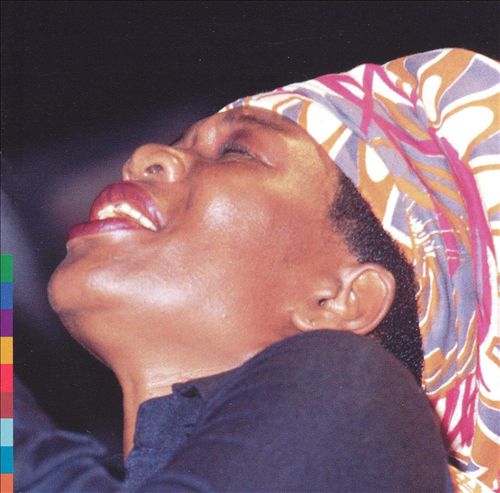
Zena Bacar, born in 1949, was a former fisherwoman from Illa de Mozambique5. Her destiny shifted at the beginning of the 1980s when she founded Eyuphuro with Omar Issa and Gimo Remane. Bacar’s voice, often compared by the press to that of Billie Holiday towards the end of her career, possessed a raw texture, almost worn by life, and which conferred an extraordinary intensity on every phrase. She was not alone: Issufo Manuel, who arrived as a co-singer during the group’s rebirth, shared with her the lead vocals and a vocal harmony that was both rough and delicate.
Their music, sung in makhuwa, dealt with love and social critique. The texts, carried by precise and melodic electric guitars and sometimes hypnotic percussion, offer a sharp view of Mozambican life, particularly the inequalities faced by women in this society6.
Rebirth: From Dissolution to Yellela
The first dissolution of Eyuphuro, around 1990, occurred as the group was leaving the international stage under applause7.
Mama Mosambiki, the album recorded in 1990 in Toronto as part of WOMAD, was praised by the global press8.
The Times described it as “refreshing, subtle, and soothing”9.
The Toronto Star read in it a “vibrant music of complex polyrhythm”10. But in Mozambique, civil war was raging.
In 1998, the singer gathered former members and new talents to reform Eyuphuro11.
The result arrived in 2001 in the form of Yellela, released on Riverboat / World Music Network12.
The album blends local rhythms, touches of South African afro-jazz, and Congolese soukous13.
The American press qualified it as an album “vibrant with magnificent melodic hooks”14. Yellela also includes non-member musicians, such as singer Mariamo Mussa Hohberg, saxophonist Orlando da Conceicao, and keyboardist Benedito Mazbuko.
In 2006, the group released 25 Anos, followed by a final major international stage in Portugal15. Zena Bacar continued to sing until the end of her life.
She died in January 201716.
Real World Records published a notice highlighting her role as the “golden voice of Mozambique”17. The Eyuphuro group, with its current members Issufo Manuel, Belarmino Rita Godeiros, Jorge Cossa, Mahamudo Selimane, and Firmina Louis Hunguana, perpetuates the legacy of a sound that made a nation proud.
Major Works
| Work | Year | Why It Is Essential |
|---|---|---|
| Mama Mosambiki | 1990 | Flagship album recorded in Toronto for WOMAD, eight tracks on male-female relationships and social injustices18 |
| Yellela | 2001 | Rebirth album, blending afro-jazz and soukous while preserving marrabenta identity |
| 25 Anos | 2006 | Commemorates 25 years of career; last album with wide international distribution |
| Akatswela (video) | 1990 | Concert filmed at WOMAD Carlyon Bay, historical archive of the group on stage19 |
Legacy
Eyuphuro played a pioneering role in the international recognition of marrabenta20.
This genre, born in Maputo as urban dance music, combining Mozambican, Portuguese, and Western influences, owes to the group being one of the first to bring this sound to a global audience21.
Zena Bacar’s commitment — for women, for the makhuwa language, for traditional rhythms — makes Eyuphuro much more than a group: it is a political and cultural voice of Mozambique22. Forty years after their creation, the “whirlwind” continues to spin.
Sources and references
-
Guinness Encyclopedia of Popular Music, Colin Larkin (ed.), first edition, Guinness Publishing, 1992, p. 815. ISBN 0-85112-939-0 ↩︎
-
Wikipedia EN, Eyuphuro, 22 April 2024 ↩︎
-
Angel Romero, Artist Profiles: Eyuphuro, World Music Central, 25 October 2018 ↩︎
-
Real World Records, artist page Eyuphuro, realworldrecords.com/artist/384/eyuphuro/ ↩︎
-
AllMusic, Eyuphuro — Biography, allmusic.com/artist/eyuphuro-mn0000789887 ↩︎
-
World Music Central, Artist Profiles: Eyuphuro, 25 October 2018 ↩︎
-
WOMAD, archive Toronto Harbourfront, 1989 ↩︎
-
WOMAD, archive Toronto Harbourfront, 1989 ↩︎
-
The Times (UK), review of Mama Mosambiki, 1990 ↩︎
-
Toronto Star (Canada), review of Mama Mosambiki, 1990 ↩︎
-
Songlines Magazine, review Eyuphuro, robert-hohberg.com/post/a-country-undergoing-a-change ↩︎
-
Roland Hohberg, A country undergoing a change, roland-hohberg.com/post/a-country-undergoing-a-change ↩︎
-
Roland Hohberg, A country undergoing a change, roland-hohberg.com/post/a-country-undergoing-a-change ↩︎
-
American Reporter, review of Yellela, 18 November 2001 ↩︎
-
Real World Records, Zena Bacar: 1949-2017, realworldrecords.com/news/zena-bacar-1949-2017/ ↩︎
-
Real World Records, death notice Zena Bacar, 16 January 2018 ↩︎
-
Real World Records, death notice Zena Bacar, 16 January 2018 ↩︎
-
Real World Records, liner notes of Mama Mosambiki, 20 May 1990 ↩︎
-
Real World Records, video Akatswela (live at WOMAD Carlyon Bay 1989), realworldrecords.com ↩︎
-
Wikipedia FR, Marrabenta, wikipédia.org/wiki/Marrabenta ↩︎
-
Wikipedia EN, Eyuphuro, 22 April 2024 ↩︎
-
Songlines Magazine, A country undergoing a change, roland-hohberg.com/post/a-country-undergoing-a-change ↩︎