Biography
Faytinga: the lyre of liberation
In 1976, at sixteen, Dahab Faid Tinga left Asmara to join the Eritrean guerrilla maquis. She was assigned administrative tasks, but it was at the podium where she shone. Armed with a krar — a traditional six-stringed lyre —, she sang for the fighters, conveying hope and determination. Thirty years later, this “combatant turned musician” carried on international stages the voice of her Kunama people, whose father, nicknamed “Fighting Gun” by the British, had defended their rights1.
In brief
| Full name | Dahab Faid Tinga (alias Dehab Faytinga) |
| Stage name | Faytinga |
| Birth | June 10, 1962, Asmara (then in Ethiopia) |
| Nationality | Eritrean |
| Ethnic origin | Kunama (father) and Tigrinya (mother) |
| Field | Singer, musician, composer |
| Instruments | Krar (lyre), dance, singing |
| Genres | World music, Kunama music, Eritrean music |
| Notable albums | Numey (2000), Eritrea (2003) |
| Awards | 2nd prize and 1st female singer of East Africa, Ma’ Africa 2000 |
Key dates
| Year | Event |
|---|---|
| 1962 | Birth in Asmara, Tigrinya mother and Kunama father |
| 1976 | At sixteen, joined the armed struggle for Eritrean independence |
| 1977-1991 | Fought during the war of independence; moral support through singing |
| 1987 | Radio program in the Kunama language |
| 1990 | Europe-US tour with the Sibrit Cultural Troupe |
| 1995 | First solo tour after Sala Da Goda on cassette |
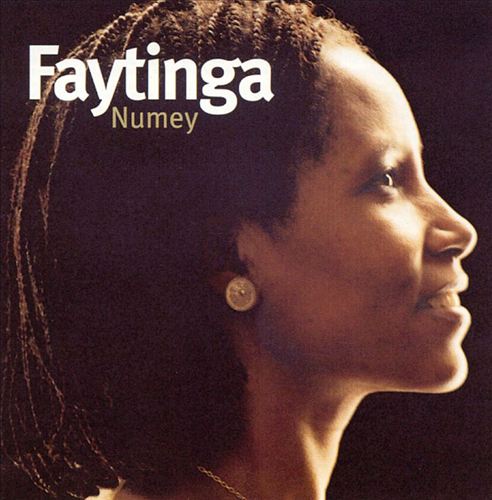
| 2000 | Ma’ Africa award and publication of Numey on Cobalt Records |
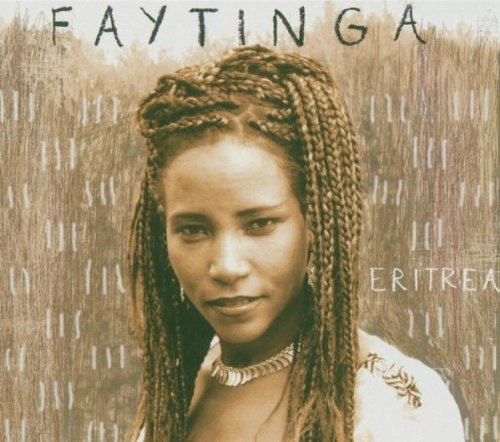
| 2003 | Release of the album Eritrea |
| 2002-2010 | Cultural ambassador: Expo 2005 Aichi, Expo 2010 Shanghai |
| 2022-2023 | Concerts with trumpeter Hermon Mehari in France and Switzerland |
From guerrilla to turntables
Faid Tinga Longhi, Faytinga’s father, formed a military orchestra after 1941 to defend the Kunama people1. The British Administration gave him the nickname “Fighting Gun”. Representing the Kunama until 1962, he was imprisoned by the Ethiopian regime before being liberated in 1974 by EPLF guerrillas.
At sixteen, Faytinga headed for the maquis. Trained in Bilekat, she was assigned bureaucratic tasks but it was her voice that she mobilized first. “She transformed her dream of singing into a mission: to distract and galvanize fighters with music of hope”. At the end of the 1980s, she set up a radio program in the Kunama language and joined the national committee of the Eritrean Women’s Union in Sudan.
The krar became her instrument of choice. Her style, “forged on the ground”, fused traditions from several Eritrean communities.
Opening to the world
In 1990, Faytinga toured Europe and the United States with the Sibrit Cultural Troupe, representing emerging Eritrean culture. Upon returning to her country, she published Sala Da Goda on cassette in 1996.
Her international breakthrough came in two stages. In 1999, an invitation to the Africolor festival in France. The turning point: Numey was released in January 2000 on Cobalt Records, a Parisian label. All tracks are in Kunama — the title track means “Do not cut off the narrator”, a song of advice. The album revealed the resemblance between the wata, Eritrean lute-bass, and the West African ngoni. That same year, Faytinga won Ma’ Africa in Benoni2.
Eritrea, released in November 2003, broadened the palette: guitar, flute and percussion were added to the krar and wata. Tracks like Goda Anna and Milomala — the latter drawn from independence battles — remain among the most widely disseminated3.
Ambassador, activist and legacy
Faytinga embodied the cultural ambassador of Eritrea in Johannesburg (2002), Aichi (2005) and Shanghai (2010). She campaigned against AIDS, singing during the 2003 World Day in Asmara and participating in a charity gala in 2005 with Kenyan singer Achieng’ Abura1.
Musically, she continued: singles Besela (2016), Kebkeba Kone (2017), Tsela’ika (2021) and Erey (2025). She collaborated with trumpeter Hermon Mehari for Asmara (2022) and sang during France Musique’s “Couleurs du Monde” in 2016. “I sing peace, love and understanding, because war brought no positive change to Africa. I bring people music of hope”4.
For Music in Africa in 2016, she declared: “I discovered that music is a universal language that gives me peace and tranquility”5.
Marco Cavallarin, in Africa e Mediterraneo, described her as “an interpreter of the deep culture of her country and its oldest and most recent history”. “There is no easy path to success”1, she concludes.
Her legacy reads in the maintenance of Kunama in the contemporary musical repertoire and in opening doors for Eritrean female musicians.
Major works
| Work | Year | Why it’s essential |
|---|---|---|
| Sala Da Goda | 1996 (cassette) | First album, entirely in Kunama |
| Numey | 2000 | First international album; all tracks in Kunama |
| Eritrea | 2003 | Guitar, flute and percussion added to the krar |
Legacy
Faytinga remains, in Marco Cavallarin’s words, “an interpreter of the deep culture of her country”4. Her lyre continues to play, twenty-five years after the maquis.
Sources and references
-
Faytinga, About Me, https://faytinga.com/about-me, accessed 28 October 2026 ↩︎ ↩︎ ↩︎ ↩︎
-
Music In Africa, Women in Eritrean music, https://www.musicinafrica.net/node/15098, accessed 28 October 2026 ↩︎
-
MusicBrainz, Faytinga, https://musicbrainz.org/artist/922ae620-acce-4d57-bfd9-ee6add5cf84a, accessed 28 October 2026 ↩︎
-
Africa e Mediterraneo, Marco Cavallarin, cited in Wikipedia Dehab Faytinga, accessed 28 October 2026 ↩︎ ↩︎
-
Music In Africa, Swiss-based Eritrean singer Faytinga working on new album, https://www.musicinafrica.net/node/15586, accessed 28 October 2026 ↩︎