Biography
Félix Wazekwa
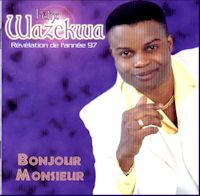
In February 2006, Félix Wazekwa arrived at Harvard for a symposium on Congolese culture. The American public discovered an artist they did not yet know — but whom Kinshasans had been greeting for a decade as the intellectual of Congolese music. Three albums earlier, in 1998, Bonjour Monsieur had propelled him across the entire continent; his rough baritone, his Lingala lyrics filled with aphorisms, and his mastery of soukous made him an unmatched songwriter in the African scene. More than twenty years later, Wazekwa continues to release albums and books, faithful to his motto: the word is not an accessory of music; it is its soul.
In Brief
| Full Name | Félix Nlandu Wazekwa, known as « S’Grave » (Sagesse Grave) |
| Birth | 14 September 1962, Léopoldville (Kinshasa, Belgian Congo) |
| Genre | Soukous, Congolese rumba, ndombolo |
| Instruments | Vocals (baritone), guitar, percussion |
| Notable Works | Bonjour Monsieur (1998), Signature (2001), Article 23 (2020) |
| Awards | ACMCO Revelation of the Year (1998), Kora Awards Best Male Artist from Central Africa (2004) |
Key Dates
| Year | Event |
|---|---|
| 1962 | Born in Léopoldville, son of an architect and a merchant from Matete |
| 1982-1983 | Musical debut with the group Kin-Verso (Matete, Kinshasa) |
| 1985 | Move to Paris; studies in economics at Université Paris 8 Vincennes-Saint-Denis |
| 1990-1993 | Collaboration as a songwriter with Koffi Olomidé (Koweit, rive gauche, Noblesse Oblige) |
| 1993-1995 | Collaboration with Papa Wemba (Foridoles, Pôle Position); encouragement to sing his own lyrics |
| 1995 | First solo album, Tétragramme, YHWH, released as a duo with Papa Wemba and Madilu System |
| 1997 | Creation of the group Cultur’A Pays-Vie; release of Pauvres, Mais… |
| 1998 | Bonjour Monsieur; pan-African revelation and ACMCO Revelation of the Year award |
| 2004 | Kora Awards — Best Male Artist from Central Africa |
| 2018 | First book published: Les Petits Bonbons de la Sagesse (Bergame editions) |
| 2020 | Fourteenth studio album, Article 23 |
| 2026 | Release of Fimbu Champions, featuring the anthem “Fimbu, Chicote” which became the war song of the Leopards |
From Matete to Harvard: Music as Language
Félix Nlandu Wazekwa was born on 14 September 1962 in Léopoldville (now Kinshasa). His father was an architect, and his mother a merchant from the Matete commune. Young Félix developed a passion for dance very early on, and at twenty-three, he went to France to study economics in Paris 8. He earned a degree while reading extensively — Paul Valéry, Jean d’Ormesson, Michel Serres — a literary culture that deeply permeated his future lyrical work. « My colleagues said I was talking to myself in the office », he recalls for RFI in 2010. « In fact, I was singing! »
In 1990, he returned to Kinshasa and launched his career as a songwriter. His pen immediately struck the two giants of Congolese music: Koffi Olomidé (albums Haut de Gamme / Koweit, rive gauche and Noblesse Oblige, 1991-1993) and then Papa Wemba (Foridoles and Pôle Position, 1993-1995). Wemba called him « the bone of the brain » and advised: « Keep a song you wrote for yourself. Sing it yourself. »
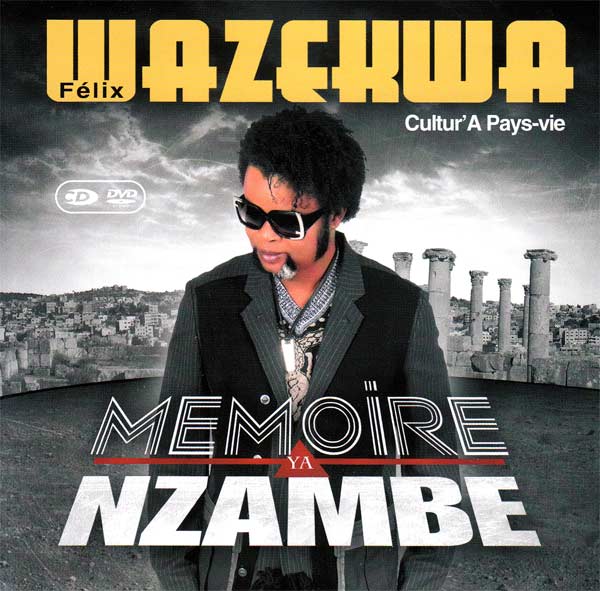
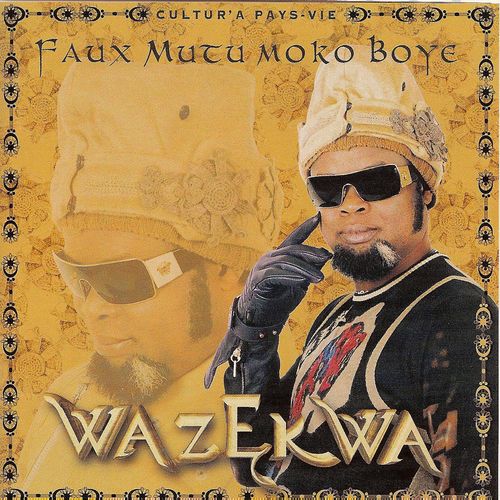
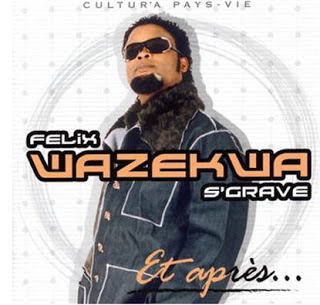
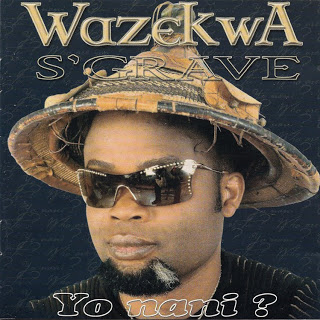
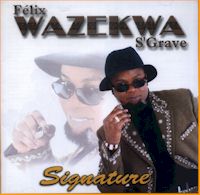
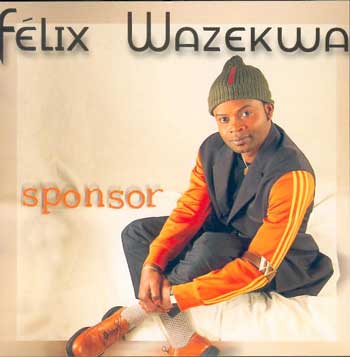
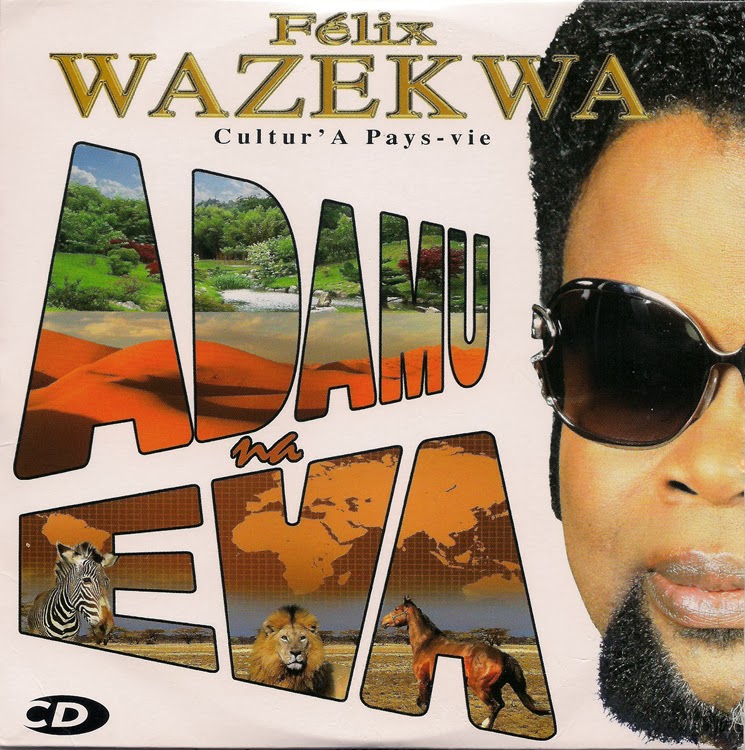
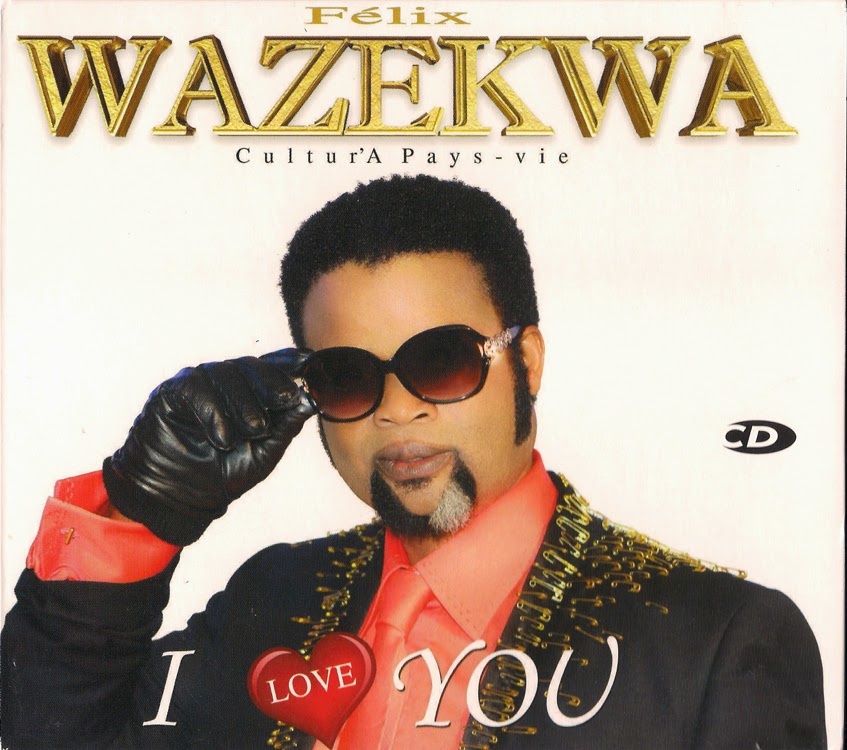
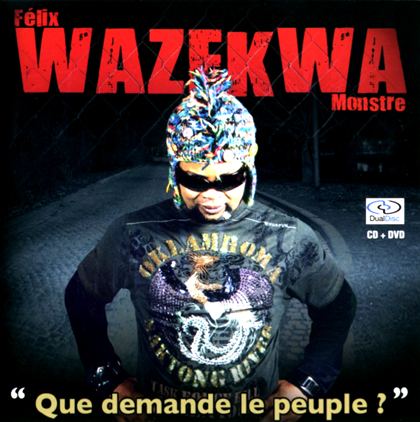
Wazekwa heeded the advice. Tétragramme, YHWH (1995), his first solo album released as a duo with Papa Wemba and Madilu System, won the ACMCO for Revelation of the Year. He formed Cultur’A Pays-Vie and released Pauvres, Mais… (1997), an album praised for its figurative language on love and social issues. The third work, Bonjour Monsieur (November 1998), was the key that opened all of Africa: produced by Jean-Pierre Saah at Studio Marcadet, it earned Wazekwa pan-African recognition. Sponsor (1999), Signature (2001) with the title “Mokuwa Bongo” — a tribute to his own songwriter label —, Yo Nani ? (2002), Et après… (2004) and Faux mutu moko boye (2005, « a certain villainous character ») confirmed his stature despite the departure of several guitarists to Koffi Olomidé. Four additional albums followed between 2008 and 2015 (Que Demande Le Peuple ?, Mémoire ya Nzambe as a duo with Lutumba Simaro, Adamu na Eva, I Love You). In 2018, he published his first book, Les Petits Bonbons de la Sagesse (153 pages, Bergame editions). « I define myself first and foremost as a songwriter, then as a writer », he states for DW in January 2026. In 2020, Article 23 marked his fourteenth album; in 2026, Fimbu Champions delivered “Fimbu, Chicote”, which became the anthem of the Leopards.
Major Works
| Work | Year | Why It Is Essential |
|---|---|---|
| Tétragramme, YHWH | 1995 | First solo album as a duo with Papa Wemba; the baptism of fire for a songwriter turned singer |
| Bonjour Monsieur | 1998 | Pan-African album; propelled Wazekwa onto the continental map and earned him the ACMCO Revelation award |
| Signature | 2001 | Contains “Mokuwa Bongo”, the introspective anthem of a songwriter proud of his « bone of the brain » |
| Article 23 | 2020 | Fourteenth album, witness to a three-decade career and a style that remained faithful |
Heritage and influence
Félix Wazekwa changed the game of Congolese music by proving that a lyricist could be as famous as their artist. Before him, the majority of soukous lyrics relied on existing traditional proverbs. Wazekwa invented the verb — a personal aphorism created entirely by the artist, a conceptual formula that allows one to approach reality with a new tool. His approach inspired an entire generation of Congolese lyricists who, like him, learned to write lyrics where dance serves as chivalry for the words.
Today, his music crosses borders: “Fimbu, Chicote” resonates in Congolese stadiums and on African sports channels; his books circulate in bookstores in Kinshasa and Paris. More than ever, Wazekwa embodies the idea he defended since sitting in the classrooms of Paris 8: being an artist is not a situation that leads to debauchery, it is a profession as demanding as an office.
Sources and references
- « Félix Wazekwa: the unshakeable poet of Congolese rumba », Congo Heritage, accessed November 12, 2025.
- « Félix Wazekwa: his journey and challenges as an artist in the DRC », Deutsche Welle, https://www.dw.com/fr/f%C3%A9lix-wazekwa-d%C3%A9voile-son-parcours-ses-inspirations-et-les-d%C3%A9fis-des-artistes-en-rdc/a-75526741, exclusive interview from January 2026, accessed November 12, 2025.
- Banning Eyre, « Felix Wazekwa, 2006 », Afropop Worldwide, https://www.afropop.org/articles/felix-wazekwa-2006, interview from February 2006, accessed November 12, 2025.
- « Félix Wazekwa », Wikipedia (English version), https://en.wikipedia.org/wiki/F%C3%A9lix_Wazekwa, accessed November 12, 2025.
- Marcy Donelson, « Felix Wazekwa Biography », AllMusic, https://www.allmusic.com/artist/felix-wazekwa-mn0001253213, accessed November 12, 2025.
- « Félix Wazekwa », Wikipedia (French version), https://fr.wikipedia.org/wiki/F%C3%A9lix_Wazekwa, accessed November 12, 2025.
- « Wazekwa Felix alias Felix Wazekwa S’Grave », Univers Rumba Congolaise, https://www.universrumbacongolaise.com/artistes/felix-wazekwa, accessed November 12, 2025.
- « Félix Wazekwa », Africultures, https://africultures.com/personnes?no=32718, accessed November 12, 2025.