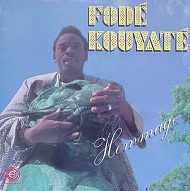
Biography
Djéli Fodé Kouyaté: the engaged voice of Mandingo tradition
Conakry vibrates to the sound of a kora and a voice that carries three generations on its shoulders. Every Friday, Djéli Fodé Kouyaté takes the stage of the Grand Palmier cultural complex in Kobayah with his orchestra Kiriköröba Nyalen Lonkassiya, and the audience — from those under twenty to grandparents still dancing to 1990s hits — responds present. Born in 1964 in the Guinean savannah, this griot — musician and storyteller heir to an oral lineage tracing back to King Soumangourou Kanté of the 13th century — has established himself as one of the most engaged artists of contemporary Guinea, blending traditional Mandingo, afro-pop, and social themes with a constancy that commands admiration1.
In brief
| Full name | Fodé Kouyaté (known as Djéli Fodé Kouyaté) |
| Birth | 1964, Kissidougou, Guinea |
| Stage name | Djéli Fodé Kouyaté |
| Field | Mandingo music, afro-pop |
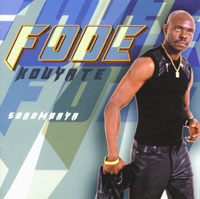
| Signature works | Tela, Photostar, First, Adama Nyingui |
| Awards | Excellence Trophies at the Victoires de la Musique Guinéenne (2022) |
Key dates
| Year | Event |
|---|---|
| 1964 | Birth in Kissifaramaya, Kissidougou prefecture |
| 1976 | Arrival in Conakry for primary studies |
| 1978 | First steps on the local music scene |
| 1982 | Death of his mother, Hadja Mama Kanté |
| 1986 | Return to Conakry, integration into Atlantique Mélodie |
| 1993 | Start of solo career |
| 1995 | First album Salatou in Abidjan |
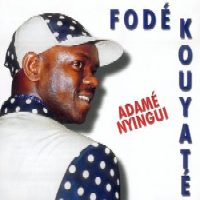
| 2002 | Album Adama Nyingui; Nuits d’Afrique festival in Montreal |
| 2008 | Album Baraka Dèn |
| 2022 | Excellence Trophies at the Victoires de la Musique Guinéenne |
| 2023 | Stage return with the single Abèta Ita |
A griot born into the strength of heritage
Fodé Kouyaté is the son of Djélyden Kabinet Kouyaté and Mama Kanté, and nephew of the famous griot Mory Kanté, nicknamed “the electric griot” for having propelled the kora onto global stages2. He is himself the direct descendant of the griot Balla Fasséké Kouyaté, contemporary of Soumangourou Kanté, the King of Sosso. This genealogy is not merely a backdrop: in Mandingo tradition, griots form a caste of oral scholars, guardians of history, and advisors to communities. Every member of a tribe knows their family tree across several generations, and the djéli is the one who transmits this memory through song3.
From the age of nine, Fodé effortlessly took up his mother’s songs. Arriving in Conakry in 1976 for his primary studies, he caught the attention of the local music scene as early as 1978. After the premature death of his mother, who passed away in Saudi Arabia in September 1982, he retired to Fria where he joined the Kimbo alumina plant. Music called to him, however, and he founded the small group Les Étoiles de Kimbo4.
In 1986, Fodé returned to Conakry and joined the Atlantique Mélodie orchestra. It was there that he recorded his first songs for Radio Télévision Guinéenne. Three years later, he chose to launch his solo career. His first television recording attracted the attention of CDS Production, who sent him to Abidjan: Salatou, released on December 2, 1995, was his first album.
The stage as a podium
The nickname “Djéli of Kissifaramaya” stuck to his skin5. Unlike some griots who merely glorify their patrons, Fodé transformed the stage into a podium: his lyrics address social cohesion, civil peace, the realities of daily life in Guinea, and even political questions using accessible language6. His commitment earned him appointment as an honorary itinerant ambassador by the pan-African organization Afrique-Aide-Afrique, an initiative supported by Senegalese President Abdoulaye Wade, for his awareness-raising work among Sierra-Guinean refugee camps.
On the international stage, Fodé gradually made a name for himself. His appearance at the Nuits d’Afrique festival in Montreal in July 2002 was a turning point, while the album Adama Nyingui (2002) and First (2000, a compilation of old tracks reissued on CD by Syllart) reached beyond borders7.
" I refer to the past to build the future. I created the Friday Gala des Souvenirs to show the new generation how we worked yesterday, work that today cradles three generations. Even our grandchildren can dance to the pieces of that era. The legacy they left us was thought for today8."
Major works
| Work | Year | Why it is essential |
|---|---|---|
| Salatou | 1995 | First album, recorded in Abidjan by CDS Production |
| First | 2000 | Compilation reissued on CD by Syllart, first international contact |
| Adama Nyingui | 2002 | Major artistic turning point, pan-African distribution |
| Baraka Dèn | 2008 | Last studio album, anchoring in contemporary Mandingo tradition |
| Tela | — | Iconic hit that remains in Guinean memory |
Legacy
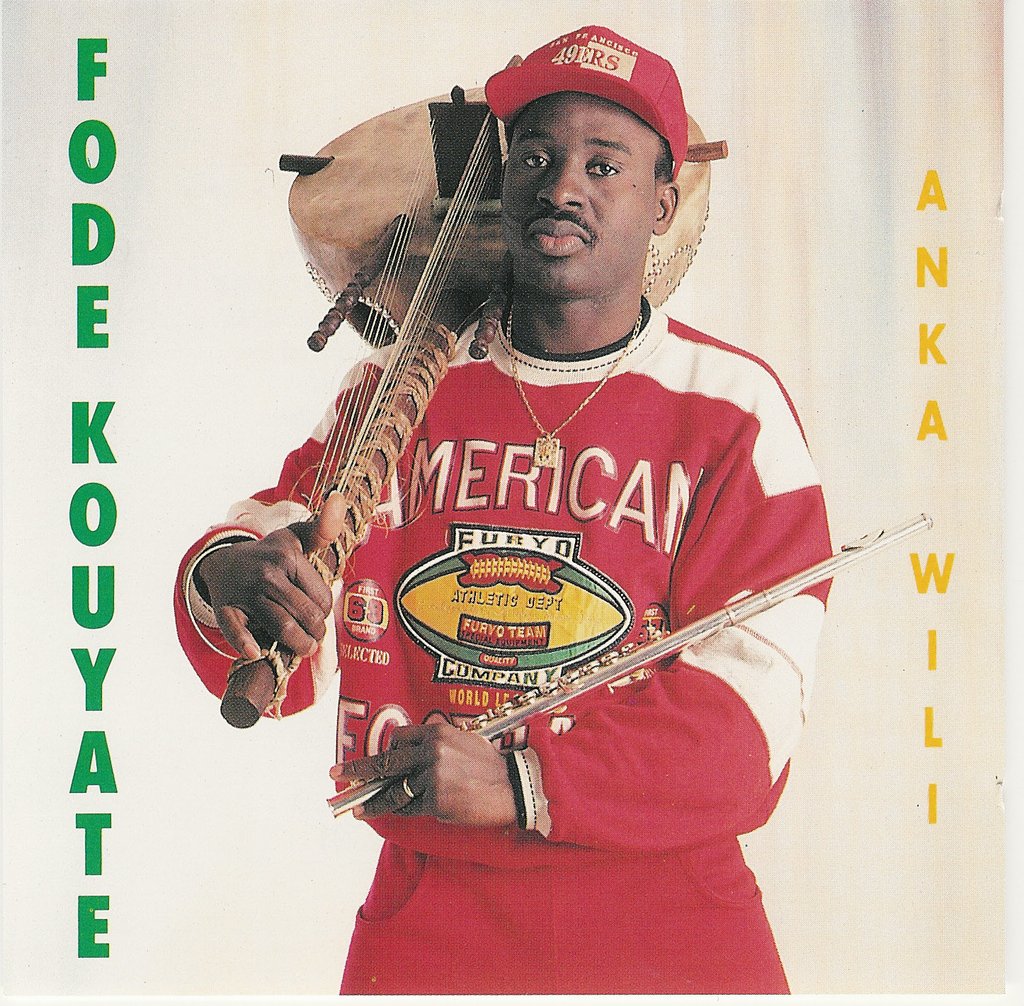
Djéli Fodé Kouyaté is not merely an artist: he is a living link between two worlds. He carries within him the millennial memory of the djélis, that smith-caste that transmits sacred speech, and he puts it at the service of a Guinea constantly seeking to define itself. His style, blending kora, balafon, and electric instruments, illustrates modern Mandingo — this music that borrows from traditional rhythms while integrating contemporary sounds9.
Beyond albums and tours, it is his commitment that leaves a lasting mark. Ambassador of peace, defender of social cohesion, he embodies the figure of the griot as guardian of the community bond. Every Friday, in the halls of the Grand Palmier, it is not merely a concert that is played — it is a pact with tradition that is renewed10.
Sources and references
-
Qui’est-qui en Guinée, Fodé Kouyaté, accessed in 2026. ↩︎
-
Afrisson, Mory Kanté (1950-2020), accessed in 2026. ↩︎
-
Universalis, Griot, Universalis encyclopedia, accessed in 2026. ↩︎
-
Wikipédia FR, Fodé Kouyaté, accessed in 2026. ↩︎
-
Musiques d’Afrique, Djeli Fodé Kouyaté (Guinée), Frank Bessem, accessed in 2026. ↩︎
-
Tabouleinfos, Double scrutin du 31 mai : Fodé Kouyaté brise le silence (Entretien), 25 mai 2026, accessed in 2026. ↩︎
-
Syllart Records, publisher catalogue (Syllart/Celluloid), accessed in 2026. ↩︎
-
Tabouleinfos, interview 2026, ibid. ↩︎
-
AllMusic, Fode Kouyate, accessed in 2026. ↩︎
-
Tabouleinfos, interview 2026, ibid. ↩︎