Biography
Malouma: the rebellious griot of the Mauritanian desert
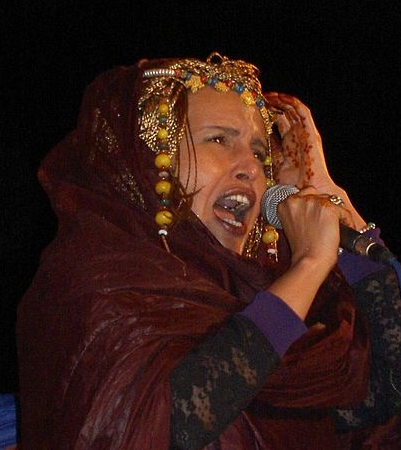
In the heart of a traditional Mauritanian wedding, while guests wait under the desert tents, a woman with clear orange nails prepares to play her ardin. Malouma is not there to sing praises of the powerful. She chose, at sixteen years old, a music that disturbs. From Mederdra to the stages of Paris and New York, the “singer of the people” spent fifteen years under a cultural embargo for daring to say that griots could be voices of rebellion1.
In brief
| Full name | Malouma mint Mokhtar Ould Meidah |
| Birth | October 1, 1960, Mederdra, Mauritania |
| Genre | Mauritanian music, blues, pop, jazz |
| Instruments | Ardin (female Moorish harp), voice |
| Nickname | The “singer of the people” |
| Honors | Knight of the Legion of Honour (2013), Mauritanian Woman of Courage Award (2015), BBC Radio 3 Awards for World Music (finalist 2008) |
Key dates
| Year | Event |
|---|---|
| 1960 | Birth in Mederdra, in the Trarza region |
| 1966 | Learning of the ardin, a traditional harp reserved for women |
| 1976 | First stage appearance at age twelve; writing of the first committed song |
| 1986 | Return to stage after an early marriage, with a revolutionary repertoire |
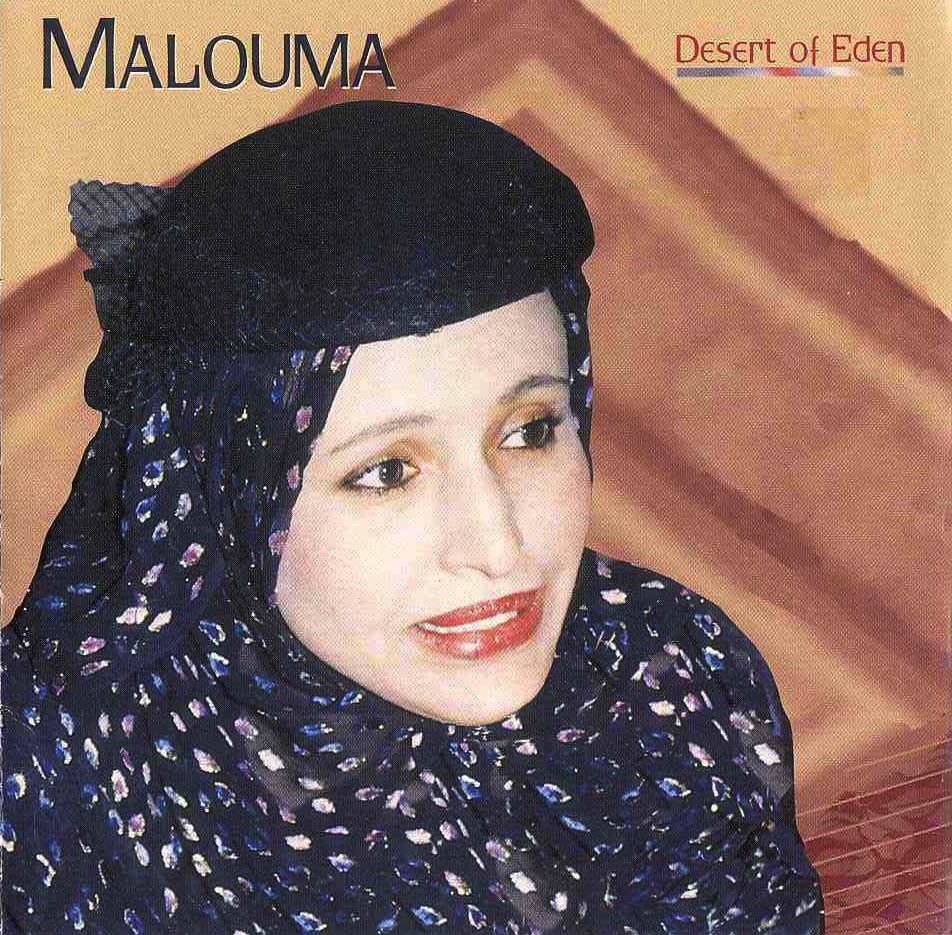
| 1998 | First album Desert of Eden, with Shanachie Records |
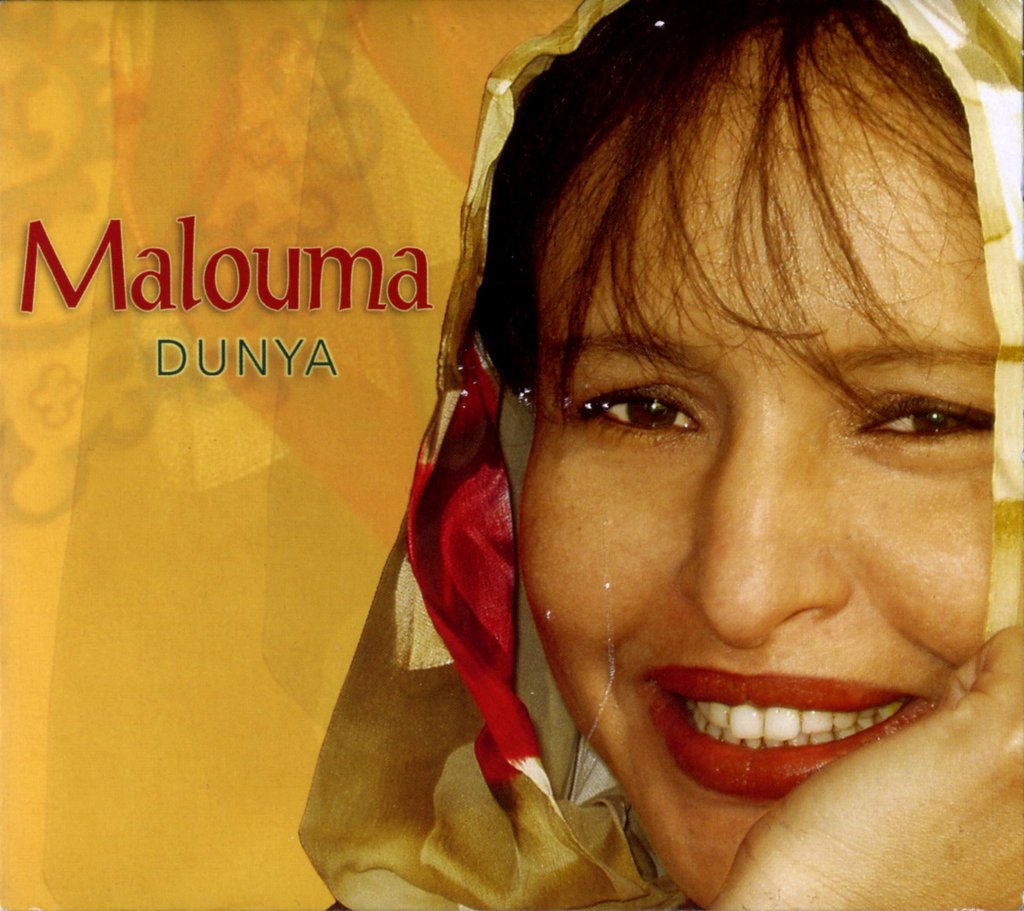
| 2003 | Dunya, lifting of censorship after a march of 10,000 people |
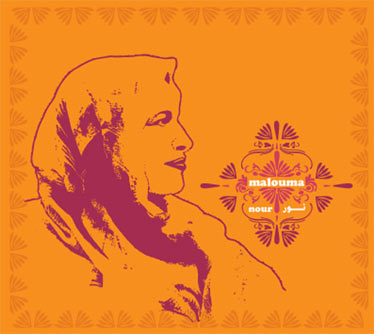
| 2007 | Album Nour; election as Mauritanian senator |
| 2008 | Finalist BBC Radio 3 Awards for World Music |
| 2013 | Knight of the Legion of Honour |
| 2014 | Knou and creation of the Mederdra festival |
| 2015 | Mauritanian Woman of Courage Award by the US ambassador |
Griot origins, rebellious awakening
Malouma was born in 1960, the year of Mauritanian independence, in the village of Charatt near Mederdra. Her father, Mokhtar Ould Meidah, is a poet and tidinit player — the three-stringed small guitar that griots, these oral historians of Sahelian Africa, manipulate like a scepter. Her mother also belongs to a lineage of musicians. The little girl grew up rocked by Vivaldi, Bach, Oum Kalthoum and Abdel Halim Hafez, but also by the old achwaar, these poems that griots have transmitted for centuries2.
From age six, she learned the ardin, an angular ten-string harp played only by women. At twelve, she went on stage for the first time; at fifteen, she was already giving solo concerts. But traditions pushed her toward a marriage she had not chosen: she gave up music for several years3.
Sound revolution and censorship
When Malouma reappeared on Mauritanian stages at the end of the 1980s, she was a bomb. She fused Moorish pentatonism with blues, jazz and electro, and her lyrics broke tabu after tabu: forced marriage, anti-Haratin racism, illiteracy, women’s rights. Her song “Habibi Habeytou” — written at sixteen and criticizing husbands who drive their wives away — triggered outrage. Members of the conservative community threatened her4.
Alongside her sister Emienh and brother Arafat, she addressed poverty and inequalities on television. Her appearance at the Carthage Festival in 1988 opened her to Arab satellite channels, but earned her, from 1991 onwards, a cultural embargo in Mauritania5. Censorship weighed for fifteen years.
Return and political engagement
In 2003, after a peaceful march of ten thousand people, censorship fell. Malouma published Dunya and Nour (2007), two albums where the ardin dialogues with electric guitar, djembé and bendir6. Her melodic fusion was acclaimed in Europe.
Elected senator in 2007, she is the first griot to enter the Mauritanian Parliament7. Goodwill ambassador for IUCN in 2011, she accumulated honors. Knou (2014) — named after a traditional dance reserved for women — marked her artistic return after seven years of politics. She created the same year a festival in the dunes of Mederdra to preserve musical heritage.
Major works
| Work | Year | Why it is essential |
|---|---|---|
| Desert of Eden | 1998 | First international album, basis for trad-mod fusion |
| Dunya (Life) | 2003 | Post-censorship: ardin, electric guitar and denunciation of slavery |
| Nour (Light) | 2007 | Feminine symphony, 14th on World Music Charts Europe |
| Knou | 2014 | Reggae and jazz in service of traditionally female dances |
Legacy
Malouma transformed the function of the griot: where her ancestors celebrated princes, she sings for the people8. She proved that ancestral Mauritanian music could dialogue with blues without renouncing itself. Today, she trains young people, preserves the ardin and tidinit, and carries Mauritania on all stages.
Sources and references
-
Wikipedia EN, Malouma, updated September 2, 2026, accessed October 31, 2026, https://en.wikipedia.org/wiki/Malouma ↩︎
-
Christophe Châtelot, Malouma, diva rebelle, Le Monde, July 14, 2009, accessed October 31, 2026, http://www.lemonde.fr/afrique/article/2009/07/14/malouma-diva-rebelle_1218640_3212.html ↩︎
-
Jon Lusk, Malouma (Mauritania), BBC Radio 3 Awards for World Music, 2008, accessed October 31, 2026, https://www.bbc.co.uk/radio3/worldmusic/a4wm2008/2008_malouma.shtml ↩︎
-
Wikipedia FR, Malouma, updated October 4, 2026, accessed October 31, 2026, https://fr.wikipedia.org/wiki/Malouma ↩︎
-
Anne Berthod, Malouma, la diva contestataire de Nouakchott, Télérama, April 28, 2014, accessed October 31, 2026, http://www.telerama.fr/musique/malouma-la-diva-contestataire-de-nouakchott,111160.php ↩︎
-
Angel Romero, Artist Profiles: Malouma, World Music Central, August 5, 2016, accessed October 31, 2026, https://worldmusiccentral.org/artist-profiles-malouma ↩︎
-
Embassy of the United States in Mauritania, Mauritanian Woman of Courage Award 2015, January 20, 2015, accessed October 31, 2026 ↩︎
-
Ministry of Foreign Affairs (France), Légion d’honneur decoration Malouma, 2013, accessed October 31, 2026 ↩︎