Biography
Mily Clément
In May 2025, under the spotlights of the Barea stadium in Antananarivo, Mily Clément launches “Tsy moramora mitady vola” and thousands of voices resonate in unison. The stage trembles, bodies ignite: at sixty-five years old, the icon of modern salegy proves that with this genre made of implacable drums and frenzied rhythms, the party has no age.
In brief
| Full name | Mily Antoine Clément |
| Birth | 1960s, Madagascar (DIANA region, Ambilobe) |
| Field | Salegy — dance music born on the north coast of Madagascar, blending traditional rhythms and Western instruments |
| Instruments | Guitar, percussion, vocals |
| Emblematic works | “Tsy moramora mitady vola” (1990), “Mandrora Mantsilany” (1993), “Akory kabary”, album Banja Malalaka (1993) |
| Distinctions | Song selected by an international conservation organization for raising awareness about deforestation; participation in Africavision (1991) |
Key dates
| Year | Event |
|---|---|
| ~1960 | Birth in Ambilobe, DIANA region, north coast of Madagascar. Son of an artist |
| 1970s-80s | Adolescence marked by tromba ceremonies (spiritual possession rituals) and influences from American and African guitarists |
| Late 1980s | Professional debut as guitarist with the group Feon’ala, in Ambilobe |
| 1988 | Joins Jaojoby’s group as a percussionist |
| 1990 | Music at the opening and closing ceremonies of the Island Games; national fame with “Tsy moramora mitady vola” |
| 1991 | Participation in Africavision in Côte d’Ivoire |
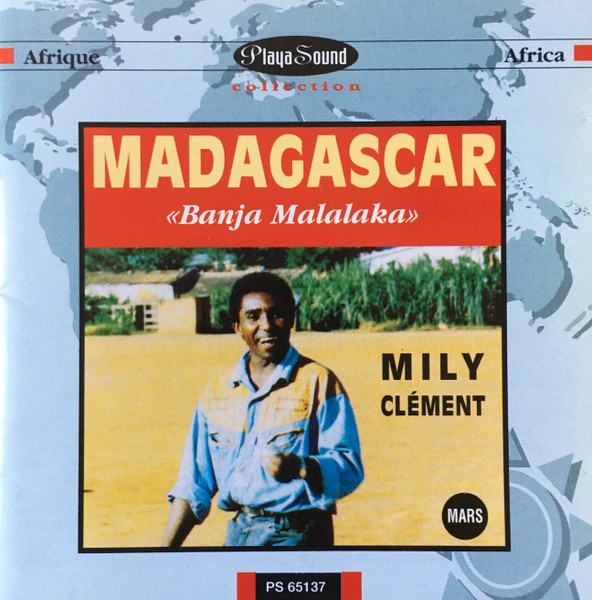
| 1993 | Release of the track “Mandrora Mantsilany” (selected for an international campaign to raise awareness about deforestation) and first international album Banja Malalaka (Playa Sound) |
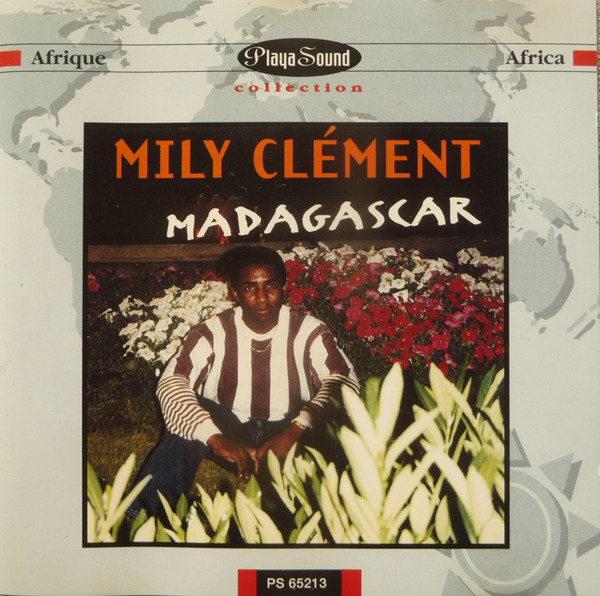
| 1998 | Release of the album Madagascar (Playa Sound) |
| 2007 | Composition of “Zagnaharibe” for the Whale Festival, on Sainte-Marie Island |
| 2010-2022 | Regular studio activities and collaborations with the new generation of Malagasy musicians |
| 2025 | Triumphant come-back at the Festival Tsika Jiaby (Barea stadium, Antananarivo) |
Origins and revelation: from trombas to Jaojoby’s stage
Mily Antoine Clément grew up in Ambilobe, a small coastal town in the DIANA region in northern Madagascar, in an environment steeped in music. Son of an artist, he was immersed from childhood in tromba ceremonies — these spiritual possession rituals where the community dialogues with ancestors. This intense sensory experience — percussion, trances, collective chants — forged the rhythmic foundation of his art.
In adolescence, Mily discovered American and African guitarists crossing the waves. Fascinated, he took up the guitar and first joined the group Feon’ala for local performances around Ambilobe. His talent developed rapidly, and in 1988, his contemporary Jaojoby — already booming on a national scale — invited him to join his formation as a percussionist. It was the latter who encouraged him to move into composition.
This period in the shadow of the salegy king was formative. Jaojoby, an implacable rhythm machine and creator of the national style that blends Western instruments, island melodies, and local rhythms, transmitted the essence of the genre to Mily. But it was in 1990 that everything changed: Mily was called to compose the music for the opening and closing ceremonies of the Island Games, a sporting competition bringing together the islands of the Indian Ocean. With “Tsy moramora mitady vola” — a track with an irresistible rhythm evoking the difficulty of labor — he exploded onto the national stage and became a star in his own right.
The following year, he represented Madagascar on the Africavision stage in Côte d’Ivoire. A continental springboard that confirmed his stature.
An ecological conscience: from deforestation to whales
While many artists sink into the classics of popular song, Mily Clément chose another path: he used his notoriety to carry messages. In 1993, his track “Mandrora Mantsilany” was selected by an international conservation organization to raise awareness about deforestation in Madagascar — a scourge that dramatically reduces the tropical forests of the island’s northwest. The song circulated widely, transforming a salegy artist into a vector of ecological consciousness.
His environmental commitment continued for years afterward: in 2007, he composed “Zagnaharibe” specifically for the Whale Festival on Sainte-Marie Island, dedicated to the protection of these marine mammals that come to give birth in the warm Malagasy waters.
Musically, Mily Clément signed two international albums with Playa Sound — Banja Malalaka (1993) and Madagascar (1998) — while remaining anchored in his territory. He collaborated with figures like jazzman Fanaiky or the group Triatra, and composed more than sixty tracks in collaboration with the new generation of Malagasy musicians. “I prefer playing pieces that the public knows well to reignite the flame around the group,” he explains in May 2025, faithful to his logic: music as a bridge between generations.
Major works
| Work | Year | Why it’s essential |
|---|---|---|
| “Tsy moramora mitady vola” | 1990 | The hit that propelled Mily Clément to the rank of national star — a frenzied salegy rhythm that speaks of the difficulty of Malagasy labor |
| “Mandrora Mantsilany” | 1993 | Awareness song about deforestation, selected by an international organization; proof that salegy can carry strong messages |
| Banja Malalaka | 1993 | First international album signed with Playa Sound, reference of northern salegy |
| Madagascar | 1998 | Second international album, musical spokesperson for the country |
Heritage and influence
Mily Clément is part of the holy trinity of modern salegy, alongside Jaojoby and Tianjama. Where Jaojoby invented the sound, Mily made it a voice. His approach — blending irresistible dance and social consciousness, drawing from tromba ceremonies to nourish urban music — paved the way for an entire generation of Malagasy artists who, to this day, claim this double heritage. In 2025, after twenty-three years of relative eclipse for the great plateaux, his triumphant come-back at the Festival Tsika Jiaby confirms that salegy is not a memory: it is a living tradition, and Mily Clément remains one of its pillars.
Sources and references
- “Mily Clement”, Wikipedia (English), https://en.wikipedia.org/wiki/Mily_Cl%C3%A9ment, accessed 11 November 2025.
- Mily Clément, Discogs, https://discogs.com/artist/1789964-Mily-Clement, accessed 11 November 2025.
- “Les Légendes Saleggy — Mily Clement”, Kiltir.org, https://kiltir.org/agenda/les-legendes-saleggy, accessed 11 November 2025.
- “MUSIQUE SALEGY — Mily Clément de retour sur scène”, Le Messager (l’Express.mg), 24 May 2025, https://www.lexpress.mg/2025/05/musique-salegy-mily-clement-de-retour.html, accessed 11 November 2025.
- “Gift & Blessings || Mily Clement”, Smithsonian National Museum of African Art, https://africa.si.edu/exhibits/malagasy/mily.html, accessed 11 November 2025.
- “Mily Clement”, National Geographic World Music (Calabash Music), web archive https://web.archive.org/web/20130530022033/http://worldmusic.nationalgeographic.com/view/page.basic/artist/content.artist/mily_clement_46192/en_US, accessed 11 November 2025.
- Rabe, Patrice (9 August 2010). “Madagascar: Mily Clément — Rentrée réussie d’un roi du Salegy”, Midi Madagasikara (allafrica.com), http://fr.allafrica.com/stories/201008091095.html, accessed 11 November 2025.
- Academic article: “Une voix, une esthétique créole : ethnographie du parcours de Mily Clément”, DOI: 10.48734/akofena.s007v2.25.2023, accessed 11 November 2025.