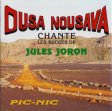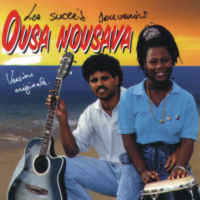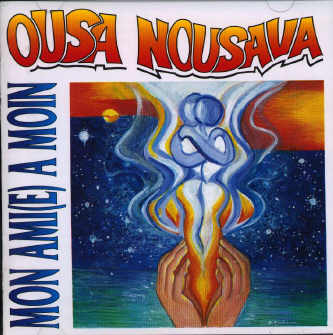
Biography
Ousanousava
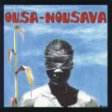
In 1984, four children from Saint-Louis, the capital of Réunion, took to the stage and chose a program name: Ousanousava, meaning “Where are we going?” in Réunion Creole. Nearly forty years later, the Joron siblings’ group is an institution of Réunion’s musical heritage. Their music oscillates between maloya — the deep music of slave descendants, rhythmically driven by the couare and tirekoin, ancestral percussion instruments — and séga, that festive rhythm that has made the island dance since the 18th century1.
In Brief
| Group Name | Ousanousava (Ousa Nousava on early albums) |
| Origin | Saint-Louis, Réunion |
| Founding Members | Frédéric, François, Bernard and Isabelle Joron |
| Genre | Maloya, séga, world music |
| Active Period | Since 1984 |
| Studio Albums | More than sixteen |
| Signature Title | “Grand-mère”, “Na dé milioane d’annees” |
Key Dates
| Year | Event |
|---|---|
| 1984 | Founded by Frédéric Joron, son of ségatier Jules Joron |
| 1989 | First cassette: 50,000 copies sold |
| 1990 | Album Déraciné, praised by Danyèl Waro |
| 1994 | Concert at the Zénith in Paris |
| 1995 | Frédéric departs for spiritual life |
| 1999 | Mon péi in tablo and the hit “Na dé milioni d’annees” |
| 2010 | Live jam de Montpellier, first album recorded in metropolitan France |
| 2016 | Double album Immortel / Sens dessus-dessous |
| 2021 | Sixteenth album: Ça mon pays |
| 2026 | Sold-out European tour |
Heirs of a Ségatier
They were born around music before they even knew how to walk. Their father, Jules Joron, was a great ségatier — a master of Réunion séga, this popular rhythm born in the 18th century from the meeting between African dances and European double basses. A teacher at the Gare school in Saint-Louis, Jules led school choirs and passed on to children his love for Creole music. “He taught us Réunion music and showed the little ones their culture,” Frédéric Joron recalls2.
The four children absorbed everything: solfège, guitar, kayamb — a bamboo triangle that scrapes like a metal triangle. Bernard and François joined a first group, Élèftéria, as early as 1983. Frédéric was already composing in his father’s schoolyard. In 1984, the siblings — Frédéric, twins François and Bernard, and little sister Isabelle — founded Ousanousava3.
The eponymous cassette, released in 1989, was a phenomenon. In one year, it sold more than 50,000 copies, a record for Réunion music. On June 12, 1994, Ousanousava took to the Zénith in Paris, with Jules Joron on stage beside them. In 1995, Frédéric announced his departure. “For me personally, it was a springboard,” he would say. He left the group for spiritual life4. Jules tried to put the pieces back together, without success. But Bernard and François had the repertoire to continue.
Mon péi in tablo (1999) marked the return. The title “Na dé milioni d’annees”, written by Frédéric as early as 1981 but sung for the first time in 1999, became the anthem of the new formation. It was remixed in 2017 by producer Manolo-J, who applied an electronic sound to it5.
A Legacy Spanning Generations
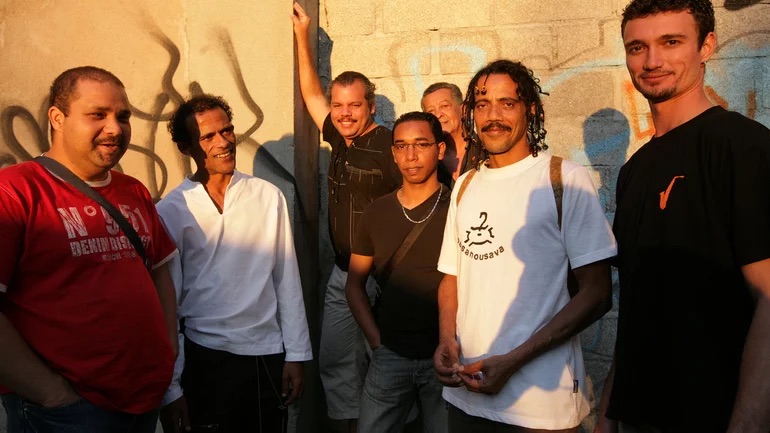
Today, Ousanousava belongs to no one. Bernard and François continue to carry the torch, surrounded by a dozen musicians. The group has toured in Madagascar, Mauritius, Seychelles and Zimbabwe. In 2026, a sold-out European tour — Strasbourg, Besançon, Grenoble, Marseille, Nantes, Rennes — confirms that forty years after its creation, Ousanousava remains one of the most representative groups of local musical terroir6.
“Ousanousava belongs to no one. More than a group, it is a legacy,” declares Bernard7.
Major Works
| Work | Year | Why It’s Essential |
|---|---|---|
| Cassette Ousanousava | 1989 | Phenomenon of 50,000 copies |
| Déraciné | 1990 | Foundational album praised by Danyèl Waro |
| “Zamal” | 1989 | Anthem for maloya |
| “Na dé milioni d’annees” | 1999 | The comeback hit, written in 1981 |
| “Grand-mère” | 1989 | Ranked among Réunionnais’ favorite songs |
| Ça mon pays | 2021 | Sixteenth album |
Legacy
Ousanousava occupies a singular place in Réunion’s musical landscape. “Grand-mère” was ranked among the Réunionnais’ favorite songs in a 2026 Quotidien poll. This popular classic spans generations. The group perpetuates a family tradition: Jules taught music to his school’s students; his sons carried it on the world’s biggest stages. Forty years after their first cassette, the Joron brothers — and their successors — carry the flame. A legacy that goes from “Zamal” to Ça mon pays, from a Saint-Louis studio to the Zénith in Paris3.
Sources and References
-
Réunion 1ère, Il y a 37 ans, Ousanousava, June 22, 2021, https://la1ere.franceinfo.reunion/saint-denis/il-y-a-37-ans-ousanousava-1038451.html ↩︎
-
L’Info.re, Frédéric Joron, 40 years of career with the Réunionnais, https://www.linfo.re/la-reunion/societe/c-kare-frederic-joron-40-ans-de-carriere-aupres-des-reunionnais ↩︎
-
PIROS, Ousanousava, https://piros.re/en/artistes/ousanousava ↩︎ ↩︎
-
Wikipedia, Ousanousava, consulted October 30, 2026, https://fr.wikipedia.org/wiki/Ousanousava ↩︎
-
Beatport, Na de milioni d’annees (Manolo-J Remix), July 5, 2017, https://beatport.com/release/na-de-milyon-danneesmanolo-j-remix/2047860 ↩︎
-
Le Quotidien.re, Favorite song of the Réunionnais: Grand-mère against Kaskavel, September 1, 2026, https://www.lequotidien.re/article/culture/2026/09/01/chanson-preferee-des-reunionnais-grand-mere-contre-kaskavel ↩︎
-
L’Info.re, Frederic Joron, from the Gare school to the court of adults, https://www.linfo.re/la-reunion/societe/frederic-joron-de-l-ecole-de-la-gare-a-la-cour-des-grands ↩︎