Biography
Racin Seggae: the root of Mauritian seggae
In the streets of Port-Louis, around the turn of the 1990s, a new sound emerged: the heavy rhythm of Jamaican reggae meets the syncopated percussion of Mauritian séga, and a musical revolution takes root. Among the first to amplify this fusion, Racin Seggae established a name that became synonymous with a manifesto—a music rooted in Creole soil, carrying truth and rebellion. The band, driven by the pen of Raynald Collet, turned the Indian Ocean stage into a resonator for voices often stifled[^4].
In brief
| Name | Racin Seggae (Racin’ Seggae, Racine Seggae) |
| Origin | Mauritius |
| Genre | Seggae — fusion of Mauritian séga and Jamaican reggae |
| Main Composer | Raynald Collet |
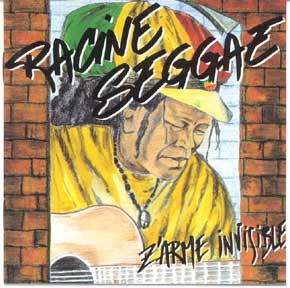
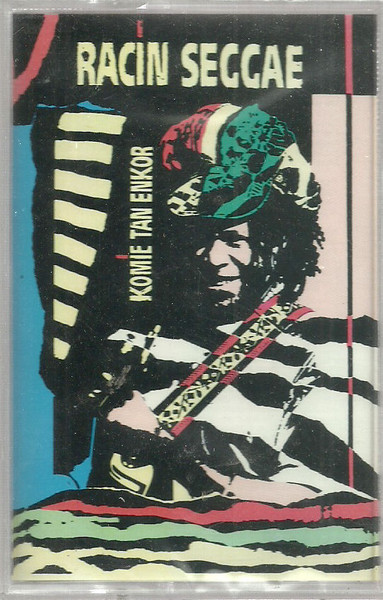
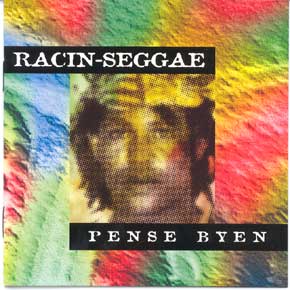
| Major Albums | Komie Tan Enkor, Z’arme Invisible, Pense byen |
| Label | Discorama |
Key dates
| Year | Event |
|---|---|
| ~1991 | Release of the first album, Komie Tan Enkor, on the Discorama label |
| 1993 | Z’arme Invisible — album confirming the group’s social commitment |
| 1995 | Pense byen — landmark album for the group |
| 1998 | Mélanzé — released in Mauritius and Réunion on the SEDM/OASIS label |
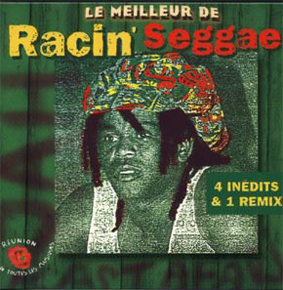
| 2003 | Compilation Le Meilleur de Racin Seggae with unreleased tracks |
| 2024 | Collaboration with Marcus Gad & Tribe on Lavérité |
| 2026 | Release of the single Kaya Day, a tribute to the seggae pioneer |
From séga to seggae: a music that speaks to the people
Racin Seggae was born in the musical crucible of Mauritius at the beginning of the 1990s. The band follows the direct lineage of seggae, a genre born in the mid-1980s when Kaya — Joseph Reginald Topize — first superimposed reggae drumming onto the syncopated rhythms of traditional Mauritian séga. Seggae, a fusion of séga — the music of the descendants of Mauritian slaves — and Jamaican reggae, was then an unknown movement outside the Indian Ocean1.
Racin Seggae took its own path. Driven by Raynald Collet, the main composer and lyricist, the group developed a collective sound anchored in the social realities of the island. The members — a community of musicians that renewed itself between Thierry Borne, Fredo Dalleau, Maurice “Momo” Manancourt and many others — worked around a fixed core. The texts, in Mauritian Creole and French, address all the issues traversing Mauritian society: discrimination, Creole identity, solidarity, spirituality. The record label Discorama became the group’s natural laboratory. It was there that Komie Tan Enkor saw the light of day around 1991-1992 — an album that immediately established Racin Seggae as one of the essential voices of Mauritian seggae[^2].
Titles like Senge nu mentalité, Kikalité mo frer or Mo liberté outline an implicit manifesto: that of a people becoming conscious of itself through its music. Z’arme Invisible (1993) and Pense byen (1995) are the pillars of this commitment. Pense byen — think well, think just — became a generational anthem, listened to from 1995 to the present day2.
The group extended this ambition beyond Mauritius’s borders. With Mélanzé (1998), also released in Réunion, Racin Seggae forged a musical link with its neighbors — where maloya, the cousin of séga, carries the same memories of slavery. The collaboration Lavérité (2024) with Marcus Gad & Tribe proves it remains a living figure of the scene3. The single Kaya Day (2026) pays tribute to Kaya, founder of seggae, in a loop of intergenerational recognition.
Major works
| Work | Year | Why it’s essential |
|---|---|---|
| Komie Tan Enkor | 1991/1992 | Founding album; establishes the group’s sound and message |
| Z’arme Invisible | 1993 | Committed album; Senge nu mentalité becomes the identity anthem |
| Pense byen | 1995 | Key title; resilience, dignity, solidarity |
| Mélanzé | 1998 | Extension of the pan-Indian Ocean vision; released in Mauritius and Réunion |
| Le Meilleur de Racin Seggae | 2003 | Compilation with four unreleased tracks; introduces new listeners to the catalog |
Legacy
Racin Seggae occupies a pivotal place in the history of Mauritian seggae. Alongside Kaya and Ras Natty Baby, it ranks among the major figures who transformed an experimental fusion of the 1980s into a lasting musical movement. While Kaya remained the tutelary figure of the genre, Racin Seggae brought a collective dimension — studio work, writing, assembled speech — that allowed seggae to structure itself as a group rather than a solo star4.
Its legacy is read in the following generations: Réunion artists like Baster, or the new names of the Mauritian scene, owe all this foundation that Racin Seggae patiently built. La Mizik Metiseh is not just a title: it is a definition of seggae itself, the mixed music that refuses boundaries between the African, Indian, and Caribbean worlds. Today, the group’s videos on YouTube accumulate millions of views, proving that a music born in the suburbs of Port-Louis can conquer the world[^2].
Sources and references
-
Apple Music, Racin Seggae (discography, tracks and label), accessed November 1, 2026, https://music.apple.com/us/artist/racin-seggae/384576077 ↩︎
-
Gaana, Pense byen (composer Raynald Collet, label Discorama), https://gaana.com/song/pense-byen ↩︎
-
Marcus Gad & Tribe, Lavérité (feat. Racin Seggae) (single, 2024), https://music.apple.com/us/album/lav%C3%A9rit%C3%A9-feat-racin-seggae-single/1751720898 ↩︎
-
Discogs, Racin Seggae (group profile, members, discography), accessed November 1, 2026, https://discogs.com/artist/4010442-Racin-Seggae ↩︎