
Biography
Rubén González
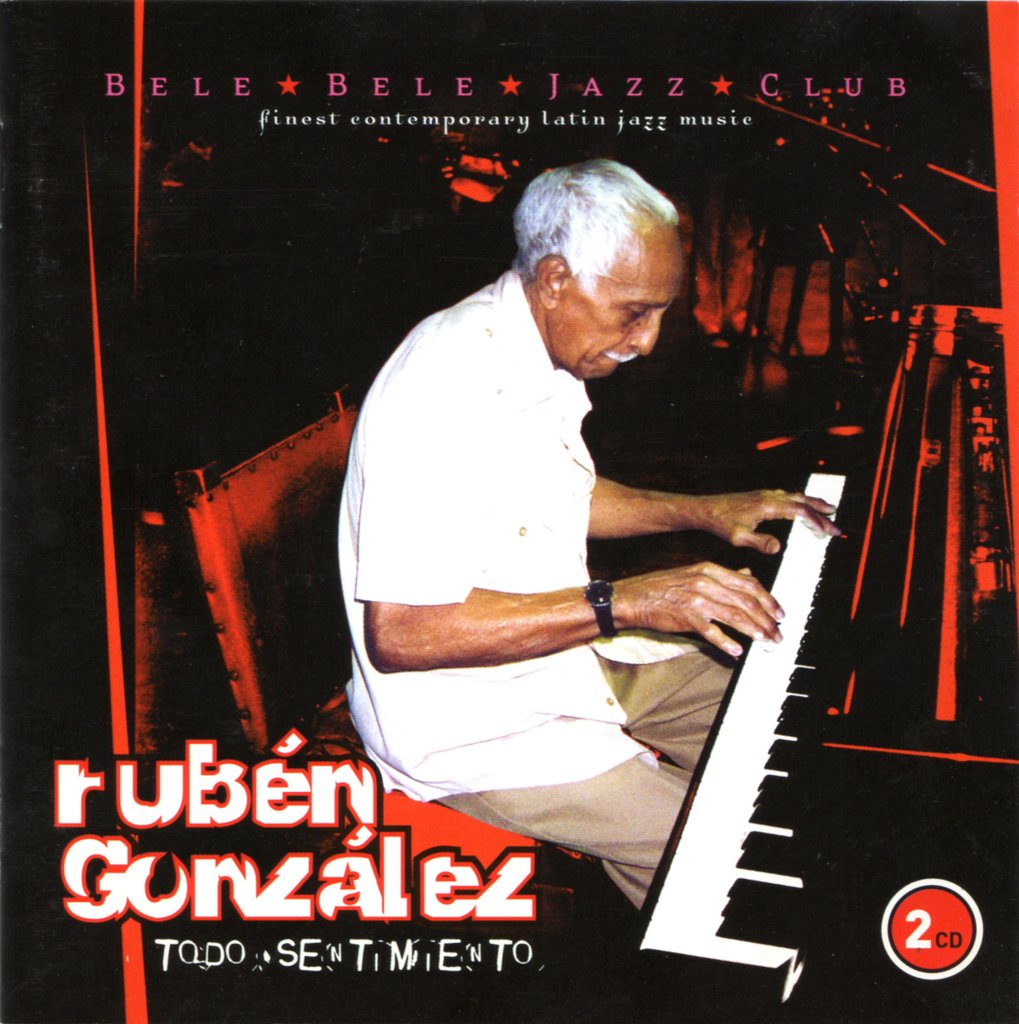
Santa Clara, Cuba. A cobbler father and a dusty piano in the house next door to the Amparo Rizo conservatory. At seven, Rubén sat on the stool and his fingers began to sculpt sounds that had nothing classical about them. At fifteen, he entered medical school — a tropical Dr. Jekyll and Mr. Hyde, according to the poetic expression of a chronicler. Music was jealous: in 1940, he moved to Havana and never looked back.
In Brief
| Full Name | Rubén González Fontanills |
| Birth | May 26, 1919, Encrucijada (near Santa Clara), Cuba |
| Death | December 8, 2003 (aged 84), Havana, Cuba |
| Field | Cuban piano — son, danzón, mambo, cha-cha-cha |
| Notable Works | Buena Vista Social Club, Introducing… Rubén González, Chanchullo |
| Distinctions | Cited by Ry Cooder as “the greatest solo pianist I have ever heard in my life” |
Key Dates
| Year | Event |
|---|---|
| 1919 | Birth in Encrucijada, near Santa Clara, Cuba |
| 1927 | Start of piano studies at the Amparo Rizo conservatory in Cienfuegos |
| 1937–40 | Medical studies in Havana; shift towards professional music |
| 1941 | Joins Arsenio Rodríguez’s conjunto, revolutionary of Cuban son |
| 1940s | Shares with Lilí Martínez and Peruchín the forge of modern Cuban piano style |
| 1957–62 | Stay in Venezuela with Orquesta América del 55; brief visit to Argentina |
| 1960s–80s | Pianist for Enrique Jorrín (inventor of cha-cha-cha); gradual retirement |
| 1996 | Discovered at the EGREM studio by Nick Gold; BVSC and Introducing recordings |
| 1997 | Release of landmark album Buena Vista Social Club (World Circuit) and first solo album |
| 2000 | Chanchullo, last album recorded at age 81 |
| 2003 | Death in Havana; the entire musical world pays tribute |
Origins and Training
Rubén grew up in a modest environment — his father was a cobbler, his mother a seamstress. His sonic destiny shifted in Cienfuegos, where his mother took him to the private conservatory of Amparo Rizo. Young Rubén devoured the repertoire, advanced faster than others, and obtained his diploma at sixteen. But he did not want to become a classical pianist: “I wanted to play Cuban son, that’s what I have always loved.” He still hesitated with medicine but music prevailed.
In 1940, he landed in Havana and settled near the great Arsenio Rodríguez. The latter was looking for a pianist for his conjunto. The young neighbor’s improvisation did not take long to seduce the maestro, who gave him his first advice: “Don’t worry about what others do. Play your own style.” Rubén applied, forging a sound that was both syncopated and lyrical which would become a school.
Revelation and Resurrection
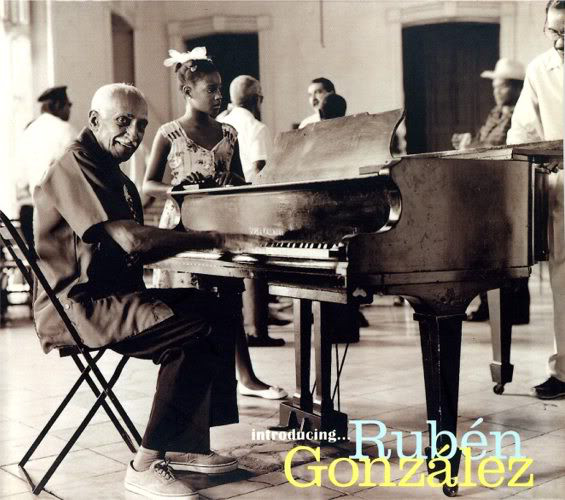
In the 1940s and 50, Rubén was claimed by all great Cuban orchestras: he rubbed shoulders with Benny Moré, Rita Montaner and Enrique Jorrín, the inventor of cha-cha-cha. He navigated easily from guaracha to mambo, from bolero to danzón. At 78, he signed Introducing… Rubén González (1997) — first solo album, recorded in two days at the EGREM studio in Havana. His discovery was due to a studio chance: during Buena Vista sessions, he tapped a tumbao during a break, Nick Gold raised his thumb and the tape was set.
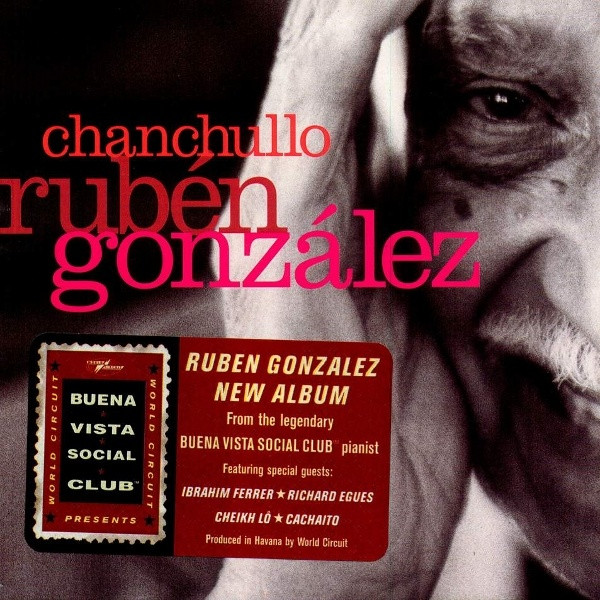
Wim Wenders’ documentary (1999) and the album Buena Vista Social Club revealed the world to a pianist who, in his country, was considered a ghost. He went on an international tour, performed at Carnegie Hall. His last solo album, Chanchullo, released in 2000 at age 81, sounded like a triumphant farewell.
Final Years and Posthumous Legacy
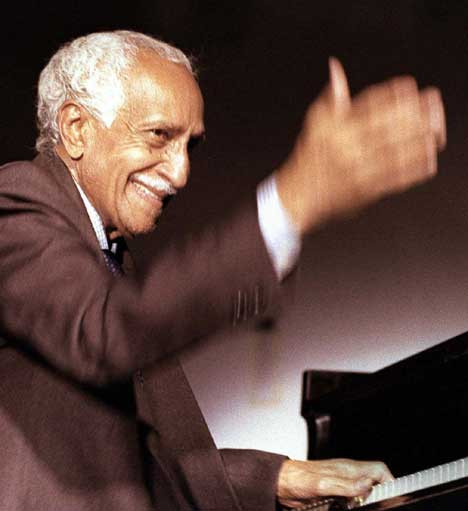
Health declined: arthritis, respiratory and renal problems. He retired to Havana, surrounded by his family. He died on December 8, 2003, a few days after Compay Segundo and Celia Cruz. The pianist was hailed as one of the three greatest of Cuba, alongside Lilí Martínez and Peruchín. Ry Cooder described him thus: “a crossing between Thelonious Monk and Felix the Cat”. His piano forged the rhythm of the Cuban golden age; his resurrection at 78 remained one of the most beautiful rebirth stories of the 20th century.
Major Works
| Work | Year | Why it is essential |
|---|---|---|
| Buena Vista Social Club | 1997 | The landmark album of the global Cuban renaissance; Rubén’s piano at the heart of arrangements. |
| Introducing… Rubén González | 1997 | First solo album; recorded in two days at the EGREM studio, without post-production. |
| Chanchullo | 2000 | Last record recorded at age 81; vigorous, inventive and poignant. |
| A Toda Cuba le Gusta (Afro-Cuban All Stars) | 1997 | The springboard that preceded the BVSC; Rubén confirms his virtuosity there. |
| Los héroes (Estrellas de Areito) | 1979 | Cult session of reunited Cuban musicians; Rubén is a brilliant soloist there. |
Legacy and Influence
Rubén González shaped modern Cuban piano, equal to Lilí Martínez and Peruchín. His approach — syncopated but never mechanical, harmonically rich without being complicated — nourished generations of Cuban musicians. After his involuntary retirement in the 1980s, his public return at 77 changed the course of Cuban music: the four million copies sold by Buena Vista Social Club gave Cuban son a global legitimacy that the Castro regime had neglected. His style remains the reference for any pianist of his Cuban, and posthumous BVSC tours continue to introduce his pianissimos to new generations.
Sources and References
-
“Rubén González (pianist)”, Wikipedia, https://en.wikipedia.org/wiki/Rub%C3%A9n_Gonz%C3%A1lez_(pianist), accessed November 9, 2026.
-
“Rubén González”, Buena Vista Social Club (official site), https://www.buenavistasocialclub.com/musicians/ruben-gonzalez/, accessed November 9, 2026.
-
Craig Harris, « Rubén González », AllMusic, https://www.allmusic.com/artist/rub%C3%A9n-gonz%C3%A1lez-mn0000800342, accessed 9 November 2026.
-
Rubén González, Introducing… Rubén González, sleeve notes by Lucy Duran, World Circuit Records WCD 049 (1997).
-
Robin Denselow, « Rubén González obituary », The Guardian, 10 December 2003, https://www.theguardian.com/news/2003/dec/10/guardianobituaries.artsobituaries.
-
« Buena Vista pianist Gonzalez dies aged 84 », The Guardian, 9 December 2003, https://theguardian.com/world/2003/dec/09/cuba.artsfeatures.
-
Jon Pareles, « Ruben Gonzalez, 84, Buena Vista Club Pianist », The New York Times, 10 December 2003, https://nytimes.com/2003/12/10/arts/ruben-gonzalez-84-buena-vista-club-pianist.html.
-
« Rubén González », Jeune Afrique, 15 December 2003, https://www.jeuneafrique.com/102346/archives-thematique/rub-n-gonz-lez/, accessed 9 November 2026.