
Biography
Wenge Musica Aile Paris
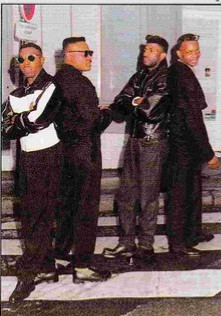
In 1989, as Wenge Musica triumphed in Kinshasa with Bouger!! Bouger!! Makinzu!!!, its first European tour fell short: the main members were blocked by Zairian customs, but Ricoco Bulambemba and a few others managed to reach Paris. There, far from the Kinshasa stages, they began rehearsing with Aimé Bwanga and Alain Mwanga « Zing-Zong », already established in the French capital. What they imagined as a break turned into a true orchestra by 1990–1991: Wenge Musica Aile Paris, the « Paris wing » of the great Wenge.
In Brief
| Full Name | Wenge Musica Aile Paris, also known as El Paris or L’Paris |
| Origin | Kinshasa (Zaire), but based in Paris from 1990 onwards |
| Genre | Soukous, Congolese rumba |
| Active Period | 1990/1991 – 1993 (dissolved into factions) |
| Founders | Ricoco Bulambemba, Aimé Bwanga « Son Altesse », Alain Mwanga « Zing-Zong », Marie-Paul Kambulu « le Roi Soleil » |
| Major Albums | Molangi ya Malasi (1991), Nganga Nzambe (1992) |
| Label | Flash Diffusion Business (FDB), Ets. N’Diaye |
Key Dates
| Year | Event |
|---|---|
| 1981 | Birth of Wenge Musica in Kinshasa (former Celio Stars) |
| 1986 | Aimé Bwanga and Zing-Zong move to Paris for studies |
| 1987 | Marie-Paul Kambulu joins Wenge Musica as a backing vocalist in Kinshasa |
| 1989 | First European tour: Ricoco alone in Europe, leaders blocked in Kinshasa; Ricoco rehearses with Bwanga and Zing-Zong |
| 1990–91 | Marie-Paul leaves Wenge after Kin é Bougé and joins the Parisians; official birth of Wenge Musica Aile Paris |
| 1991 | Release of Molangi ya Malasi, first album credited to Ricoco Bulambemba |
| 1992 | Nganga Nzambe, second album, credited to Marie-Paul Kambulu |
| 1993 | Release of Soukous Koumbela; leadership dispute; dissolution into factions |
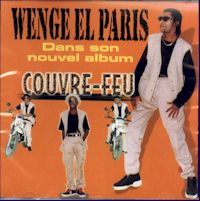
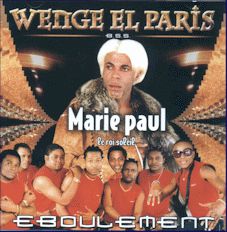
| 1994 | Aimé Bwanga creates Wenge Kumbela, Marie-Paul founds Wenge El Paris |
Origins and Formation: The Paris Split
Wenge Musica Aile Paris was born from a series of coincidences and frustrations layered onto the history of the great Wenge Musica. In 1979, a group of Bandalungwa’s friends in Kinshasa founded the Celio Stars, which became Wenge Musica in 1981. After the triumph of their first album in 1988, the group embarked on a European tour in 1989. Visa issues caused the formation to split: Ricoco Bulambemba and drummer Pipo La Musica crossed the border with forged documents, while the leaders—JB Mpiana, Werrason, Didier Masela, and Alain Makaba—remained blocked in Kinshasa.
Ricoco thus arrived alone in Europe, where he reunited with Aimé Bwanga and Alain Mwanga « Zing-Zong », founding members who had already settled in Paris since 1986. With singer Adolphe Dominguez also present in Europe, they assembled a rehearsal team that quickly grew: Ya Yuyu, JDT Mulopwe, Boss Matuta, Prince César Loboko… Then Marie-Paul Kambulu returned to the stage. The singer, a member of Wenge Musica since 1987 when he handled backing vocals on Kin é Bougé, felt « cramped » upon the group’s return and deserted to join his friends from the « Paris wing ». He gave the new band its cohesion and ambition—under the high patronage of manager Francis Kalombo.
The formation benefited from prestigious endorsements: Papa Wemba, King Kester Emeneya, and Lidjo Kwempa offered them compositions. Joly Mubiala (Kester’s younger brother) and former Victoria Eleison drummer Djudju Ché participated in the first recordings. The ensemble formed an eleven-piece musical machine: vocal attack with Ricoco, Dominguez, Ya Yuyu, and César; guitars by Zing-Zong, Aimé Bwanga, and Boss Matuta; bass played by a member with the same stage name Delo Bass; congas, drums, keyboards, and animations.
Brief Splendor (1991–1993)
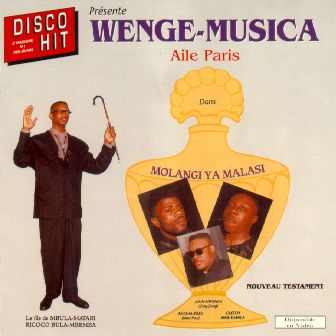
Wenge Musica Aile Paris recorded two studio albums, both released by the label Flash Diffusion Business. Molangi ya Malasi, published in 1991 and credited to Ricoco Bulambemba, opens with the eponymous title that Ricoco had composed during his time in his former orchestra Il Fallait Kaka. The album strikes with its raw energy, a soukous with a «ザラザラ» grain—rough and electric, as noted by Japanese critic Arai Osamu in the description of the reissue.
The following year, Nganga Nzambe marked a turning point: it was credited to Marie-Paul Kambulu and introduced « Fidélité sens unique », a piece that was not only a musical success but an unveiled attack on JB Mpiana and Werrason’s camp: « the loyalty I gave them was one-way; they took advantage of the kindness of my heart ». The title transformed an internal conflict into a public declaration, sealing the break with the mother group.
The third project, Soukous Koumbela released in 1993 under the name Aimé Bwanga, hastened disintegration. Leadership disputes erupted violently: in 1993, only two years after its birth, the group fragmented. Aimé Bwanga founded Wenge Kumbela; Marie-Paul created his own structure, Wenge El Paris, which persisted much longer by releasing about fifteen albums between 1997 and 2007. Ricoco Bulambemba, in turn, attempted to revive the formula with 4 Saisons (2000) and Mfumueto Vibration (2001). Today, Wenge Musica Aile Paris exists only through the records it pressed and the memory of Kinshasa and Parisian stages that saw it grow.
Major Works
| Work | Year | Why It’s Essential |
|---|---|---|
| Molangi ya Malasi | 1991 | First album, featuring the rough sound and raw energy of a group born from migration; Ricoco reprises a composition he had written before Wenge |
| Nganga Nzambe | 1992 | Marie-Paul takes the lead and launches an open feud against Werrason/JB Mpiana, summarizing the story of the split in a single song |
| Soukous Koumbela | 1993 | Last recording under the name Aile Paris; marks the definitive fracture and the members’ entry into their own factions |
Legacy and Influence
The career of Wenge Musica Aile Paris is brief, but it illustrates a recurring phenomenon in Congolese rumba: splits that multiply names under the “Wenge” label. The group served as a reservoir for several formations that marked the 1990s — Wenge El Paris, Wenge Kumbela, and indirectly Wenge Référence (Manda Chante). The rivalry between the Parisian wing and the Kinshasa factions of BCBG and Maison Mère spanned decades, fueling response songs for years.
The New York Times noted in 1995 that the Parisian wing « released as many albums as the originals, perhaps to confuse listeners ». A remark that, in subtext, acknowledges the dynamism of a group often eclipsed by the celebrity of Werrason and JB Mpiana. The albums Molangi ya Malasi and Nganga Nzambe remain references for soukous collectors, appreciated for their raw sound and youthful energy.
Sources and References
- « Wenge Musica », Wikipédia (French version), https://fr.wikipedia.org/wiki/Wenge_Musica, accessed November 11, 2026.
- « Wenge Musica », Wikipedia (English), https://en.wikipedia.org/wiki/Wenge_Musica, accessed November 11, 2026.
- Frank Bessem, « Wenge Musica El Paris », Musiques d’Afrique, https://www.musiques-afrique.net/rdc/art_wenge_lp.html, accessed November 11, 2026.
- « Wenge Musica Aile Paris, l’autre groupe zaïrois du clan Wenge dont on parle moins », Kribios Universal, https://www.kribiosuniversal.com/post/wenge-musica-aile-paris-lautre-groupe-zairois-du-clan-wenge-dont-on-parle-moins, accessed November 11, 2026.
- « Recordings View; A Brisk Zairian Rumba Reverberates in America », The New York Times, April 30, 1995, https://www.nytimes.com/1995/04/30/arts/recordings-view-a-brisk-zairian-rumba-reverberates-in-america.html, accessed November 11, 2026.
- « Stars no longer welcome in Paris », The Nation Kenya, https://nation.africa/kenya/life-and-style/weekend/stars-no-longer-welcome-in-paris--936614, accessed November 11, 2026.