Biography
Zenglen
In July 1989, three young musicians from Port-au-Prince laid down the first chords of a group that would become an institution. The name, Zenglen, comes from broken glass — but their music, on the other hand, brings people together. Thirty-five years later, just shy of crossing the forty-year mark, Zenglen remains one of the references of Haitian compas, not despite its internal tumults, but thanks to them.
In brief
| Name | Zenglen |
| Origin | Port-au-Prince, Haiti |
| Genre | Compas (kompa) — Caribbean music born in Haiti in the 1950s by Nemours Jean-Baptiste, characterized by a driving binary rhythm and instrumentation that blends guitars, saxophone, brass, and percussion |
| Period | 1989–present |
| Founder | Jean Brutus Dérissaint (guitar, composition) |
| Studio albums | 15+ |
| Signature track | “Fidèl” |
Key dates
| Year | Event |
|---|---|
| 1989 | Founded by Jean Brutus Dérissaint, Gary Didier Perez, and Patrick Martineau |
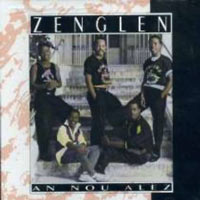
| 1990 | Release of the first album, An nou Alèz, with tracks “Fidèl”, “Michaëla”, “Tanbou Nou” |
| 1992 | Release of Atò n Alèz; period of transition and first departures |
| 1999 | Major revival with Easy Konpa and Gracia Delva on vocals |
| 2001 | Release of 5e Vites; affirmation of the style |
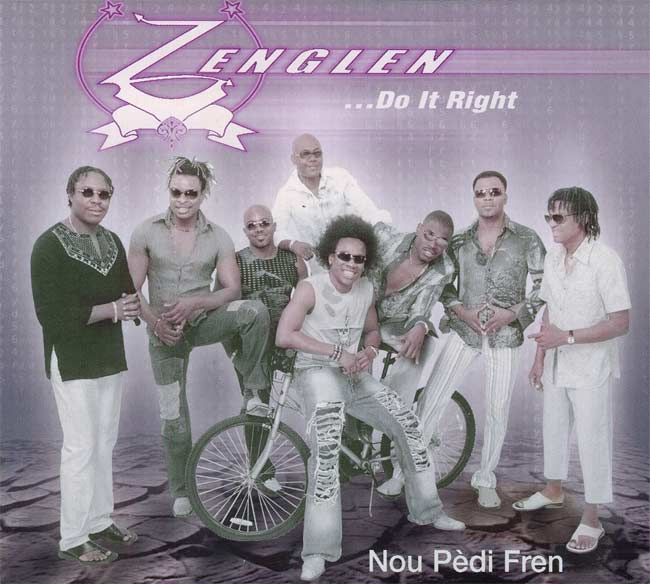
| 2004 | 5 Etwal and the arrival of Réginald Cangé (ex-Zafem) renew the lineup |
| 2002–2012 | Period of turbulence: cascade departures of singers, but continued production |
| 2018 | 15th studio album: No Dead End |
| 2022 | Release of Bravo Victorious (14th album) |
| 2024 | Happy 69th Compas; Zenglen remains active |
A name that doesn’t fit, but that unites
Zenglen takes its name from the image of small pieces of broken glass. Ironically, the group’s music does exactly the opposite: it sticks back together. Formed at the end of the 1980s in a circle of young Port-au-Prince musicians around Jean Brutus Dérissaint, Gary Didier Perez, and Patrick Martineau, Zenglen was born from a simple but ambitious idea — to modernize Haitian compas, make it more polished, and open the door to social issues.
The first milestone arrives in 1989 with Koule Tan, then the group explodes with An nou Alèz in 1990. The signature track, “Fidèl”, becomes a hymn: fidelity is not just a love theme there, but a mission declaration for a lineup that wants to reshape kompa (the modern evolution of compas, more rhythmic and dance-oriented) in its image. The album also contains “Michaëla” and “Tanbou Nou”, tracks that will remain in collective memory.
But success attracts covetousness. From the first American tours, several members leave the group. Jean Brutus Dérissaint, guitarist and composer, remains the fixed point — the only founding member who never gave up. Nicknamed “Pè Brut” by fans, he rebuilds, re-engages, and keeps the Zenglen idea alive.
From chaotic instability to stability
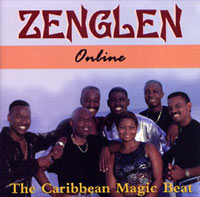
What distinguishes Zenglen is its ability to transform instability into creativity. Over thirty-five years of existence, the group has counted ten singers in “ban devan” (front stage): Gracia Delva, Réginald Cangé, Frérot, Kenny Desmangles, Dabenz Chéry, Klemay, Wid, Emmynix, Richie, and others still. Some even passed through the house twice, like Réginald Cangé and Frérot.
The longest period of stability for a singer was played out with Kenny Desmangles, who stayed nine years (2007-2015). On the other hand, some singers lasted only eighteen months. For the guitarist himself, the reasons for departures are clear: each musician has their ambitions, and Zenglen singers did not wait long to want to launch their own solo careers.
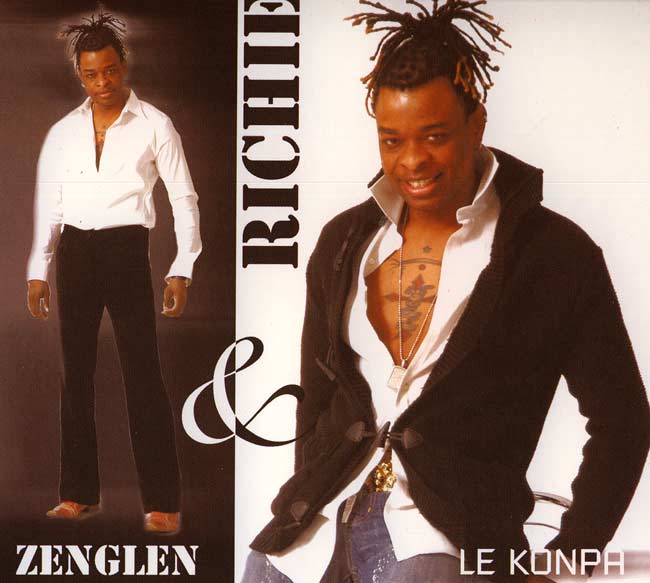
The years 2002-2012 constitute the most tormented period. Gracia Delva (vocals) leaves in 2002, followed by Réginald Cangé, Frérot, Nickenson Prud’homme, and Dabenz Chéry. Richie and Romny Florestal (“El Pozo”) then leave to form the group Klass. Each time, Zenglen survives — and continues to release records.
A compas machine always in motion
Despite internal tornadoes, production quality does not waver. From Easy Konpa (1999) to No Dead End (2018), passing through 5 Etwal (2004) and Bravo Victorious (2022), each album brings its share of hits. “M Sweté’l Dansé”, “Grèv Bèbè”, “5 Dwèt”, “Flannè Femèl”, “Sincerely Yours”: the list of hits keeps growing.
Zenglen also functions as a nursery for the HMI (Haitian Music Industry): many musicians pass through the group, learn there, and leave to pursue their careers elsewhere. Saxophonist Nicolina Ferrentino and tambourine player Eddy Germain are among the few to have shown exemplary loyalty, alongside Jean Brutus Dérissaint.
In 2018, with No Dead End — its 15th studio album — the group celebrates three and a half decades of uninterrupted career. The album features eleven compositions performed by Frérot, Wid, and Emmynix, with collaborations from Kikko and Masterbrain. “Grèv Bèbè” and “M swete l danse” benefit from immediate audience among music lovers.
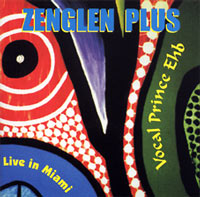
In 2022, Bravo Victorious (14th album) extends the series. In 2024, Zenglen releases Happy 69th Compas, tribute to the legacy of Nemours Jean-Baptiste, founding father of Haitian compas. The group remains active in 2025 and 2026, delivering singles like “Ouvè Peyi a” and “Ti Poud”, and continuing to tour in Miami, Cayes, and Quebec.
Major Works
| Work | Year | Why It’s Essential |
|---|---|---|
| An nou Alèz | 1990 | First album, introduced “Fidèl” and “Michaëla”, two foundational tracks of modern kompa |
| Easy Konpa | 1999 | Revival of the group after a dry spell; multiple hits (“5 Dwèt”, “Flannè Femèl”) |
| 5 Etwal | 2004 | Arrival of Réginald Cangé, vocal and commercial renewal |
| No Dead End | 2018 | 15th album; “Grèv Bèbè” and “M sweté’l danse” confirm the enduring nature of the style |
Legacy and Influence
Zenglen is more than a group: it is an institution of Haitian compas. Its discography, international tours, and ability to renew its voices without ever losing its identity make it a pillar of the HMI. Artists who carried the song of Zenglen — Gracia Delva, Richie, Réginald Cangé — have in turn become major figures. The group also nurtured other formations, such as Klass, founded by former members.
Its name, “Zenglen,” remains today synonymous with resilience: a broken group yet incapable of not reforming, a music that, like recycled glass in a mosaic, shines more brightly after being scattered.
Sources and References
- “1989-2018: Zenglen, 29 years of unstable stability,” Le Rédacteur (leredacteur.info), https://leredacteur.info/2018/06/02/1989-2018-zenglen-29-ans-dinstable-stabilite/, accessed November 3, 2026.
- “Zenglen,” Wikipedia, https://fr.wikipedia.org/wiki/Zenglen, accessed November 3, 2026.
- “Zenglen on HaitiDJ,” HaitiDJ, https://www.haitidj.com/fr/artist/zenglen/, accessed November 3, 2026.
- “Brutus: Zenglen loves competition,” Le Nouvelliste, https://lenouvelliste.com/article/141982/brutus-zenglen-aime-la-competition, accessed November 3, 2026.
- “Greatest Hits,” Genius, https://genius.com/albums/Zenglen/Greatest-hits, accessed November 3, 2026.
- “Zenglen,” Deezer, https://www.deezer.com/us/artist/471941, accessed November 3, 2026.
- “Zenglen,” Facebook (official page), https://www.facebook.com/zenglenofficial, accessed November 3, 2026.