Musical History of Lesotho
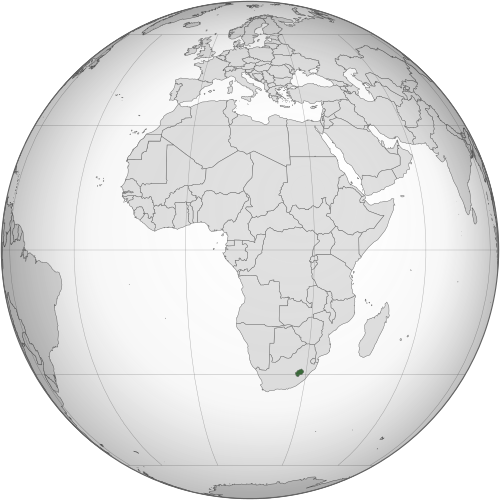
From the snow-capped slopes of the Drakensberg mountains to the shebeens[1] of Maseru, Basotho music has always been the barometer of a people trapped in a country — Lesotho, a 100% landlocked kingdom surrounded by South Africa. Today, the famo, an emblematic accordion genre, is in crisis: eighteen music groups are classified as terrorist organizations by the government, and gang violence has claimed more than nine hundred lives in 2022[2]. Yet, this same music, born in the fields and mines, is a living art that has crossed a century, carried by pioneers like Mohapeloa, giants like Sankomota, and rising stars like Sannere.
One Country, Many Sounds
Traditional Basotho instruments bear witness to a long cultural history. Before the arrival of Europeans, the Basotho people already used the lesiba (a single-string instrument played with a bow), the thomo (a tube zither played vertically), the moropa (a drum) and the setolo-tolo (a jaw harp)[3]. Oral poetry — dithoko (praises), dikoma (hymns) and difela (travelers’ songs) — structured social life[4].
In the 19th century, the foundation of the kingdom by Moshoeshoe I at Thaba-Bosiu (1824) amalgamated groups of varied origins — Sotho, Nguni, San — and shaped a unique cultural identity[5]. At the beginning of the 20th century, Protestant missionaries from the Paris Evangelical Missionary Society transcribed these oral traditions and introduced formal music education, in particular at Morija, a town that became the cultural capital of Lesotho[6].
Mohapeloa: The First Composer
At the heart of this mutation lies Joshua Pulumo Mohapeloa (1908-1982), considered the most important composer of choral music in Sesotho. Born in the eastern mountains of Lesotho, he studied music at Morija Training College before contracting tuberculosis at Fort Hare University, which forced him to give up his medical studies[6].
He spent the 1930s at Morija Printing Works, where he trained generations of composers and published his first collection in 1935, Meloli le Lithallere tsa Afrika I (The Sounds and Songs of Africa)[6]. In 1937, he composed a Coronation song for the coronation of King George VI, which was adapted in 1966 into Lesotho Lefa la Rōna (Lesotho, Our Heritage), a patriotic anthem still sung today[7]. Mohapeloa also trained composers such as J.Q. Matsoso and L. Ntšasa at Morija[6].
The Famo: From Eldorongo to the Mountains
When thousands of Basotho left the mountains to find work in South African gold mines from the 1920s onwards, they took their music with them. In the shebeens (illegal bars) of the townships, they discovered the French accordion, nicknamed koriana in Sesotho[8]. This instrument, originally adopted in concertina form for its portability, quickly became the central element of a new genre that fused traditional a cappella singing, marabi (an urban South African style) and dance rhythms[9].
The first major figures of famo appeared in the 1960s-1970s. Tau ea Matšekha, a group led by accordionist Forere Motloheloa and singer Apollo Ntabanyane, was the first to break through into national consciousness, with albums like Pelo ea Banna (The Heart of Men)[9]. The famo, whose name means “to tickle one’s nose” — a gesture of defiance and pride — spread throughout the country: community radio stations, record stores like Gallo Record Company, and festivals. “It’s like jazz in other countries; it’s the most well-known genre in Lesotho,” explains Puseletso Seema[10].
The Golden Age: Sankomota and Tsepo Tshola
While famo dominated the popular scene, another current developed in the 1970s: afro-jazz fusion. The group Sankomota, founded in 1976 by guitarist Frank Leepa (“The Captain”), drummer Moss Nkofo and singer Tsepo Tshola, was the first to record an LP in Lesotho in 1983, on the advice of South African producer Lloyd Ross[11]. Their first album, Sankomota, blended Sesotho rhythms, jay[12] and jazz, with lyrics in multiple languages — Sesotho, Zulu, Pedi — and a message of pan-African liberation[11].
Tsepo Tshola, nicknamed “The Village Pope” for his deep baritone voice reminiscent of Louis Armstrong, left the group in 1991 to embark on a solo career. He recorded albums like The Village Pope (1993) and New Dawn (2003), collaborated with Hugh Masekela, Brenda Fassie, Oliver Mtukudzi, and co-founded the independent label Killer Joe[13]. After collaborating with Masekela, he pursued a career spanning genres — from protest pop to gospel[14]. Tshola passed away on July 15, 2021, at the age of 68[13].
A century of transformation: famo in the 21st century
Famo remains the most popular music in Lesotho, but it is going through a complex period. Puseletso Seema, born in 1949 in Johannesburg, was the first woman to produce famo in the 1980s, when the genre was a man’s affair[10]. After decades of touring in mining camps, she now lives in precarious conditions, without electricity, at the age of 77[10]. “I do not want vulgar, insulting or hateful music,” she declares[10].
Among young people, famo continues to evolve. Sannere (whose real name is Relebohile Monaphathi), born in the village of Mokema, has become one of the most popular artists in Lesotho with his EP Pha-Balimo (2024)[15]. Inspired by pioneers like Famole and Hatlane, he fuses famo, gospel and reggae in his project Sehopotso (2025)[15]. Further west, Morena Leraba mixes famo, afropop and European dance to conquer Africa and Europe[2].
But music hides a shadow. From the 2000s onwards, Basotho famo has infiltrated South African criminal networks, particularly illegal gold mining (the zama zamas). Some artists become gang leaders, using music as a political branding tool. Lyrical dissensions, traditionally a sport (comparable to “rap battles”), degenerate into real violence[16]. In 2024, the government declared eighteen famo groups as terrorist organizations, banning their dissemination[10]. That same year, singer Khopolo Khuluoe (nicknamed “Lisuoa”, the Grudge) and journalist Pulane Macheli were shot in Maseru[2].
Heritage and perspectives
The musical history of Lesotho is that of a mountain people who have transformed every constraint into a resource — exile in the mines into musical innovation, colonization into hybridity, oppression into resistance. From Mohapeloa to Sannere, the Basotho musical thread weaves bridges between tradition and modernity, between the mountains and the world.
Did you know? The name “Sankomota” refers to a Pedi warrior from the time of Moshoeshoe I, chosen to symbolize unity beyond tribes. The group was also the first to record an LP in Lesotho[11].
Sources and references
[1] Sesotho term designating informal bars, often clandestine, popular in the south of Africa, accessed 25 October 2026, URL: https://www.npr.org/2025/09/29/nx-s1-5518143/famo-lesotho-music-gangs [2] RUBIN Brett, “Can Famo Music Survive Lesotho’s Gang Wars?”, Rolling Stone, 5 January 2025, accessed 25 October 2026, URL: https://www.rollingstone.com/music/music-features/famo-music-lesotho-africa-1235200507 [3] MORIJA MUSEUM & ARCHIVES, Re-appropriating SEVEN OF LESOTHO’S MUSICAL INSTRUMENTS, pdf, accessed 25 October 2026, URL: https://www.morijamuseum.org/_files/ugd/eedfa1_dd243f2a08bf4fe7a6ef58f6e3b78e6f.pdf [4] BIESHEVELD T., “‘I sing of the woes of my travels’: the lifela of Lesotho”, in The Cambridge History of African and Arab Literature, Cambridge University Press, 2010, accessed 25 October 2026, URL: https://doi.org/10.1017/chol9780521199285.005 [5] HELBERGER H. & SIMONS G., Ethnologue: Languages of the World, 16th edition, SIL International, 2009, accessed 25 October 2026, URL: https://www.ethnologue.com [6] SONDERLING J., “Joshua Pulumo Mohapeloa”, African Composers Edition, accessed 25 October 2026, URL: https://african-composers-edition.co.za/composer/joshua-mohapeloa [7] SOKAMELELO M., “Joshua Pulumo Mohapeloa”, Wikipedia, 24 October 2026, accessed 25 October 2026, URL: https://en.wikipedia.org/wiki/Joshua_Pulumo_Mohapeloa [8] MARTIN E., “Lesotho’s Famo music: from shepherd songs to gang wars”, NPR, 29 September 2025, accessed 25 October 2026, URL: https://www.npr.org/2025/09/29/nx-s1-5518143/famo-lesotho-music-gangs [9] PAN-AFRICAN MUSIC, Introducing Lesotho’s accordion music, 2024, accessed 25 October 2026, URL: https://pan-african-music.com/en/introducing-lesothos-accordion-music [10] MARTIN E., op. cit., 2025 [11] WIKIPEDIA, “Sankomota”, Wikipedia, 23 October 2026, accessed 25 October 2026, URL: https://en.wikipedia.org/wiki/Sankomota [12] Jamaican musical style with marked rhythm and heavy bass [13] CONVERSATION, “The Village Pope has passed: remembering Tsepo Tshola, Lesotho’s musical giant”, The Conversation, 16 July 2021, accessed 25 October 2026, URL: https://theconversation.com/the-village-pope-has-passed-remembering-tsepo-tshola-lesothos-musical-giant-164650 [14] CONVERSATION, “The spirit, life and art of Tsepo Tshola, pastor of South African pop”, The Conversation, 15 July 2021, accessed 25 October 2026, URL: https://theconversation.com/the-spirit-life-and-art-of-tsepo-tshola-pastor-of-south-african-pop-164702 [15] OKAYAFRICA, “Is Sannere Lesotho’s Biggest Artist Ever?”, OkayAfrica, December 2024, accessed 25 October 2026, URL: https://www.okayafrica.com/is-sannere-lesothos-biggest-artist-ever/166708 [16] AL JAZEERA, “How South Africa’s Famo music gave birth to Lesotho’s ’terrorist’ gangs”, 28 November 2024, accessed 25 October 2026, URL: https://www.aljazeera.com/features/2024/11/28/how-south-africas-famo-music-gave-birth-to-lesothos-terrorist-gangs