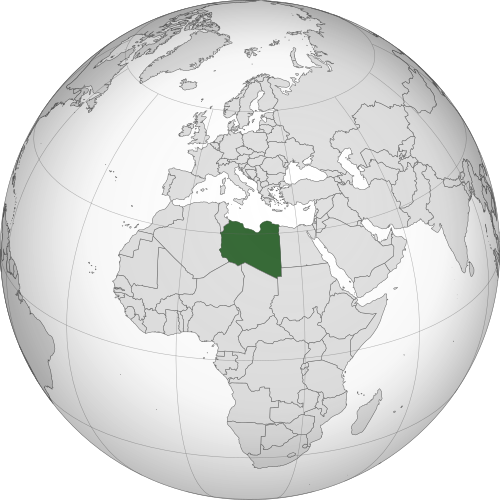
Libya, the little-known relative of the Arab music scene
From Benghazi to the oases of Fezzan, Libya hides a musical heritage of surprising richness: Andalusian suites played in Tripoli to the fast rhythms of Benghazi’s Gheita, passing through the Marikaoui of the south and Ahmed Fakroun’s international pop. His artists have crossed centuries and borders. Forty years of dictatorship, an international embargo, and forced exile have however slowed this vitality. The Libyan musical history, rich and plural, deserves to be told.
Multiseccular roots: between Malouf, Jarr Suwahli and desert traditions
Libyan music is first a crucible. Since the expulsion of Moriscos from Andalusia in the 15th century, Tripoli and the coast have cultivated the Malouf, heritage of these musicians fleeing reconquered Spain. This classical genre is structured around 24 noubas — great vocal and instrumental suites — and is played on the oud and bendir, a circular stringed drum. Each nouba, structured in five mizan, can last six to seven hours. Similar echoes are found in Tunisia, Algeria (Gharnati) and Morocco1.
Less scholarly, the Jarr Suwahli — literally “coastal music” — is one of the oldest forms of Mediterranean Libya. Born from the fusion between Arab-Andalusian tradition and rhythms beyond the Mediterranean, this free and expressive genre gave birth to an entire wave of Libyan pop. Its open structure allows both poetic improvisations and collective performances, often danced during weddings2.
To the east, the city of Benghazi produces two emblematic styles. The Mirskaawi, whose name would come from Mourzouk (in the south) or “Morisco” through linguistic evolution, marries classical Arab modes (maqam Bayati or Rast) to modern urban energy. The Gheita, even faster, is a genre essentially masculine, associated with weddings and great national holidays. It is also played in the oases of Ghadames and Ghat, where instruments like the zokra (Libyan biniou), darbuka and bendir rhythm collective dances3.
In Fezzan and Cyrenaica, Bedouin and Amazigh traditions — huda, chant of camel drivers whose rhythm imitates the dromedary’s walk, Shetawi, exclusively manual percussion — testify to a vitality that never went out4.
Did you know? In the 1950s, Libyan music was so present that it accompanied mandatory tours of Egyptian stars like Oum Kalthoum, who performed in Tripoli on March 12, 1969 — the day before the September 1st coup d’état of the following year5.
The golden age: pioneers and radiation (1950-1970)
The independence of the Kingdom of Libya in 1951 marks a turning point. The Libyan radio, created in the 1950s, launches musical departments in Tripoli and Benghazi, offering artists a new showcase6. In this context, founding figures flourish.
Mohamed Hassan (c. 1944-2017), born into a poor Bedouin family from Al-Khums, joins the choir of Libyan radio in the 1960s. He publishes his first solo song in June 1970, six months before Kadhafi’s coup d’état7. His music, at the crossroads of Bedouin folklore and modern rhythms, knows immediate popular success. He composes more than 500 songs over four decades, also writing for Arab stars like Warda Al-Jazairia, and performs in 2002 at London’s Royal Albert Hall8.
Ali Maher (1945-2022) is, for his part, one of the most distinguished composers in the Arab world. Former Central Bank official, he switches to music in 1967, studies in Cairo and returns to Libya in 1977. He composes the masterpiece Balad Al-Tayub by poet Ali Sidqi Abdel Qadr and realizes the first Libyan opera, Hind et Mansour9.
But the most international name is undoubtedly that of Ahmed Fakroun, born in 1953 in Benghazi. From 1970, he forms his first group, spends five years in the United Kingdom, records in London with BBC producer Tommy Vance, then signs with Ricordi (Italy) and Polydor (France). His clip “Soleil Soleil”, directed by Jean-Baptiste Mondino and featuring comedian Coluche, triumphs throughout Europe in the 1980s10. In 1987, the album Mots d’amour, recorded in Paris, is considered a milestone of Arab world music11. International sanctions against Libya after 1986 prevent him from radiating further — but his titles are rediscovered in the 2000s by Balearic DJs who make them staples of European underground12.
In parallel, Hamid Al Shaeri (born in Benghazi in 1961) moves to Cairo in 1974, where he becomes the pioneer of al-Jeel, that Arab synth-pop which will dominate Arab pop of the 1980s-1990s. His hit “Lolaïki” (1988) sells over a million cassettes13. He also produces Amr Diab’s first successes, including Nour El Ain (1996), a title that wins a World Music Award and propels Egypto-Libyan pop onto the international stage14.
Four decades of contradictions: folklorization under Kadhafi, Amazigh silence and the underground
The regime of Colonel Muammar Gaddafi (1969-2011) placed the music industry under direct influence. Mohamed Hassan, through his folklorizing style and allegiance to the regime, became the “court musician” — his tent shows, traditional attire, and closeness to the head of state made him the visible face of official music, instrumentalized as propaganda15. In parallel, Amazigh styles — Tamazight in language — underwent an Arabization policy: Amazigh cultural expressions were relegated to informality, banned publicly16.
The 1970s-1980s nonetheless saw a certain artistic emigration. Exile in Cairo and Paris allowed artists like Fakroun and Al Shaeri to shine, but also to suffer the consequences of Libya’s growing isolation17. Reggae, imported in the 1990s, became one of the few spaces of freedom — driven by Ibrahim al-Hasnawi and a myriad of anonymous interpreters18.
Revolution, renaissance, and today’s scenes
The 2011 revolution changed the landscape. Dania Ben Sassi (born 1988), an Amazigh singer, became the musical icon of the uprising. Her songs in Tamazight, including Agrawli Itri Ennegh (“The rebel is our star”), composed by her activist father, became anthems of resistance19. Her role made her the “swallow of the Libyan Amazigh spring,” according to writer Lhoussain Azergui20.
Rap, long banned under Kadhafi and confined to the underground diaspora, became the voice of revolutionary dissent. Rapper MC Swat released in 2011 “Hathi Thawra” (“It is the revolution”): a sonic manifesto that mobilized Libyan youth21. After Kadhafi’s fall and the 2014 civil war, the scene continued to grow. Artists like Ibn Thabit (with Al Sou’al) and Rami al Kaleh ("We will not surrender", killed in 2011) embodied this resistance22.
The renaissance accelerated in the mid-2020s. The inaugural edition of the Benghazi Summer Festival in August 2024 — the country’s first major cultural event in 15 years — brought together about twenty regional artists: Egyptians Afroto, Wegz, and ElGrandeToto rubbed shoulders with Libyans Ka7la and Mansor Unknown, who played their first concert on stage in their own city23. But this movement is threatened: by the end of 2024, eastern authorities imposed heightened censorship on rap, accusing artists of violating “moral rules,” which echoes the musical repression of the Kadhafi era24.
To listen to
| Artist | Origin | Genre | Key Contribution |
|---|---|---|---|
| Mohamed Hassan (c. 1944-2017) | Al-Khums | Libyan folk / patriotic pop | 500+ songs, Royal Albert Hall 2002 |
| Ali Maher (1945-2022) | Tripoli | Classical composition / opera | First Libyan opera, Balad Al-Tayub |
| Ahmed Fakroun (born 1953) | Benghazi | World music / Arabic synth | Soleil Soleil, clip with Coluche |
| Hamid Al Shaeri (born 1961) | Benghazi | Al-Jeel / synth-pop | “Lolaïki”, producer for Amr Diab |
| Dania Ben Sassi (born 1988) | Amazigh | Tamazight pop / committed song | Anthem of the Amazigh revolution |
| Mansor Unknown (born 1997) | Benghazi | Rap / hip-hop | First Benghazi concert 2024 |
Libyan music is not an exotic curiosity: it is a whole country that sang — and continues to sing — despite obstacles. The Malouf of Tripoli, the Marikaoui of the south, the Gheita of Benghazi, the rap of Tripoli’s streets: there is no “mysterious desert music” here, but rather vibrant, complex, contemporary scenes — connected to global trends while remaining rooted in their history. The challenge for Libyan artists is not innovation, but the simple survival of a scene that dictatorship, war, and sanctions have weakened but never destroyed.
Sources and references
-
Coline Houssais, « Libya, a relatively unknown figure on the Arab music scene », #AuxSons, 6 November 2023. URL : https://www.auxsons.com/focus/la-libye-relative-inconnue-de-la-scene-musicale-arabe/ ↩︎
-
Wikipedia, « Music of Libya », Wikipédia article. URL : https://en.wikipedia.org/wiki/Music_of_Libya ↩︎
-
Wikipedia, « Mirskaawi », Wikipédia article. URL : https://en.wikipedia.org/wiki/Mirskaawi ↩︎
-
Wikipedia, « Music of Libya », section on Bedouin and Amazigh traditions. ↩︎
-
Coline Houssais, op. cit.; reference to Oum Kalthoum’s presence in Tripoli in 1969 ↩︎
-
Wikipedia, « Music of Libya », section « Chaabi » and history of Libyan radio ↩︎
-
Wikipedia, « Mohamed Hassan (Libyan musician) », Wikipédia article. URL : https://en.wikipedia.org/wiki/Mohamed_Hassan_(Libyan_musician) ↩︎
-
Middle East Monitor, « A homage to Libya’s legendary artist », 6 December 2018. URL : https://middleeastmonitor.com/20181206-a-homage-to-libyas-legendary-artist/ ↩︎
-
Al Fusaic, « Libya bid farewell to one of its leading composers, Ali Maher (1945-2022) ». URL : https://alfusaic.net/blog/convene/libya-bid-farewell-to-one-of-its-leading-composers-ali-maher-1945-2022 ↩︎
-
Libyan Wanderer, « The Soleil of the Libyan Song: Ahmed Fakroun ». URL : https://libyanwanderer.com/the-soleil-of-the-libyan-song-ahmed-fakroun/ ↩︎
-
Coline Houssais, op. cit.; reference to Mots d’amour (1987) recorded in Paris ↩︎
-
BBC News, « World music pioneer in web revival », URL : http://news.bbc.co.uk/2/hi/business/7434014.stm ↩︎
-
AllMusic, « Hamid El Shari — Biography ». URL : https://allmusic.com/artist/hamid-el-shaeri-mn0000666295 ↩︎
-
Daily Bandcamp, « The Origins of Egyptian Music Legend Hamid Al Shaeri ». URL : https://daily.bandcamp.com/features/hamid-al-shaeri-the-slam-years-1983-1988-feature ↩︎
-
Coline Houssais, op. cit.; Mohamed Hassan and instrumentalization by the regime ↩︎
-
Wikipedia, « Dania Ben Sassi », Wikipédia article. URL : https://en.wikipedia.org/wiki/Dania_Ben_Sassi ↩︎
-
BBC News, op. cit.; sanctions and isolation of Fakroun ↩︎
-
Coline Houssais, op. cit.; reggae and freedom under Kadhafi ↩︎
-
Wikipedia, « Dania Ben Sassi », op. cit.; « Agrawli Itri Ennegh » and the Amazigh revolution ↩︎
-
Quote by Lhoussain Azergui, reported in the Wikipedia article on Dania Ben Sassi ↩︎
-
Courrier International, « In Libya, rap tested by censorship ». URL : https://www.courrierinternational.com/stories/musique-en-libye-le-rap-a-l-epreuve-de-la-censure_227581 ↩︎
-
Coline Houssais, op. cit.; Ibn Thabit and Rami al Kaleh ↩︎
-
OkayAfrica, « What It’s Like To…Organize Libya’s Inaugural Benghazi Summer Festival ». URL : https://www.okayafrica.com/what-its-like-toorganize-libyas-inaugural-benghazi-summer-festival/241653 ↩︎
-
DW, « Libya’s culture clampdown silences popular rap music ». URL : https://www.dw.com/en/libyas-culture-clampdown-silences-popular-rap-music/a-71539798 ↩︎