From bomba to streaming: the musical history of Puerto Rico
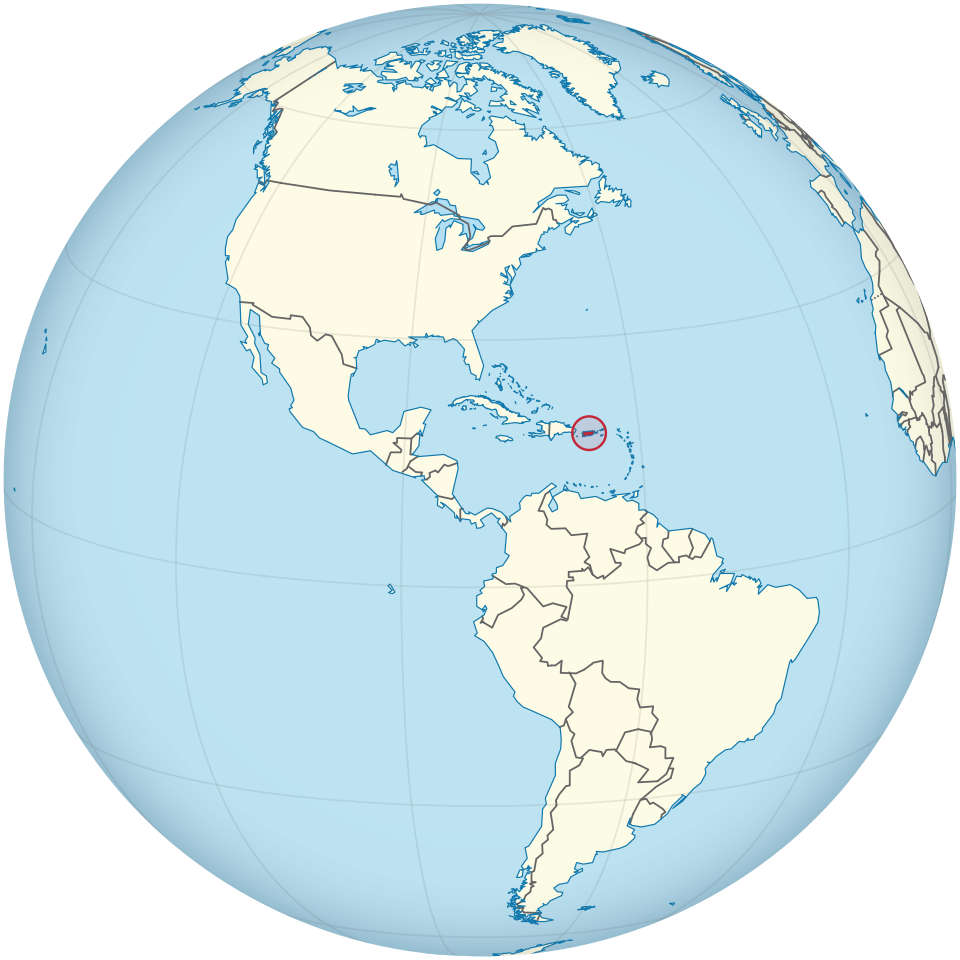
Bad Bunny accumulates 19.8 billion streams on Spotify in 2025, becoming the first artist in history to win the title of most-streamed artist on the platform[1]. Born in Vega Baja in 1994, he has dominated the charts since 2020. This phenomenon is rooted in an ancient musical heritage. Puerto Rico, a Caribbean island of 3.2 million inhabitants, has produced entire genres and the most-listened-to artists of the 21st century. How did such an island become a cultural power?
Slavery, resistance, and African roots
Puerto Rican music was born from forced mixing. In the 16th and 17th centuries, Spanish colonists established sugar cane plantations and transported African slaves there, mainly from Ghana and Bantu-influenced areas[2]. Deprived of their languages but united by resistance, these slaves created the bomba — the oldest musical genre of the Antilles still played today.
Documented in 1797 by French botanist André Pierre Ledru, who described inhabitants singing and dancing on plantations, the bomba is a dialogue between a dancer and the drum leader, the subidor[3]. The dancer launches a rhythmic challenge, the drum responds: a form of counter-communication born from the impossibility of speaking without being understood by the overseers[4].
Five styles developed in the coastal municipalities of Loíza, Mayagüez, Ponce, and San Juan. Loíza, populated mainly by Afro-Puerto Ricans, remains the living heart of this tradition. The bomba counts sixteen rhythms, including the yubá inherited from Haitian slaves who arrived during the 1791 Revolution[5].
The plena emerges at the beginning of the 20th century in the south of the island. Inspired by the bomba but more accessible, it uses panderetas, hand drums, and tells current events: Tito Matos, pioneer of the genre, describes it as « the newspaper of the people »[6]. The seis carries the heritage of rural culture, the jíbaros, instrumented around the cuatro, a seven-string Puerto Rican guitar, and includes décimas, poetic improvisations where musicians answer each other in a duel[7].
Precursors and Nuyorican salsa (1940-1965)
For decades, the bomba and plena remained confined to black neighborhoods and tourist folklore. The turning point arrives in the 1940s and 1950s.
Rafael Cortijo (1925-1984), from Santurce, a working-class neighborhood in San Juan, formed his orchestra in 1955 with pianist Rafael Ithier and singer Ismael Rivera, nicknamed « Maelo »[8]. The combo became the first black formation to appear on Puerto Rican television and reinvented Puerto Rican sound by integrating bomba and plena into a sophisticated orchestral framework[9].
Ismael Rivera (1931-1968), born in Santurce and formerly a shoe shiner, nicknamed « El Sonero Mayor », left an indelible mark[10]. In 1962, he was arrested in Panama: he took the weight of his own head to protect all of Cortijo’s group, which would be broken[11]. Upon returning, he formed his own group and recorded his greatest hits.
From the beginning of the 1950s, another path emerged in the New York diaspora. Puerto Rican musicians from New York, notably Willie Colón and Héctor Lavoe, drew from the bomba, plena, and Cuban son to create New York salsa, one of the most influential genres on the continent[12].
Underground and reggaeton explosion (1990-2010)
Reggaeton finds its roots in an unexpected crossing: Jamaican dancehall imported to Panama, adapted into Spanish by Panamanian artists like El General, then taken up in Puerto Rico in the 1990s[13]. The result is called underground — a raw sound produced by DJs like DJ Playero and DJ Negro, who mix dancehall rhythms, hip-hop, and Caribbean beats on cassettes passed hand to hand[14].
This movement crystallizes around the caseríos, large housing estates. It develops in San Juan nightclubs and expresses violence, racism, and police brutality frankly[15]. It is here that the word reggaeton appears for the first time in Puerto Rico, in 1994, used by Daddy Yankee during a session with DJ Playero[16].
The genre explodes in 2004 with “Gasolina” by Daddy Yankee, from the album Barrio Fino. The song, written with producers Luny Tunes and Eddie Dee, is inscribed in 2024 on the National Recording Registry of the Library of Congress, alongside Madonna’s Like a Virgin and Mariah Carey’s All I Want for Christmas[17]. “Gasolina” becomes the first track of the genre to penetrate mainstream American charts, reaching 32nd place on the Billboard Hot 100.
Artistically, Tego Calderón (born 1972) establishes himself from 2003 with El Abayarde, the first conscious reggaeton album fusing rap, salsa, and bomba[18]. He celebrates his Afro-Puerto Rican heritage there, and his stage name, « El Abayarde », refers to maroon slaves.
Ivy Queen (Martha Ivelisse Pesante, born 1972) carves out a unique place in a predominantly male genre. Starting in 1993, she appears on reggaeton compilations from 2001 with “Quiero Bailar”[19]. The New York Times describes her as « the only significant female rapper in reggaeton »[20]. Wisin pays tribute to her: « We can live from our art because Ivy Queen opened the door[21]. »
Current Stars and Global Reach
Since the 2010s, reggaeton and Latin trap have dominated streaming platforms. Bad Bunny — Benito Antonio Martínez Ocasio, born in 1994 — has accumulated 19.8 billion global streams on Spotify in 2025, an absolute record. His album Un Verano Sin Ti (2022) became the most-streamed in Spotify history, surpassing Taylor Swift and Beyoncé[1]. As the first non-English-speaking artist to top the annual chart, he is also the first to accumulate four distinctions in a row[22].
Romeo Santos (born 1981, son of a Dominican and a Puerto Rican, raised in the Bronx) launched a solo career in 2011 after the group Aventura. Nicknamed “el rey de la bachata,” he has sold more than 24 million records by fusing Dominican bachata with R&B and hip-hop[25].
The new generation includes Ozuna (born 1992), Farruko (born 1991), Arcángel (born 1985) and Anuel AA (born 1992), firmly rooted in reggaeton and Latin trap. At the same time, William Cepeda (born 1965), a pioneer of the bomba renaissance, and Bomba Estéreo remind us that Puerto Rico’s African roots remain alive[26].
Founding Figures
| Figure | Period | Genre | Contribution |
|---|---|---|---|
| Rafael Cortijo | 1925-1984 | Bomba, plena, salsa | Established bomba on the national stage[8] |
| Ismael Rivera | 1931-1968 | Bomba, plena, salsa | Iconic voice, “El Sonero Mayor”[10] |
| Willie Colón | 1950-2026 | Salsa | Architect of New York salsa[12] |
| Daddy Yankee | Born 1977 | Reggaeton | “Gasolina” (2004), global ambassador[17] |
| Tego Calderón | Born 1972 | Reggaeton, bomba | Afro-consciousness, El Abayarde (2003)[18] |
| Ivy Queen | Born 1972 | Reggaeton | “Queen of Reggaeton,” female pioneer[20] |
| Bad Bunny | Born 1994 | Reggaeton, trap | Most-streamed artist on Spotify (4×)[1] |
A Heritage Tested by Colonialism
The musical history of Puerto Rico is that of an island which, under Spanish and then American domination, turned its music into a weapon of affirmation. Bomba, reggaeton, seis and plena: genres born in oppression that became global.
Three million inhabitants is a small number. But its capacity to create genres and export them has no equivalent in the Caribbean. From the slave striking his drum in Loíza to the young person from Vega Baja accumulating 19 billion streams on Spotify: the thread connecting these two worlds is that of a music that refuses to be silenced.