From royal drums to kinyatrap: how Rwanda rebuilt its music
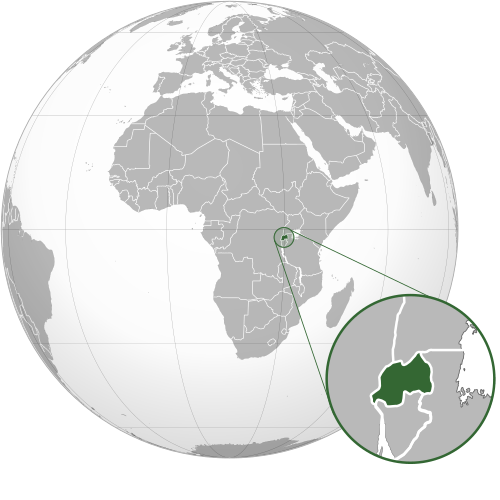
The sound of the inanga, this wooden instrument with eight strings made from cow tendon, resonates in concert halls in Kigali and in artist residences in Canada1. A few kilometers away, producers are recording kinyatrap — a blend of drill, trap, and samples of traditional chants recorded in western Rwanda2. Between these two worlds lies the story of a nation that, after seeing its music instrumentalized for the 1994 genocide, rebuilt its music scene from scratch.
Rwanda is not always cited among the countries driving today’s pan-African music scene. Yet, the Rwandan scene is in full effervescence: a new generation of artists fuses ancestral instruments with Nigerian afrobeats, American hip-hop, and international trap, while asserting its own identity3. From the inanga to the Inyarwanda platform, from Cécile Kayirebwa in Belgium to Meddy in Lagos, this is the story of a musical resilience that deserves to be told4.
The roots: from royal drums to popular orchestras
Traditional Rwandan music is based on instruments and dances passed down from generation to generation. The inkinimba, perhaps the most revered tradition, is a dance that recounts the exploits of kings and heroes, accompanied by the ngoma (the great drums), the ikembe (wooden lamellophone), the umuduri (gourd musical bow), and the inanga5. These instruments are played during royal ceremonies and community gatherings, within a system where music is inseparable from narrative and dance6.
In the 20th century, these traditions gave rise to amatorero, groups of traditional dancers present throughout the country. The most famous, the Ballet National Urukerereza, was created in the early 1970s to represent Rwanda on the international stage, alongside the troupes Amasimbi n’amakombe and Irindiro7.
With independence in 1962, the popular scene became urbanized. Orchestras like Orchestre Impala de Kigali, Les 8 Anges, Imena, Nyampinga and Abamarungu prospered, blending Congolese influences, Caribbean zouk, and reggae8. The Karahanyuze, a genre emblematic of this era, fuses folk music, poetry in Kinyarwanda, and influences from Congolese rumba and West African highlife9. These orchestras represented a burgeoning urban middle class, speaking to the youth of a Rwanda in full modernization10.
Did you know? Before the genocide, the Kigali Impala Orchestra, directed by André Sebanani, was one of the most popular groups in Rwanda. Its music continues to inspire new generations11.
This golden age produced artists who became cultural references. Rodrigue Karemera, with his song “Ubalijoro”, remains one of the most-listened-to voices in the diaspora12. Cyprien Rugamba, leader of the Amasimbi n’amakombe troupe, and Jean-Paul Samputu, winner of two Kora Awards in 2003, also marked their era13.
The 1994 rupture: the genocide and its cultural consequences
The genocide against the Tutsi, which killed between 800,000 and one million people between April and July 1994, devastated the Rwandan music scene14. Not only did production cease on the territory, but the genocide also caused a carnage among the musicians themselves. Major figures were assassinated: André Sebanani (Impala), Cyprien Rugamba (Amasimbi n’Amakombe), and Rodrigue Karemera, not to forget the gospel singer Kizito Mihigo, who died in prison in 2020 at the age of 3815.
But the genocide also instrumentalized music. The international tribunals (ICTR) established that the songs of Simon Bikindi, a renowned artist, had served as propaganda to incite ethnic hatred16. This double reality — music as an instrument of death AND as a vector for healing — still weighs on the Rwandan scene.
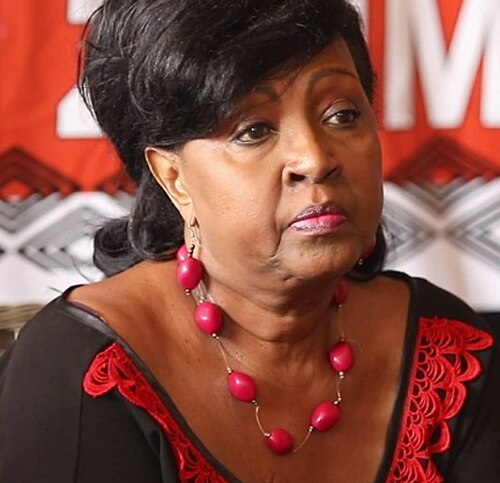
The Rwandan diaspora expanded. Musicians settled in Brussels, Paris, Montreal, and Washington. For years, Cécile Kayirebwa, exiled in Belgium, became the most internationally recognized Rwandan musician17. Corneille, who arrived in the United States and then Canada in the 1990s, achieved remarkable commercial success18.
The rebirth: diaspora and return
Starting in the 2000s, Rwandan music gradually came back to life on the territory, driven by a new generation. The 1990-2000 period saw the emergence of local hip-hop, popularized as early as the 1980s by DJ Berry, a Rwandan pioneer of rap19. After the genocide, the genre developed in several waves: from Diplomat, a star of the 2000s, to Riderman, Jay Polly and Bull Dog, who mixed rap, ragga, and R&B20.
R&B and afrobeats also conquered the Rwandan public. Tom Close, The Ben and Meddy were among the first to popularize this genre before expatriating to the United States21. King James, Knowless and Christopher embody this trend today22. Mani Martin and Miss Jojo were among the stars of the first post-genocide generation23.
Festivals and competitions structured this rebirth. The Primus Guma Guma Super Star (PGGSS), a music contest organized by the Bralirwa brewery, revealed talents like Bruce Melodie and Young Grace24. The Kigali Up! festival offers a stage to emerging artists25. The platform Inyarwanda, founded in 2008 by Joseph Masengesho, digitizes the distribution of Rwandan music26.
The New Generation: In Search of a Rwandan Sound
Today, the Rwandan scene is divided into several movements. On one side, artists who defend the preservation of roots: Deo Munyakazi, a virtuoso of the inanga, advocates for preserving the true roots of Rwandan culture27. His album Isoko Dusangyie (« Our Common Source »), released in 2019, is acclaimed internationally28. Michael Makembe created the project Sounds of Rwanda, an audio museum of songs and instruments recorded in rural areas29. Kaya Byinshii, whose album Ukwiyuburura (2022) symbolizes a renaissance, fuses urban blues with traditional instruments30.
On the other side, a trap wave is emerging: kinyatrap, born during the pandemic, blends drill, trap, and samples of traditional songs. Pro Zed and Kenny K-Shot, founders of Loud Sound Studios, say they want to create a Rwandan sound, in the image of Nigerian afrobeats or South African amapiano31.
Artists like Boukuru, Kenny Mirasano (EP Umuntu, 2025) and Teta Diana navigate between spirituality, jazz, and Afrobeats32. The music industry itself is becoming more professional: in 2024, the Rwandan digital market should generate more than $478,800 in revenue, with streaming as the dominant segment33.
A Future Under Construction
Rwandan music is at a crossroads. Some artists look toward major pan-African stages, while others dig deeper into local traditions. Between the kinyatrap of Kigali and royal drums, between archival samples and digital productions, what is emerging is a country singing its reconstruction—not by hiding behind its past, but by assembling it, note by note, with what it is becoming.
As Pro Zed, a pioneer of kinyatrap, says: « Rwanda must have its own sonic signature. Nigeria has afrobeats, South Africa has amapiano. We have our place in this story.»34
Sources
-
Afropop Worldwide, « Rwanda’s Young Artists Going Back to their Roots », September 19, 2024. URL: https://afropop.org/articles/rwandas-young-artists-going-back-to-their-roots ↩︎
-
NPR, « In Rwanda, a new sound blends rap beats with traditional music », April 11, 2024. URL: https://www.npr.org/2024/04/11/1244174111/in-rwanda-a-new-sound-blends-rap-beats-with-traditional-music ↩︎
-
Bandcamp Daily, « Six Artists Bridging Past and Present in Rwandan Music », 2020. URL: https://daily.bandcamp.com/scene-report/rwanda-music-list?all-nav= ↩︎
-
Yale Globalist, « An Examination of Rwanda’s Underground Music: How to Transcend Afrobeats », URL: https://globalist.yale.edu/in-the-magazine/an-examination-of-rwandas-underground-music-how-to-transcend-afrobeats/ ↩︎
-
« Music of Rwanda », Wikipedia. URL: http://en.wikipedia.org/wiki/Music_of_Rwanda ↩︎
-
World Music Guide, « East Africa », references ch05-east-africa.md. Graham, Stern’s Guide to Contemporary African Music, vol. 2, p. 231–232. ↩︎
-
« Music of Rwanda », Wikipedia; Rwanda Insights, « Music of Rwanda ». URL: https://rwandainsights.com/about-rwanda/music-of-rwanda ↩︎
-
Wikipedia; musicinafrica.net, « Popular music in Rwanda ». URL: https://musicinafrica.net/magazine/popular-music-rwanda ↩︎
-
Afropop Worldwide (2024). Cf. note 1. ↩︎
-
World Music Guide, « East Africa ». Cf. note 6. ↩︎
-
Afropop (2024). Cf. note 1. ↩︎
-
Afropop (2024). Cf. note 1. ↩︎
-
Wikipedia; Afropop Worldwide (2024). Cf. note 1. ↩︎
-
Wikipedia; Afropop (2024). Cf. note 1. ↩︎
-
Afropop Worldwide, « Rwanda’s Young Artists Going Back to their Roots » (2024); Afropop Blog, « Kizito Mihigo Has Died in Jail at 38 », February 18, 2020. ↩︎
-
« An Examination of Rwanda’s Underground Music », Yale Globalist; New York Times, December 3, 2008. URL: https://www.nytimes.com/2008/12/03/world/africa/03rwanda.html ↩︎
-
Wikipedia; Rwanda Insights (2024). ↩︎
-
Wikipedia. ↩︎
-
musicinafrica.net, « Popular music in Rwanda ». Cf. note 8. ↩︎
-
musicinafrica.net (2024); Wikipedia. ↩︎
-
musicinafrica.net. Cf. note 8. ↩︎
-
musicinafrica.net; Wikipedia. Cf. note 8. ↩︎
-
Wikipedia; musicinafrica.net. Cf. note 8. ↩︎
-
musicinafrica.net. Cf. note 8. ↩︎
-
Intranet/INTRACEN, « Creative Industries in Rwanda: Digital Paths to Global Markets ». URL: https://www.intracen.org/file/rwandadigitalexportsfinallowrespdf ↩︎
-
Intranet/INTRACEN. Cf. note 25. ↩︎
-
Afropop Worldwide (2024). Cf. note 1. ↩︎
-
Bandcamp Daily (2020). Cf. note 3. ↩︎
-
Afropop Worldwide (2024). Cf. note 1. ↩︎
-
Afropop (2024). Cf. note 1. ↩︎
-
NPR (2024). Cf. note 2. ↩︎
-
Afropop Worldwide (2024). Cf. note 1. ↩︎
-
SENS Magazine Rwanda, « The Rwandan Music Industry is Booming, But What About Its Artists », 2024. URL: https://sensmagazine.com/rw/the-rwandan-music-industry-is-booming-but-what-about-its-artists/ ↩︎
-
NPR (2024). Cf. note 2. ↩︎