Biography
Abdou El Omari
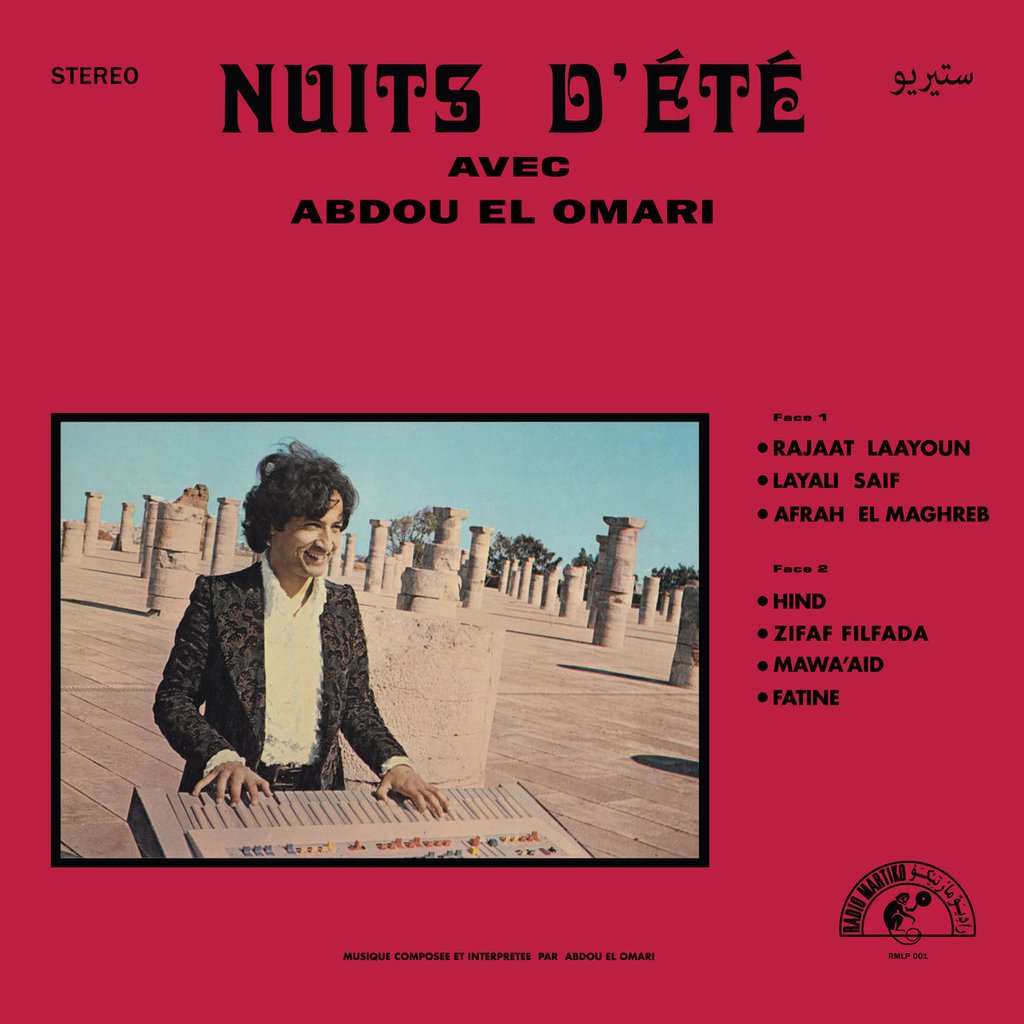
Casablanca, mid-1970s. In a cramped studio in the Habous district, a man with calloused hands – those of a hairdresser who has just closed his shop – sets up a Farfisa organ on a table. This instrument, emblematic of Western psychedelic rock, seems out of place in a musical landscape still dominated by large chaâbi and malhun orchestras. Yet, Abdou El Omari discovers entire worlds through it, shaping a music that seems to emerge from a parallel Morocco, a dream shared between the blue nights of Casablanca and the silent dunes of the Anti-Atlas[^1].
In Brief
| Full Name | Abdou El Omari (عبده العماري) |
| Birth | 1945, Tafraout (Anti-Atlas, Morocco) |
| Death | 2010, Casablanca, Morocco |
| Genre | Psychedelic jazz, funk, Moroccan fusion music |
| Notable Works | Nuits d’Été (1976), Nuits de Printemps (1978), Lost Tape – 1980 |
| Honors | Posthumous discovery by vinyl collectors; international reissues |
Key Dates
| Year | Event |
|---|---|
| 1945 | Birth in Tafraout, a village in the Anti-Atlas south of Agadir |
| 1955 | Arrival in Casablanca at age ten |
| 1960 | Admission to the Casablanca Conservatory; seven years of study |
| 1967 | Formation of Les Fugitifs, his first group |
| 1976 | Release of Nuits d’Été, his only album under his own name |
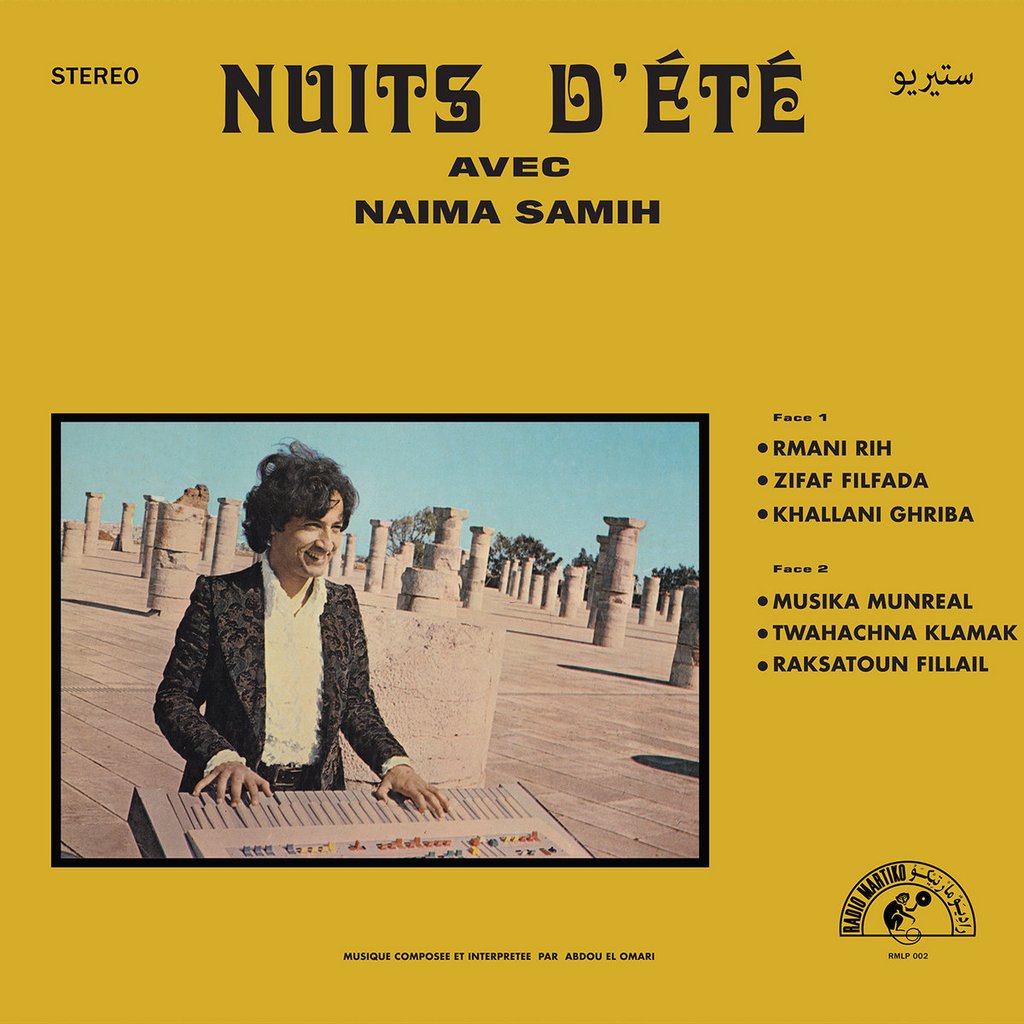
| 1977 | Collaboration with singer Naima Samih |
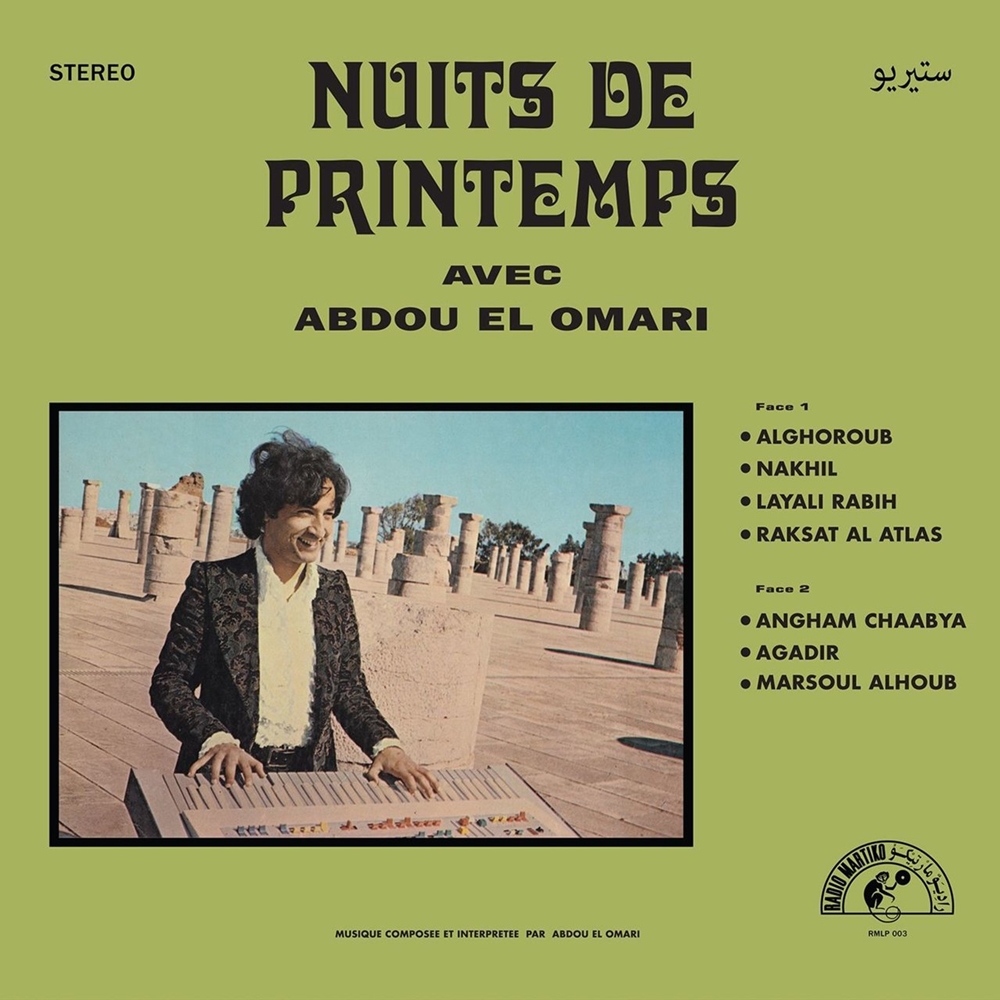
| 1978 | Release of Nuits de Printemps |
| 1980s | Gradual withdrawal from the music scene; return to hairdressing |
| 2010 | Death in Casablanca |
| 2017 | Reissue of the Nuits trilogy by Radio Martiko (Belgium) |
| 2026 | Publication of Lost Tape – 1980 by Born Bad Records |
From the Anti-Atlas to Casablanca: A Double-Lived Life
Abdou El Omari was born in 1945 in a village in the Anti-Atlas, 180 kilometers south of Agadir[^2]. Nurtured by the sounds of nature and Amazigh Berber culture[^3], he left the southern highlands for Casablanca at the age of ten[^4]. Music was everywhere: on the radio, in cafés, and in jazz clubs run by Moroccan Jews or expatriates[^5]. His path was that of a free agent. While his brother ran a record shop, he refused to join him, first becoming a butcher, then a general handyman[^6]. His employers helped him enter the hairdressing school, and then the Casablanca Conservatory in 1960[^7]. He studied there for seven years[^8], became a luthier, frequented musicians, and discovered the instrument that would become his signature: the Farfisa organ[^9].
Becoming a hairdresser, he opened his own school in Casablanca in the 1970s, then a second one in Safi, officially recognized by the State[^10]. He was never a full-time musician. At twenty-two, he founded Les Fugitifs, composed for Naima Samih, Laila Ghofran, or Aicha El Waad, performed at Radio-Télévision Marocaine[^11], and produced 45 rpm records for labels such as Cléopâtre, Boussiphone, Hassania, and his own Al Awtar[^12].
In 1976, the Disques Gam label published Nuits d’Été, his only album under his own name. Inspired by the jazz of John Coltrane[^13], the cosmic flights of Sun Ra[^14], Gnawa roots[^15], and chaâbi[^16], El Omari shaped a music where airy jazz, wet funk, and Moroccan trance blended[^17]. The Farfisa hovered like a spaceship flying over the Atlas[^18]. In 1977, an album shared with Naima Samih[^19]. In 1978, Nuits de Printemps confirmed his quest[^20]. To the local press, he declared: “I am trying to give a modern aspect to Moroccan song”[^21]. The music he produced answered this ambition: Berber drums[^22], Gnawa pulsations[^23], funk guitars[^24], and analog synthesizer[^25] interlaced in trances where 6/8 Moroccan rhythms crossed with hypnotic grooves[^26].
In the 1980s, his music became more intimate[^27]. He attempted to recover his recordings[^28], withdrew with bitterness, and returned to hairdressing. He disappeared in 2010[^29], without having experienced the enthusiasm his music would generate decades later[^30].
Major Works
| Work | Year | Why It Is Essential |
|---|---|---|
| Nuits d’Été | 1976 | Only album released during his lifetime; organic fusion between jazz, funk, and Moroccan traditions |
| Nuits de Printemps | 1978 | Confirmation of his signature: astral Farfisa and trance Moroccan rhythms |
| Naima Samih / Abdou El Omari | 1977 | Two voices for the same quest; the synthesizer dialogues with the singing |
| Lost Tape – 1980 | 1980 (2026) | Cassette found by chance; cosmic pop, disco, and electric Moroccan blues |
Legacy and Influence
The rediscovery of Abdou El Omari began in the 2010s on vinyl collector forums, Discogs, Blogspot, and YouTube[^31]. A close friend and poet, Aziz Essamadi, saved a box destined for the trash: the musician’s personal archives[^32]. These documents, demos, rehearsals, and the masterful 1980 cassette, were entrusted to Casablanca collector Ahmed Khalil of the label Dikraphone[^33], who managed to convince El Omari himself to publish[^34].
In 2017, the Belgian label Radio Martiko reissued the Nuits trilogy[^35]. In 2026, Born Bad Records published Lost Tape – 1980, completing the portrait of an artist whom Télérama calls the “Moroccan Sun Ra”[^36]. Aquarium Drunkard speaks of hypnotic, sinister funk[^37]. His music, colorful, magnetic, and timeless[^38], continues to travel, born between the dunes of the Sahara and the electric keyboards of Casablanca[^39].
Sources and References
- “Birth of a Star”, Born Bad Records, https://www.bornbadrecords.net/releases/abdou-el-omari-lost-tape-1980/, accessed November 3, 2026.
- “Abdou El Omari”, Discogs, https://www.discogs.com/artist/4904035, accessed November 3, 2026.
- « Abdou El Omari », Flow State, https://www.flowstate.fm/p/abdou-el-omari, accessed on November 3, 2026.
- « Category: Abdou El Omari », Aquarium Drunkard, https://aquariumdrunkard.com/category/abdou-el-omari/, accessed on November 3, 2026.
- « “Lost Tape, 1980” : all the audacity of Abdou El Omari comes back to life », Télérama, https://www.telerama.fr/musique/lost-tape-1980-toute-l-audace-d-abdou-el-omari-reprend-vie-dans-un-voyage-rock-et-disco-psychedelique_cri-7043803.php, accessed on November 3, 2026.
- « Nuits de Printemps », Bandcamp, https://abdouelomari.bandcamp.com/album/nuits-de-printemps-avec-abdou-el-omari, accessed on November 3, 2026.