Moroccan Music
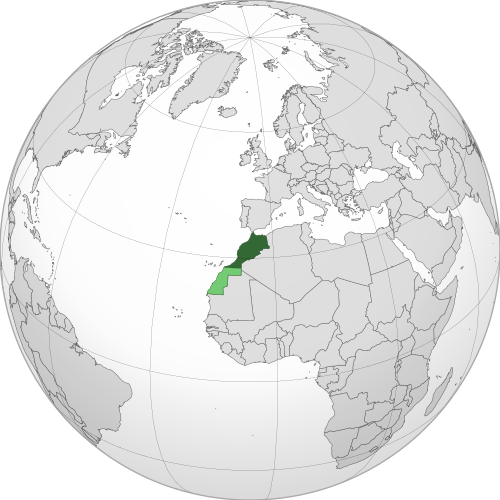
Moroccan music is one of the most diverse in North Africa, with at least twenty regional and ethnic styles. It reflects Morocco’s complex history: Andalusian, Berber, Sub-Saharan, Arab, Mediterranean, and Atlantic legacies.
Gnawa: Moroccan trance with a Sub-Saharan heritage
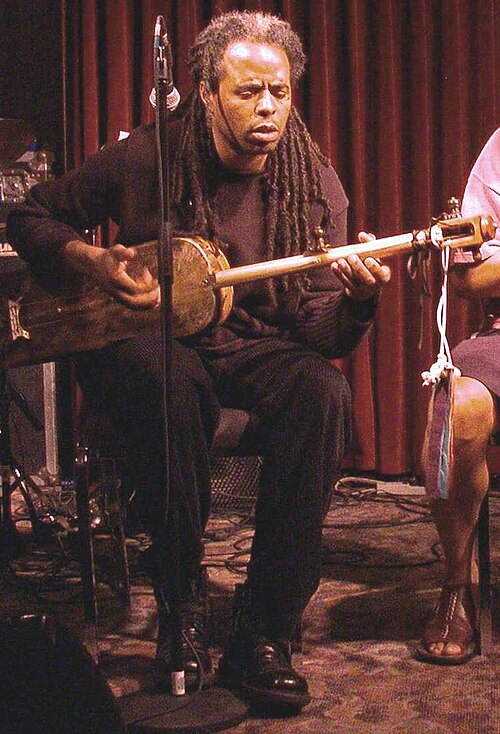
Gnawa is the most internationally recognized Moroccan musical tradition. Originating from trans-Saharan slavery (11th–17th centuries), gnawa music perpetuates the memory of descendants of former slaves from West Africa (Senegal, Mali, Niger) who came to Morocco1.
The central instruments are:
- Guembri / sintir (or hajhuj) — three-stringed metal lute, the sonic “heart” of gnawa
- Qraqab / krakeb — pairs of metal jingles (like giant castanets)
- Bendir — frame drum
- Tbel / tabl — large cylindrical drums
Gnawa is performed during ritualized ceremonies called lila (نights) — nocturnal gatherings dedicated to spiritual healing and dhikr (commemoration of the divine). The master (maalem) guides participants’ trance through cycles of songs and dances that progressively intensify2.
Gnawa ritual instruments also include the gogo (old-style arched lute) and metal drums. Gnawa songs alternate between Arabic and West African languages, preserving words like Sidi Moussa, Sidi Hamou, or Sidi Mimoun3.
Since the 1990s, the Essaouira International Gnawa Festival has attracted thousands of spectators from around the world and contributed to gnawa’s inscription on UNESCO’s Intangible Cultural Heritage list in 20194.
Arab-Andalusian music: gharnati and Moroccan stambeli
The gharnati (or al-‘ala) tradition is classical Moroccan music, inherited from Al-Andalus. Spanish Jews expelled at the end of the 15th century transplanted this repertoire to Morocco, notably in Fès, Tétouan, and Chefchaouen5.
Gharnati is performed in noubas (suites) structured with increasing tempo movements, using the same instruments as the Egyptian takht: oud, qanun, violin (adapted for Arabic microtones), ney, and percussion. Works are based on classical poems in Classical Arabic or Moroccan dialect. The tradition is divided into four regional schools (Fès, Tétouan, Rabat-Médina, and Casablanca) with distinct repertoires6.
Moroccan chaâbi: urban popular music
Chaâbi (popular music) is the most popular urban musical genre in Morocco. Born in Moroccan suburbs at the beginning of the 20th century, it combines traditional instruments (guembri, banjo, karkabat/metal jingles) with clarinets and accordions. The repertoire is in Moroccan dialect (darija) and addresses popular themes: love, daily life, social satire. The diatonic accordion holds a central place7.
Amazigh (Berber) music and awad
Morocco boasts a great diversity of Amazigh traditions by region:
- Ahwash (Central High Atlas) — collective music with group dances, played on bamboo flutes (mizmar) and large drums (bel), practiced during weddings and ceremonies
- Ait Atta / Aït Ouaix (Anti Atlas) — polyphonic female songs on the tamimchi lute
- Ahidus / ahidous (Rif, northern Morocco) — collective music of choirs dancing in circles to mizmar and tamta, typical of Aït Benhaddou festivals
- Guedra (Moroccan Sahara, Draa and Ziz wadis) — music of Tuareg/Sahara women, rhythmically driven by frame drums with hand gestures in motion8
Aita: Hassanie song
The Aita (ایتا) is a popular Moroccan music style originating from southern Morocco, particularly in the Agadir and Essaouira regions. It is a solo song (often female) accompanied by ghaïta (double oboe), tbel (large drum), and percussion, played at weddings and celebrations9.
Moroccan instrumentarium
- Guembri / sintir — gnawa three-stringed lute
- Qraqab / krakeb — metal jingles (gnawa)
- Oud — Arab-Andalusian lute in gharnati
- Ghaïta — double oboe (aita, awad)
- Mizmar / ney — Amazigh flutes and oboes
- Violin — instruments of the gharnati takht
- Harpa / harp marocain — rare, played in southern Amazigh traditions
- Akoukar / agoudal — horn made of sheep’s horn (Berber)
Sources:
-
Afropop Worldwide, « Gnawa Music of Morocco » — introduction to gnawa. ↩︎
-
Wikipedia, « Gnawa music » — instrumentation and lila ceremonies. ↩︎
-
Wikipedia, « Music of Morocco » — regional traditions. ↩︎
-
Serenity Morocco Tours, « Gnawa » — guide to Moroccan traditions. ↩︎
-
Serenity Morocco Tours, « Andalusi » — Moroccan gharnati. ↩︎
-
World Music Network, « Gharnati Music » — gharnati. ↩︎
-
Maison Scene, « Traditional Moroccan Music » — urban Moroccan chaâbi. ↩︎
-
Serenity Morocco Tours, « Amazigh » — Amazigh music. ↩︎
-
Slow Morocco, « Moroccan Music: Gnawa, Andalusi, Chaabi and Rai » — overview of Moroccan genres. ↩︎