Biography
Hassan Hakmoun: The Gnawa master who brought Marrakech to New York
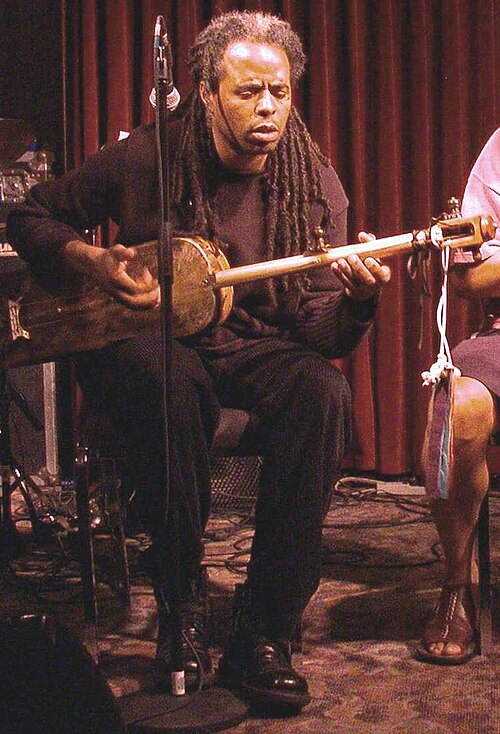
Marrakech, late 1960s. In a courtyard of the medina, a six-year-old girl watches her mother lead a derdeba—a nocturnal Gnawa ceremony where voices coil in rhythmic vertigo and sintir players make the earth vibrate beneath the feet of attendees. Her younger sister, Mina Hakmoun, and her older brother Hassan: what they hear in these smoky rooms, blending liturgical chants, syncopated percussion, and the grit of the guembri, will shape one of the most singular voices in world music.
In brief
| Full name | Hassan Hakmoun (حسن حكمون) |
| Birth | September 16, 1963, Marrakech, Morocco |
| Genre | Gnawa, world fusion |
| Instruments | Vocals, guembri (sintir), percussion |
| Notable works | Gift of the Gnawa, Trance, The Gift |
| Awards | INDIE Award AFIM (2003), Rolling Stone Hot Pick of ‘94 |
Key dates
| Year | Event |
|---|---|
| 1967 | At age 4, attends his first derdeba (nocturnal Gnawa ceremony with curative intent) |
| 1970 | Begins studying tagnawit (Gnawa ritual arts) under masters like Hmida Boussou |
| 1977 | At age 14, recognized as m’allem (master musician), leads his own ensemble |
| 1987 | American debut at Lincoln Center, moves to New York |
| 1989 | Forms Magmouat Hakmoun with his brother Said and other close associates |
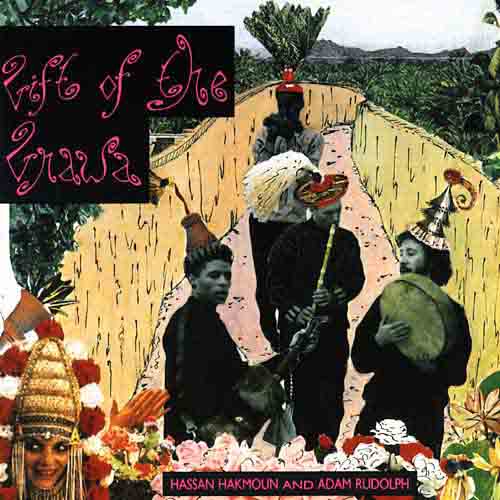
| 1991 | Gift of the Gnawa with Adam Rudolph and Don Cherry |
| 1992 | WOMAD by Peter Gabriel, recording of Trance at Real World Studios |
| 1994 | Woodstock Festival ‘94 |
| 2002 | The Gift, in duo with Paula Cole; INDIE AFIM award winner |
| 2014 | Unity, album spanning two decades of exploration |
From the medina of Marrakech to New York stages
Hassan Hakmoun was born on September 16, 1963, in the medina of Marrakech. His father is a musician and his mother, a mystic healer known throughout the city, leads derdeba—nocturnal Gnawa ceremonies intended to soothe spirits through music, dance, and liturgical chants. The Gnawa community, whose ancestors were brought from sub-Saharan Africa to Morocco in the 15th and 16th centuries, occupies a place that is both spiritual and artistic: its members serve as intermediaries between the visible world and the invisible.
From the age of four, Hassan is present at these ceremonies. “To learn this music, you must go and listen to musicians play,” he would later tell the New York Times. “You cannot write this music; you must be friends with the musicians and listen, listen, listen.” At seven, he begins formal study of tagnawit under masters like Hmida Boussou. He travels the country following great masters, then discovers jazz and rock in France. By fourteen, he is an established musician—recognized as m’allem, master of derdaba ceremonies. He leads his own ensemble through the streets of Marrakech, Casablanca, and at Lila ceremonies.
In 1987, a dance company invites him to the United States. He performs at Lincoln Center in New York and decides to stay. The New York underground scene overwhelms him: jazz, experimental rock, world music. The Knitting Factory, a downtown club, becomes his laboratory. It is there that one night Miles Davis and Daniel Lanois are in the audience—the latter introducing Hakmoun to Peter Gabriel. Gabriel, founder of the WOMAD movement, integrates him into his network. He forms Zahar—“chance” in Arabic—a group blending rock, jazz, and African rhythms, sharing the stage with Don Cherry, the Kronos Quartet, and David Sanborn. He tours at Real World Studios in Bath, England, records Trance, and travels the world’s festivals.
Return to roots, bridge to the future
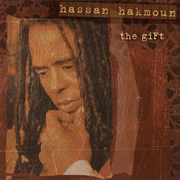
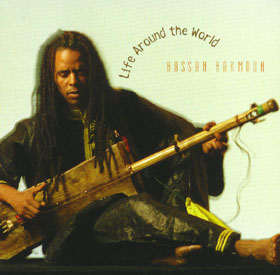
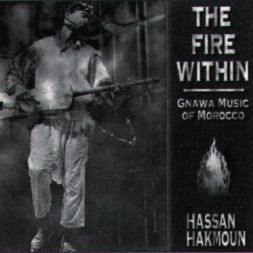
From the mid-1990s onward, Hakmoun focuses on solo albums: Fire Within (1995), Life Around le Monde (1999), and The Gift (2002) produced with Fabian Alsultany. The latter includes “This Gift,” a duo with Grammy-winning artist Paula Cole, whom he met during Peter Gabriel’s Secret World Live tour in 1994. The Gift receives the INDIE AFIM award in 2003. Fire Within, Gift of the Gnawa, and Trance appear on the charts for World Music Albums, World Music Charts Europe, and CMJ Radio Top 150. He also contributes to film soundtracks (Jungle 2 Jungle, Rollerball) and continues performing at major festivals, conducting university master workshops, and exploring new forms of Gnawa dance.
Major works
| Work | Year | Why it’s essential |
|---|---|---|
| Gift of the Gnawa | 1991 | Pioneering Gnawa-jazz fusion with Adam Rudolph and Don Cherry |
| Trance | 1993 | Recorded at Peter Gabriel’s Real World Studios; explores Gnawa rituals in a world fusion production context |
| Fire Within | 1995 | Asserts his solo vocal and instrumental signature |
| The Gift | 2002 | INDIE AFIM award winner, featuring Paula Cole; bridge between African traditions and pop |
| Unity | 2014 | Review of two decades of exploration; synthesizer and guembri in dialogue |
Legacy
Hassan Hakmoun opened doors that few Moroccan artists had crossed: major American festivals, Bath studios, New York underground scenes, university classrooms. He proved that the Gnawa tradition is not a relic of the past but a living language, capable of dialoguing with jazz, rock, and pop. Peter Gabriel describes him as “one of the most piercing and intriguing voices in the world.” Today, a new generation of Moroccan and African musicians draws on his example to explore the boundaries between ancestral music and modernity.
Sources and references
- “Hassan Hakmoun”, Wikipedia (English version), https://en.wikipedia.org/wiki/Hassan_Hakmoun, accessed October 23, 2026.
- « Hassan Hakmoun », Wikipedia (French version), https://fr.wikipedia.org/wiki/Hassan_Hakmoun, accessed 23 October 2026.
- Jason Ankeny, « Hassan Hakmoun — Biography, Discography, Albums & Expert Reviews », AllMusic, https://www.allmusic.com/artist/hassan-hakmoun-mn0000804011, accessed 23 October 2026.
- Anastasia Tsioulcas, « Hassan Hakmoun: globalFEST 2014 », NPR, https://www.npr.org/2014/01/16/260448221/hassan-hakmoun-globalfest-2014, accessed 23 October 2026.
- « Biography », Hassan Hakmoun (official website), https://hassanhakmoun.com/bio.html, accessed 23 October 2026.
- « Press », Hassan Hakmoun (official website), https://hassanhakmoun.com/press.html, accessed 23 October 2026.
- « Hakmoun, Hassan », Encyclopedia.com, https://www.encyclopedia.com/education/news-wires-white-papers-and-books/hakmoun-hassan, accessed 23 October 2026.