Biography
Aflak: when “Marock’n’roll” revolutionized Moroccan music
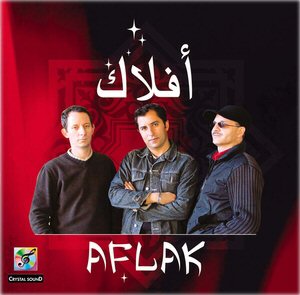
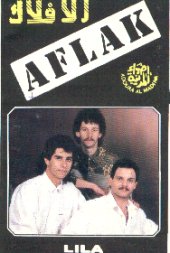
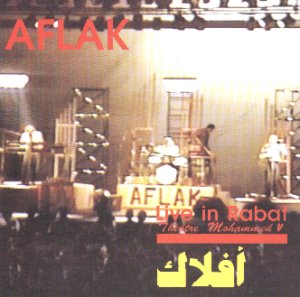
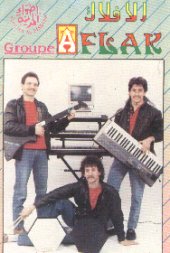
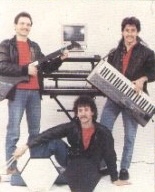
In Rabat, in 1989, Aziz Aflak took the stage with his electric guitar and synthesizers. The audience was expecting conventional raï; instead, they heard an unprecedented sound made of haâbi and gnaoui rhythms blended with electronic tones. “I was six years old when I started playing the piano and the oud, the oriental lute,” he said. “I wanted to make computer-assisted music, but with the rhythms and lyrics of traditional Morocco.” This group of three brothers from Marrakech had just been born.
In brief
| Group name | Aflak (أفلاك) |
| Founders’ names | Aziz, Lucien and Jamal Fayet |
| Origin | Marrakech (Morocco), then Mourenx (France) |
| Genre | Marock’n’roll — fusion of traditional Moroccan music, rock, funk, reggae and electronic |
| Active period | 1986 – today |
| Emblematic works | Taala Ngoulik, Marocain moderne, Dini Mak |
| Estimated sales | More than 2.5 million albums |
Key dates
| Year | Event |
|---|---|
| 1980 | The Fayet brothers move from Marrakech to Mourenx (Pyrénées-Atlantiques, France) |
| 1986 | Aziz composes “Marrakesh”, first track |
| 1988 | Release of Taala Ngoulik, first album |
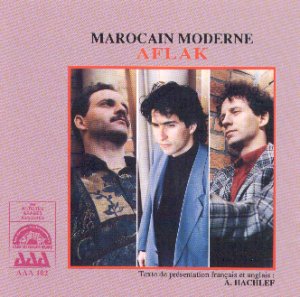
| 1994 | Marocain moderne; international breakthrough |
| 1998 | Dini Mak; tours in Europe and Morocco |
| 2005 | Album Enti; last album by the brothers together |
| 2008 | Departure of brothers Lucien and Jamal; Aziz continues alone |
| 2011 | Invitation to the Mawazine festival in Rabat |
| 2016 | Album Tawassol with Gabacho Maroc, number one on the Transglobal World Music Chart |
From the conservatory of Meknès to the stages of the Bataclan: Aflak’s journey
Aziz Fayet was born in Marrakech in the 1960s, in a bicultural family — his father French, his mother from Marrakech. From the age of six, he studied piano and oud. At nine, he obtained his oriental lute diploma from the conservatory of Meknès. This classic Moroccan path contrasted with his attraction to Jean-Michel Jarre and Depeche Mode.
In 1980, the family settled in Mourenx. Aziz, accompanied by his brothers Lucien and Jamal, forged an unprecedented approach: importing Western electronic textures into Moroccan music. “Taala Ngoulik” (Come tell me), released in 1988, was the fruit of this alchemy. The title blends haâbi and gnaoui colors — traditional Moroccan styles rooted in the popular repertoire — with funk, rock and reggae rhythms, accompanied by synthesizers and electric guitars.
The term “Marock’n’roll”, invented by the group, was not just a slogan: it was a promise. Aflak was the first Moroccan and Arab group to play with electric instruments in the 1980s and 1990s. Their sound, neither rock nor raï but borrowing from both, quickly won over a broad audience, particularly the Moroccan immigrant community in Europe.
The breakthrough came at the beginning of the 1990s. With Marocain moderne (1994) and Dini Mak (1998), Aflak conquered the international scene. The group performed at the Bataclan in Paris, the Palais des congrès and the Cirque Royal in Brussels, and embarked on a tour of Germany. In Morocco, they played at the Mohammed V Theatre in Casablanca, as well as in Agadir and Rabat. “My concerts were even broadcast during halftime of football championships,” Aziz recounted. “Thanks to Moroccan television, many spectators discovered my music.”
Aflak was invited to the royal palace: King Hassan II invited the group to host evenings, a strong symbolic recognition for artists who dared to modernize a heritage considered classical.
The turning point came at the beginning of the 2000s. One of the brothers passed away, and in 2008, Lucien and Jamal left the group. Aziz Fayet, the only founder still present, reconfigured Aflak with a dozen Moroccan, French and Spanish musicians. The group became a collective platform. In 2011, it was invited to the Mawazine festival in Rabat. In 2014, it toured with a rock formation. In 2016, it joined the Gabacho Maroc collective and co-produced Tawassol, which reached number one on the Transglobal World Music Chart and led to a four-year tour with more than two hundred concerts. In 2021, it announced the afro dance remix of its hit “Wa Tâala Ngoullik”, in collaboration with DJ Jabato, so that the younger generation could discover Aflak. Aziz continues his path as a musician, producer and director.
Major works
| Work | Year | Why it’s essential |
|---|---|---|
| Taala Ngoulik | 1988 | First album; laid the foundations of Marock’n’roll |
| Marocain moderne | 1994 | International breakthrough; tours at the Bataclan and Brussels |
| Dini Mak | 1998 | Success and massive diffusion on Arab radio waves |
| Enti | 2005 | Last album by the Fayet brothers together |
| Tawassol | 2016 | Number one on the Transglobal World Music Chart (with Gabacho Maroc) |
Legacy
Aflak paved the way for an entire generation of Moroccan and Arab musicians who dared to blend modern instruments with tradition. “Marock’n’roll” is today a benchmark for artists working on world music in the digital age. The haâbi and gnaoui colors, traditional rhythms, are no longer seen as mere relics — thanks to Aflak, they are living elements that dialogue with the synthesizer and electric guitar. Aziz Aflak remains one of the most prolific Franco-Moroccan musicians, with nearly forty years of career. His journey, from the conservatory of Meknès to the stages of the Bataclan, is a story of blending and borderless music.
Sources and references
- “Aflak — Biography”, AllMusic, https://allmusic.com/artist/aflak-mn0001782921, accessed October 23, 2026.
- « The return of Aflak », Morocco World News, https://moroccoworldnews.com/2015/05/158840/the-return-of-aflak, accessed 23 October 2026.
- « Successful single: Soon to be “Wa Tâala Ngoullik” by Aflak in Afro dance rhythms », Aujourd’hui le Maroc, https://aujourdhui.ma/culture/single-a-succes-bientot-wa-taala-ngoullik-daflak-en-rythmes-afro-dance, accessed 23 October 2026.
- « Aflak - أفلاك », Hiba Music, https://en.hibamusic.com/Maroc/aflak/aflak-123.htm, accessed 23 October 2026.
- « Biography of Ensemble Aflak », Last.fm, https://last.fm/fr/music/Ensemble+Aflak/+wiki, accessed 23 October 2026.
- « Aflak - Aflak 2005 », Discogs, https://discogs.com/release/14618039-Aflak-Aflak-2005, accessed 23 October 2026.
- « Aflak », Spotify, https://open.spotify.com/intl-ar/artist/6i4LJyFQbSEP4tIQrYs1VN, accessed 23 October 2026.
- « Aflak », Kiff Africa, https://kiff.africa.com/artist/aflak, accessed 23 October 2026.
- « Aflak can’t wait to be there », Sud Ouest, https://www.sudouest.fr/pyrenees-atlantiques/mourenx/aflak-a-hate-d-y-etre-9668634.php, accessed 23 October 2026.
- « Aziz Aflak », LinkedIn, https://linkedin.com/in/aziz-aflak-25331886, accessed 23 October 2026.