Biography
Akiyo
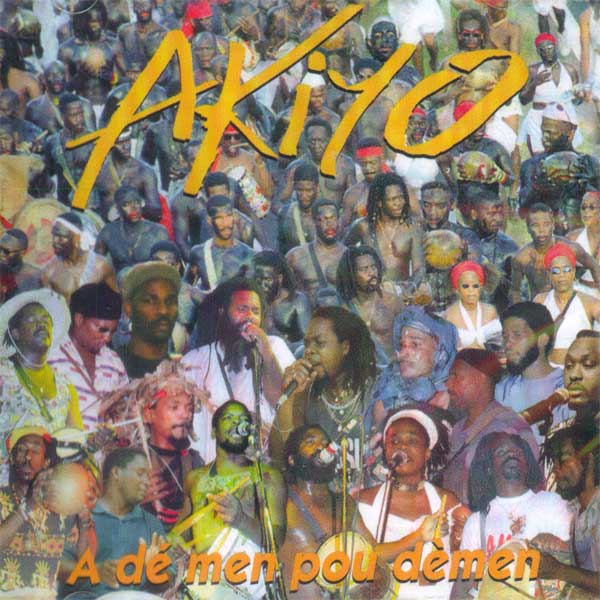
The streets of Pointe-à-Pitre ignite every year during carnival, but Akiyo never arrives where they expect it. While other troupes parade on beaten paths, the group bursts through side streets, preceded by whip-crackers cracking their whips on the asphalt, followed by thousands of carnival-goers dressed in dried banana leaves and coated in roucou — a fiery red vegetable pigment. This 2023 Mardi Gras, thousands of participants burst forth in a cacophony of ka drums, conch shells, and shouted chants: « Koné Koné yo, Akiyo ka koné yo ». Behind this spectacular appearance lies a cultural project born more than forty years ago: one of the most engaged gwoka groups in the Antilles.
In brief
| Group Name | Akiyo (gwoup a po, « group of skins ») |
| Origin | Les Abymes, Guadeloupe (Pointe-à-Pitre) |
| Genre | Gwoka, mizik a mas (carnival music), gwoup a po — music founded on goat-skin drums |
| Active Period | 1978 – present |
| Founding Members | « Vélo » (Marcel Lollia), Michel Halley, François Ladrezeau, Joël Nankin |
| Emblematic Works | Mémoires, Mouvman, Dékatman |
| Commitment | Cultural movement, LKP (2009), defense of gwoka and Afro-Guadeloupean identity |
Key Dates
| Year | Event |
|---|---|
| 1978/1979 | Group founded by the Nankin brothers, « Vélo », Michel Halley, and François Ladrezeau in Pointe-à-Pitre |
| 1984 | Death of « Vélo »; Akiyo forms an association and defines its cultural commitment |
| 1985 | Parade ban by sub-prefect Hugodot. More than 8,000 Guadeloupeans descend into the streets to support Akiyo — the ban is lifted |
| 1988 | Creation of Akiyo Mizik, the stage version of the group: first show with 80 musicians |
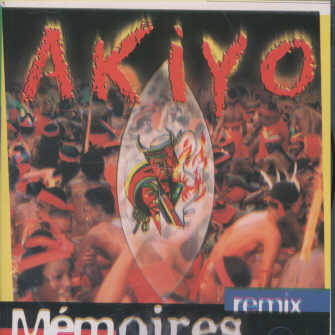
| 1992 | Release of the first album, Mémoires, a major success in the island without advertising |
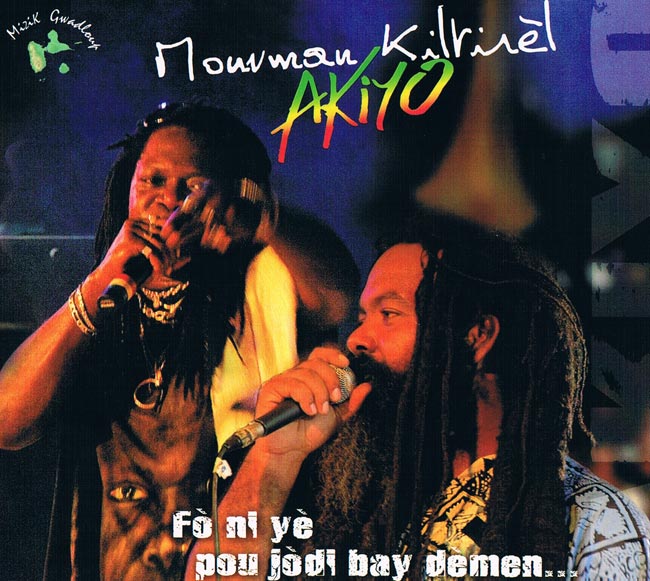
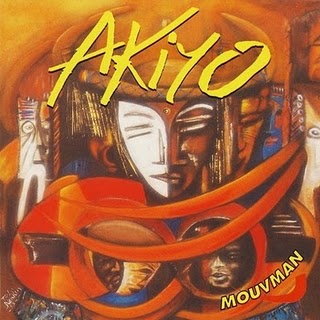
| 1993 | Second album, Mouvman, containing the track “Déboulé”, the group’s anthem |
| 1998 | Participation in the opening ceremony of the World Cup in France |
| 2009 | Akiyo participates in the formation of the LKP during the general strike in the Antilles |
| 2013 | Release of Mastodont on Akiyo’s own structure, Mouvman Kiltirel Akiyo |
Roucou masks against the « satin » carnival and Akiyo’s battles
Guadeloupe in the 1970s lived under the effect of a strong independentist dynamic. A group of young gwoka fans — the traditional musical style based on drums that is the pride of Guadeloupean culture — decided on a mission: to return carnival to the people. The Nankin brothers, « Vélo » (Marcel Lollia), Michel Halley, and François Ladrezeau observed that the island’s carnival was overrun by imported satin-and-sparkle costumes from the metropole and plastic instruments. They proposed something else: traditional masks, skin drums (boula and maké), and a clear political commitment. The term itself of « mas » — which designates both the disguise and the popular procession nourished by animist traditions — was preferred to « carnival », the colonists’ word.
To do this, Akiyo donned costumes made of dried banana leaves or dyed in roucou. The group used whip-crackers at the head of the procession, sounded the conch shells, and played on the mas a Senjan rhythm, derived from the mendé, one of the seven fundamental rhythms of gwoka. Michel Halley, one of the founding members, summarized the group’s vision thus: « The drum is an instrument of expression, of joy, of sorrow, and of celebration. Akiyo is a stream of thought, an ideological movement above all, a will to act. »
In 1984, the death of Vélo deeply affected the group, which restructured itself as a 1901 law association and defined itself as a « cultural movement ». This taking of speech quickly caused tensions with the authorities. In 1985, sub-prefect Hugodot banned Akiyo from parading. The Guadeloupean population, however, descended into the streets: more than 8,000 people demonstrated to support the group. The ban was lifted, and Akiyo became aware of its importance — that of a megaphone capable of mobilizing entire crowds. This ability to channel popular anger, Akiyo reactivated it in 2009 during the general strike in the Antilles. The group was part of the founding cultural actors of the LKP (Liyannaj Kont Pwofitasyon). During the night negotiations, dozens of percussionists played gwoka around the official buildings. Every Saturday, on the Place de la Victoire in Pointe-à-Pitre, Akiyo’s members broadcast their message through songs — so that gwoka and pride remain alive.
Major Works
| Work | Year | Why it is essential |
|---|---|---|
| Mémoires | 1992 | Group’s first album, immediate success in the island. Affirmation of Guadeloupean identity through gwoka. |
| Mouvman | 1993 | Contains “Déboulé”, an indispensable anthem. Apex of the fusion of traditional drums and synthesizers. |
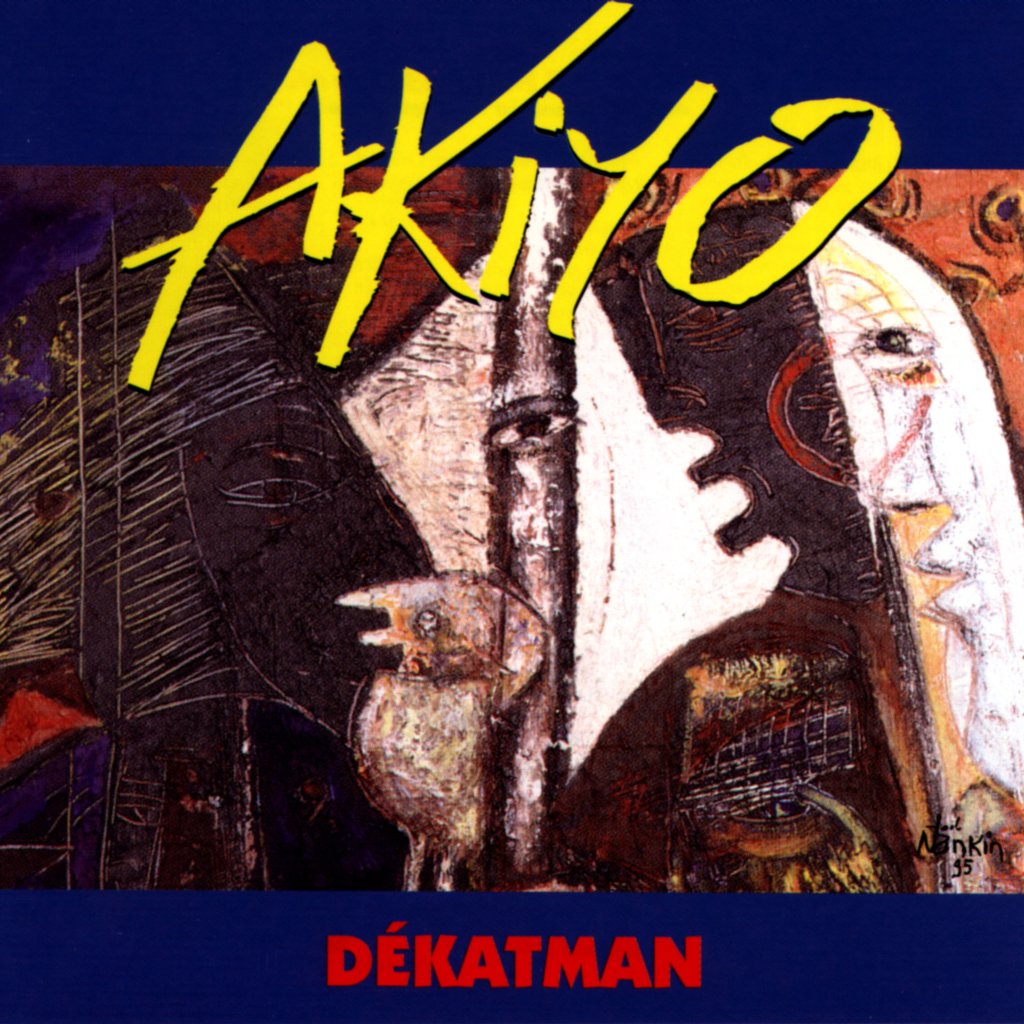
| Dékatman | 1995 | Third record recorded at Studio Henri Debs in Pointe-à-Pitre, with richer arrangements. |
| Mastodont | 2013 | Produced on Akiyo’s own structure. Testifies to the maturity of the cultural movement. |
Legacy and Influence
For more than forty years, Akiyo has become a cultural institution in Guadeloupe. The group exported its message to the Théâtre de l’Odéon in Paris, the Stade de France, and the Olympia. Its music — a blend of traditional drums, synthesizers, and guitars — has inspired a new generation of contemporary gwoka artists. The reissue by Beauty & the Beat Records of their tracks Mouvman in 2024 testifies to growing international recognition.
Sources and references
- « Antilles Carnival: Akiyo, Voice of the Guadeloupean People », RFI, https://www.rfi.fr/fr/musique/20230221-carnaval-des-antilles-akiyo-haut-parleur-du-peuple-guadeloup%C3%A9en, accessed 3 November 2026.
- « Akiyo — Excursions in Gwoka Vol. 2 », Cédric Lassonde / Beauty & the Beat Records, https://cedriclassonde.com/akiyo-excursions-in-gwoka-vol-2/, accessed 3 November 2026.
- « Akiyo », Wikipedia, https://fr.wikipedia.org/wiki/Akiyo, accessed 3 November 2026.
- « Akiyo — Biography, Discography », AllMusic, https://www.allmusic.com/artist/akiyo-mn0001290325, accessed 3 November 2026.
- « Akiyo — Mouvman », Discogs, https://discogs.com/release/5937002-Akiyo-Mouvman, accessed 3 November 2026.
- « Fanswa Ladrézeau: “For me, Gwoka is a deity” », Kariculture, https://kariculture.net/en/fanswa-ladrezeau-for-me-gwoka-is-a-deity-that-gave-me-everything-i-wanted, accessed 3 November 2026.