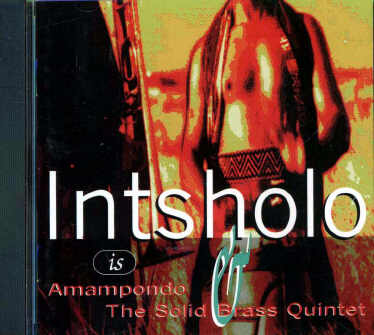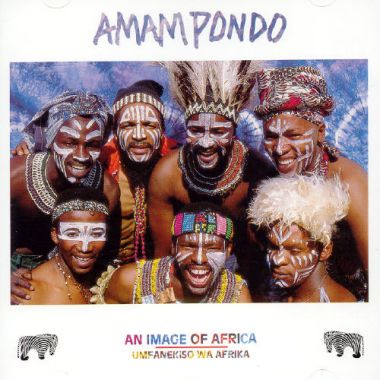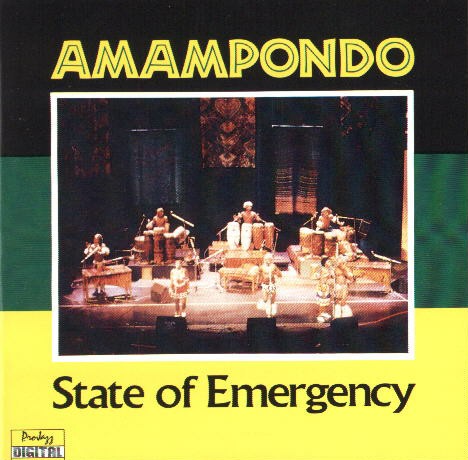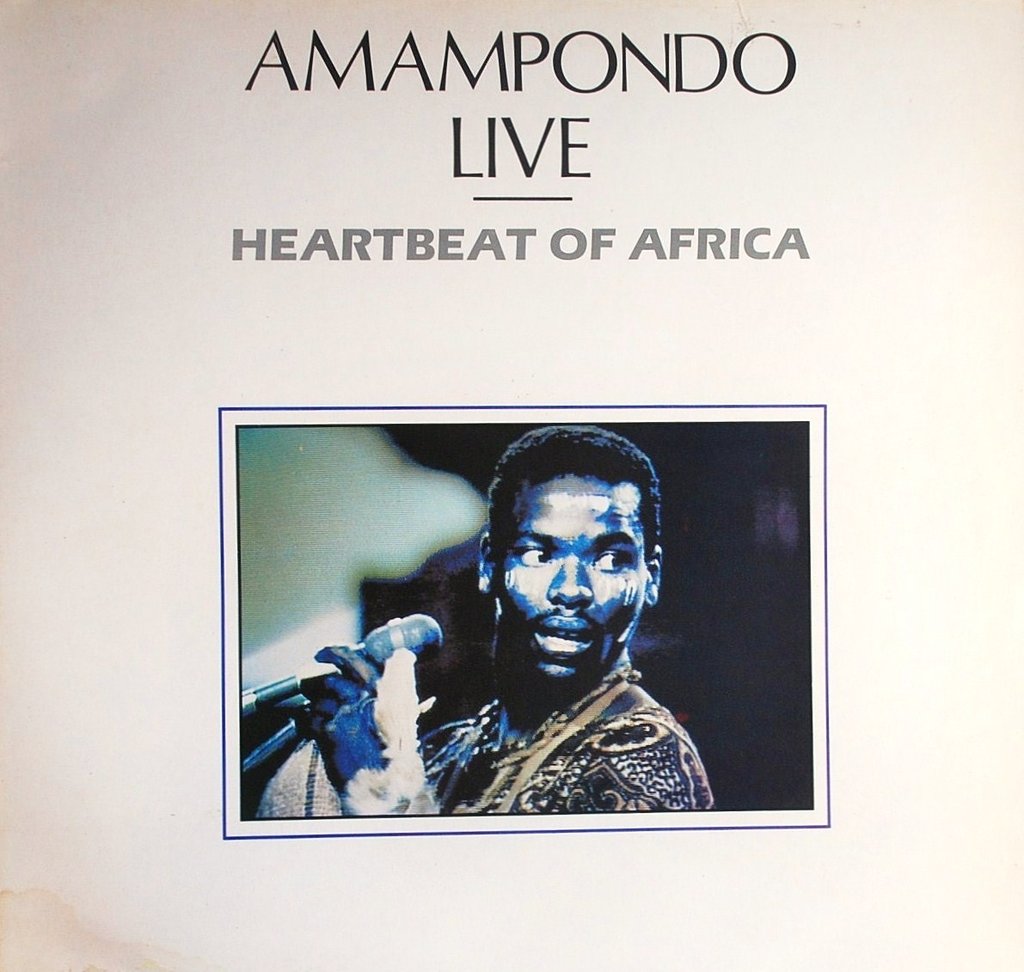
Biography
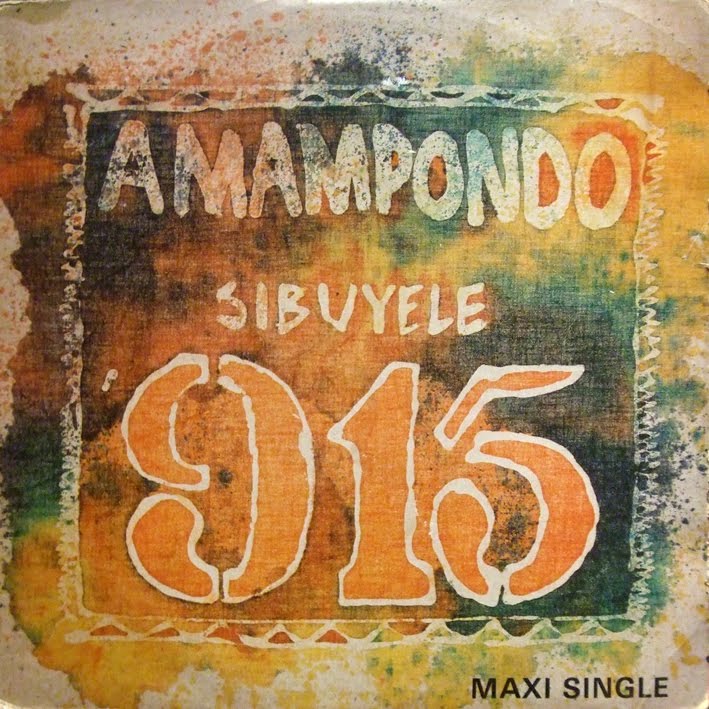
Amampondo
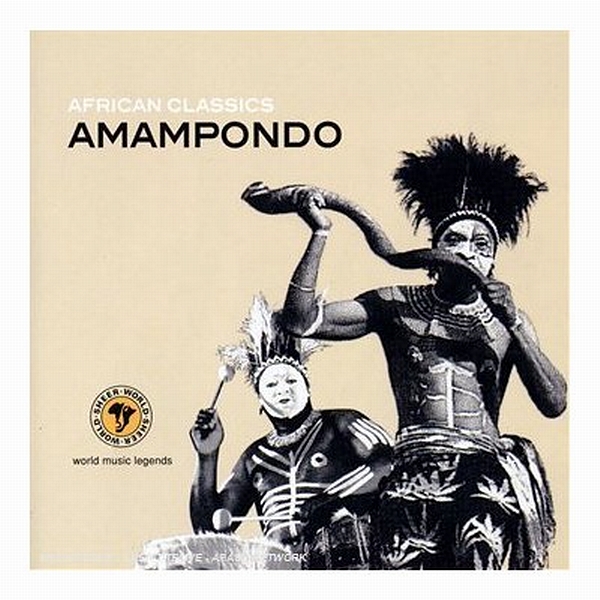
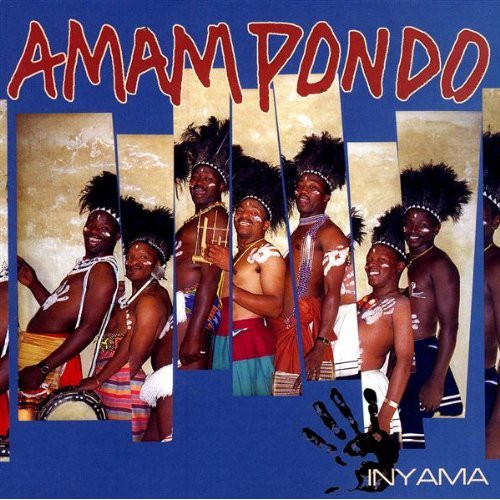
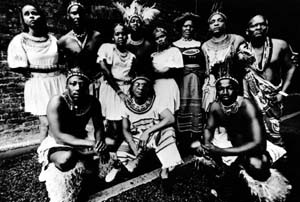
In 1988, during the concert celebrating Nelson Mandela’s 70th birthday at Wembley Stadium, seven men in traditional South African suits took center stage. Seven marimbas and hand-beaten drum skins — a sound the West discovered. This was Amampondo’s international birth certificate.
In Brief
| Group Name | Amampondo (lit. “People of Mpondo”) |
| Origin | Langa, Cape Town township, South Africa |
| Founded | 1979 |
| Founder | Dizu “Zungulu” Plaatjies |
| Genre | Traditional African Percussion |
| Notable Works | Heartbeat of Africa (1983), Drums for Tomorrow (1998) |
| Honors | South African Music Ambassadors (Mandela), 1996 Atlanta Olympics |
Key Dates
| Year | Event |
|---|---|
| 1979 | Group founded in Langa, Cape Town township |
| 1983 | First professional recording: Heartbeat of Africa |
| 1988 | Historic performance at Mandela’s 70th birthday concert in Wembley |
| 1989–1992 | Four-year boycott by the ANC |
| 1994 | Collaboration with Juno Reactor |
| 1996 | Represented South Africa at the Atlanta Olympics |
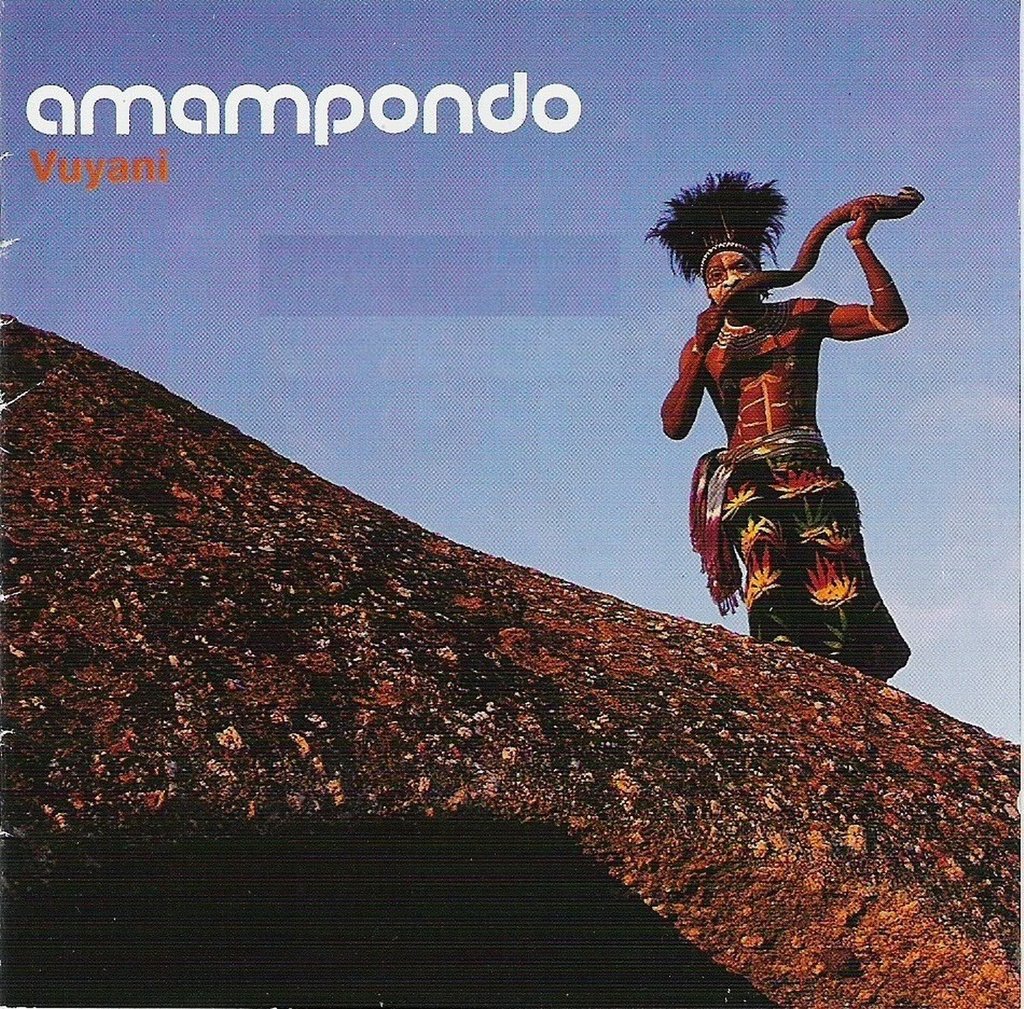
| 2000 | Album Vuyani, celebrating 20 years of career |
| 2013 | Langa Nights, Mountain Records |
A township, marimbas and the refusal to forget
Dizu Plaatjies was born on February 5, 1959, in Lusikisiki in Pondoland. He grew up in an environment where music was not a pastime but a language. His father was a traditional healer, his mother a teacher. He himself was initiated into Xhosa and Mpondo rites. When he arrived in Cape Town and settled in Langa, the city’s largest township, he did not leave that music behind; he transplanted it.
In 1979, with five young men from the same neighborhood — Simpiwe Matole, Mzwandile Qotoyi, Michael Ludonga, Leo Mbizela and Mandla Lande — he formed Amampondo, which means “the people of Mpondo,” a reference to the Mpondo kingdom in present-day Eastern Cape, from which most members originate. The group started as street musicians, begging for the money needed to buy instruments. By 1981, they were already playing at the Scratch Club, a Cape Town institution.
To equip the group, the founders called on Father David Dargie from St. Francis Church in Cape Town. The marimbas were produced in 1979 by Brother Kurt Huwiler at the Lumko Institute, an artistic training center located in Umtata. Each marimba was tuned according to Mpondo scales and Afro-diatonic scales, giving the group a sound impeccably rooted in its land of origin while remaining open to universal harmonies.
The group then broadened its horizons by working with ethnomusicologists on traditions from Nigeria, Côte d’Ivoire, Uganda and Zimbabwe. They integrated the rhythms of Xhosa, Zulu, Shangaan and Sotho peoples to build a pan-African sound.
Wembley, the boycott and resilience
The consecration came in 1988. Amampondo was asked to play at Nelson Mandela’s 70th birthday concert in Wembley Stadium. The performance, viewed by millions of viewers around the world, immediately established their international reputation — National Geographic would later qualify them as one of the most interesting and experimental groups in South Africa.
But Wembley’s brilliance hid an unforeseen setback. Upon their return, the ANC, the anti-apartheid movement in exile, forbade them to perform both inside and outside South Africa. The reason invoked: the group had performed in Israel and Taiwan, violating the cultural boycott of apartheid. The paradox was painful — they had just played at Mandela’s concert, and the door was closed to them.
The group remained unable to perform for four years. They withdrew to Langa and turned to educational programs, teaching South African culture in schools. This difficult period did not break the group; it bound them tighter together. It was during these years that Dizu received support from Scandinavian countries, where festivals and universities offered the group a fallback stage.
Help finally arrived from an unexpected source: Archbishop Desmond Tutu, with whom Amampondo had recorded the album Give Praise Where Praise Is Deserved after receiving the Nobel Peace Prize. Tutu wrote to the ANC requesting the lifting of the boycott, and the ban was lifted.
Free at last, the musicians took back the world. Nelson Mandela, released from prison in 1990, promoted them as ambassadors of South African music — their favorite, according to testimonies. In 1996, it was he who nominated them to represent South Africa at the opening ceremony of the Atlanta Olympics.
Modernity without renouncing tradition
In the 1990s, Amampondo undertook a remarkable feat: preserving the spirit of tradition while making it accessible to a wide audience. The turning point came in 1994 with the meeting of Robert Trunz, owner of the MELT 2000 label. After two years of contractual negotiations, the group signed in 1996 and released Drums for Tomorrow, produced by Cameroonian virtuoso Brice Wassy. The album fuses marimbas, percussion, singing and a cappella vocalise with saxophones, trumpets and guests from Brazil (Airto Moreira), Cuba (Changuito), France (Emmanuelle Sejourne) and Switzerland (Chris Stiefel).
The same decade saw the group collaborate with Juno Reactor, the German techno collective. Dizu, Simpiwe, Mandla, Michael and Mabi toured the United States for five weeks on Moby’s tour, bringing African percussion to the heart of dance music. Dressed in body paint and traditional costumes, they performed acrobatics and rhythms against a backdrop of techno.
Amampondo continues to travel, teach and invent. In 2011, a collaborative EP with the Berlin techno firm Âme, Ku Kanjani, extended this approach of building bridges between sound continents. The group, reduced but faithful, remains active: Langa Nights was released by Mountain Records in 2013.
Major works
| Work | Year | Why it is essential |
|---|---|---|
| Heartbeat of Africa | 1983 | First professional recording, captured live at Cape Town City Hall |
| Drums for Tomorrow | 1998 | Successful fusion between Xhosa tradition and world music |
| Vuyani | 2000 | Tribute to twenty years of career, a masterpiece of maturity |
Legacy and influence
Amampondo paved the way for an entire generation of South African musicians who refuse the artificial opposition between tradition and modernity. Their model — preserving ancient sounds while projecting them into contemporary contexts — resonates with producers who build bridges between traditional rhythms and current distribution formats.
Dizu Plaatjies, after leaving Amampondo, founded Ibuyambo and taught African music at the University of Cape Town (UCT), where he is today a professor emeritus. His albums African Kings and Ubuntu — The Common String won South African Music Awards. The group remains living proof that music born in a township can conquer world stages without betraying its roots.
Sources and references
- « Amampondo », Wikipedia, https://en.wikipedia.org/wiki/Amampondo, accessed November 10, 2026.
- Craig Harris, « Amampondo — Artist Biography », AllMusic, https://www.allmusic.com/artist/amampondo-mn0000745866, accessed November 10, 2026.
- « Amampondo », M2KR — MELT 2000 Legacy Artists, https://m2kr.co.za/legacy-artists/amampondo-3/, accessed November 10, 2026.
- « Amampondo », National Geographic World Music (archive), accessed November 10, 2026.
- Max Mojapelo, Sello Galane and Chris Walton, Beyond Memory: Recording the History, Moments and Memories of South African Music, African Books Collective, 2009.
- Dizu Plaatjies, « Dizu Plaatjies », Wikipedia, https://en.wikipedia.org/wiki/Dizu_Plaatjies, accessed November 10, 2026.
- Mari Koppinen, « Etelä-Afrikan musiikin legenda toi Korjaamolle tunteikkaan rytmijuhlan », Helsingin Sanomat, November 8, 2018.
- Simon Broughton, Mark Ellingham and Richard Trillo, World Music: The Rough Guide — Africa, Europe and the Middle East, Rough Guides, 1999.