Biography
Bi Kidude: the “little grandmother” who shook Zanzibar to its core
In 2004, while touring Europe with the Culture Musical Club of Zanzibar, rumors spread on the island that Bi Kidude had died. All of Stone Town wept. Worse still: she was not dead. The old warrior continued her tour, fearless and intact, living proof that beyond a century of age, a breath can carry the weight of an entire story.
In brief
| Full name | Fatuma binti Baraka, nicknamed Bi Kidude (“little grandmother”) |
| Birth | Around 1910, Kitumba village (now Kati district), Zanzibar |
| Death | April 17, 2013, Zanzibar |
| Genre | Taarab (Arabo-Swahili fusion blending violins, oud, and African rhythms) — Unyago (drum rhythms for female rites) |
| Instruments | Voice, ngoma drums |
| Signature works | “Muhogo wa jang’ombe”, Zanzibar (1999), Machozi ya Huba |
| Awards | WOMEX Award 2005, Tanzania Medal of Arts and Sports 2012 |
Key dates
| Year | Event |
|---|---|
| Around 1910 | Birth in Kitumba, daughter of a coconut seller |
| 1920 | Start of musical career, inspired by Siti binti Saad |
| 1923 | Escapes a forced marriage at age 13, crosses to the Tanzanian mainland |
| 1930s | Settles in Shangani, Stone Town; sings female taarab |
| 1980 | Turning point: return to the public stage |
| 1995 | Tour of the United Kingdom with Shikamoo Jazz Band, Womad festival |
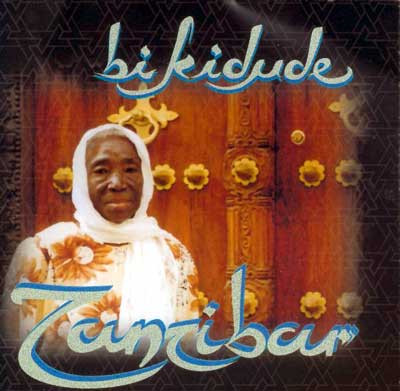
| 1999 | First solo album: Zanzibar (Retroafric Recordings) |
| 2004 | European tour with the Culture Musical Club |
| 2005 | WOMEX Award for contribution to world music |
| 2006 | Release of documentary As Old As My Tongue (Andrew Jones) |
| 2012 | Tanzania Medal of Arts and Sports |
| 2013 | Death on April 17 in Zanzibar |
Fleeing to sing: origins and rebellion
Fatuma binti Baraka was born around 1910 in the village of Kitumba, south of Zanzibar island, daughter of a coconut seller. At her age, she would say: “I don’t know myself, but my birth dates back to the era of the Indian rupee,” the former currency in circulation in East Africa before World War I. Her stage name, “Bi Kidude,” means “little grandmother” in Swahili—a respectful term addressed to older women. 1
From the age of ten, she made an act of rebellion by fleeing the Quranic school, then at thirteen by escaping a forced marriage. She crossed the sea to the Tanzanian mainland aboard a dhow and traveled the country on foot, barefoot, as she would do for her entire life. On the roads, she learned songs, collected melodies, and discovered the music of Siti binti Saad (1880–1950), pioneer of the Zanzibar music scene and first woman to sing in public. 1
Returning to Zanzibar in the 1930s, she settled in the Shangani neighborhood of Stone Town. She immersed herself in female taarab, a style whose provocative lyrics metaphorically critique men’s sexist behavior. She participated in Unyago ceremonies, rites of passage where adolescents receive social and sexual education. 2
The stage, world tours, and scandals
For decades, Bi Kidude sang in Swahili during ceremonies and festivals, often as the main attraction. Her career almost slept for fifty years before experiencing a turnaround in the 1980s. She played with the group Sahib El-Ahri, then joined the Twinkling Stars of Zanzibar. Tours followed: Germany, Scandinavia, Japan, Middle East, Southeast Asia.
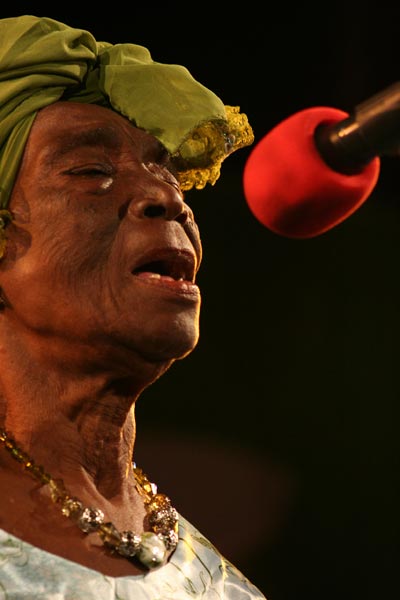
But her presence on stage went beyond music. Daughter of the Swahili sexual revolution, Bi Kidude defied Muslim taboos by smoking and drinking in public. She removed her veil, a gesture then “truly revolutionary and so controversial,” recalls DJ Rita Ray. She beat ngoma drums with vigor that defied her age. 1
In 2004, during the European tour, false news of her death spread. “I am not yet dead; perhaps people say it because they haven’t seen me for almost a month.” The phrase launched another legend.
Final concerts and legacy
In 1999, the Zanzibar International Film Festival awarded her an honorary prize for her contribution to the arts. The following year, she recorded Machozi ya Huba (Heartbeat Records), which marries her traditional Unyago drums with local Zenji Flava hip-hop, a remarkable stylistic juxtaposition. 3
Maryam “Mim” Suleiman, a young musician met in 2013, recalls: “Bi Kidude? You don’t joke with this woman!”. The singer died three weeks later, on April 17, 2013. Two documentaries, As Old As My Tongue and I Shot Bi Kidude, signed by Andrew Jones, immortalize her journey. 1
Her legacy continues to spread. Contemporary Singeli musicians in Tanzania draw inspiration from her music, using accelerated loops and Unyago rhythms, breaking rules as she did. “When I sing, I feel like a fourteen-year-old girl,” she used to say.
Major works
| Work | Year | Why it’s essential |
|---|---|---|
| “Muhogo wa jang’ombe” (with Culture Musical Club) | ? | Hymn to work and female independence, in poetic Swahili |
| Zanzibar (Retroafric Recordings) | 1999 | First solo album, recorded around age 89 |
| Machozi ya Huba (Heartbeat Records) | 2001 | Fusion between traditional Unyago drums and Zenji Flava |
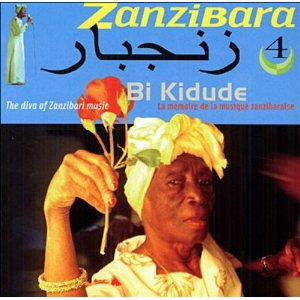
| Zanzibara 4 – Bi Kidude (Buda Musique) | 2007 | Posthumous compilation preserving the Saadian repertoire |
Heritage
Bi Kidude made a mark on the cultural history of Zanzibar by breaking three taboos at once: the veil, purdah, and the idea that a woman should not sing in public. Inspired by Siti binti Saad, she reinvented taarab by infusing it with local rhythms, the Swahili language, and the realities of daily life.
Her generosity was as legendary as her rebellion. On tour, she brought in thousands and spent it all within a few days to help her family and those in need. A recognized herbalist, she prepared remedies for asthma and distributed them for free. 2
Today, generations of Tanzanian musicians — from Mim Suleiman to DJ singeli — cite her as an example of courage and authenticity. “She lived the life she wanted to live,” says Rita Ray. A legacy made of drums, rebellion, and sung Swahili. 1