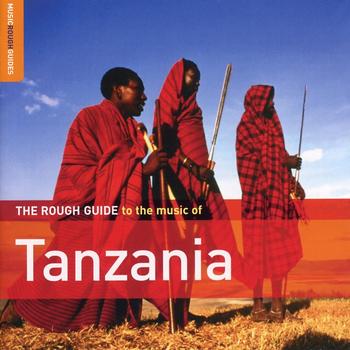
Musical History of Tanzania
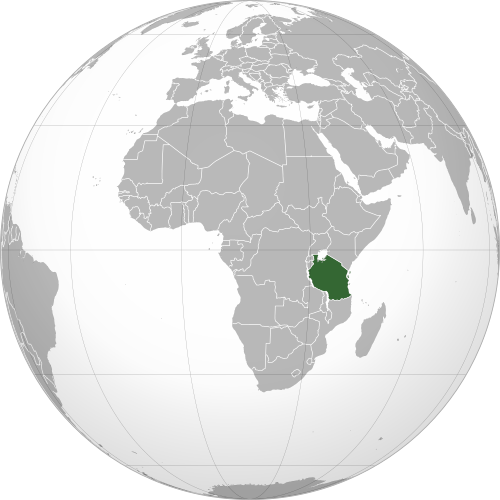
Dar es Salaam, nicknamed bongo — which means brain in Swahili, a name given to the city by Julius Nyerere in 1977 to evoke the intelligence necessary for survival in difficult times — is the birthplace of a genre that makes the entire continent dance. Bongo Flava, this unique fusion of American hip-hop, R&B, reggae, and Swahili rhythms, became the musical voice of Tanzania in the 21st century, with more than 500 million streams in 2024 for top tracks alone 1. How did an East African country forge a music scene that today rivals Nigerian afrobeats and South African amapiano?
Roots: Between Congolese Rumba and Swahili Singing
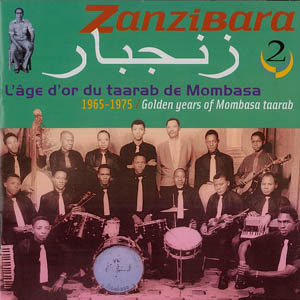
Tanzanian urban music finds its origins in three major currents. First, dansi (muziki wa dansi), which emerged in the 1930s in Dar es Salaam and flourished from the 1960s to the 1980s. Inspired by Congolese rumba, dansi is a grand electric orchestra style that blends guitars, brass, and percussion 2. At the heart of this era: NUTA Jazz Band (founded in 1964), Morogoro Jazz Band with guitarist Mbaraka Mwinshehe (1944–2017), Mlimani Park Orchestra, and union-sponsored troupes such as Vijana Jazz, a pioneer in the use of drum machines in Africa 3.
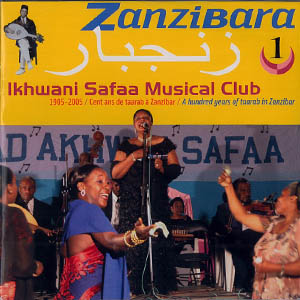
In parallel, Zanzibar developed its own tradition: taarab. This genre, born in the 19th century under the influence of Sultan Barghash who brought Egyptian musicians to his palace 4, fuses Swahili poetry, Arab modes, Indian rhythms, and African percussion. Siti binti Saad (1880–1950), the first female star of the genre, paved the way for a repertoire addressing politics, labor, and education — themes that would continue to inspire Tanzanian musicians 5.
Post-independence cultural policy played a decisive role. In 1973, the national radio banned foreign music on its waves, making an exception only for Zairian music 6. This directive, combined with the creation in 1974 of the department responsible for national culture and BAMUTA (National Music Council), protected and stimulated local scenes 7. By the end of the 1970s, there were approximately 120 active Swahili orchestras, and Radio Tanzania archived more than 1,500 recordings from 56 different orchestras 8.
Did you know? In 1977, Orchestra Afro 70 represented Tanzania at FESTAC, the great festival of African arts and culture held in Lagos, Nigeria 9. A scene that had been little exported abroad made its debut on the pan-African stage.
Precursors: The “Brain” Before Rap
It was Remmy Ongala (1947–2010), nicknamed “Dr. Remmy” by his fans, who bridged the gap between dansi and modern social consciousness. Originally from Kindu (now DR Congo), he joined his uncle Mzee Makassy’s Orchestra Makassy in 1978, then founded in 1981 the Super Matimila Orchestra 10. His style, ubongo beat — reflective music from the Swahili ubongo meaning brain — marries Congolese dance rhythms with lyrics denouncing poverty, corruption, and, in a pioneering way, the AIDS epidemic 11.
His song Mambo Kwa Soksi (“The Underworld Affairs”), advocating for condom use between 1989 and 1990, was banned by Radio Tanzania but became a concert anthem 12. Invited in 1989 to Peter Gabriel’s WOMAD, Remmy Ongala broadcast the Tanzanian sound on international stages, becoming such a local idol that a neighborhood in Sinza, Dar es Salaam, bears his name 13.
Dansi continued to evolve in the 1980s. Vijana Jazz innovated with mitindo (styles) such as sindimba and pamba, while Mlimani Park Orchestra and Maquis Original dominated dance halls 14. These formations, sponsored by state institutions, formed the nursery of talents that would feed subsequent decades.
Hip-Hop Renaissance: Birth of Bongo Flava
Bongo flava emerged in the early 1990s, born from the encounter between American hip-hop and Tanzanian musical traditions. The term itself was coined in 1996 by DJ Mike Mhagama on private radio Radio One 99.6 FM, to distinguish the new local scene from American hip-hop and R&B 15. Bongo flava, etymologically “the flavor of the brain,” captures the spirit of survival and ingenuity of Dar es Salaam’s youth.
The early days were underground. As early as 1990, beach concerts were organized by promoters like Joseph Kusaga and Ruge Mutahaba (future founders of Mawingu Studio), and the rap contest Yo! Rap Bonanza promoted the first talents 16. Saleh Jabir, by covering Vanilla Ice’s “Ice Ice Baby” in Swahili, became the first Tanzanian rapper broadcast on Radio Tanzania, pushing the genre forward 17.
But the founding figure of bongo flava is Joseph Mbilinyi, known as Mr. II or Sugu (which means stubborn in Swahili). Originally from Mbeya, he began rapping in 1990 and released Ni Mimi in 1995 18. Sugu was the first Tanzanian rap artist to achieve mainstream success: his lyrics addressed prostitution, police brutality, and corruption, resonating with both urban and rural areas 19. M-Net named him Best Male Artist at the Grammy Award for Tanzania in 2001, and he became a parliamentarian in 2010, embodying the transition from engaged art to political action 20.
Other pioneers emerged in the 1990s: Cool James, Chege from the group TMK Wanaume, Ray C, Professor Jay, Lady Jaydee, and Juma Nature, whose songs circulated throughout East Africa, notably in Kenya 21.
The contemporary era: Diamond Platnumz and the streaming wave
The turn of the 2010s propelled bongo flava to the forefront of the continental scene. The turning point? In 2014, Diamond Platnumz released his hit “My Number One”, followed by a collaboration with Nigerian star Davido, opening the doors to Nigeria, Ghana and South Africa 22. Today, bongo flava is no longer a purely East African phenomenon: it is a global African industry.
Diamond Platnumz (Naseeb Abdul Juma Issack, born 1989 in Dar es Salaam) is the dominant figure of the genre. Having started by selling clothes — he financed his first recordings with this trade —, he released his hit “Kamwambie” in 2010 and his nomination to the BET Awards 2014 confirmed his breakthrough 23. Founder of the WCB Wasafi label, he became the first African artist based on the continent to reach 900 million views on YouTube 24. His album First Of All (2022), collaborating with Adekunle Gold (Nigeria) and Focalistic (South Africa), illustrates this desire to build a musical bridge between African scenes 25.
His rivalry with Ali Kiba (nicknamed “King Kiba”) has become legendary, occupying conversations since 2012 and crystallizing the competition between the two giants of the genre 26. Other major artists structure the scene: Harmonize, emerging from the Wasafi camp, released five albums consecutively from 2020 to 2024 (Afro East, High School, Made for Us, Visit Bongo, Muziki wa Samia), beating a record previously held by Sugu 27. Vanessa Mdee (Vee Money), the first woman to have firmly established her brand, and Jay Melody embody a new generation where women hold a central place.
Music consumption itself has shifted: in 2024, Tanzanian tracks accumulated more than 500 million streams, marking a break with the purely radio era 28. The proliferation of home recording studios — Diamond Platnumz, Harmonize and Marioo all own them — transforms the creation process, bringing Tanzania closer to international models 29. Marioo, with “Hakuna Matata”, became the most-listened-to artist on Spotify Tanzania in 2024, demonstrating that the next generation is already in place 30.
| Figure | Period | Major Contribution |
|---|---|---|
| Siti binti Saad (1880-1950) | ~1920-1950 | First female star of taarab |
| Mbaraka Mwinshehe (1944-2017) | ~1960-2010 | Legendary guitarist, Morogoro Jazz Band |
| Remmy Ongala « Dr. Remmy » (1947-2010) | ~1978-2010 | Ubongo beat, Super Matimila, social consciousness |
| NUTA Jazz Band (founded 1964) | 1960-1980 | First professional dansi orchestra |
| Vijana Jazz | ~1980-1990 | Innovation with the drum machine |
| Joseph « Sugu » Mbilinyi (born 1972) | 1990-present | First Tanzanian mainstream rapper |
| Diamond Platnumz (born 1989) | 2006-present | 900M YouTube views, continental star |
| Harmonize | ~2012-present | Five albums from 2020 to 2024, heir of Wasafi |
A moving heritage
Tanzanian music has never ceased reinventing itself. From beni ngoma — these dance associations of the coast in the 19th century that imitated European military bands 31 — to Zanzibar taarab, from 1970s dansi orchestral to the digital bongo flava of the 2020s, Tanzania has kept an undisputed asset: transforming external influences into something resolutely local. Swahili, the national language imposed on radio waves as early as 1970 32, remains the country’s sonic DNA.
Today, with more than 500 million annual streams and a new generation of artists as diverse as Zuchu, Marioo, Nandy or Alikiba, Tanzania does not merely survive — it exports. The bongo brain has found its music, and the rest of Africa is listening.
Sources and references
« top streamed local song of 2024 ».
-
The Citizen (2024), « The top 20 most-streamed songs in Tanzania », December 12, 2024. URL: https://www.thecitizen.co.tz/tanzania/news/entertainment/the-top-20-most-streamed-songs-in-tanzania-4855204 ↩︎
-
Perrillo, John (2008), « Congolese Rumba Music in Dar es Salaam », in Music in Africa, May 15, 2008. URL: https://musicinafrica.net/magazine/muziki-wa-dansi-history-and-notable-bands-zilipendwa-download-tz ↩︎
-
« Muziki wa dansi », Wikipedia, accessed October 26, 2026. URL: https://en.wikipedia.org/wiki/Muziki_wa_dansi — « NUTA Jazz Band », Wikipedia, accessed October 26, 2026. URL: https://en.wikipedia.org/wiki/NUTA_Jazz_Band ↩︎
-
« Taarab », Wikipedia, accessed October 26, 2026. URL: https://en.wikipedia.org/wiki/Taarab — Fargion, Janet Topp (2013), « Between Mainland and Sea: The Taarab Music of Zanzibar », doi:10.4324/9781003085751-10. ↩︎
-
Sweet Mother, chap. 4, « Gourd Trumpets and Guitar Music » — « Tarab »: Siti Bind Saad (1880–1950), one of the first tarab singers to appear on record; lyrics dealing with love, politics, work, and education. ↩︎
-
Bender, Wolfgang (1985), Sweet Mother: Modern African Music, chap. 4: « 1973: Radio Tanzania decides not to broadcast any foreign music » (with the exception of Zairian music). ↩︎
-
Stern’s Guide Vol. 1, « Tanzania »: Department for National Culture and Youth Programs (1974); BAMUTA (Baraza la Muziki la Taifa) — controls dance hall licenses and instrument imports. ↩︎
-
Sweet Mother, chap. 4: « Radio Tanzania is the central promoter of musicians/bands », 1979 figures: approximately 6,000 traditional ngoma groups, 120 « jazz » swahili bands, and 1,500 archive bands from 56 different orchestras (1980). ↩︎
-
Stern’s Guide, « Tanzania »: « Afro 70 represented the country at FESTAC 77 in Lagos with the support of the National Music Council ». ↩︎
-
« Remmy Ongala », Wikipedia, accessed October 26, 2026. URL: https://en.wikipedia.org/wiki/Remmy_Ongala — « Remmy Ongala obituary », The Guardian, January 11, 2011. URL: https://theguardian.com/music/2011/jan/11/remmy-ongala-obituary ↩︎
-
« Remmy Ongala », Real World Records. URL: https://realworldrecords.com/artists/remmy-ongala-orchestre-super-matimila — « Remmy Ongala: Capitalist transition and popular music in Tanzania 1979–2002 », African Music Journal, 2009. URL: https://tandfonline.com/doi/full/10.1080/13696810903259319 ↩︎
-
The Guardian, 2011 obituary: « His song Mambo Kwa Socks… was banned by Radio Tanzania, but he continued to perform it in concert. » ↩︎
-
The Guardian: « His popularity was unparalleled… a neighborhood in Sinza, in Dar es Salaam, bears his name. » — WOMAD 1989: Real World Records. ↩︎
-
« Vijana Jazz Orchestra », Wikipedia, accessed October 26, 2026. URL: https://en.wikipedia.org/wiki/Vijana_Jazz — Music in Africa: « Mlimani Park Orchestra, Maquis Original » (sources moulkie.net/UnitedRepublicofTanzania.com). ↩︎
-
« Bongo Flava », Wikipedia, accessed October 26, 2026. URL: https://en.wikipedia.org/wiki/Bongo_Flava — « DJ Mike Mhagama mentioned the term « Bongo Flava » for the first time via his radio program « DJ Show ». » ↩︎
-
Music in Africa, « History of bongo flava », URL: https://musicinafrica.net/magazine/history-bongo-flava — « Yo! Rap Bonanza », rap contest by DJ Kim Magomelo (« Kim & The Boyz »). ↩︎
-
Bongo Flava (Wikipedia): « Saleh Jabir… his very popular version received muted airplay on National Radio Tanzania, making him the first rapper to be broadcast on Tanzanian radio. » ↩︎
-
« Mr. II » (Joseph Mbilinyi), Wikipedia, accessed October 26, 2026. URL: https://en.wikipedia.org/wiki/Osmund_Mbilinyi ↩︎
-
Mr. II (Wikipedia): « His rap style is soulful, lyrhythmique and comes from the heart… he is not afraid to say things as they are, addressing democracy, child prostitution, police brutality, and corruption. » ↩︎
-
Mr. II (Wikipedia): « M-Net Best Male Artist Grammy Award Winner for Tanzania in 2001. » — « elected to the Tanzanian Parliament in 2010. » ↩︎
-
Music in Africa, « History of bongo flava »: « Cool James, Chege, Ray C, Professor Jay, Lady Jaydee, Juma Nature, Dully Sykes… pushed the sound beyond Tanzania to Kenya. » ↩︎
-
« Bongo Flava », Wikipedia, accessed October 26, 2026: « began making waves in major markets like Nigeria, Ghana, and South Africa in 2014 when Diamond Platnumz released « My Number One » and his remix with Davido. » ↩︎
-
« Diamond Platnumz », Wikipedia, accessed October 26, 2026. URL: https://en.wikipedia.org/wiki/Diamond_Platnumz — Citizen: « Kamwambie won three Tanzania Music Awards. » ↩︎
-
Diamond Platnumz (Wikipedia): « First African-based artist to reach 900 million views on YouTube. » ↩︎
-
Diamond Platnumz (Wikipedia): « First Of All (FOA), 10 tracks, collab with Zuchu, Adekunle Gold, Focalistic. » ↩︎
-
The Citizen: « Feud deepens between musicians Diamond, AliKiba » — « The rivalry began in 2012 when Alikiba accused Diamond of deleting his lyrics ». Kenya 24: « Diamond-Alikiba 15-year beef thaws amid talks of collabo », 2026. URL: https://k24.digital/entertainment/diamond-alikiba-15-year-beef-thaws-amid-talks-of-collabo ↩︎
-
The Citizen, « What shaped Tanzania entertainment industry 2024 »: « Harmonize beat Joseph Mbilinyi’s alias Sugu record by releasing five consecutive albums. » ↩︎
-
The Citizen, « The top 20 most-streamed songs in Tanzania », 2024: « more than 500 million streams in total… a milestone for bongo flava. » ↩︎
-
The Citizen, « Homegrown hits: Tanzania’s home studios challenging standards »: Diamond Platnumz, Harmonize, and Marioo own home studios. ↩︎
-
The Citizen, « Marioo maintains his dominance as the most-listened artiste on Spotify Tanzania »: « Hakuna Matata » — ↩︎
-
Sweet Mother, chap. 4 : « Beni ngoma — dance associations from the coast, mid-19th century, which imitated European military bands with uniforms and hierarchical formations. » ↩︎
-
Sweet Mother, chap. 4 : « Since 1970, English has been audible only on international broadcasts. Declared policy to create a single nation. » ↩︎