
Biography
Cheikha Rimitti
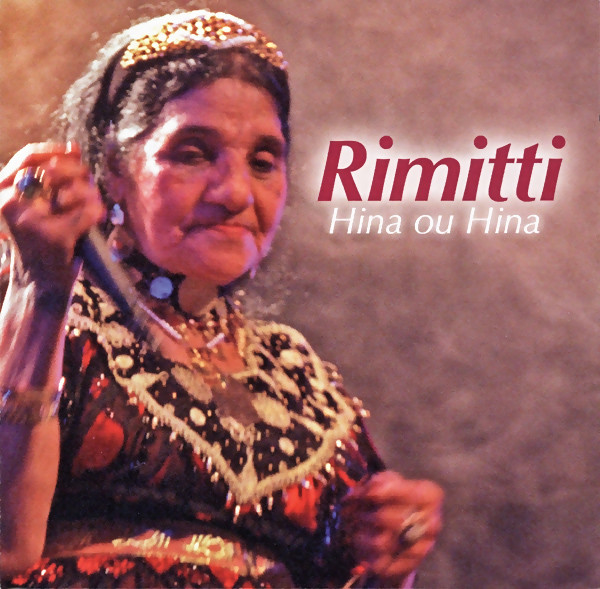
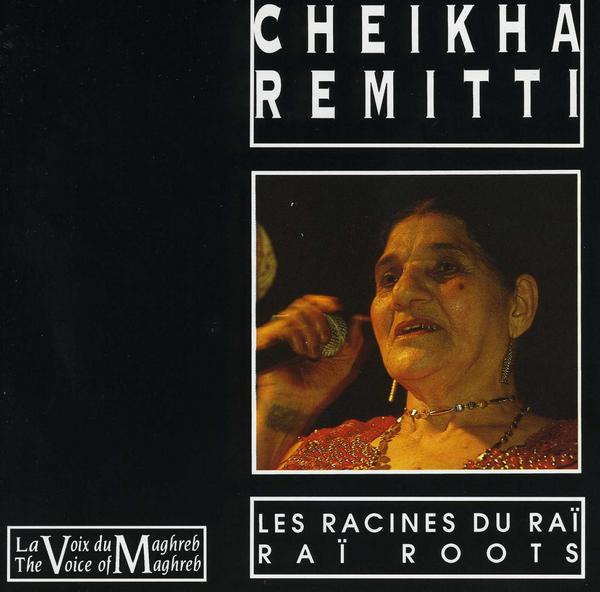
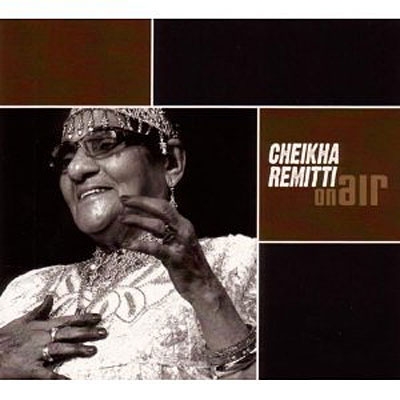
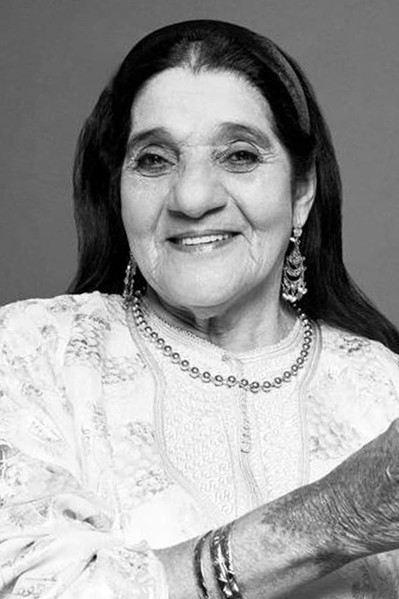
On May 13, 2006, two days before her death, Cheikha Rimitti performed on the stage of the Zénith in Paris. In front of 4,500 spectators, her rocky voice and gaze charged with irony made her sing as if every note were a challenge thrown at the world. At 83, this orphan from the Algerian countryside became the absolute reference of raï — a genre that means “opinion” in Arabic and makes people dance equally with both feet.
In Brief
| Full Name | Saadia El Ghizania (Sadia Bédief) |
| Birth | May 8, 1923, Tessala (Western Algeria) |
| Death | May 15, 2006, Paris (France), heart attack |
| Field | Algerian raï — singing, gaspa flute, guellal |
| Emblematic Works | “Er-Raï Er-Raï” (1952), Charrak Gattà (1954), Sidi Mansour (1994) |
| Honors | Nicknamed the “Mamie du Raï” by young artists of the 1980s |
Key Dates
| Year | Event |
|---|---|
| 1923 | Birth in Tessala, in Oranie, within the Berber tribe of Beni Ouragh |
| 1938 | At age 15, joins an itinerant troupe of traditional Algerian musicians |
| 1945-47 | Under the patronage of Cheikh Mohammed Ould Ennems, radio broadcast in Algiers |
| 1952 | First record on Pathé Marconi: “Er-Raï Er-Raï” (under the name Cheikha Remettez Reliziana) |
| 1954 | Scandalous success of “Charrak Gattà”, denouncing the taboo of virginity |
| 1962 | Music banned by the Algerian government; tour in France for the diaspora |
| 1978 | Settles definitively in Paris |
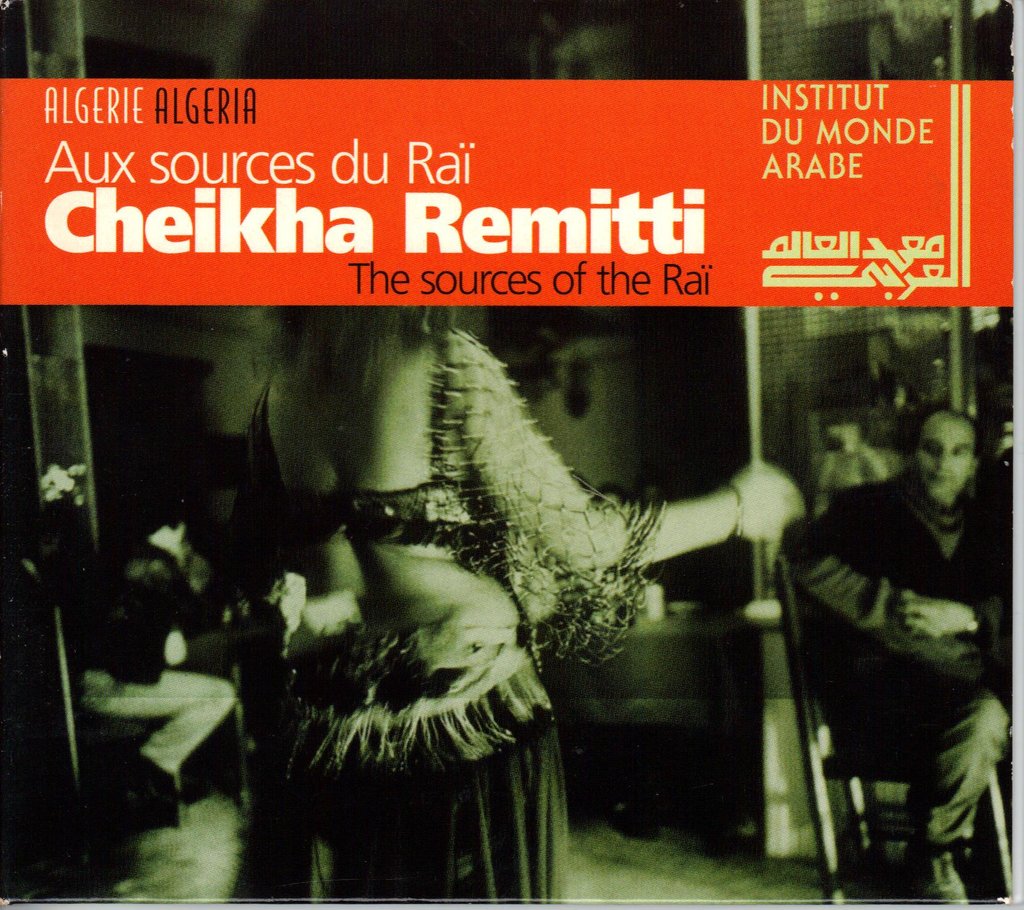
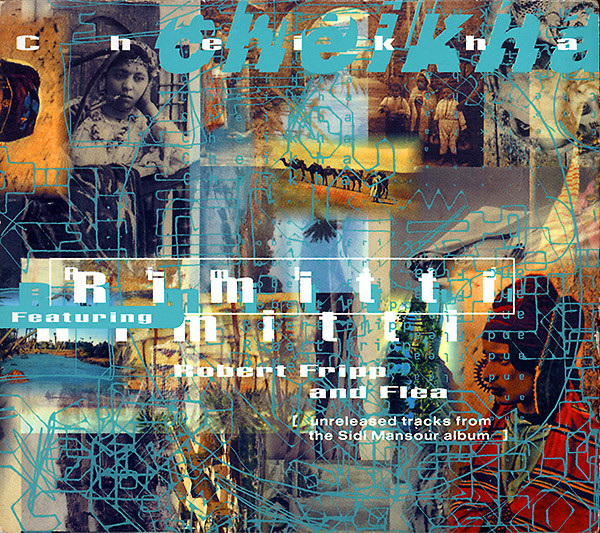
| 1994 | Comeback at the Institut du Monde Arabe; recording of Sidi Mansour with Robert Fripp and Flea |
| 2001 | Concert at Central Park Summerstage in New York — unique performance in the United States |
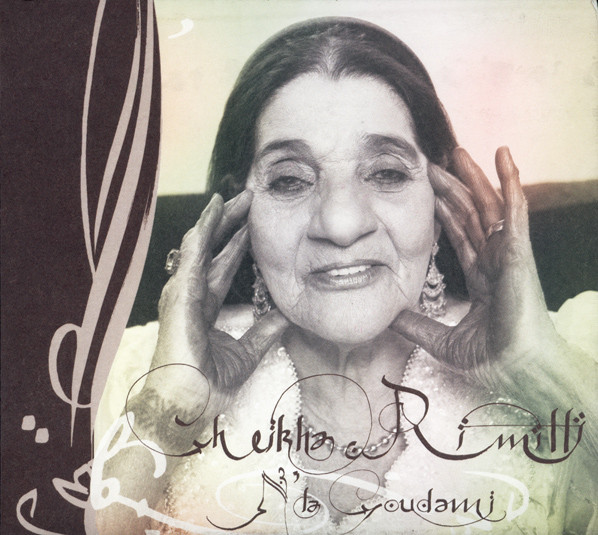
| 2006 | Final album N’ta Goudami recorded in Oran; final concert two days before her death |
From Misery to Raï: A Life of Rebellion
Saadia El Ghizania grew up an orphan in rural Algeria during the 1920s and 30s. Without a fixed home, she worked as a domestic for French families to survive. “It was misfortune that taught me,” she would later say. Misery became her best school and nurtured her writing talent: she said the songs trotted through her head like bees that never stopped stinging her.
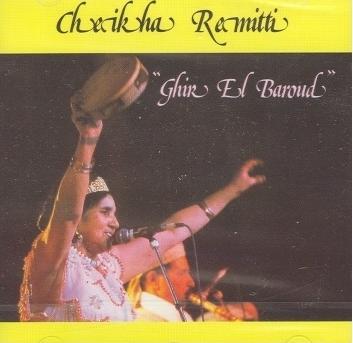
At 15, she joined an itinerant troupe of musicians and learned to sing, dance, and play the guellal. In weddings in Oranie during the 1940s, she fascinated with her flamboyant presence: gold teeth, eyes lined with kohl, hands stained with henna. The name Rimitti comes from a bar anecdote: she asked in French to buy a round for everyone — hence the nickname Rimitti. The honorific title Cheikha (mistress of her art) was added later. As Le Monde wrote in 2000: “Her hoarse, almost spoken voice carried the words of women onto the field of free love.”
In 1952, she signed with Pathé Marconi and recorded “Er-Raï Er-Raï”. Two years later, “Charrak Gattà” became a scandal: its text confronted with unprecedented audacity the cult of virginity. Muslim orthodoxy and Algerian nationalists rose against her; in 1962, the new Algerian government banned her music. Rimitti exiled herself in France, performing for the diaspora at Parisian weddings and clubs. “Raï was born by me,” she assured, tapping her belly.
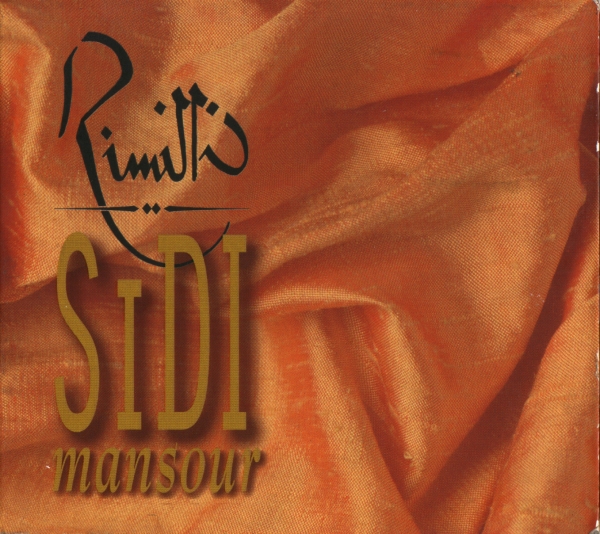
The musical turning point arrived in 1994 with Sidi Mansour, a raï-rock album produced by Robert Fripp (former leader of King Crimson) with Flea on bass. The album marked a radical break: electric sound replaced the sole traditional instruments, for an audacious blend of avant-garde rock and raï. AllMusic praised it as one of the best raï-rock records ever released. The following years saw her tour Europe, Japan, and Canada. In 2001, she sang at Central Park Summerstage in New York — an experience that would remain a landmark of her career.
Major Works
| Work | Year | Why It Is Essential |
|---|---|---|
| “Er-Raï Er-Raï” | 1952 | First discographic recording; laid the stylistic foundations of Oranie raï |
| “Charrak Gattà” | 1954 | Frontal attack on the taboo of virginity; became an anthem of rebellion |
| Sidi Mansour | 1994 | Raï-rock reinvention; collaboration with Robert Fripp and Flea (Red Hot Chili Peppers) |
| N’ta Goudami | 2005 | Final album recorded in Oran; return to the roots of original raï |
Legacy and Influence
Cheikha Rimitti was not the only raï singer, but she became its spiritual mother. The chebs of the 1980s and 1990s — Khaled, Rachid Taha — owe her their license to sing freely. Her name appears in the Dictionary of African Biography (Oxford University Press, 2012). Her songs continue to be covered and rediscovered. The rusty voice that launched challenges against the conventions of colonial Oranie is now credited as the true cradle of modern raï — that cry between a people’s pain and vital energy that refuses to extinguish. As she proclaimed: “Raï music has always been a music of rebellion, a music that looks ahead.”
Sources and References
-
“Cheikha Rimitti, 83, Rebel of Algerian Music, Is Dead”, The New York Times, May 28, 2006 — Jon Pareles
-
“Cheikha Rimitti”, The Guardian, May 18, 2006 — Robin Denselow, obituary
-
“Cheikha Rimitti (1923-2006)”, Encyclopædia Britannica, biographical article
-
“Cheikha Rimitti”, AllMusic (Jason Ankeny), biography and review of Sidi Mansour
-
“Rimitti — Sidi Mansour”, Discogs, album credits 1994 (Robert Fripp, Flea)
-
“Cheikha Rimitti-2001”, Afropop Worldwide, interview with Banning Eyre (June 30, 2001, Central Park)
-
“The song of the pain and love of women from the Maghreb”, Le Monde, December 7, 2000 — Véronique Mortaigne
-
“Cheikha Rimitti”, Jeune Afrique, December 6, 2005 — interview
-
« Cheikha Rimitti : Je chante tout ce qui m’inspire », France Culture, Atelier de Création Radiophonique (14 mai 2000) — Marie-Hélène Bernard
-
Sheldon, Kathleen (2012), « Cheikha Rimitti », in Dictionary of African Biography, Vol. 2 (Oxford University Press), p. 203